

Home & Decor Blogs: DIY, Interior Design & Lifestyle Ideas
7 Tips How to Make Your Deck Safe for Aging in Place
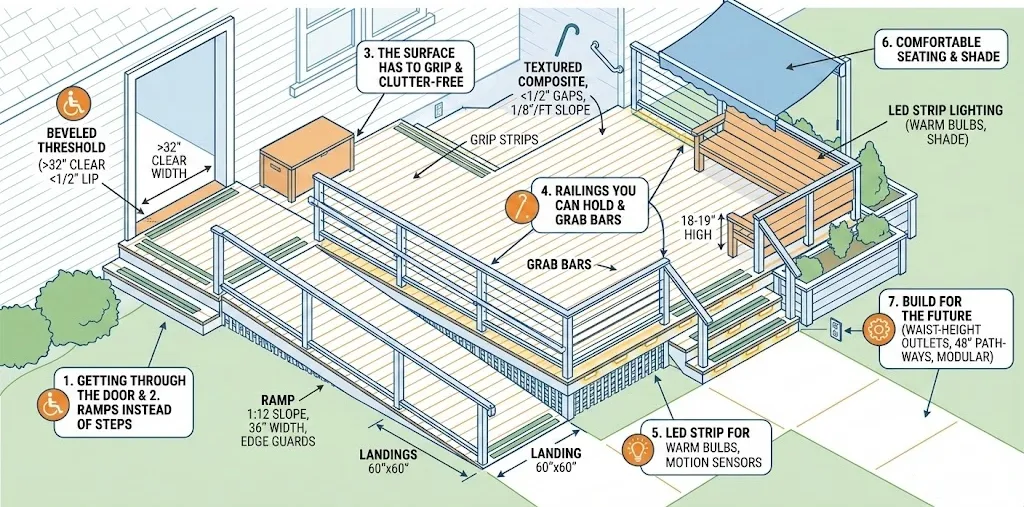
Nobody plans for the day their deck becomes a problem. One year it’s fine — barbecues, morning coffees, grandkids running around. Then someone’s hip gets dodgy, or a parent starts using a walker, and suddenly that two-inch step at the back door might as well be a wall.
Decks are brilliant spaces. Probably the most underrated part of most homes, honestly. But they’re also designed by people who assume everyone using them can walk without thinking about it. Once that changes, the gaps show up fast — literally. Gaps between boards that catch cane tips. Surfaces that turn into a skating rink when it rains. Railings that are decorative rather than actually useful.
The ADA sets accessibility standards for public buildings. Ramp angles, railing heights, pathway widths — all of it measured and tested. You obviously don’t need your deck to pass a federal inspection. But those numbers exist because they work, and borrowing them for a home deck is one of the smartest things you can do if someone in your household has mobility concerns or you’re planning for the years ahead.
Seven things to get right.
1. Getting through the door
Sounds ridiculous that a door could be the main problem, but it often is. There’s a lip at the threshold that catches toes and wheel fronts. The opening is too narrow for a walker. There’s a step down that nobody thought twice about when the deck was built.
The threshold should sit at half an inch or less. Anything higher needs a beveled edge to bridge it. Door opening wants to be 32 inches of clear width minimum — sliding doors and French doors tend to be easiest because they open flat instead of swinging into the walkway.
If there’s a drop between the interior floor and the deck surface, that’s your ramp situation, which is next.

2. Ramps instead of steps
Steps and older adults don’t mix well. Research puts the increased fall risk from steep steps at around 40% for seniors, which is not a number anyone should be comfortable with.
A ramp built to a 1:12 slope — that’s one inch of height for every twelve inches of length — feels gentle enough that most people barely register the incline. Thirty-six inches wide minimum. Level landings at the top, bottom, and every thirty feet of run, sized at least 60 by 60 inches so someone in a wheelchair can pause and reposition without feeling boxed in. Edge guards on both sides stop wheels from drifting off.
| What | The number |
|---|---|
| Slope ratio | 1:12 (1 inch rise per 12 inches run) |
| Minimum width | 36 inches |
| Landing size | 60 x 60 inches |
| Landing frequency | Top, bottom, every 30 ft of run |
| Surface | Textured composite or treated wood with grip |
If your deck sits high enough that a straight ramp would stretch halfway across the garden, a switchback with a landing in the middle fixes that. Takes up less ground space and the landing gives someone a rest point on the way up.

3. The surface has to grip, not slide
Wood decking gets slippery when it’s wet. That’s not an opinion, it’s just how wood behaves. Add some fallen leaves or a bit of morning dew and you’ve got conditions that would make anyone nervous, let alone someone who’s already unsteady.
Composite decking has taken over for good reason. It doesn’t splinter, it barely needs maintenance, and most of the decent brands now texture their boards specifically for wet traction. PVC with embossed patterns does a similar job.
Board gaps need to stay under half an inch — anything wider catches cane tips and narrow wheels. A drainage slope of roughly 1/8 inch per foot keeps water moving off the surface instead of sitting in puddles. And rubberized grip strips near doorways, around seating spots, at the top of ramps — cheap, easy to install, barely noticeable visually, massively useful.
The other thing that trips people up, sometimes literally, is clutter. Tools left out, cushions stacked on the floor, pot plants sitting in the middle of the walkway. All of it needs somewhere to go that isn’t on the path people walk. Keter’s deck boxes handle this well — they sit along the edge of the deck, swallow up all the stuff that would otherwise end up on the floor, and keep the actual walking routes clear. Simple fix for a stupid-common problem.

4. Railings that you can actually hold onto
If you only do one thing on this list, make it the railings.
People grab railings instinctively when they feel off-balance. Doesn’t matter if they’re fit and active or using a wheelchair — that railing is what they reach for when something goes wrong. Decorative railings that look nice but can’t take weight or don’t sit at the right height are essentially useless for this purpose.
ADA says 34 to 38 inches high. Round or D-shaped profile, 1.25 to 2 inches in diameter, so your hand wraps around it properly. That grip matters — a flat-topped wide rail might look modern but it’s almost impossible to actually hold onto when you need to.
Things people miss with railings:
- They should extend 12 inches past the top and bottom of any ramp or stairs. That extra bit is what you’re holding while your feet negotiate the transition, which is the moment you’re most likely to lose balance.
- Intermediate rails at 34 inches help shorter people and cane users.
- Baluster spacing under 4 inches. Not negotiable if small pets or objects rolling through is a concern.
- Aluminium or powder-coated steel. Wood railings rot, warp, splinter, get too hot in sun. Metal lasts and stays functional.
Grab bars near seating areas and at transition points are worth adding too. Plenty of modern ones look nothing like hospital equipment — they blend straight into the railing design.

5. Lighting before someone falls in the dark
A dark deck is a dangerous deck. Full stop. Reduced vision, poorer depth perception, slower reaction times — all things that come with age, all things that get worse when you can’t see where you’re putting your feet.
Motion sensors at entry points. Nobody should be fumbling for a switch in the dark while standing on a step. LED strips along step edges and railing bases — soft enough not to create glare, bright enough to show where one surface ends and another starts. Warm bulbs around 2700K, because cooler white light flattens everything and makes it harder to judge distances.
Colour contrast does half the work that lighting does, and it’s free. Lighter railing caps against darker decking. A brighter shade on step edges. Contrasting tones at any point where the surface changes level. Your brain processes these visual differences before your foot arrives, which is exactly the kind of early warning system that prevents falls at dusk and dawn when the light is worst.

6. Somewhere comfortable to sit
All the safety features in the world won’t matter if nobody actually wants to spend time out there. The deck needs to be comfortable, not just safe.
Standard folding patio chairs — the wobbly ones that tip on any surface that isn’t dead flat — are rubbish for anyone with balance issues. Built-in benches with backrests and armrests at about 18 to 19 inches high are far better. The armrests are the key bit. They’re what people push against to stand up without needing someone’s help.
Raised planters or counter-height work surfaces let someone garden or pot about without bending to the ground. Sturdy lightweight chairs that can be shifted around without a wrestling match are worth having for flexibility.
Shade is the other piece. Older skin burns faster, overheats quicker, and tolerates UV exposure less well. A pergola or retractable awning covers the space without boxing it in. If you go with umbrellas, heavy-base ones only — a lightweight umbrella catching the wind and toppling over is a hazard that nobody thinks about until it clatters into someone.
Keep controls and frequently used items at waist height. The less reaching down and stretching up the space demands, the more an older person will actually use it day to day.

7. Build it for five years from now, not just today
Needs shift. Someone walking confidently with a cane right now might need a wheelchair eventually. A deck that only works for today’s situation is a deck that’ll need ripping apart again in a few years.
Some things that cost almost nothing extra if you build them in from the start:
- Electrical outlets at waist height instead of floor level
- Pathways at 48 inches wide — enough for a wheelchair or scooter even if nobody needs one yet
- Modular furniture that rearranges as requirements change
- Capped composite materials that won’t need sanding, staining, or sealing annually
Check local building codes before anything goes up. Load capacity (usually 50 to 100 PSF live load), permits, inspections — all of that varies by area and getting it wrong is expensive. A CAPS-certified builder (Certified Aging in Place Specialist) knows the specific details that a general contractor might not think about, and for a project like this, that expertise is worth paying for.

 Decor & Improvement Accessories