

Home & Decor Blogs: DIY, Interior Design & Lifestyle Ideas
Decobry: Elevating Daily Living Essentials, Home Décor & Furniture for Modern Homes



A Decobry: The Home Brand a Friend of Mine Dreamed Up but Never Built
A friend of mine spent the better part of a year talking about a shop that didn’t exist. She had a name for it, Decobry, and she’d say it the way people say the name of a place they’ve already decided to move to. The idea was simple enough on the surface, an online store for daily living essentials and home décor and furniture, the sort of thing there’s already a hundred of. But the way she talked about it was never really about the products. It was about a feeling she thought most homes were missing, and most shops weren’t helping with.
She’d been to enough friends’ flats, she said, where everything looked right in photos and felt wrong to actually live in. The lovely sofa you couldn’t sink into. The lamp that lit the room like a dentist’s office. The beautiful sideboard with a tangle of charger cables spilling out the back of it. And she got it into her head that there should be a brand that started from how a home is used rather than how it photographs, and Decobry was going to be that. So this is really her vision more than it’s an article, the thing she wanted to build before life got in the way of it.
What she meant by “daily living essentials”
When she talked about essentials she didn’t mean the big obvious furniture, or not only that. She meant the things you touch every single day without thinking about them until one of them is wrong. The chair that’s the wrong depth for your back. The shelf that’s too high to actually use. The throw that turns out to be scratchy synthetic the moment you wrap up in it on a cold night. Those, she insisted, were the backbone of whether a home felt good, and nobody was paying attention to them.
Here’s roughly how she’d lay it out when she got going on it, the core things and what she thought actually mattered about each:
| Essential Item | What to Look For | How It Supports Daily Life |
|---|---|---|
| Comfortable Seating (e.g., sofa / lounge chair) | Durable upholstery, seating depth suitable for your height, removable cushions | You relax, read, watch, chat. It needs to feel good day-to-day. |
| Multi-Purpose Storage (e.g., sideboard, shelving with closed + open) | Good height, cable management, a mix of hidden and display storage | Keeps clutter away, hides tech, shows what you love, supports both calm and personality. |
| Lighting Layers (ambient + task + accent) | Warm-tone bulbs, dimmers, fixtures matching décor | Good lighting affects mood, eye health, and function, reading, relaxing, working. |
| Table Surfaces (coffee table, dining table) | Sturdy surface, shape matched to room scale, clearance around chairs | Central to eating, chatting, working, board games, makes multi-use easy. |
| Décor Accents (rugs, cushions, wall art) | Materials you like, easy to clean or replace, shapes and colours that reflect your style | The personality pieces. They refresh a space without reinventing it. |
The table was hers, more or less. She used to sketch versions of it on the backs of envelopes, which tells you how far into this she got.
The thing that made Decobry different in her head
Most décor blogs, she’d point out, only ever talk about looks, what’s in this season, what’s out. And most furniture sites only talk about the other half, the dimensions and the materials and the price. Almost nobody, she thought, sat in the middle, which is where people actually live, the place where a thing has to fit your routine and your smaller flat and your work-from-home corner and still be something you don’t mind looking at every day. Decobry was meant to live in that middle. Functionality and style and everyday comfort, not as three separate things you trade off against each other, but fused.
And she was insistent that essentials aren’t just pretty accessories, that they have to work. A sideboard with cable management built in so your media kit isn’t a visible mess. A coffee table with storage inside it or modular bits you can move around. Décor you can rotate as the seasons or your mood change instead of buying everything new. That was the whole pitch, really, things designed for how modern homes get used, where a living room is also an office and a sofa is also a nap spot and the storage has to swallow both the clutter and the tech.
Building the base before you decorate
One thing she came back to constantly was the order people do this in. Most of us, she reckoned, decorate backwards, we buy the fun stuff first, the cushions and the vases and the wall art, and then wonder why the room never quite settles. Her rule was the opposite. Get the core pieces right first, the seating that defines the living room, the bed, the table, the things the room is built around, and only then layer the personality on top.
Decobry, the way she imagined it, would carry both ends of that, the foundational furniture and the finishing touches, but it would gently push you to build in the right order. Base first, thoughtfully. Then decorate on purpose, rather than dumping everything in at once and hoping it cohered.
She had a way of mapping it room by room, too:
| Room | Core Furniture Piece | Décor / Finishing Element | Style-Function Consideration |
|---|---|---|---|
| Living Room | Sectional sofa or seating group | Large area rug + throw blanket | If you host, choose seating that allows conversation and lounge mode. The rug anchors the group. |
| Home Office (if in living or bedroom) | Desk + ergonomic chair | Shelf with display + hidden storage | You need comfort and focus, but the space often doubles, so keep it tidy and styled. |
| Dining Area | Dining table + comfortable chairs | Pendant light + centrepiece (vase / plants) | Meals are functional and social. The table has to work well and look inviting. |
| Bedroom | Bed frame + mattress + bedside tables | Wall art + bedside lamp + soft textiles | This is the personal sanctuary, comfort and style go hand in hand. |
| Outdoor / Balcony | Weather-proof lounge seating or dining set | Outdoor rug + string lighting + plants | Even a small outside space can extend the home. Weatherproof materials matter. |
The bits she was proudest of
This was where she’d light up, because these were the ideas she thought nobody else was bothering to say.
The tech thing, first. In a modern home you’ve got laptops and tablets and speakers and a drawerful of chargers, and almost no furniture is designed with any of that in mind. She wanted Decobry to favour tables and sideboards with cable routing built in, places to tuck the tech out of sight, because a beautiful room with wires crawling all over it isn’t a beautiful room.
Then the turnover idea, which was really a sustainability point dressed up as a money-saving one. Rather than buying expensive new décor every time the trend shifts, you keep a strong, lasting base and let the cheap, changeable things, the cushions, a rug, a bit of wall art, do the refreshing. Kinder on the planet and on your wallet, both.
She talked about texture as something you feel, not just see, the soft throw, the rug with some character to it, lighting that flatters a room instead of interrogating it. About furniture that adapts as your life does, modular sofas, extendable tables, the chairs that stack away, because you might move or your family might grow or your work might change, and the stuff shouldn’t have to be thrown out every time. About zoning a small flat into areas, one corner for sitting, one for working, one for storage, using rugs and a change of lighting and the way you angle the furniture to tell one from another without building a single wall.
And she had this line about décor with a purpose, which I still think about. Instead of “I’m adding a vase because it’s pretty,” ask what the thing is going to do. Will it hold the remotes. Will it hide something. Will it make you feel calm, or remind you of somewhere you loved. Décor chosen that way, she said, lasts. The pretty-for-pretty’s-sake stuff you tire of in a season.
A way of buying that doesn’t bankrupt you in a weekend
She was practical about money, too, which I appreciated, because a lot of this kind of advice quietly assumes you’ve got a spare ten grand. Her answer was to layer the spending out instead of doing it all at once. Seating and a table to start. Lighting and a rug a few months later. A proper storage piece after that. A décor refresh somewhere down the line. It spreads the cost, it stops you making ten decisions in one panicked afternoon, and it lets each layer settle before you add the next, so you actually find out how the room wants to be used before you commit to the rest.
None of which, she’d remind you, means buying for trends. The big pieces you choose for the long haul, timeless shapes and materials that wear well, and you save the trend-chasing for the small things that are easy to swap. Solid frames, good fabric, the stuff that’s still going to look right in five or ten years.
Why Decobry never opened
So why am I telling you about a shop you can’t buy anything from. Because it never opened.
She’d worked the whole thing out, the philosophy, the range, those envelope-back tables, and then she went to actually register it and found the domain she wanted, decobry.com, wasn’t available to buy.
And somehow that was the thing that took the wind out of it. Not the money or the logistics, just that one small wall at the worst moment, and the idea quietly went back in the drawer.
I’ve always thought it was a shame, because the vision was sound, sounder than plenty of brands that did launch. But maybe it doesn’t need to be a shop to be useful. The way she thought about a home, start from how you live in it, get the bones right before the decoration, choose things that work as hard as they look, that’s the part worth keeping, whether or not there was ever a Decobry to sell it to you. She furnished her own flat by those rules, and it’s one of the few homes I’ve been in that felt as good to sit in as it looked. Which, if you think about it, was the entire point she was trying to make.
How to Use Decobry Philosophy in Your Home
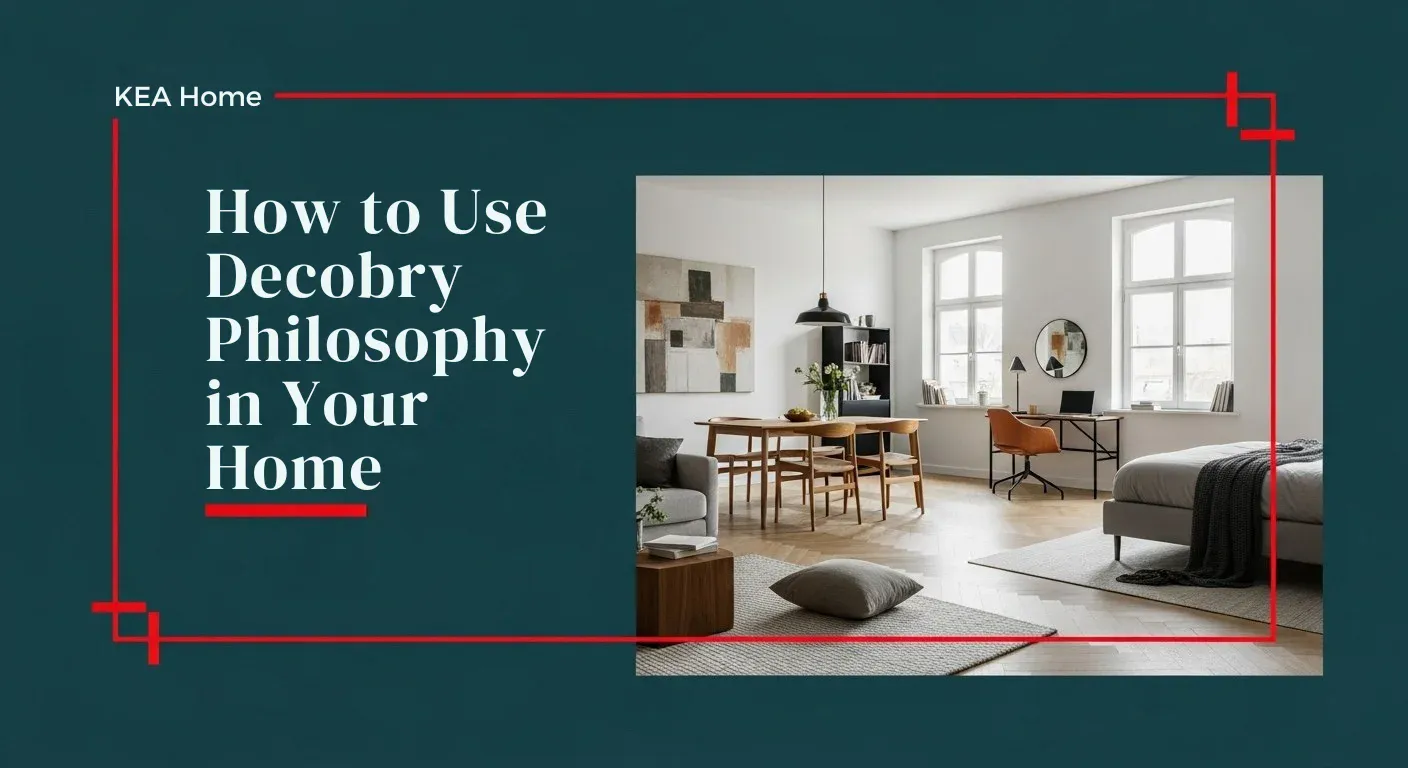
Start with the “core” pieces: Pick foundational furniture for each main room sofa, table, bed.
Match scale to your space: Measure carefully. Many homes have limited flow ensure furniture doesn’t block circulation or light.
Choose materials that match your lifestyle: If you have kids/pets, go for durable fabrics, solid frames. If you entertain often, think extendable tables or sofas with seating flexibility.
Layer in décor intentionally: After the core furniture is in, add rugs, cushions, lighting, artwork. Let your personality emerge.
Stay flexible: Use modular pieces or furniture with storage so your home adapts to change.
Think long-term: Build with intention—not just because something is trendy. Choose pieces you’ll still like in 5-10 years.
Reflect your daily living: If you like to read, allocate lighting & a cozy corner. If you work from home, make sure your workspace is integrated stylishly, not an afterthought.
Refresh rather than replace: When the mood changes, swap décor accents rather than overhaul everything.
 Decor & Improvement Accessories