
Home & Decor Blogs: DIY, Interior Design & Lifestyle Ideas
How Furnace Repair Actually Works in Corona Homes
Furnace problems don’t announce themselves. You notice weak heat one morning, maybe a rattling sound that wasn’t there last week, or rooms that never quite warm up. Easy to brush off. Most people do. Then the system stops working entirely on a cold night, and suddenly everyone’s scrambling.
Corona doesn’t get brutal winters – January sits around 52°F highs and 41°F lows – but that’s almost worse for catching furnace issues early. The system runs just enough to hide problems until something breaks. Understanding how repairs actually happen, from weird noises to working heat again, takes the panic out of the process.
Why Corona Furnaces Struggle
Here’s something most homeowners don’t realize: nearly half of all furnace service calls in Corona come down to clogged filters. Not broken parts. Not major failures. Filters packed with dust, pollen, and whatever the Santa Ana winds blow through.
Corona sits in a basin that collects freeway pollution from the 91 and 15, seasonal wildfire smoke, and construction dust from all that Inland Empire development. Your furnace filter catches the worst of it. When that filter clogs, airflow drops, the system overheats trying to compensate, and you get short cycling – furnace kicks on, runs briefly, shuts off, repeats. Your energy bill climbs while your house stays cold.
Electric bills in Corona already average around $333 monthly at 29 cents per kilowatt-hour. That’s roughly 11% higher than the national average. A struggling furnace pushes those numbers even higher.
Warning Signs That Actually Matter
Furnaces hint at problems before they quit. Catching those hints saves money and headaches.
What to watch for:
- Short cycling (furnace turns on and off repeatedly without heating properly)
- Uneven temperatures from room to room
- Energy bills are creeping up without explanation
- Rattling, humming, or grinding sounds
- The thermostat says one thing, but the room feels different
- Weak airflow from vents
About 30% of repair calls in the area come from homeowners noticing short cycling or rising bills first. Those two symptoms usually point to the same root causes: airflow restrictions or ignition problems.
What Happens During an Inspection
A technician showing up for corona furnace repair doesn’t just poke around randomly. There’s a sequence.
Safety checks come first – gas connections, electrical components, carbon monoxide risks. Then, airflow testing, ignition system review, and thermostat calibration. The inspection confirms what’s actually wrong instead of guessing.
Standard inspection covers:
- Visual check of all components for wear or damage
- Ignition and sensor testing
- Thermostat accuracy and response
- Airflow measurement at vents
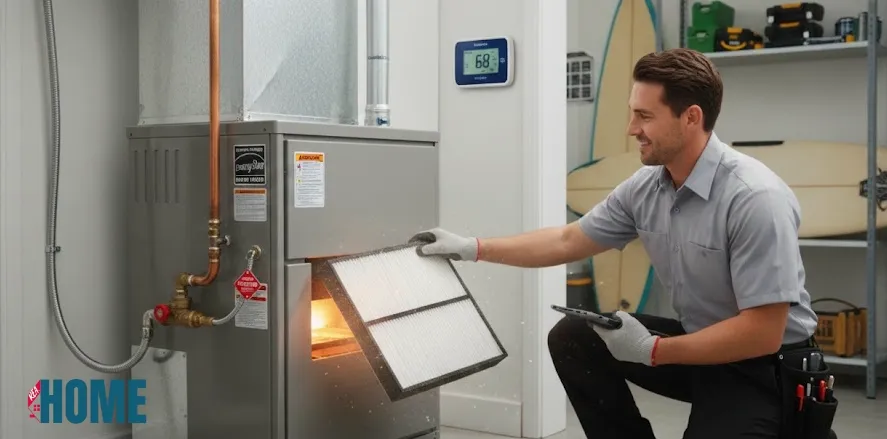
- Filter condition assessment
- EPA-recommended checks
This stage exists to prevent unnecessary part replacements. A good technician explains exactly what they found before recommending anything.
Common Problems and What Fixes Them
| Problem | Usual Cause | Typical Fix |
|---|---|---|
| Short cycling | Clogged filter, overheating | Filter replacement, airflow correction |
| No heat | Ignition failure, thermostat issue | Igniter replacement, recalibration |
| Weak airflow | Dirty blower, duct blockage | Blower cleaning, duct inspection |
| Uneven heating | Duct leaks, blower problems | Sealing, blower repair |
| Strange sounds | Loose parts, worn belt | Tightening, belt replacement |
Clogged filters top the list because Corona’s air quality demands more frequent changes than most climates. Mild winters with dry air compound the issue – dust circulates without rain to settle it.
Ignition faults rank second. Older systems with pilot lights struggle more than electronic ignition models, especially after sitting unused during Corona’s warm months.
Blower motor issues round out the top three. These motors work harder when filters restrict airflow, wearing out faster than they should.
The Repair Process Step by Step
Once the diagnosis is finished, repairs follow a logical order. Main fault first, supporting issues second, then verification.
Typical repair sequence:
- Address the primary failure (igniter, filter, blower)
- Clean internal components while the system is accessible
- Replace any worn parts showing early failure signs
- Adjust airflow balance across zones
- Run a full system test
That final test matters more than people realize. Temperature rise, airflow rates, and cycle timing all get measured. A furnace might fire up fine but still distribute heat poorly without proper calibration.
Scheduling corona furnace repair before peak cold snaps means faster service and fewer emergency calls competing for technician time.
Keeping Problems from Coming Back
Routine maintenance cuts furnace failures by roughly 50%. That’s not a small number. Half the emergency calls could have been tune-up visits instead.
Basic upkeep that actually helps:
- Filter changes every 1-3 months (Corona’s dusty air leans toward monthly)
- Annual professional inspection before heating season
- Keeping vents clear of furniture and debris
- Checking thermostat batteries and calibration
High-efficiency furnaces and smart thermostats have become popular upgrades in Corona over the past year. The combination can trim heating costs 20-30%, which matters when electricity runs 29 cents per kilowatt-hour. New systems typically pay back their installation cost faster in California than in most other states, just because energy prices sit so high.
When Repair Makes Sense vs. Replacement
Older homes in Corona see more repairs than replacements because the furnaces installed decades ago were built more heavily. But there’s a tipping point. When repair costs hit 50% of replacement value, or when the system can’t maintain efficiency anymore, upgrading makes financial sense.
Modern high-efficiency units paired with smart thermostats deliver 30% long-term savings CA HVAC rebates up to $8,000 in high-cost California markets. That math changes the repair-vs-replace calculation faster than it would in states with cheaper electricity.

 Decor & Improvement Accessories