

Home & Decor Blogs: DIY, Interior Design & Lifestyle Ideas
Dinvoevoz: Unify Your Creative Digital Home Designs

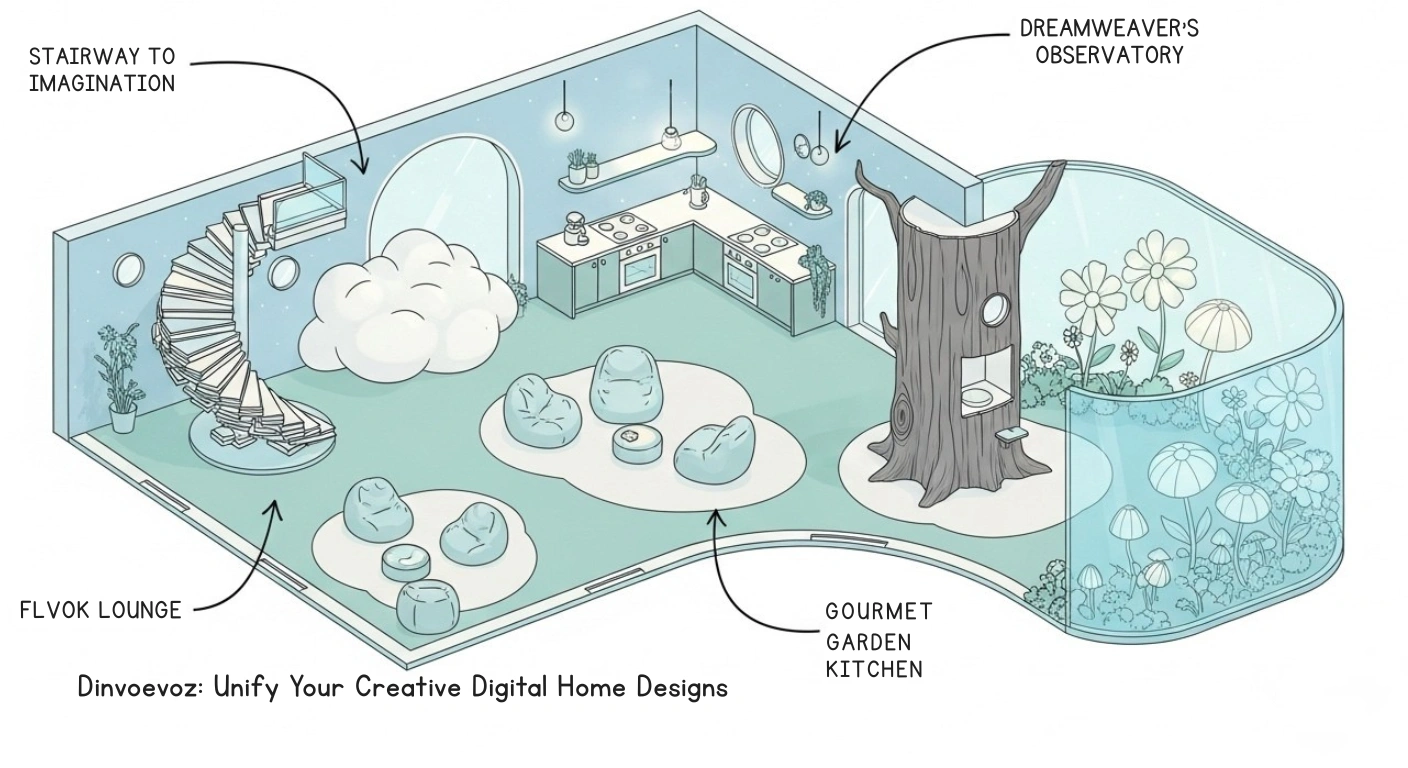
Your home design portfolio is everywhere — and nowhere at once. Pinterest board here, Houzz profile there, a few saved Instagram reels, maybe a half-finished mood board someone emailed you. Dinvoevoz fixes that. It’s a digital platform built specifically for home design, pulling your scattered visual identity into one coherent, navigable space — and TheHomeTrotters is where most designers and homeowners are actually doing it.
What Dinvoevoz Actually Is (And Why Home Design Specifically)
Not an app you download. Not a plugin. Dinvoevoz is a structured digital framework — purpose-built for the home design world — that connects your projects, inspirations and professional presence under one roof. Literally.
The concept borrows from how architects think about space. Every room serves a function. Every hallway connects two places intentionally. Your digital design presence should work the same way.
Right now, it mostly doesn’t. A 2023 report from the National Association of Realtors found that over 67% of homebuyers start their search online — meaning the designers, renovators and decorators they discover need a coherent digital presence or they’re invisible. Fragmented profiles don’t build trust. They create confusion.
Dinvoevoz solves the coherence problem. TheHomeTrotters built its platform around this exact framework, which is why it’s become a go-to hub for serious home design professionals.
The Real Problem With How Designers Exist Online
Here’s something worth sitting with. A kitchen remodel you’re proud of lives on Instagram. Your full portfolio is on a site you haven’t updated in eight months. Your process photos are on Pinterest. A client testimonial is buried in a Google review.
Nobody sees the full picture. Not clients, not collaborators, not press.
Research from Lucidpress showed brand consistency across platforms can lift revenue by up to 23%. That stat gets quoted a lot — but in home design specifically, it hits differently. Because design is visual. Inconsistency doesn’t just confuse people; it actively undermines your credibility as someone who creates order and beauty.
The fragmentation problem isn’t laziness. It’s structural. Each platform has different dimensions, different audiences, different content rhythms. Without a framework tying them together, drift is inevitable.
Three things typically go wrong:
- Visual incoherence — your portfolio photos look different across platforms because each has its own compression, filter norms and cropping rules.
- Dead ends — a potential client finds your Instagram, loves it, clicks your bio link and hits a website that tells them almost nothing.
- No narrative — projects exist as isolated posts, not as part of a story about who you are as a designer.
Dinvoevoz — as practiced through TheHomeTrotters — addresses all three.
The Hub-and-Spoke Model, Applied to Home Design
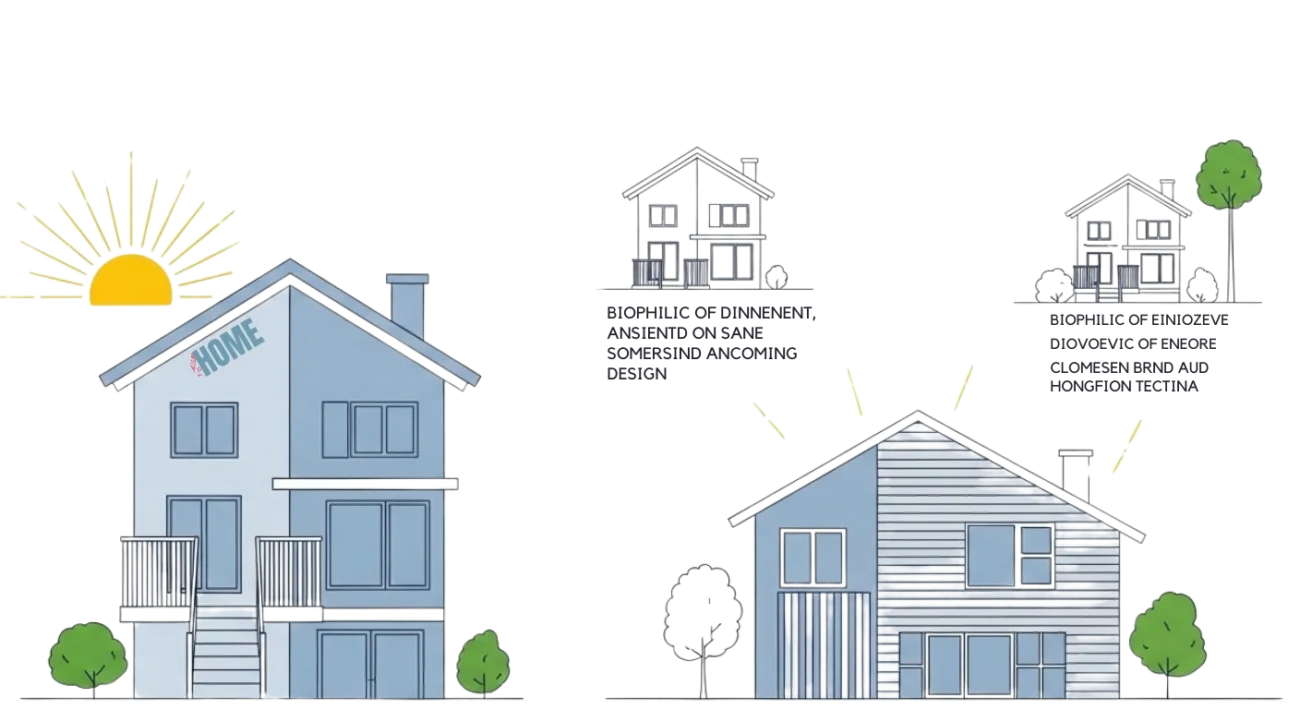
Every successful Dinvoevoz setup has a center. For home designers using TheHomeTrotters, that center is a profile page that functions as a living portfolio — not a static PDF, not a frozen website, but something that updates as your work does.
From that hub, spokes extend outward. Your Instagram showcases the mood. Your process videos live on YouTube. Client before-and-afters go on Houzz. But every one of those platforms points back to your TheHomeTrotters hub, where someone can see everything in context.
Think of it the way Architectural Digest covers a home tour — you’re not shown one room and left guessing. You get the full story, room by room, with intention. That’s what a properly structured Dinvoevoz presence does for a designer’s online identity.
A quick breakdown of how the model works in practice:
| Layer | Role | Example |
| Hub | Complete story, full portfolio | TheHomeTrotters profile |
| Primary spoke | Professional credibility | LinkedIn or Houzz |
| Visual spoke | Inspiration & reach | Instagram or Pinterest |
| Video spoke | Process & personality | YouTube or Reels |
| Community spoke | Trust & reviews | Google Business / Houzz reviews |
Each spoke feeds the hub. The hub converts visitors into clients.
Building Your Dinvoevoz Presence: Where to Actually Start
Most designers stall at the audit stage. They make a list of every platform they’re on, feel overwhelmed and close the tab. Skip that spiral.
Start with one question: if a potential client Googled your name right now, what would they find first — and does it tell the right story?
That first result is your de facto hub, whether you designed it that way or not. TheHomeTrotters profiles consistently rank well for designer names because the platform is structured for exactly this — searchable, media-rich and linked outward to your other platforms. Google’s own Search Quality Evaluator Guidelines place heavy weight on author and creator credibility signals. A complete, consistent profile is a credibility signal.
Once you know your hub, the build-out follows a simple sequence:
- Lock your visual identity first — pick two to three colors that represent your design aesthetic and use them everywhere. Profile photos, cover images, even the tone of your photography. This isn’t about being rigid; it’s about being recognizable.
- Write one bio, adapt it everywhere — not five different bios that describe five different versions of you. One clear statement of who you are and what you do, then shortened or expanded based on the platform’s character limit.
- Link everything back — every platform bio, every content post where possible, every email signature. TheHomeTrotters profile link should be as automatic as your phone number.
Small detail that matters more than people expect: your profile photo. A study published via ResearchGate found consistent profile imagery significantly increases cross-platform recognition. Same photo — or at minimum the same visual style — across your hub and all spokes.
Creating Content That Works Across the Whole System
Here’s where Dinvoevoz thinking changes how you actually produce content — not just how you organize it.
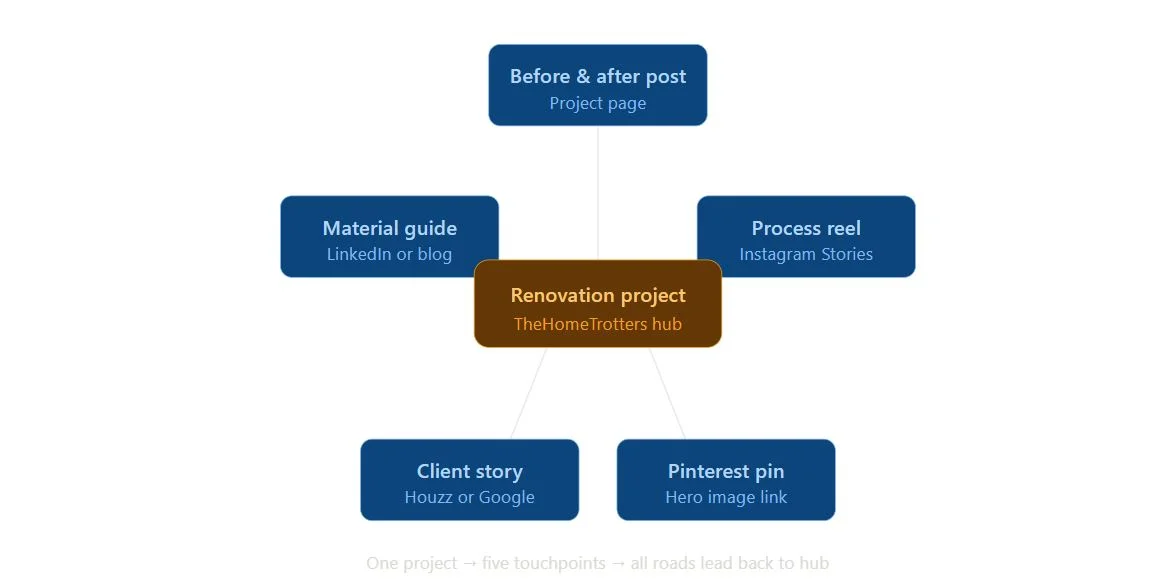
The old approach: shoot a finished room, post it on Instagram, move on. The Dinvoevoz approach: that same finished room becomes five different pieces of content, each suited to a different platform, each pointing somewhere else.
A renovation project on TheHomeTrotters, for instance, can anchor an entire content cycle:
- The process reel — raw, behind-the-scenes clips on Instagram Stories.
- The before-and-after post — polished photography on your TheHomeTrotters project page.
- The material breakdown — a short blog post or LinkedIn article about the specific tile, paint, or joinery decisions.
- The client story — a testimonial thread on Houzz or a Google review request.
- The Pinterest pin — a single hero image from the finished space, linked back to your full project page.
One project. Five touchpoints. All roads lead back to your hub.
Content Marketing Institute research consistently shows that repurposed content reaches audiences who missed the original — without proportionally increasing production time. For solo designers or small studios, that efficiency isn’t optional. It’s survival.
The key discipline is resisting the urge to post the same thing everywhere simultaneously. Each platform has its own rhythm and audience expectation. What works as an Instagram caption reads as lazy on LinkedIn. Adapt the format, keep the core message, maintain the visual thread.
What Good Dinvoevoz Looks Like — And What Breaks It
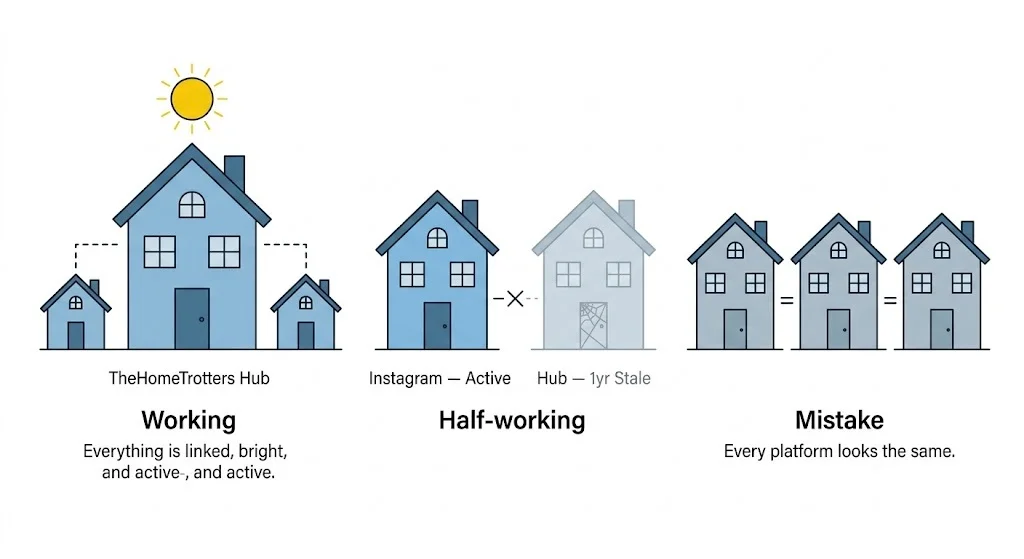
Three profiles that illustrate the difference between a working Dinvoevoz system and one that’s falling apart.
The designer who got it right: An interior designer running a two-person studio set up their TheHomeTrotters profile as the central archive — every completed project documented with process notes, material lists and client context. Instagram handles reach and mood, posting three times a week. LinkedIn publishes one long-form piece monthly about a specific design challenge they solved. Every post on every platform links to the relevant TheHomeTrotters project. Clients routinely say they felt like they already knew the studio’s work before their first call.
The one that’s half-working: A renovation contractor with a strong Instagram — great photos, decent engagement — but a TheHomeTrotters profile that hasn’t been updated in a year. The hub is broken. Traffic arrives and has nowhere to go. The spoke is doing its job; the hub is failing it.
The common mistake: Chasing consistency so hard the personality disappears. Brand guidelines are not a personality transplant. Harvard Business Review has written about how over-polished brand voices actually reduce trust — they signal inauthenticity. Your Dinvoevoz presence should feel like you, just organized.
A few things that reliably break a Dinvoevoz system:
- Updating one platform and forgetting the rest — a new logo on Instagram, old one still on TheHomeTrotters profile.
- Mixing professional project content with unrelated personal content on your hub platform.
- Letting the hub go stale while the spokes stay active — the imbalance is immediately obvious to anyone who clicks through.
The TheHomeTrotters Advantage Within the Dinvoevoz Framework
Most platforms weren’t built with the Dinvoevoz model in mind. They were built to keep you on the platform — not to connect you outward. TheHomeTrotters is different in one specific way that matters here: it’s structured to function as a hub, not just another spoke.
Project pages support deep documentation. Not just a photo gallery — material sourcing, room dimensions, project timelines, designer notes. The kind of detail that builds the E-E-A-T signals Google explicitly rewards in its Helpful Content guidelines. A before-and-after photo is nice. A before-and-after photo with a documented decision process behind it is authoritative content.
A few specific features that support the Dinvoevoz approach on TheHomeTrotters:
- Cross-linking to external profiles — LinkedIn, Instagram, Houzz all linkable directly from your profile.
- Project categorization — style tags, room types and budget ranges make your work discoverable by the right audience.
- Client-facing presentation mode — share a clean project view with clients without exposing your backend notes.
- SEO-structured project pages — each project page is indexed individually, meaning a well-documented renovation in a specific city can rank for local search terms.
That last point is underused. A designer in Austin who documents a mid-century modern living room renovation on TheHomeTrotters — with proper location tags and material details — is building a searchable asset, not just a portfolio entry.
FAQs: What People Actually Ask About Dinvoevoz
No. Homeowners actively renovating, design students building a portfolio and contractors wanting a stronger digital presence all use it. The framework scales. A first-time renovator with three completed rooms and a clear visual style can build a credible Dinvoevoz presence just as effectively as a studio with fifty projects.
Realistically, two to three months before the connective tissue starts showing results — more inbound profile views, longer time-on-page, clients who arrive already informed. The first two weeks are just setup: hub locked, bios aligned, visual identity consistent. The compounding happens after that.
The methodology itself costs nothing. TheHomeTrotters has free profile tiers that cover the basics of what a Dinvoevoz hub needs. Premium tools — advanced analytics, featured project placement, expanded storage — are optional and worth evaluating once you’ve validated your setup.
Good. Document it that way. A profile that shows genuine creative development over time is more trustworthy than a curated highlight reel that looks too perfect. Research from Nielsen Norman Group consistently finds that authenticity markers — including visible growth and process — increase user trust significantly more than polished presentation alone.
Not automatically. Older projects show range and longevity. If something actively contradicts your current positioning — a phase you’ve moved on from, work that doesn’t represent your current quality — archive or remove it. Otherwise, let the history stand. Context makes it an asset, not a liability.
A Realistic 30-Day Start Plan
Not a comprehensive overhaul. Just enough to get the system functioning.
Week one — audit and anchor List every platform you’re active on. Pick your hub — for most designers, TheHomeTrotters. Get that profile to 100%: photo, bio, at least three documented projects, all external links filled in.
Week two — visual alignment Same profile photo across all platforms. Consistent color palette in cover images and featured photos. Update every bio to point back to your TheHomeTrotters hub.
Week three — content connection Take one existing project and build the content cycle around it. Process content on Instagram. Final result on your hub. One longer reflection piece on LinkedIn. Cross-link everything.
Week four — review and adjust Check your analytics. Where is traffic coming from? Where are people dropping off? Which spoke is performing? Double down on what’s working, fix one dead end, leave everything else alone for now.
That’s it. No complete redesign. No buying new tools. Just one month of intentional connection between the platforms you’re likely already using.


 Decor & Improvement Accessories