

Home & Decor Blogs: DIY, Interior Design & Lifestyle Ideas
How to Plan Modern Bedroom Furniture for Australian Homes

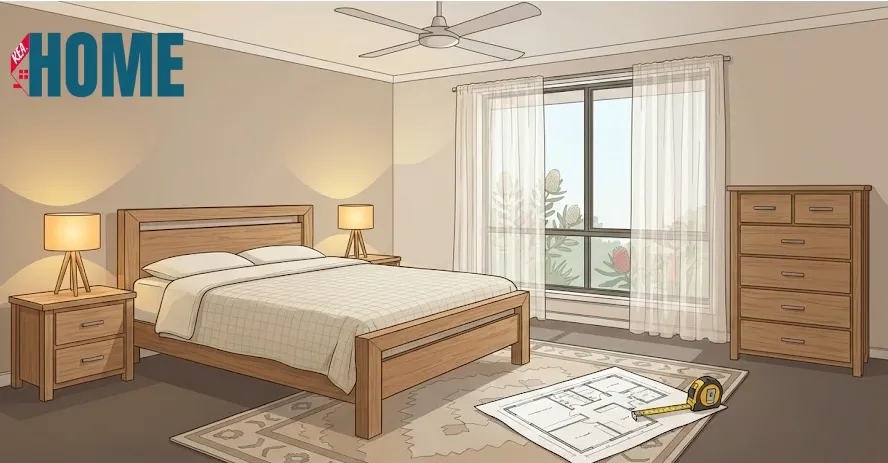
Bedroom makeovers go wrong the same way every time. Someone spots a beautiful king bed, orders it, gets it delivered, and then realises they’ve got 400 mm to squeeze past the wardrobe. Barely enough room to shuffle sideways.
The fix is boring, but it works: measure first, fall in love with furniture second.
This guide covers bed footprints, clearances, storage, lighting, and materials – all using Australian dimensions. Whether you’re working with a Brisbane apartment, a Melbourne terrace, or something regional with a bit more breathing room, the numbers here will stop you buying stuff that doesn’t fit.
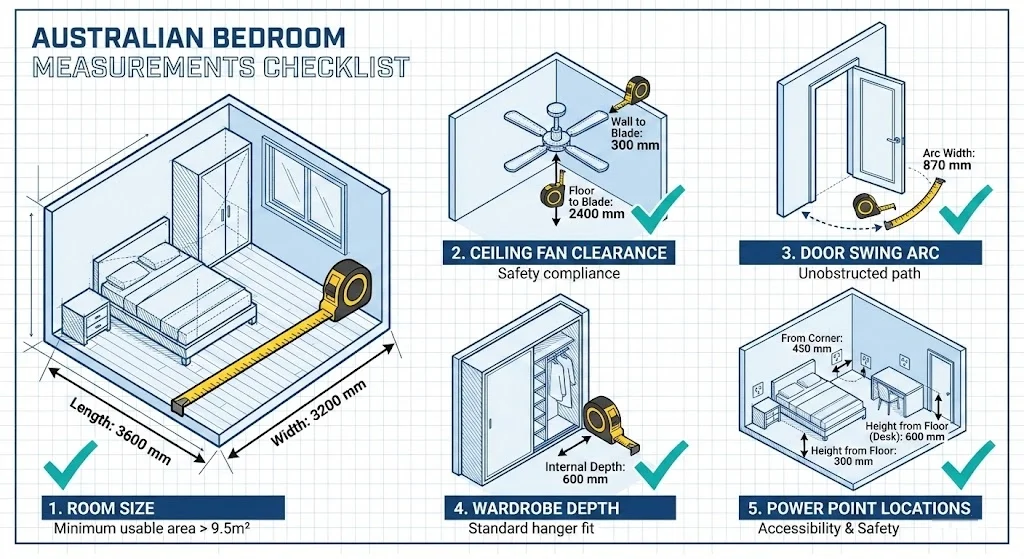
Five Measurements You Need Before Shopping
Fifteen minutes with a tape measure saves weeks of frustration. Do this before you browse anything.
Room length and width – Sketch your floor plan. Mark windows, doors, any nib walls or bulkheads. Frames add 50-100 mm to mattress dimensions on each side, which catches people out constantly.
Ceiling height – Standard Australian ceilings sit between 2400 and 2700 mm. Lower ceilings suit vertical panel headboards that draw the eye up. Planning ceiling fans or pendants? Keep 2100 mm clearance minimum over walkways.
Door and window swings – Mark where hinged doors arc. Nothing worse than a bedside table that clashes with the door every single morning. Sliding wardrobe doors change your depth calculations completely. And don’t block window ventilation – cross breezes are how you survive hot nights without cranking the aircon.
Wardrobe space – Built-ins need about 600 mm internal depth. Add sliding doors, and you’re looking at 650-700 mm overall. Walk-in wardrobes want 900-1200 mm aisle width so you can actually open drawers without reversing out.
Power points – Know exactly where they are. Saves you from extension leads trailing across the floor to reach bedside lamps and phone chargers.
Australian Mattress Sizes
| Size | Dimensions | Minimum Room |
|---|---|---|
| Queen | 153 × 203 cm | 3.0 × 3.0 m |
| King | 183 × 203 cm | 3.0 × 3.6 m |
| Super King | 203 × 203 cm | 3.5 × 3.5 m |
Bed frames add 50-100 mm per side. A King mattress might fit your room on paper. The frame probably won’t.
Room Layouts
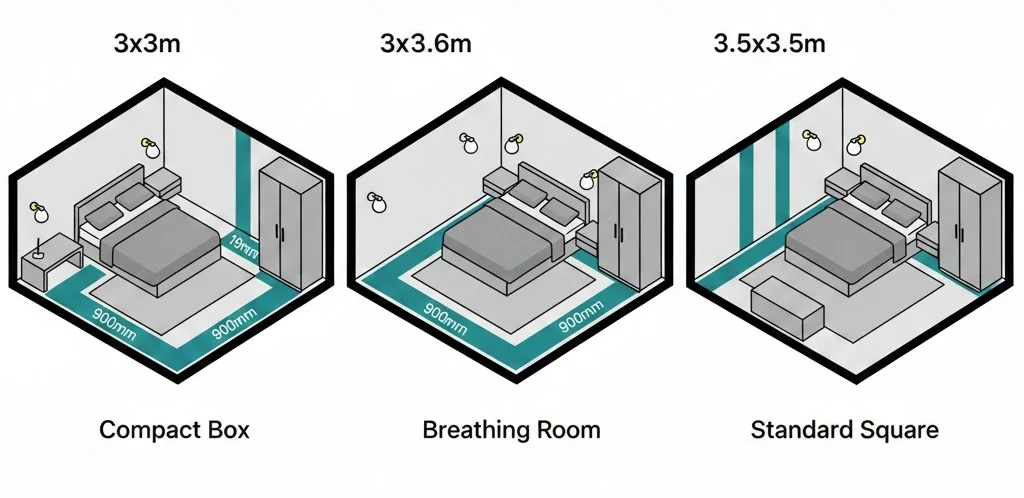
The magic number is 900 mm. That’s a comfortable walking space. You can compress to 600-750 mm if you absolutely have to, but it’ll feel tight every day.
Small rooms around 3.0 × 3.0 m – Stick with a slim platform Queen. Forget oversized footboards – they eat floor space for no reason. Wall sconces or swing-arm lamps instead of chunky bedside table lamps. A 200 × 300 cm rug under the lower two-thirds of the bed keeps walkways clear.
Mid-size rooms around 3.0 × 3.6 m – Queen or King both work depending on how much circulation you’re willing to sacrifice. Check you’ve still got 750-900 mm clear at the sides and foot before adding anything at the end of the bed.
Generous rooms 3.5 × 3.5 m and up – King or Super King with two proper bedsides and a reading chair, no problem. Wall systems and walk-in wardrobes become realistic options. Just maintain that 900 mm circulation and you’re fine.
Bed Frames Brisbane
Shopping locally means shorter lead times and actually seeing how things look under real lighting. Matters more than you’d think when you’re trying to match wardrobes, work out circulation, and figure out storage all at once.
Humidity is the thing nobody warns you about in coastal Queensland. Timber frames with ventilated slats let air move under the mattress and cut mould risk. Upholstered frames work too – just use performance fabrics and air them out occasionally. Don’t let them trap moisture.
Bring your measurements to the showrooms. Every time. Ask staff for actual frame footprints including headboards, side rails, and legs. Decorative details add bulk that mattress-size labels don’t mention. Note which drawers, gas-lift bases, and timber tones work for your room, then check each one still leaves your walkways clear.
Browse The A2Z Furniture’s bed frames Brisbane collection to compare storage bases, timber finishes, and upholstered options suited to Brisbane-Gold Coast conditions. Check drawer and lid clearances, confirm delivery access before you commit.
Few things worth doing in-store: measure external frame dimensions yourself rather than trusting the tag. Test drawer slides and gas-lift mechanisms – they should be smooth and quiet, operable with one hand. Robot vacuum? Confirm 100-120 mm under-bed clearance. Ask about warranty on joints, slats, and hardware. Those fail before surfaces do.
Custom Bed Frame
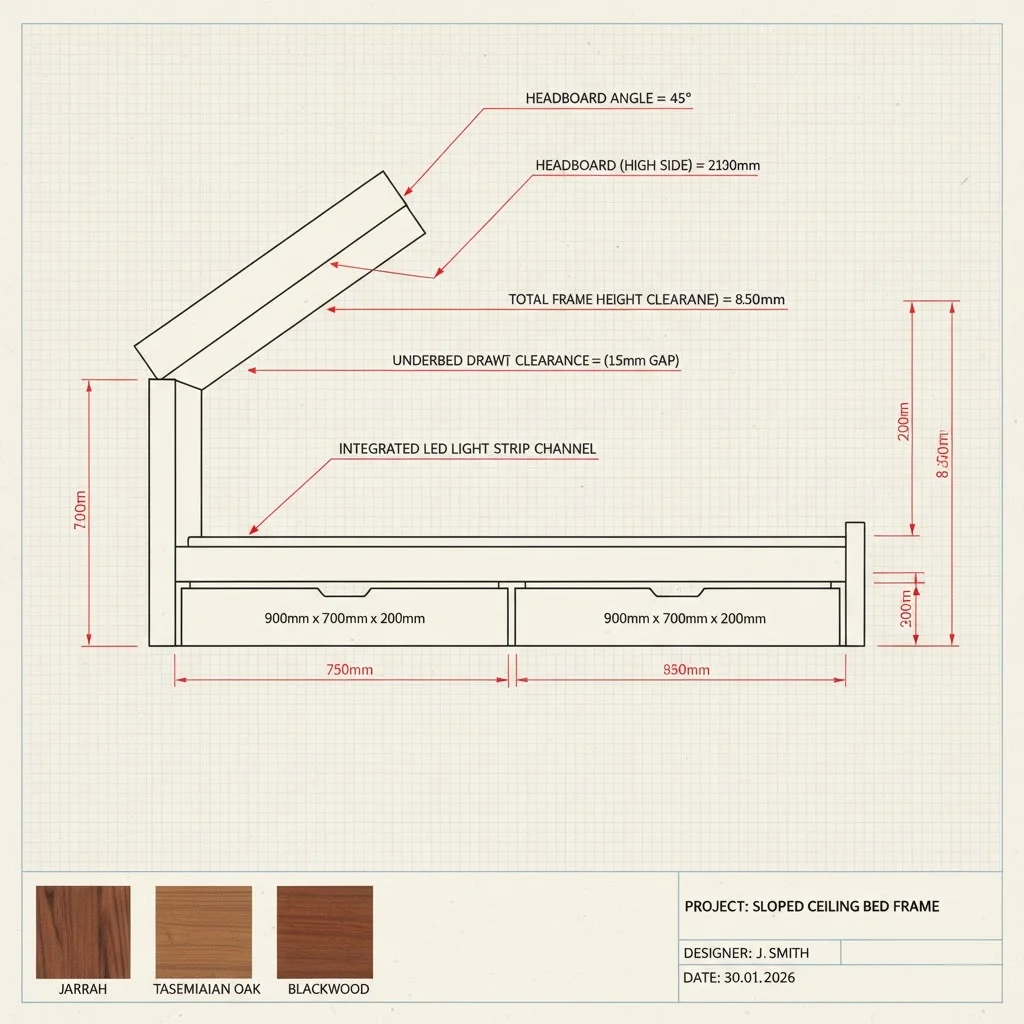
Sometimes standard sizes just won’t work. Weird room widths, sloped ceilings, asymmetrical alcoves – off-the-shelf frames either don’t fit or destroy your circulation paths.
Made-to-measure lets you specify width, headboard angle, under-bed storage, all of it. Get shop drawings with millimetre measurements and signed finish samples before putting down any deposit.
Custom makes sense for tight or awkward rooms where standard frames would wreck the layout. Same goes for design-driven projects needing integrated lighting, concealed power, or exact timber matching. If indoor air quality matters to you, solid timber and low-VOC finishes beat foam-heavy synthetic builds.
For rooms where measurements are tight or the design needs to be precise, commission a custom bed frame from Naturally Timber. Match dimensions, storage, and timber tones to your plan exactly. Lead times run longer than off-the-shelf and the approval process has more steps, but you get something that actually fits.
Storage
Every storage piece needs to earn its footprint. Tallboys work when you’ve got vertical wall space. Lowboys suit spots under windows where you need surface area. Match bedside height to mattress top – reaching down or up for your phone and water glass gets old fast. Wall-hung bedsides float the floor visually and make small rooms feel bigger.
Bench or blanket box at the foot? Only if 750-900 mm of walkway survives after placement.
One thing that’s non-negotiable: anchor tall furniture to walls. Australia’s mandatory toppling furniture standard kicked in on 4 May 2025. Since 2000, at least 28 Australians have died from furniture tip-overs – 17 of them children under five. More than 900 injuries every year. Anchor every tallboy, bookshelf, and wardrobe that’s taller than it is wide. Doesn’t matter how stable it looks.
Lighting
A single overhead fixture won’t cut it. You need layers.
Ambient – Dimmable ceiling oyster or flush-mount. Around 160 lux when you need it for general tasks.
Task – Wall sconces or swing-arm lamps at each bedside, switched independently. USB charging in the base saves outlet space.
Night – Motion-activated path lights under the bed or along skirting toward the ensuite. Low-glare so they don’t blast you awake at 3am.
Warm white bulbs only – 2700-3000K. Cool white suppresses melatonin and makes it harder to wind down. Put dimmers on everything so you can drop light levels gradually before sleep.
Blackout curtains help too. Layer sheers with blockouts: daytime softness, nighttime darkness.
Materials
Australian hardwoods like messmate rate around 7.1 kN on the Janka hardness scale, which measures dent resistance. Solid choice for frames that’ll take daily use.
Low or zero-VOC paints and E1 or E0 rated boards reduce chemical exposure. New furniture off-gasses, so ventilate thoroughly before sleeping near it.
FSC or PEFC certified timber means you can trace responsible forestry. Water-based sealers cure faster with less smell than solvent-based options.
Humid zones need slat ventilation and regular airing – moisture sitting under the mattress causes problems. Wipe timber spills quickly, don’t trap moisture under bed skirts, and stick felt pads under furniture legs to protect floors and reduce vibration noise if you’re in an apartment.
Mistakes That Keep Happening
Oversizing the bed. Does it every time? Room looks fine, then circulation dies before any other furniture even arrives. Check walkways and drawer clearances against your measurements first.
Too many timber tones. One dominant timber, one accent. More than that reads as chaos.
Cool white lamps and no dimmers. Actively hurts sleep quality. Warm white, dimmable, always.
Ignoring door swings and drawer paths. Constant clashes, damaged finishes, daily annoyance.
Skipping proper wardrobe depth. Crushed clothes, cramped mornings.
Not anchoring tall storage. Preventable danger, especially with kids around.
In The End
Start with bed footprint. Protect your 900 mm paths. Size storage to walls you actually have.
Double-check external frame dimensions against circulation before buying – especially storage bases with drawers or gas-lift mechanisms. Make sure wardrobe depths fit your actual clothes including coats and longer items. Test lighting at warm white settings.
Sort delivery access and anchoring hardware before the furniture arrives. Give new finishes time to air out before sleeping in the room.
Right dimensions, airflow-friendly frames, low-VOC materials, anchored storage. That’s a bedroom that works for years. Measure first, shop second, and you won’t be dealing with returns.
 Decor & Improvement Accessories