

Home & Decor Blogs: DIY, Interior Design & Lifestyle Ideas
How to Design an Australian Bathroom That Actually Works

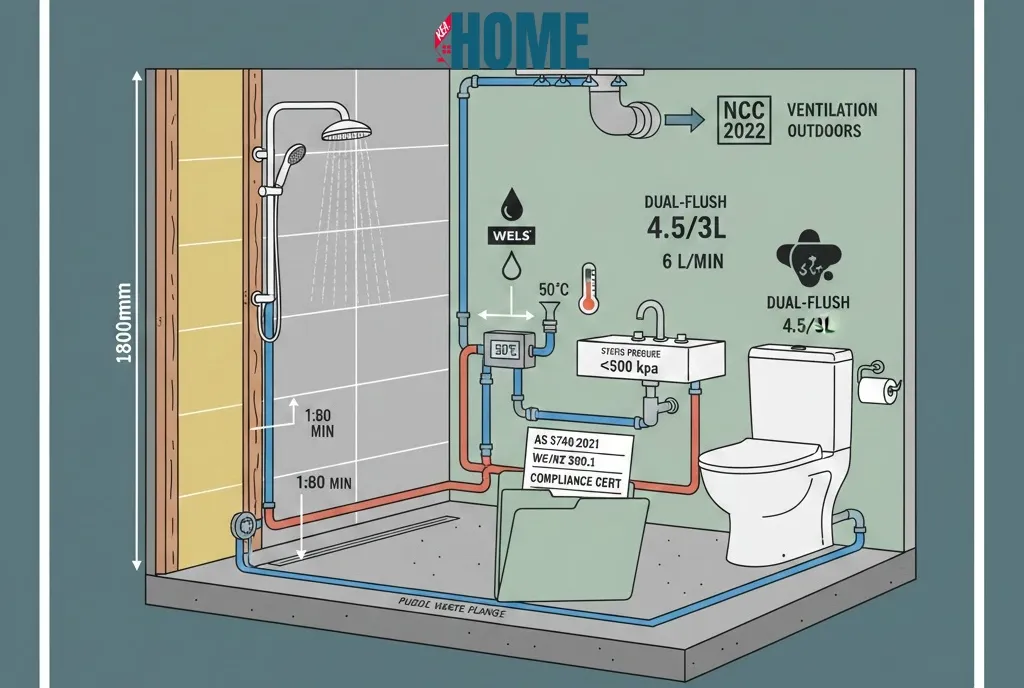
Pick your tiles before sorting your pipes, and you’re asking for trouble. Seen it happen dozens of times—someone falls in love with a freestanding bath, plans the whole room around it, then discovers moving the drain will cost eight grand. Or they tile over rushed waterproofing and spend years watching black mould colonise their grout.
The boring truth? Drainage falls, hot water temps, pressure limits, ventilation paths—these should dictate your layout before you touch a mood board. Get your design aligned with NCC 2022 and the relevant Australian Standards from the jump, and you dodge the rework and failed inspections that blow budgets apart.
This covers waterproofing under AS 3740:2021, pressure limits from AS/NZS 3500.1, and WELS/WaterMark rules for buying fixtures. Dimensions, decisions, commissioning targets. Stuff you can print and hand to your builder.
Layout and Clearances
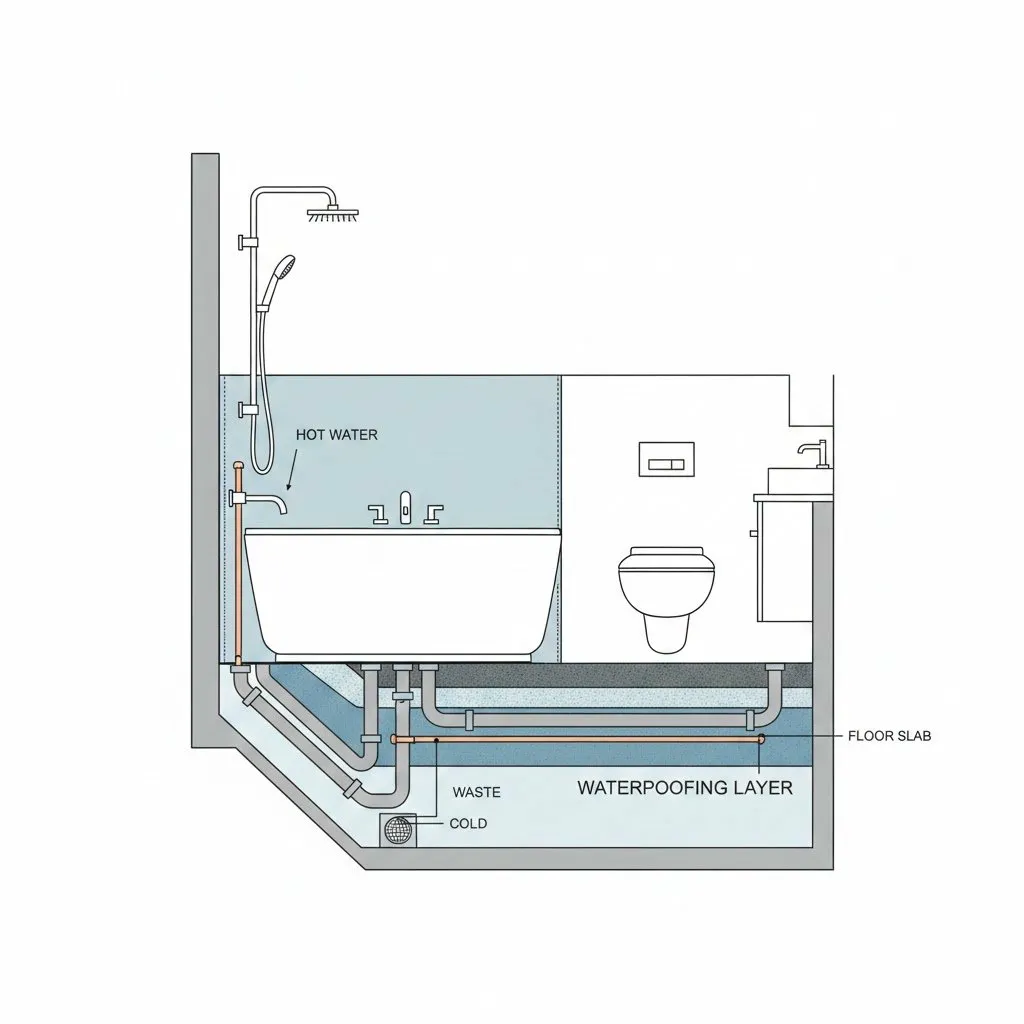
Work around existing stacks and floor wastes. Moving them costs serious money. Before you sketch a single fixture, measure the room properly—wall to wall, floor to ceiling, door swings, window positions, sill heights. Mark your existing stacks, floor wastes, vent penetrations, and any bulkheads limiting pipe runs. All of it on a scaled drawing.
Back-to-back wet zones share risers. That saves money. Hot water on the left, cold on the right, shortest runs you can manage for temperature stability. Concrete slab? Linear drains along walls simplify hitting compliant falls with fewer tile cuts. Timber floors need you to check joist direction early so you can plan penetrations and noggins without nasty surprises.
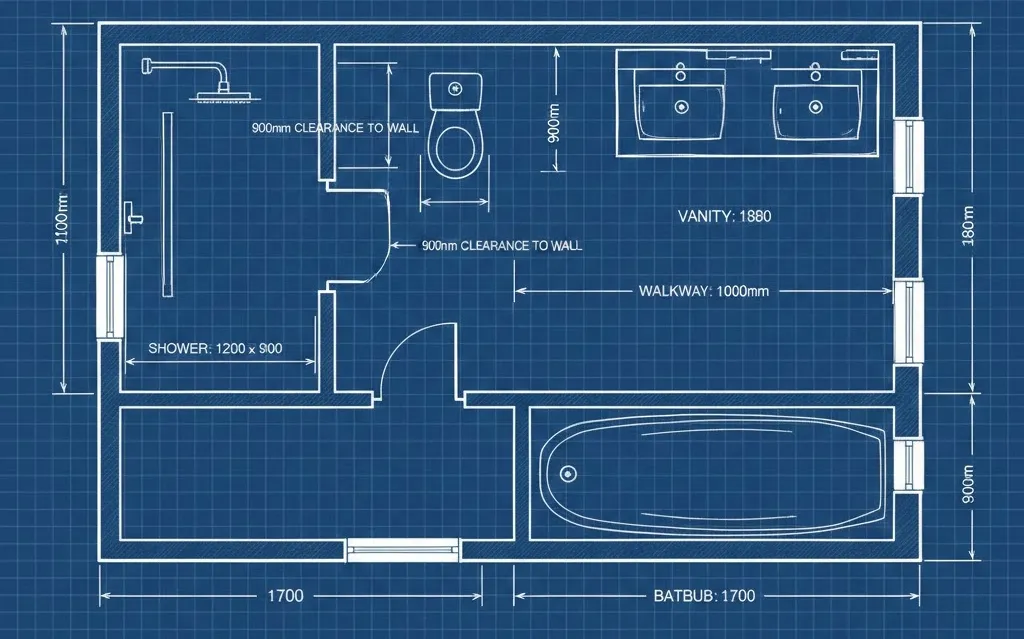
900mm walkways work for most people. Showers need 900×900mm minimum—bigger if you want room to move or accessibility matters. Vanity height lands between 750mm and 900mm, depending on who’s using it. Mirrors at eye level. Towel rails that don’t smack into doors.
Niches only work where the stud depth allows. Shallow studs? Surface-mount shelves instead. Trying to carve niches into inadequate framing wrecks your waterproofing continuity and weakens the wall. Not worth it for somewhere to put your shampoo.
Waterproofing and Drainage
This is where bathrooms die. Bad waterproofing causes more renovation disasters than anything else. Water finds its way through the smallest gap, and once it’s behind your tiles, you won’t know until the damage is done.
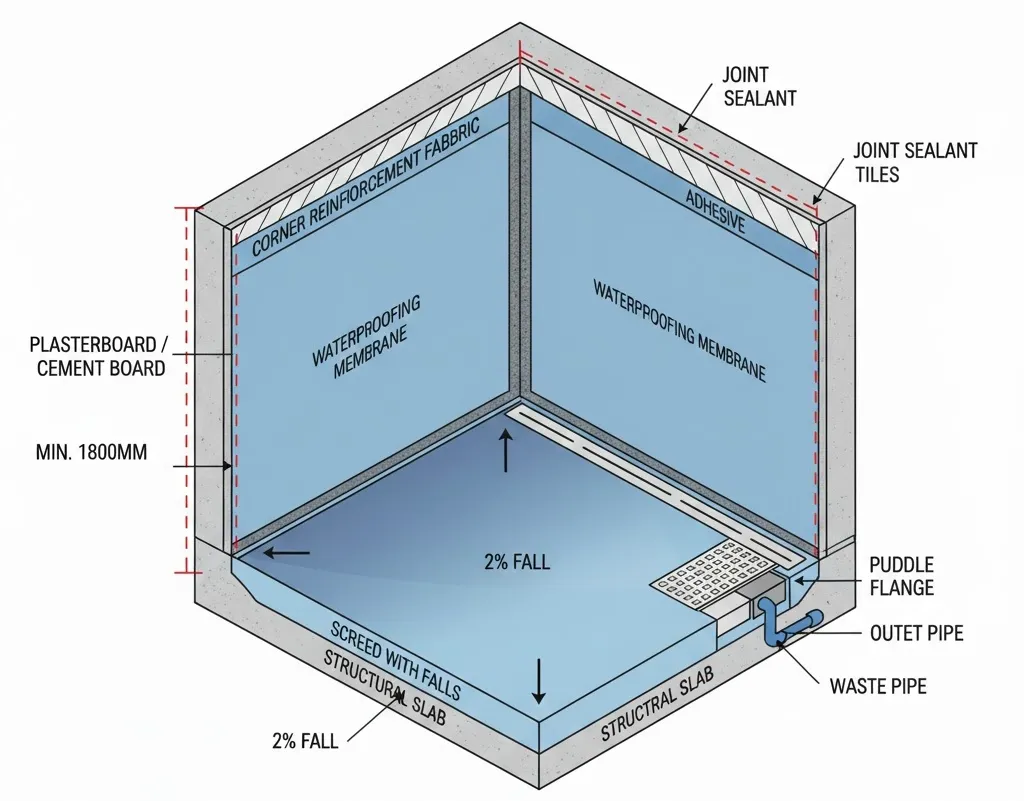
AS 3740:2021 says shower walls need waterproofing to 1800mm above finished floor level. Wet area floors get full waterproofing, graded between 1:80 minimum and 1:50 maximum to the floor waste. These aren’t suggestions.
Sort your membrane system before anyone starts work. Membrane type, compatible primer, how many coats, total dry film thickness, and curing intervals between them. Check that the membrane plays nicely with your tile adhesive. Puddle flanges at drains, bond-breakers at junctions, reinforcing fabric in corners.
Linear drains suit longer showers and open wet rooms—they keep falls within compliant ranges without creating lips that trip people or look ugly with large-format tiles. Shower hobs are high enough to contain splashes. Water stops at door thresholds so moisture doesn’t migrate into your hallway.
Get photos of membrane coverage at corners, niches, and penetrations. Before tiling. Your waterproofer signs off, noting product batch numbers, film thickness, and cure dates. Keep this paperwork forever. Inspectors want it. And if something fails in five years, you’ll want proof of what was done.
Hot Water, Pressure, Ventilation
Get these right once and forget about them for years.
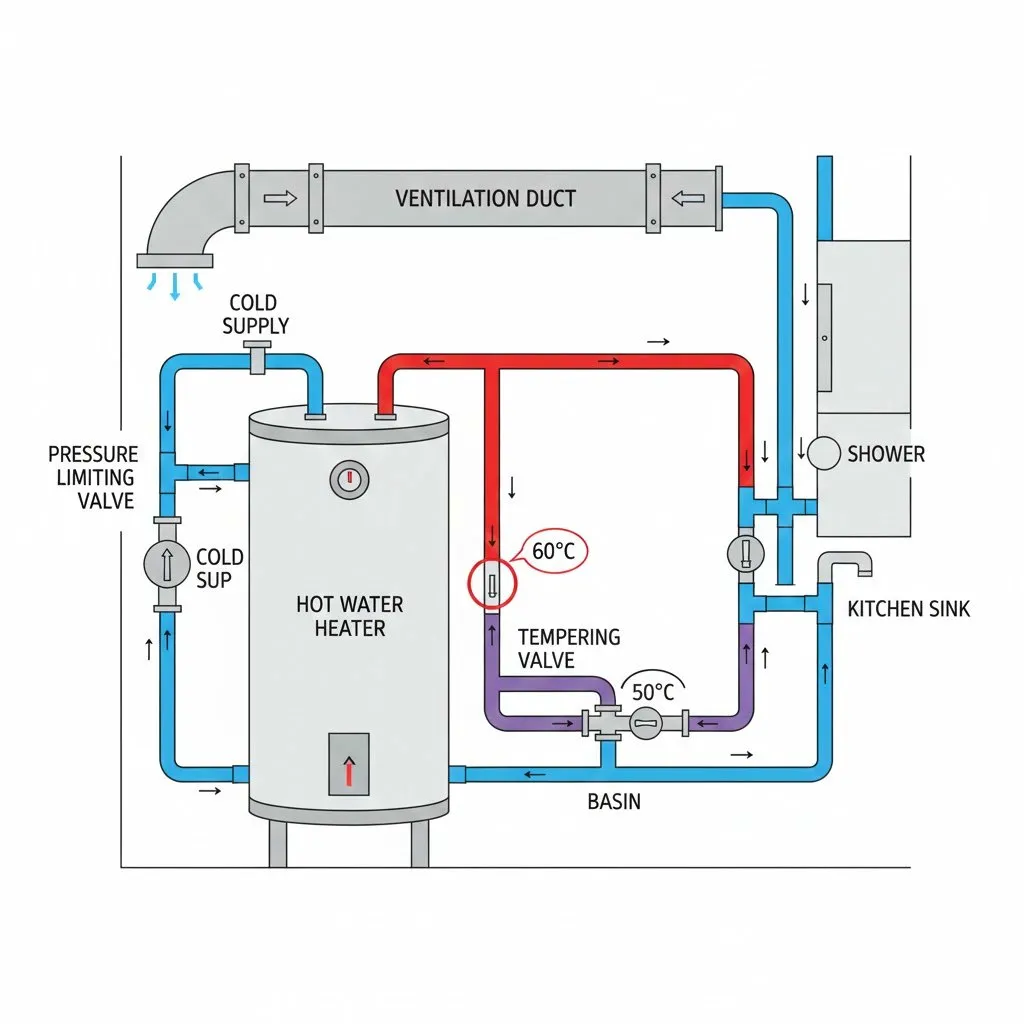
NCC 2022 caps hot water at 50°C at bathroom fixtures. Store it at 60°C or higher—that’s what kills Legionella—then temper at the point of use with a tempering valve. After commissioning, stick a thermometer under the farthest tap and check it’s actually hitting 50°C, not scalding or lukewarm.
AS/NZS 3500.1 limits static pressure to 500 kPa. Higher than that at your boundary? Install a pressure-limiting valve. Aim for hot and cold pressures within about ten per cent of each other at mixers. Otherwise, someone flushing the toilet sends your shower temperature swinging.
Flush your lines before final fit-off. Construction debris wrecks ceramic discs and clogs aerators. Mini isolation valves at each fixture let you service a tap later without shutting the whole house down.
Ventilation goes outdoors. Not into the roof space—NCC 2022 is clear on this, and the condensation problems are real. No window? Interlock the exhaust fan with the light switch, and add a ten-minute run-on timer so it keeps clearing moisture after you leave. Undercut door or transfer grille for makeup air.
Short duct runs, smooth bends, backdraft damper at the soffit, so outside air and smells don’t creep back in when the fan’s off.
Fixtures and Water Ratings
WaterMark certification isn’t optional where the schedule requires it. Your plumber can’t legally install non-certified products in those categories.
WELS labels on showers, taps, and toilets—verify the registration number on the government database. Selling WELS-regulated products without registration is actually illegal, which plenty of eBay sellers don’t seem to realise.
Numbers that matter: swap a 15 L/min showerhead for 9 L/min and a four-person household saves roughly 70 kilolitres annually. Just water. Add the energy you’re not using to heat that water, and it adds up fast. WELS is projected to save Australians 209 gigalitres and about $1.6 billion in 2025.
| Fixture | Spec to Target | Flow/Flush | Check For |
|---|---|---|---|
| Toilet | Dual-flush, 4-star WELS+ | 4.5/3L | WaterMark licence number |
| Showerhead | 3-star WELS minimum | 9 L/min or 7.5 L/min | AS 6400:2016 tested |
| Basin tap | With aerator | 6 L/min or under | Replaceable cartridge |
| Kitchen mixer | Flow limiter fitted | 7.5 L/min | Common spare parts |
Dual-flush at 4.5/3 litres hits the sweet spot for most homes. Showerheads at 9 L/min feel fine; 7.5 L/min works if the spray pattern’s been properly engineered. Pick mixers with cartridges you can actually buy replacements for in five years.
Make a proper shopping list. Model numbers, WELS stars, flow rates, WaterMark IDs, and finish options. Check lead times before you demolish anything. Trades standing around waiting for a backordered vanity costs you money.
Emergencies
Burst pipe at 11 pm. Sewer backing up. Gas smell when you walk in the door. Happens to everyone eventually.
Water pouring somewhere, it shouldn’t? Shut off at the meter, then open a low tap to release pressure in the lines. Sewer overflow means keeping kids and pets away from the contaminated area. Gas smell—close the meter valve, no sparks, ventilate, and get out if anyone feels off.
If you’re in SEQ and a burst pipe, gas leak, or sewer disaster hits outside business hours, Brisbane emergency plumber gets Universal Plumbing and Gas out to isolate mains and make things safe. Worth having saved in your phone before you need it. Older homes with galvanised pipes are especially prone to joint failures, and fumbling through search results while water pours through your ceiling is not fun.
Know where your isolation points are. Photo of your meter on your phone, labelled. Stress makes simple things hard.
Budgeting
Bathroom costs in Australia run roughly $8,000 to $15,000 for a basic refresh, $15,000 to $35,000 for a proper renovation, $35,000 and up for high-end builds. The big cost drivers: relocating plumbing, structural changes, large-format tiles, and custom joinery.
Moving stacks and waste costs thousands. Only do it if the layout improvement genuinely justifies the spend. Three quotes minimum, all specifying the same model numbers and membrane products, so you’re comparing like with like. Hold back ten to fifteen per cent for whatever’s lurking behind those walls. There’s always something.
Sequence matters. Rough-in plumbing, ventilation, and electrical first. Waterproof and tile second. Joinery, mirrors, final fit-off third. Order anything with long lead times—custom vanities, imported tiles—before you start demolition. Idle tradies waiting on materials cost you daily.
Victorian plumbers must issue a Compliance Certificate for prescribed work or anything over $750, usually within five working days. Keep waterproofing statements, electrical certificates, and everything in one folder.
Heritage Areas and Local Rules
Boroondara homes with heritage overlays and tight side setbacks make bathroom layouts complicated. Compare quotes with bathroom renovations Camberwell—Matrix Renovations knows the AS 3740:2021 requirements and how to work within heritage constraints while still getting a bathroom that feels current.
Ask contractors for pre-tile membrane photos. Get commissioning sheets with pressure readings and temperatures. Check they actually understand heritage overlay requirements for your specific council—ventilation discharge locations, what you can and can’t change with windows.
Heritage rules blocking window changes? Exhaust ducts can terminate at eaves with backdraft dampers. Linear drains and shallow hobs keep falls compliant without major subfloor work—useful when you can’t go digging around in a listed building.
Before You Demolish Anything
Sign off on:
- Layout drawing with fixture centres, heights, drain types, and niche positions
- Membrane spec sheet: product name, primer, thickness, curing schedule
- Ventilation plan showing outdoor termination and timer settings
- Target numbers: pressure ≤500 kPa, delivery temp ≤50°C
- WELS and WaterMark IDs for every fixture
- Who’s issuing which certificate and when
Keeping It Working
Every few months: wipe exhaust grilles, check the backdraft damper actually closes. Look at silicone joints and grout lines for early cracking. Slow drains or gurgling sounds might mean trap or vent problems are developing.
Once a year: measure outlet temp and pressure, confirm they’re still where they should be. Clean aerators and showerhead filters—crud builds up and kills your flow. Clear hair and soap from the linear drain channels.
One folder for all your paperwork. Commissioning sheets, compliance certificates, product specs, and membrane photos. Date and receipt for any maintenance or replacement parts. If you sell, hand the folder over. Buyers notice when a bathroom’s been properly looked after, and it shows in what they’ll pay.
 Decor & Improvement Accessories