

Home & Decor Blogs: DIY, Interior Design & Lifestyle Ideas
First Home Interior Design Guide for Beginners

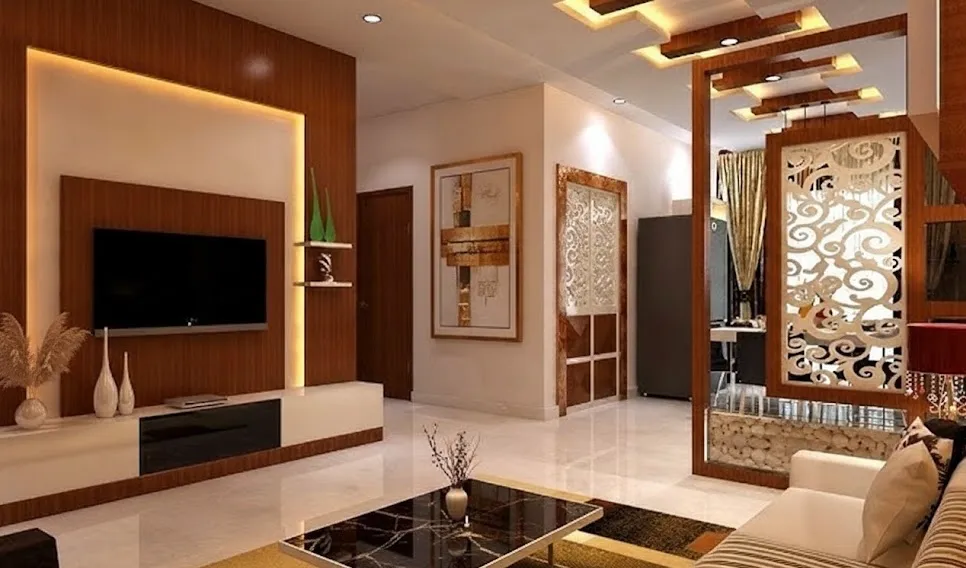
Most first homes end up looking half-finished for months because people buy things in the wrong order. The rug shows up before the sofa, so it’s the wrong size. Curtains go up before anyone checks where the sun hits, and the bedroom turns into a greenhouse by 3 pm.
The fix isn’t spending more money. It’s doing things in sequence — layout first, lighting second, surfaces last. Those three things in that order drive about eighty per cent of how comfortable a home actually feels.
This guide runs on a practical ninety-day plan aimed at first-home buyers and renters in Melbourne and greater Victoria, though the principles work anywhere.
Map Your Rooms with Purpose Before Buying Anything
Print or sketch each room to scale. Trace door swings, window openings, every power point, heater and split-system head. These fixed elements dictate where furniture can actually go.
Give each room one main job — lounging, sleeping, eating, working — and build around that. Secondary uses layer on later.
Take phone photos of every wall with dimensions overlaid using your phone’s markup tool. When you’re standing in a showroom three suburbs away trying to remember if the hallway is 1400 or 1600 wide, those photos pay for themselves.
Tape-out trick: Before buying anything big, use painter’s tape on the floor to mark its exact footprint. Walk around it. Open the nearest door. Pull out a chair. If anything feels tight with tape on the ground, it’ll feel tighter with real furniture.

The Big Four Pieces
Your sofa, bed, dining table and main storage unit do most of the heavy lifting. Size them to your floor plan before thinking about anything else.
Sofa: 180 to 220cm long, 90 to 100cm deep for compact rooms. Leave 800mm of walkway around it. Modular designs split apart for future moves.
Bed: A queen at 153 by 203cm fits most rooms with 700 to 800mm of walkway on each side. Leave 60 to 100mm of clearance underneath for storage tubs and airflow.
Dining table: A round table between 100 and 120cm across seats four comfortably. Allow 90cm from the table edge to the walls so chairs push back without gouging paint.
Storage: Modular systems with adjustable rails and shelves. Entry cabinets should be 25 to 35cm deep in narrow halls. And measure wardrobe openings before buying inserts — the number of people who buy drawer units that physically won’t fit through the wardrobe door is genuinely surprising.

The Spend Plan
Allocating by room doesn’t work. Allocating by impact does.
| Category | Budget Share | One-Bed Example (~$8,000) |
|---|---|---|
| Core furniture | 60% | ~$4,800 |
| Lighting & windows | 20% | ~$1,600 |
| Surfaces & decor | 15% | ~$1,200 |
| Contingency | 5% | ~$400 |
Order the bed, mattress, sofa and custom blockout blinds in weeks one and two — these take two to six weeks to arrive. Hold off on the rug until the sofa’s physically in the room so you buy the right size instead of guessing.
Light Like a Professional
Three layers handle almost everything: ambient for general room light, task for work areas, and accent for mood. Light from different heights serves different purposes. That’s the whole principle.
Warm-white between 2700 and 3000 Kelvin works for living rooms and bedrooms. Comfortable, flattering, won’t mess with your sleep. The Australian Government’s YourHome resource recommends warm-white for most household rooms, and a 2023 consensus study by Moore-Ede et al. involving 248 circadian researchers confirms that blue-enriched lighting in the evening suppresses melatonin and disrupts the body’s internal clock (Frontiers in Photonics, 2023).
A few things worth doing early: add dimmers to living and dining circuits, put task lights at benches and desks, and try portable lamps in different positions before calling an electrician. A $40 floor lamp can solve a problem that would cost $400 in permanent rewiring.
Smart Home Basics
You don’t need to wire your house like a spaceship. Smart plugs, a few smart bulbs and decent Wi-Fi cover ninety per cent of what’s actually useful.
Smart plugs let you schedule lamps, heaters and fans from your phone. Smart bulbs like Philips Hue or IKEA Trådfri shift colour temperature throughout the day — same circadian principle, just automated. And if your router sits in the living room while the bedroom gets a patchy signal, a mesh Wi-Fi system sorts it for $150–$300. Every other smart device depends on reliable Wi-Fi.
The Australian Government’s energy.gov.au guidance notes that smart controls can maintain comfort while reducing energy use, especially when set to heat or cool only the rooms you’re actually using.
Skip smart fridges, smart ovens and anything locked into a single brand’s ecosystem. Worth noting: from March 2026, Australia’s new Cyber Security Rules require consumer smart devices to meet mandatory security standards, so stick to reputable brands.
Laminate Floors
Picking the wrong floor for the wrong room is one of the more expensive first-home mistakes.
| Type | Best Rooms | Water Resistance | Cost |
|---|---|---|---|
| Laminate | Living, hallways, bedrooms | Limited | Low–Mid |
| Hybrid (rigid core) | Living, kitchen, dining | High | Mid |
| Vinyl | Kitchens, laundries | Very high | Low–Mid |
| Engineered timber | Living, bedrooms | Moderate | High |
Laminate toughness is measured by AC ratings — AC3 handles light use like spare bedrooms, AC4 covers heavy domestic traffic and is the sweet spot for most first homes, and AC5 is commercial-grade and usually overkill. Pair laminate with quality underlay for acoustic comfort, especially in apartments. For comparing water-resistant options across different AC ratings, thicknesses and colours, browse laminate floors from Carpet Right.
The critical rule: do not put laminate in bathrooms or laundries. Under the NCC, these are wet areas requiring waterproofing. Kitchens sit outside that definition, though penetrations still need sealing. For bathrooms and laundries, go with tile or wet-rated vinyl.
Apartment dwellers — confirm strata acoustic underlay requirements before the flooring arrives. Sort this out before installation day, not during it.
Walls, Windows and Kitchen
Paint is the cheapest way to reshape how a room feels. Matte or low-sheen on walls hides surface flaws. Semi-gloss on trims where you need something wipeable. Test large swatches on multiple walls under both daylight and evening lamps — colours behave completely differently, and a small chip on a paint card tells you almost nothing useful.
Windows: Layer sheers for daytime light filtering with blockout rollers for night privacy and insulation. Measure width and height in three places because frames are rarely perfectly square. Go cordless or use child-safe mechanisms.
Kitchen: Start with the workflow triangle — sink, stove, fridge — and arrange storage to match. You don’t need a complete cookware set on day one. One frying pan, one large and one small saucepan, a baking tray, a decent knife and a chopping board. Add specialist items as you figure out what you actually cook. Most first-home buyers over-purchase kitchen gear in the first week and end up with three spatulas and no decent saucepan.
For a more functional feature wall, consider modular acoustic tiles for feature walls. They can add texture and visual interest while helping reduce unwanted sound reflections, making them particularly useful in living rooms, home offices and open-plan spaces.

First Home Buyer Melbourne
What you qualify for in grants and duty concessions directly affects how much cash you’ve got left for fit-out.
Stamp duty: Victoria gives eligible first-home buyers a full exemption on properties valued at $600,000 or under. Properties between $600,001 and $750,000 get a sliding concession. You must live in the property as your principal residence for at least twelve continuous months.
FHOG: A one-off $10,000 payment for buying or building a new home in Victoria valued up to $750,000. Only applies to homes that have never been sold or lived in.
5% Deposit Scheme: From 1 October 2025, the Australian Government expanded the Home Guarantee Scheme. All first-home buyers can purchase with a five per cent deposit without paying LMI — no income caps, no limits on places, and higher property price caps.
Confirm eligibility through the State Revenue Office calculator and your lender before finalising your budget. For a step-by-step guide covering the full build timeline and grant eligibility for Melbourne, see the first home buyer Melbourne from Beachwood Homes.
Avoid These Beginner Mistakes
Furniture that won’t fit through the door. A corner sofa that doesn’t clear an 850mm apartment doorway gets sent back. Return shipping on bulky items runs $150–$200.
Daylight globes in bedrooms. Cool-white light above 4000K suppresses melatonin. Swapping to 2700K warm-white dimmable globes costs $150–$250 but makes an immediate difference.
Undersized rugs. At least the front legs of all seating should sit on the rug. Measure after the sofa arrives.
Laminate in bathrooms. NCC wet areas require waterproofing. Laminate doesn’t belong there, regardless of what the marketing says.
A first home doesn’t need to be perfect on day one. It needs to be functional, comfortable and set up in the right order so you’re not ripping things out three months later. Measure first, buy the big pieces second, layer everything else in as you go.
 Decor & Improvement Accessories