

Home & Decor Blogs: DIY, Interior Design & Lifestyle Ideas
The Insurance Letter That Sends Tampa Bay Homeowners Looking for an Electrician

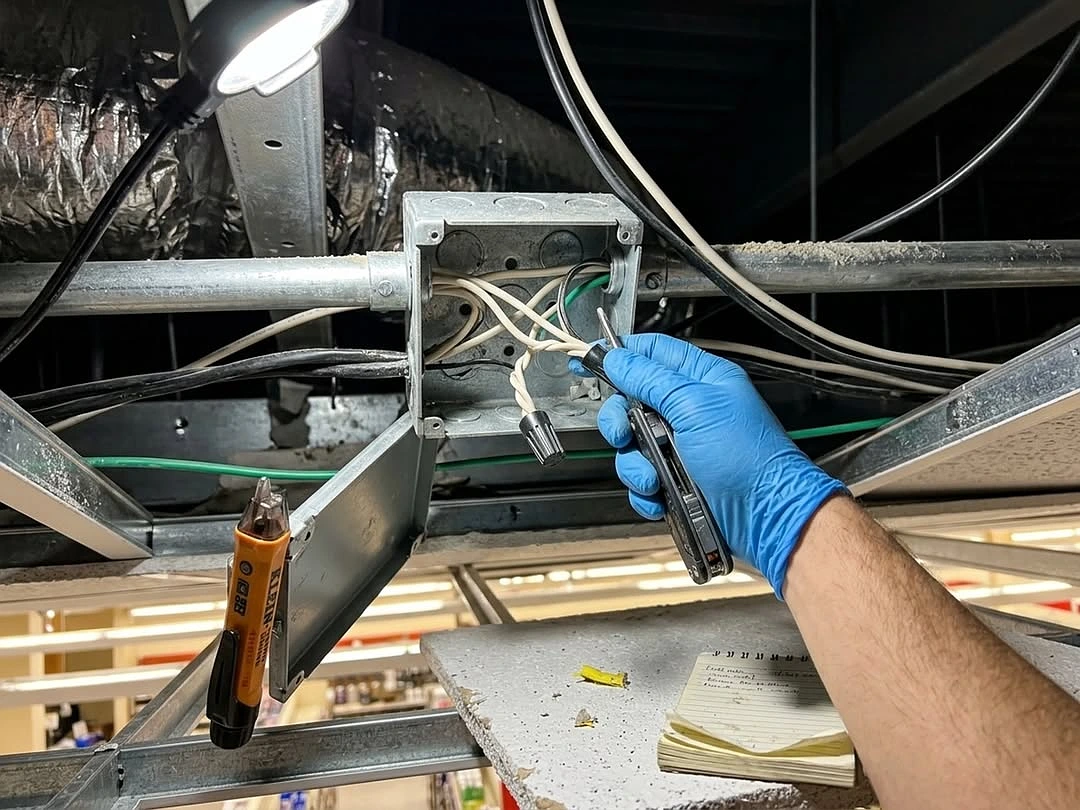
Somewhere in Tampa this week a homeowner is reading a non-renewal letter and blaming the insurance company. Wrong target. The company is reading a 4-point inspection report, and the report is reading a panel box that was screwed to the wall back when the house cost forty thousand dollars, new.
Nothing in that house broke. Understand that part first, because it is the part that feels unfair. The lights are working, the AC is running, the breakers have not tripped in years. And still the carrier is walking away, because in Florida the electrical system stopped being your private business the day the market turned, and what an underwriter now sees in a 1970s panel is not a working system. It is a fire that has not happened yet.
Call it a repair job if you want. Wrong word, though. A repair means something failed. Nothing failed. The rules moved, and the house stayed where it was.
What a 4-Point Inspection Actually Decides
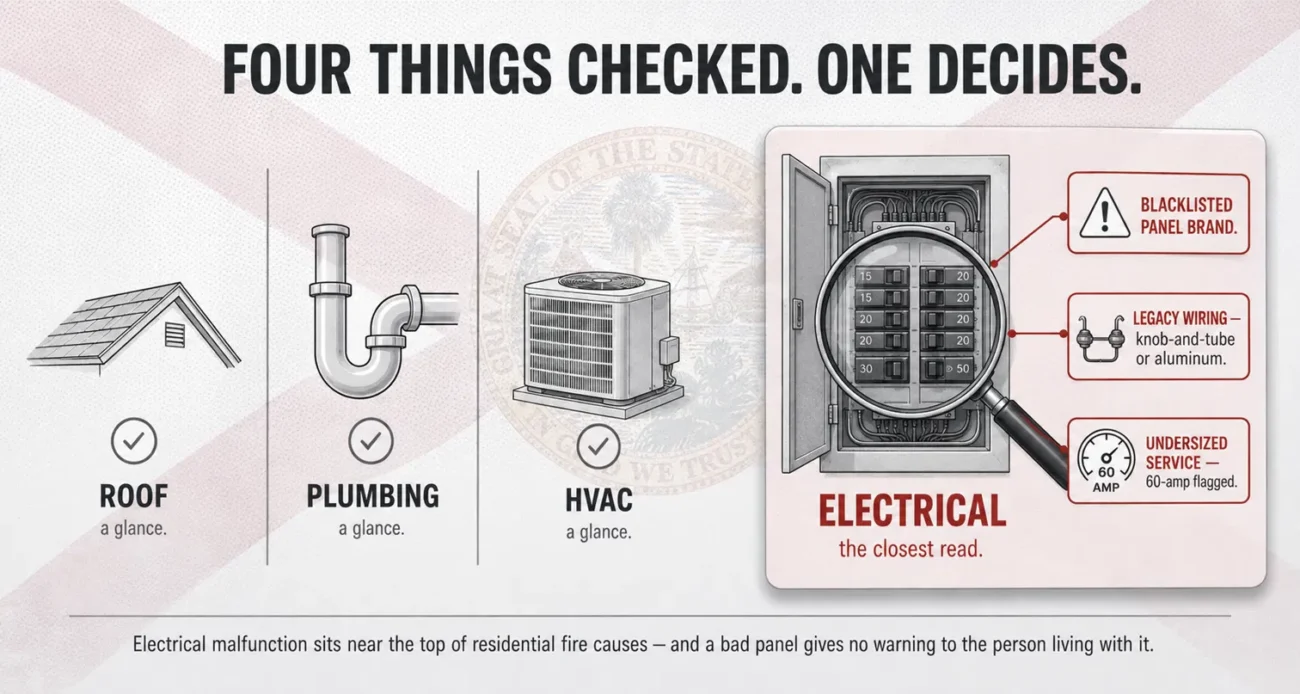
Florida carriers order a 4-point inspection on older homes before writing or renewing a policy. The age trigger moves around by carrier, generally somewhere between 20 and 30 years, and the inspector looks at exactly four things: roof, plumbing, HVAC, electrical. Think of it as a blood test for the house. Short, cheap, and one bad marker is enough to change everything.
Electrical is the marker that fails Tampa Bay homes, and the logic behind that is not insurance company paranoia. NFPA data keeps electrical malfunction near the top of residential fire causes, year in, year out. A tired roof announces itself. A dangerous panel says absolutely nothing to the family living under it, which is precisely why the underwriter wants a stranger to open the grey door and write down what is inside.
Three findings end applications: a blacklisted panel brand, legacy wiring, undersized service. Take them in order.
The Panel Brands Florida Carriers Will Not Touch
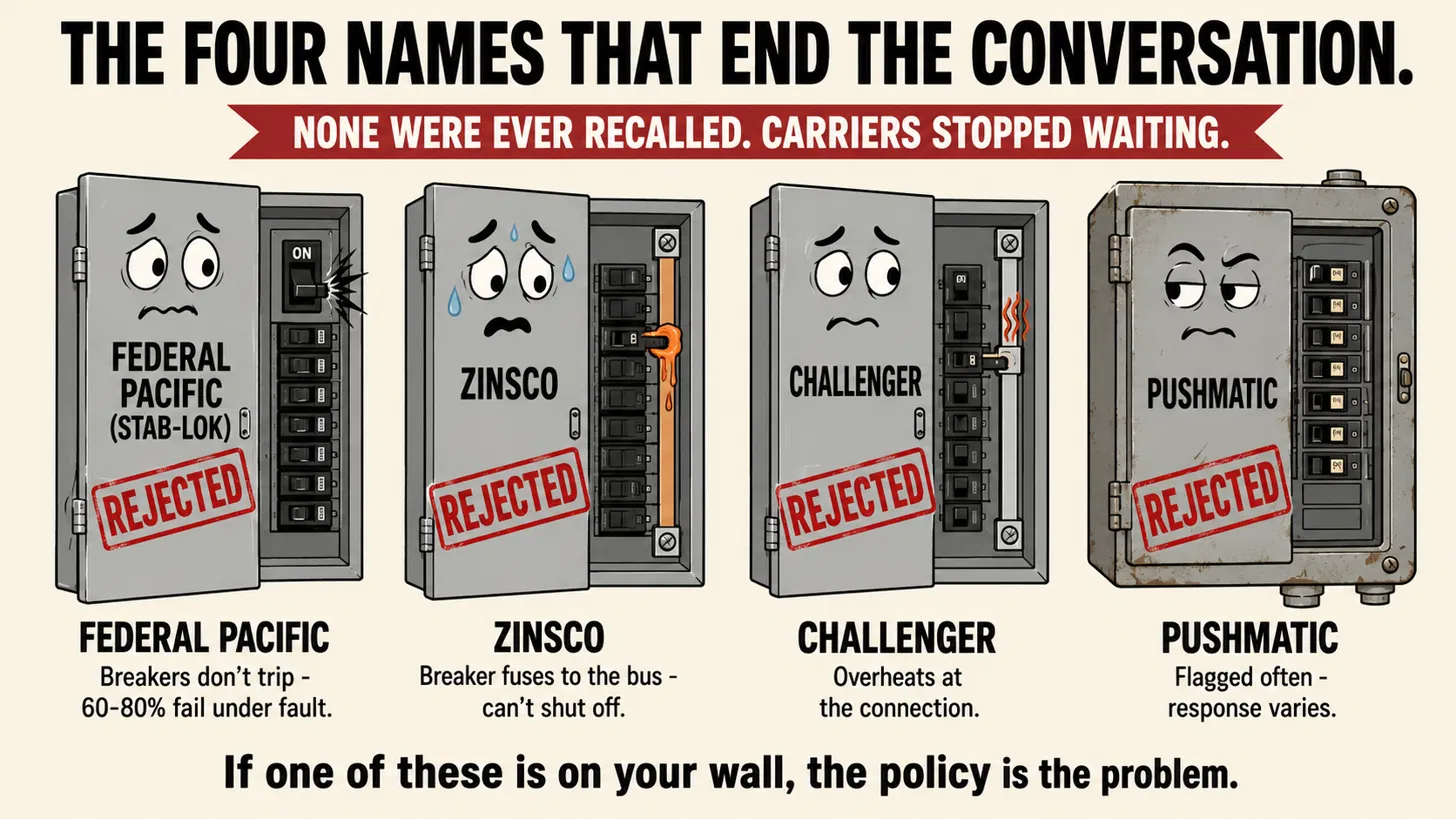
- Federal Pacific Electric (Stab-Lok). The famous one. These breakers have a documented habit of not tripping when a circuit overloads, which is the one job a breaker exists to do. Independent testing has put failure rates as high as 60 to 80 percent under fault conditions. One Florida insurance agency reports that 24 of the 26 carriers it represents will not write a policy on a home with an FPE panel until it’s replaced.
- Zinsco and Zinsco-Sylvania. A different flaw, arguably worse. The breakers can overheat and fuse themselves to the aluminum bus bar, which means the breaker physically cannot shut off. Florida’s humidity accelerates the corrosion that drives it.
- Challenger. Nearly as restricted as the first two with most carriers, for overheating issues at the breaker-to-bus connection.
- Pushmatic. Flagged often, though carrier response varies more than with the other three.
And to be fair, indeed thousands of these panels ran for decades without burning anything down. True. It is also true of most worn tires. The carrier is not pricing your panel, it is pricing a hundred thousand panels like yours, and at that scale the bad ones stop being anecdotes.
The Wiring Hiding in Tampa’s Prettiest Streets
The panel is the headline. The wiring is where the older neighborhoods get caught, and the charm is exactly the problem.
Those pre-1950s bungalows in Seminole Heights and Hyde Park, the old blocks across St. Pete, a good number of them are still carrying knob-and-tube, wiring with no ground, aging insulation, never meant to spend its retirement buried under blown-in attic insulation. Hard stop for most carriers. No amount of curb appeal argues with that.
The 1960s and early 70s houses inherited something else. Copper got expensive during those years, roughly 1965 to 1973, so builders ran aluminum branch wiring instead, and CPSC data puts the fire risk at aluminum connection points around 55 times the copper equivalent. Fifty-five times. A number like that does not ask for context, it asks for a torque screwdriver. Some carriers accept aluminum after a documented retrofit with approved connectors. Others want the whole thing rewired. Same house, two different verdicts, depending on whose desk the file lands on.
Then capacity, the quiet one. A 60-amp service fails almost everywhere now, and even 100 amps draws questions on a bigger home, because the load a modern household is putting on a panel, the EV in the garage, the induction range, the tankless heater, has nothing in common with what those services were sized for in 1968.
What the Fix Costs, and Why the Paperwork Is Half the Product
A panel replacement to modern 200-amp service is running $2,500 to $5,500 in the Florida market, moving with the state of the service entrance and whatever the wall has been hiding behind the old box. Aluminum remediation and full rewires are separate conversations with separate invoices, and pricing those from an article would be guessing, so no number gets invented here.
The mistake that costs people the most is not the money. It is treating the job as electrical work when it is really an insurance document with copper inside. The carrier wants the swap permitted and finaled, on paper, verifiable. Swap a panel without a permit and the fire risk is gone but the insurance problem is fully intact, plus a new one, because the next inspection writes down “unpermitted work” and now the file has two red flags where it used to have one.
Which turns the contractor question into the real question.
Who Handles This Work in Tampa Bay
Whoever touches the panel should hold a Florida license you can check on the DBPR site yourself, should pull the permit under their own license instead of nudging you toward owner-permitting, and should hand over paperwork an underwriter accepts without a phone call. Three outfits keep coming up for this category of work around the bay, each for a different reason, and this is a fit question, not a ranking.
Hoffman Electrical & A/C
Hoffman Electrical & A/C running family operations, since 1989. Such a long time, that is a serious run, most contractors do not survive one Florida recession and this crew has worked through four. Point being, a bench that has been opening Tampa panel boxes that long has met every brand on this page more times than it can count. Panel upgrades, heavy-ups, rewiring older homes to code, that is their standing diet, and they sit as the exclusive electrical expert for WFLA Channel 8 News, which is a third party’s endorsement rather than a self-printed badge. Two-year craftsmanship warranty, pricing quoted before work starts, and a maintenance plan with an annual inspection built in, which stops being a perk and starts being useful in a state where an inspection report is a financial document.
Mister Sparky
The national franchise route, with everything that implies in both directions. What the structure buys you is process: background-checked technicians, 24-hour emergency coverage, and the punctuality promise the whole brand is built on, “We’re On Time, You’ll See, Or the Repair Is Free.” For insurance-driven work they cover panel upgrades and full rewires, and franchise standardization means the documentation habits do not depend on which electrician happens to pick up your job.
Tampa Spark Masters
The local operation with the biggest stated numbers of the three, over 200,000 projects completed and $3 million in liability coverage, both per the company’s own materials. Services line up with everything above, panel upgrades, whole-house rewiring, code corrections, itemized estimates, lifetime workmanship warranty. Ask them to show the license number and the insurance certificate before signing. A legitimate outfit produces both without any change in tone, and that little test costs nothing.
Get more than one quote on anything panel-related regardless of the name on the truck. The price spread on identical scope in this market pays for the extra phone calls many times over.
Where This Leaves You
The insurance company did not ruin the house. It moved up a deadline that was always out there, quietly compounding behind a grey steel door. A Stab-Lok was a risk the day before the inspection too, the letter just gave the risk a due date. Argue with the underwriter if the urge is strong. People do. They lose, politely, in writing, while the renewal date keeps walking toward them. The homeowners who come out of this cheapest read the first notice as a project kickoff, book the estimates that same week, and turn a coverage crisis back into what it actually was the entire time, an electrical job with a deadline attached.

 Decor & Improvement Accessories