

Home & Decor Blogs: DIY, Interior Design & Lifestyle Ideas
How to Buy Office Supplies Smartly for Long-Term Savings

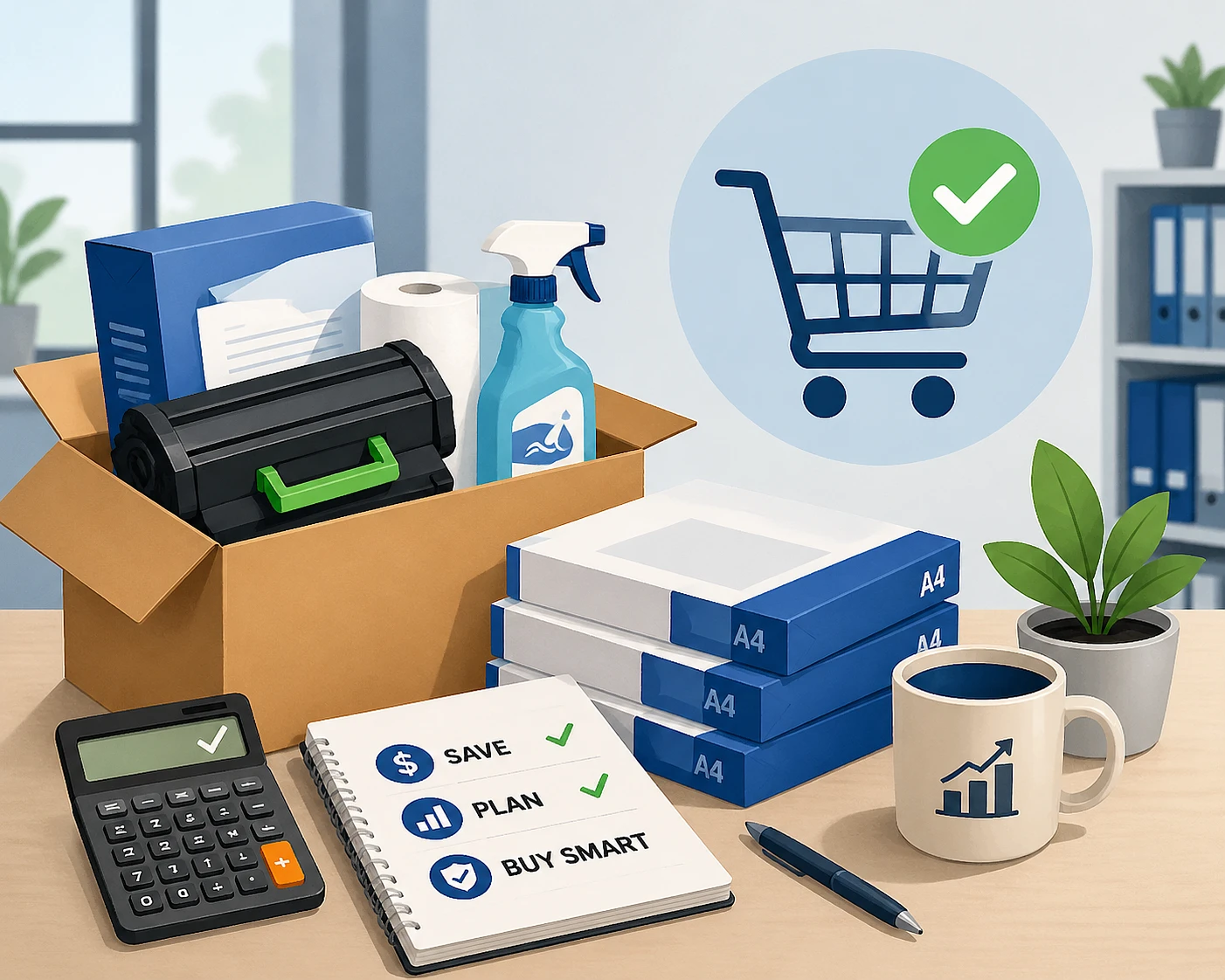
Office supply budgets look embarrassingly small until they don’t. A case of paper here, toner cartridges there, cleaning stuff for the bathroom — nobody’s writing about it. Then the quarterly report lands, and someone’s asking why consumables ran $4,000 last month for a team of twelve.
Strategies for Cost-Effective Purchasing
1. Evaluate Supplier Range and Reliability
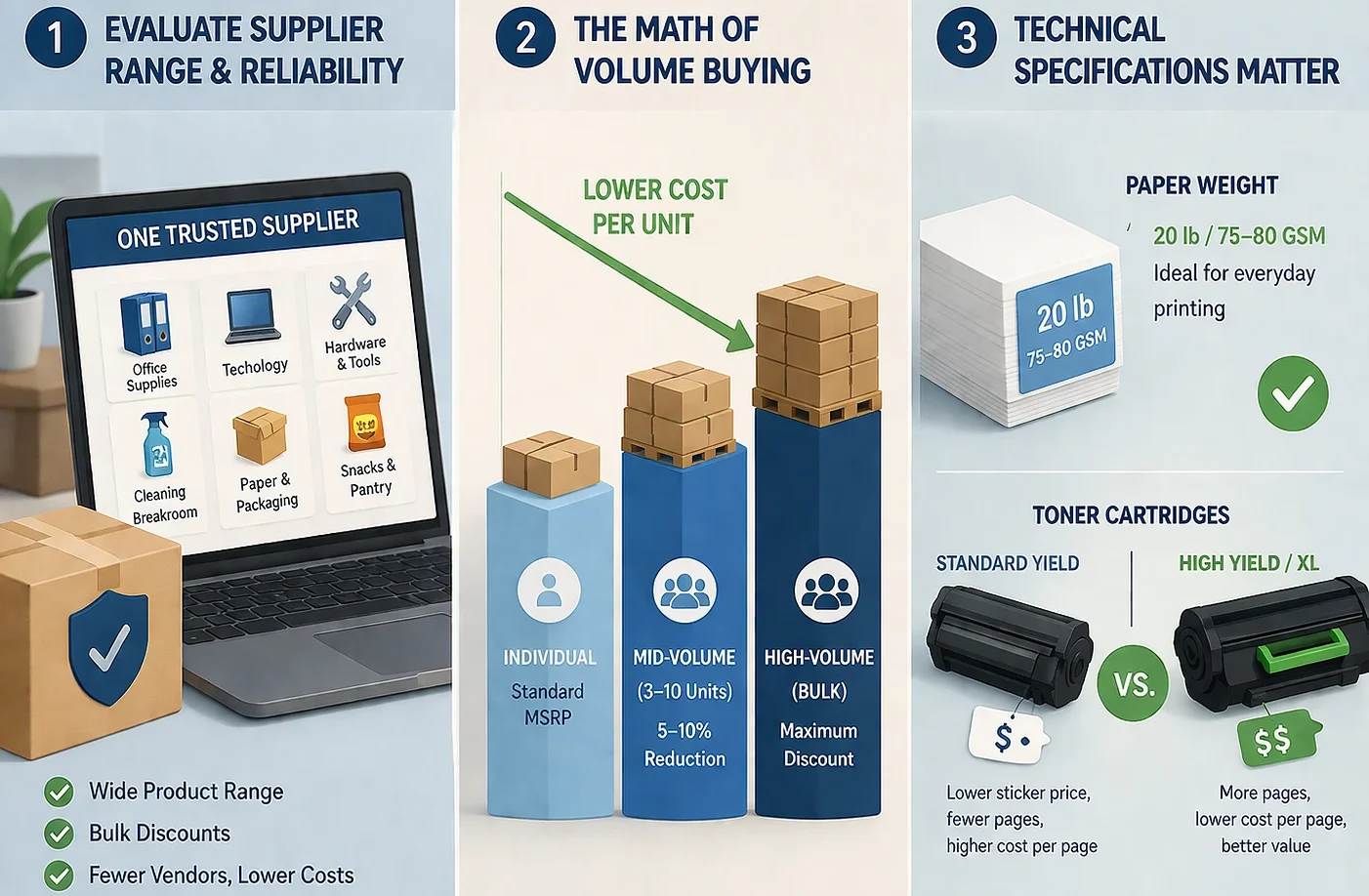
Choosing a supplier is a long-term partnership. You need a partner that offers a massive breadth of products—from hardware and tools to breakroom snacks—so you can consolidate your shipping and administrative efforts. A supplier with a diverse catalog allows you to leverage bulk discounts across multiple categories simultaneously, rather than juggling five different vendors for five different needs.
2. The Math of Volume Buying
Purchasing in larger quantities reduces the per-unit cost through the principle of economies of scale. However, volume buying is not just about “buying more.” It is about hitting specific price break points. Most modern suppliers offer tiered pricing structures:
| Purchase Level | Per-Unit Price | Ideal For |
| Individual/Single Unit | Standard MSRP | Rare or specialty items |
| Mid-Volume (3-10 Units) | 5-10% Reduction | Small teams / Monthly staples |
| High-Volume (Bulk) | Maximum Discount | High-velocity essentials (Paper, Cleaning) |
3. Technical Specifications Matter
When buying in bulk, a mistake is multiplied. For example, understanding paper weights is crucial. Standard everyday printing typically requires 20 lb / 75-80 GSM paper. Buying a heavier, premium weight in bulk for internal memos is a waste of capital. Conversely, buying low-yield toner cartridges because they have a lower sticker price is often a mistake; always look for the “High Yield” or “XL” variants, which, when combined with bulk discounts, offer the lowest cost-per-page ratio.
When Bulk Buying Makes Sense
For those high-frequency items, bulk discounts are where the math starts working. Not because buying more is inherently clever — it’s because most suppliers use tiered pricing that drops per-unit cost once you cross certain thresholds. The gap between buying two cases of paper versus ten can run 15-20% per unit, sometimes higher. On something your office burns through constantly, annualized, that’s real money sitting on the table.
The Storage Problem Nobody Plans For
Storage is where bulk buying quietly falls apart for a lot of offices. Paper left in a humid spot curls, jams printers, and becomes useless. Two damaged cases can erase whatever discount you captured. If a proper dry storage area doesn’t exist, either create one or cap your bulk quantities at what fits somewhere sensible. A hallway isn’t storage.
Stop Buying Toner by Sticker Price
Toner deserves its own paragraph. The instinct is the cheapest per cartridge. Wrong calculation. What actually matters is cost per page, which means high-yield or XL variants are almost always the correct buy. They print more pages per dollar, and layering bulk pricing on top of that produces real savings. Standard-yield cartridges at a lower sticker price are usually more expensive once you do the actual math.
The Case for Fewer Suppliers
Consolidating to fewer suppliers is underrated. Managing five vendor relationships across five product categories seems workable until billing cycles stack up, shipping minimums conflict, and something goes wrong with one of them. A single supplier with a wide enough catalog to cover most needs simplifies the whole operation — and makes hitting volume thresholds easier since you’re concentrating spend in one place rather than spreading it thin.
The Number That Matters
One thing worth knowing before assuming any deal is a deal: the shipped cost is the actual cost. A supplier offering 20% off but charging $40 freight on a $60 order has sold you nothing. Run the full number every time.
Where the Money Goes
Most advice on this stops being useful at the audit stage. “Track your spending!” Okay, but what you’re actually hunting for is which items get bought reactively — meaning someone ran out, panicked, and ordered from wherever was fastest at whatever price came up first. That’s the drain. Not the paper itself. It’s the $80 toner cartridge purchased from a random seller because the regular order hadn’t arrived.
Pull your last three months of purchase history. Fifteen minutes, maybe less. You’ll almost certainly find three or four items eating 60-70% of total spend — printer paper, black toner, paper towels, possibly coffee if that falls under your budget. Those are worth actually thinking about. Everything else, handle normally.
Cleaning Supplies Are Worth a Second Look
Concentrated cleaning products are worth a look if janitorial supplies show up meaningfully in your spend. The kind you dilute yourself costs less per use than ready-to-spray bottles, generates less packaging waste, and typically carries better bulk pricing — partly because suppliers aren’t shipping mostly water. They’ve been standard in commercial cleaning for years; they just haven’t made it into the general office supply conversation much.
Someone Needs to Own the Reorder Side
None of this holds together without someone owning the reorder side of it. Not a dedicated procurement role necessarily — just whoever places orders needs to know the inventory level at which a new order goes in, before running out, rather than after. Depleting paper on a Wednesday afternoon is preventable. The fix is straightforward. The cost of not doing it — in time, in emergency pricing, in general irritation — is out of proportion to how simple the solution actually is.
 Decor & Improvement Accessories