

Home & Decor Blogs: DIY, Interior Design & Lifestyle Ideas
How to Choose a Murphy Bed Style, Room by Room
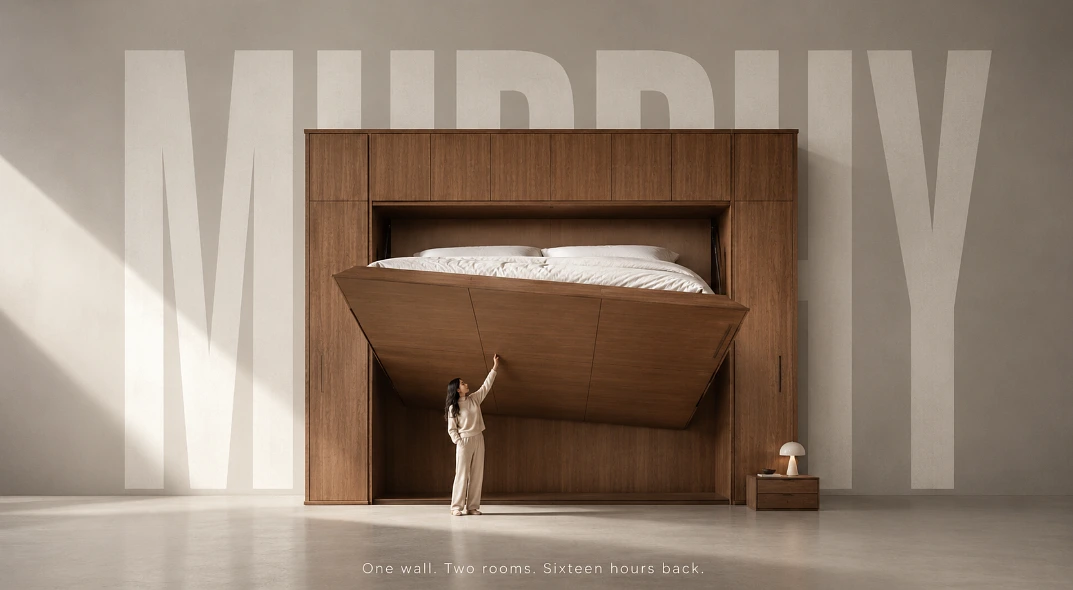
Start from the room, not the catalog. A Murphy bed bought for how a space gets used every week disappears into it, and one bought from a photo fights the layout daily. There are six real styles, and each belongs to a specific kind of room, so the useful way to shop is to find your room below and see what belongs in it.
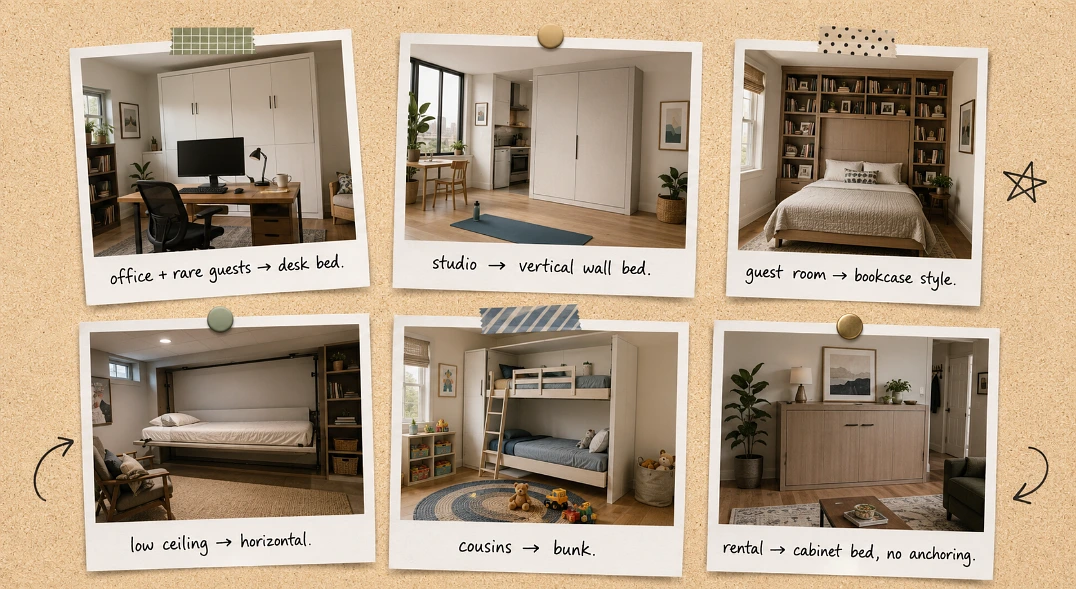
The Home Office That Hosts Guests Twice a Year
This room needs the desk to win, because the desk works five days a week and the bed works five nights a year. A desk Murphy bed solves it with a mechanism that keeps the work surface level while the bed comes down over it, so the monitor, the papers, and the half finished coffee stay exactly where you left them. Combos run about $1,100 to $3,750 depending on size and cabinetry. If the office also serves as a sitting room, the sofa style does the same trick with seating instead, a couch by day and a proper bed when the in laws land.
The Studio Apartment Where the Bed Is the Room
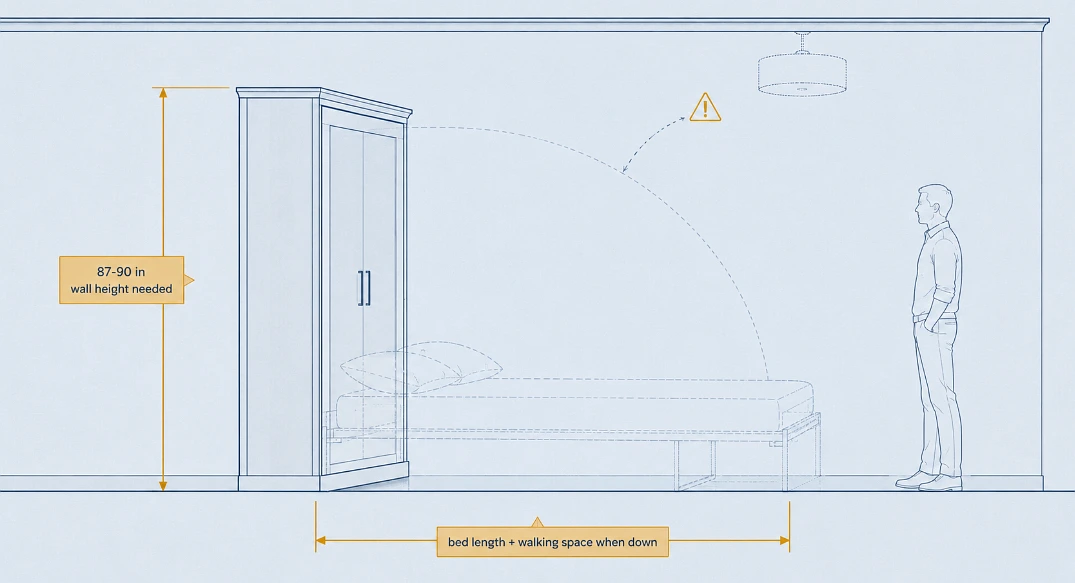
A bed claims its floor for sixteen unused hours a day, and in a studio that floor is the living room, the office, and the gym. The standard vertical wall bed gives it all back, lifting straight up into its cabinet. Check one number before ordering: vertical designs need roughly 87 to 90 inches of wall height plus the bed’s length in floor clearance when it’s down. Most units in this style now come with integrated shelves or side cabinets, which matters in a studio where storage is the other war being fought.
The Actual Guest Room
If the room’s whole job is guests, the choice is between the standard wall bed, the simplest and most reliable option, and the bookcase style, which reads as shelving when closed instead of announcing there’s a bed in the wall. Size to the guests you host. A twin serves the one visitor room fine and costs meaningfully less, while a full or queen makes sense once couples visit or the room might ever become someone’s bedroom.
Low Ceilings, Narrow Rooms, and Kids
Horizontal models mount the bed’s long side to the wall and fold down sideways, which is the answer for basement ceilings and narrow rooms where a vertical unit either won’t clear or won’t leave walking space. And where the problem is capacity rather than clearance, Murphy bunk styles stack two sleepers on one footprint, which is how a small room hosts cousins.
Rentals
Everything above anchors into wall studs, non negotiable for safety, and landlords have opinions about that. Cabinet beds are the renter’s version: they look like a sideboard closed, don’t require wall anchoring, and move out when you do. The trade is a slightly bulkier footprint and usually a lower mattress profile, a fair price for furniture that doesn’t need permission.
What Murphy Beds Cost and Where the Money Goes
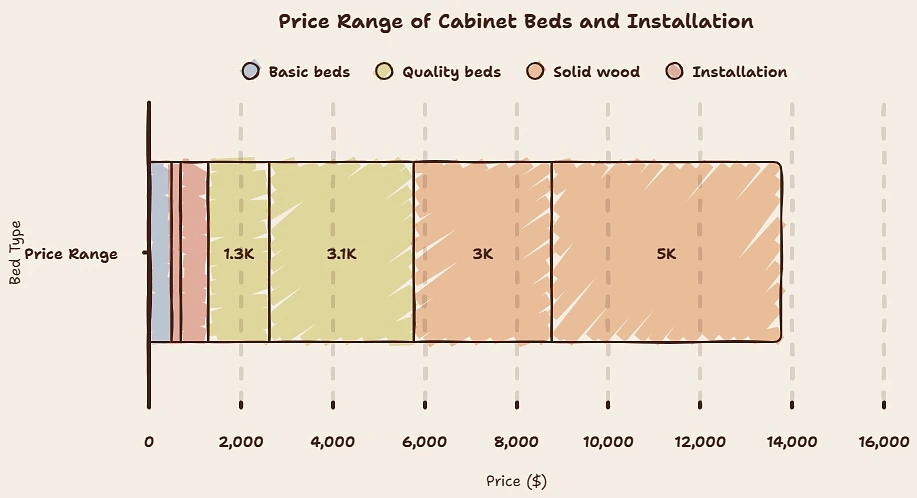
The spread is wide and honest once you know what each tier buys:
- Basic cabinet beds from big box retailers start around $500, fine for occasional use.
- Quality direct brand wall beds run from about $1,325 for a bare twin to $3,150 and up with side cabinets.
- The solid wood tier sits at $3,000 to $5,000, with fully custom cabinetry work above that.
- Professional installation adds $200 to $600 where it isn’t a DIY weekend.
The material question deserves the firm answer: this is furniture with a mechanism that cycles every day, and particleboard around a daily mechanism is a false economy, because the hinge points wear their housings loose long before real wood would give. Pay for the lift hardware and the panel material first, the finish and the lighting after. And whatever the room, check the mechanism warranty before you fall for a cabinet style, since the hinges will outlive several rounds of your taste in furniture anyway.

 Decor & Improvement Accessories