

Home & Decor Blogs: DIY, Interior Design & Lifestyle Ideas
Before You Pay For A New Roof, Check The Thing That Probably Killed The Old One

Quick answer: the most ignored reason roofs die early is attic ventilation. A starved attic can pass 150 degrees on a summer afternoon, and that heat cooks your shingles from underneath while the sun works on them from above. It is how a 25 year roof ends up failing at 10 or 12 years. It is also one of the most common reasons shingle manufacturers deny warranty claims. The fix usually runs a few hundred dollars. And most replacement quotes never mention it, which means plenty of people pay full price for a brand new roof sitting on the exact same problem that killed the last one.
That last part is the one worth sitting with for a second. My roof is barely twelve years old, why is it already curling. If that question sounds familiar, there is a decent chance the answer was never on the roof at all. It was in the attic the whole time.
Why Nobody Brings This Up When They Quote You
I will be honest about how this usually goes. A replacement quote gets written from the top of the roof. Shingles, underlayment, flashing, tear off, disposal. The attic underneath barely comes up, partly because ventilation work is small money compared to a replacement, and partly because checking it properly means someone actually crawling up there instead of measuring from a ladder.
And some crews genuinely do not think about it. There are roofers who will take the old roof off and put the ventilation back exactly the way they found it, which means if bad airflow shortened your last roof, it is already working on your new one from day one. You paid for a fresh 25 year roof and quietly kept the thing that made the old one a 12 year roof.
So this is the one question that saves real money, and you have to be the one who asks it.
How A Starved Attic Cooks A Roof From Below
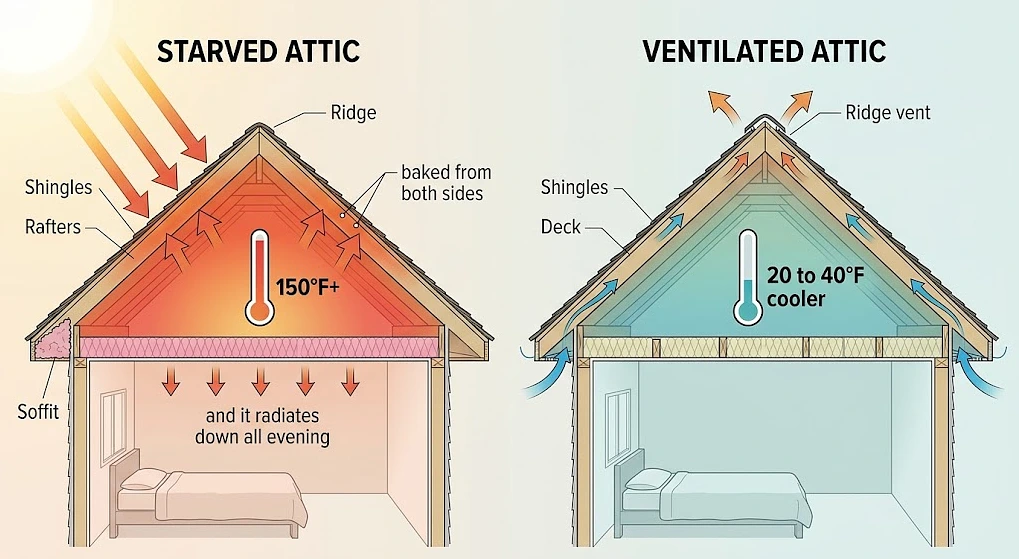
The mechanism is simple once someone explains it. Shingles are built to take heat from the sun. What they are not built for is heat from both sides at once.
When an attic cannot breathe, the summer heat that radiates through the roof deck has nowhere to go, so it builds. Poorly ventilated attics regularly pass 150 degrees on hot afternoons, and the shingle surface above can run even hotter. Now your shingles are getting baked from above by the sun and from below by a trapped oven, and that double heat load breaks down the asphalt years ahead of schedule. Curling, cracking, granules washing into the gutters, all the mid life failures that make a roof look twenty years old at twelve.
Proper ventilation drops that attic temperature by 20 to 40 degrees, and that single change is worth years of extra shingle life. It also takes real load off your air conditioning, because a 150 degree attic does not keep its heat to itself, it radiates down into the bedrooms all evening.
Winter runs the same story with moisture instead of heat. Warm damp air from the house rises into a sealed attic, condenses on the cold underside of the deck, and slowly rots the wood. Mold smell, rusty nail heads, soft decking. Different season, same missing airflow.
The Warranty Part People Find Out About Too Late
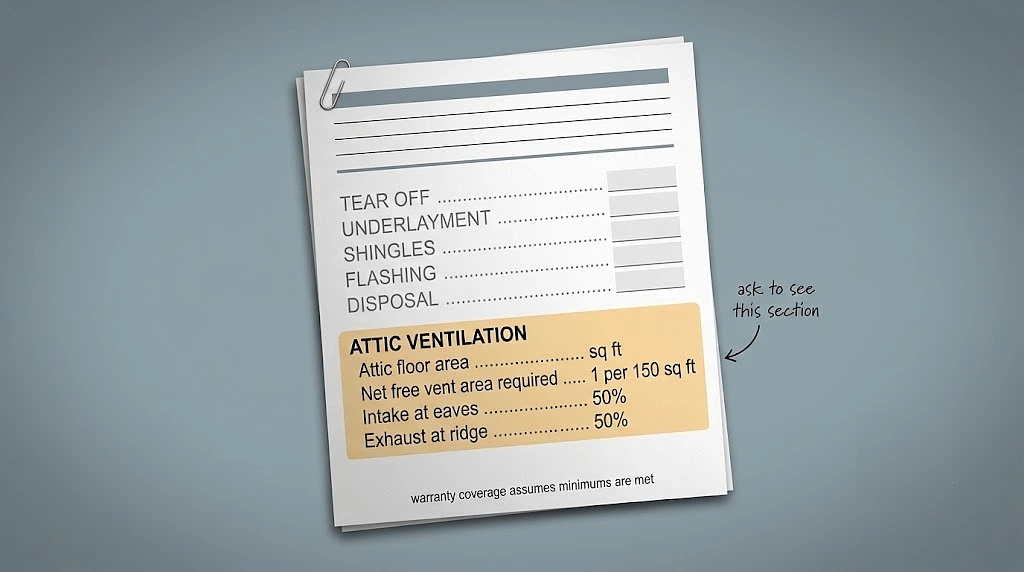
This is the piece that turns ventilation from a nice to have into a money issue, so let me be plain about it.
The big shingle manufacturers tie their warranties to ventilation minimums. Owens Corning’s warranty language excludes damage from inadequate ventilation. GAF requires a set amount of net free vent area, roughly 1 square foot for every 150 square feet of attic floor, or 1 per 300 when the setup qualifies, balanced between intake at the eaves and exhaust at the ridge. If your shingles fail early and the inspector finds the attic was starved, the claim gets denied, and legally they are within their rights, because it was in the paperwork all along.
Which means a new roof over a bad attic is not just aging fast. It is aging fast without a safety net.
When This Is Actually Your Problem, And When It Is Not
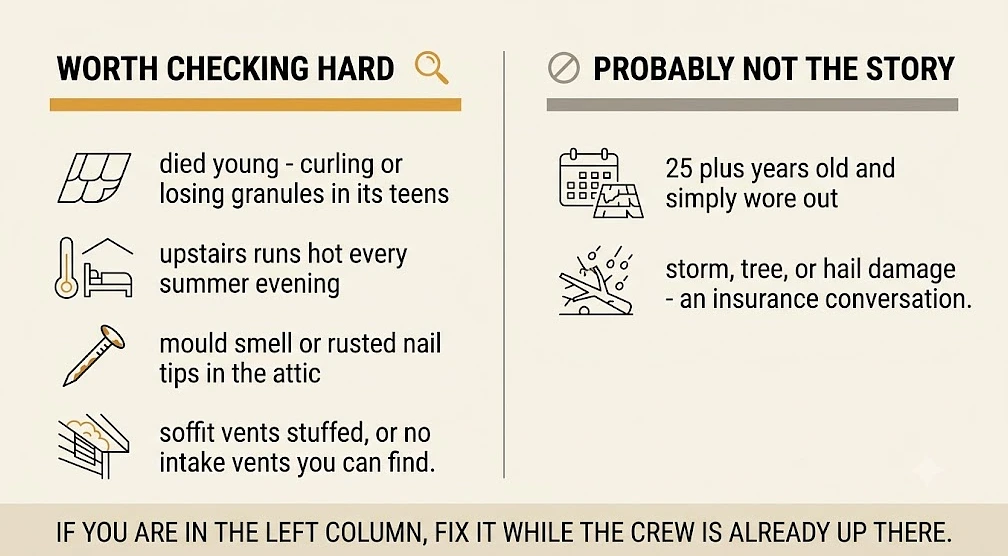
Honest scoping, because ventilation is not the answer to everything and I am not going to pretend it is.
It is worth checking hard if any of these sound like your house:
- The old roof died young, curling or losing granules in its teens instead of its twenties
- The upstairs runs hot every summer evening no matter what the thermostat says
- There is a mold smell in the attic, or rust on the nail tips poking through the deck
- Your soffit vents are stuffed with insulation, which happens all the time after an insulation upgrade, or you cannot find intake vents at all
It is probably not the story if:
- The roof is 25 plus years old and simply wore out on schedule, that is just a roof reaching the end
- The damage came from a storm, a tree, or hail, which is an insurance conversation, not an airflow one
If you are in the first group, fixing the ventilation while the roof is being replaced is close to free compared to doing it later, the crew is already up there, and it protects the exact roof you are about to buy.
The One Question To Ask Before You Sign
Ask the contractor to show you the ventilation math for your attic in the quote itself. Intake and exhaust, in numbers, against your attic’s square footage. A good one will not be offended by the question, honestly the good ones bring it up before you do.
I put this to Ben Lapp, who founded Middle Creek Roofing back in 2005 and runs it today as a trusted contractor for roof replacement Lancaster PA homeowners lean on, and he agreed without any hesitation, the attic side gets overlooked constantly, and a replacement quote that skips the ventilation check is leaving the new roof exposed to whatever shortened the old one. Coming from someone who has spent twenty plus years on roofs, that is about as straight an answer as you will get.
So before the deposit goes down, get someone into the attic. It is a twenty minute look that decides whether your new roof gets its full life or inherits the old one’s problem. Cheapest twenty minutes in the entire project, and almost nobody spends them.
 Decor & Improvement Accessories