
Home & Decor Blogs: DIY, Interior Design & Lifestyle Ideas
Your Garden Feels Small Because You Can See All Of It At Once

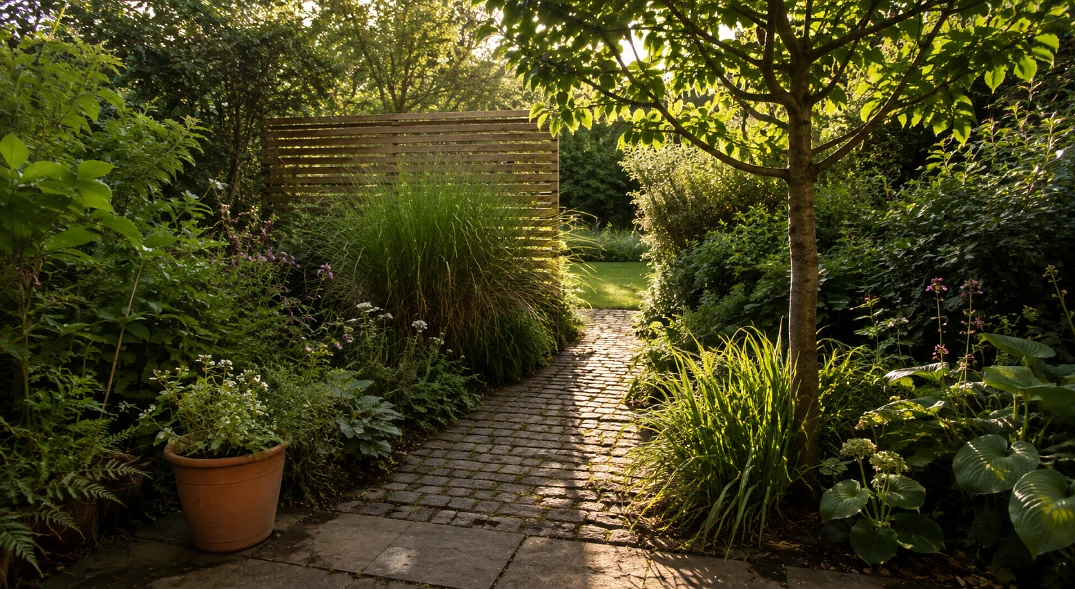
Stand at your back door and look out. If your eye reaches the far fence in about a second and there is nothing on the way to slow it down, that is the whole problem, and it has almost nothing to do with how many square metres you actually own.
Paul Hervey-Brookes, who has won gold at Chelsea, puts it about as bluntly as it can be put. Our minds always want things to be bigger, and if you cannot see all of your plot at once, it can double or triple in size in your mind. Read that again because it is the opposite of what most people do. When a garden feels cramped the instinct is to clear things out and open it up, take out the shrub, widen the paving, get a clean view end to end. And that instinct is the thing making it feel smaller.
Same source says the paving part outright, it is a mistake to think a large expanse of paving will create the illusion of space, often it emphasises the smallness.
Hiding Part Of A Small Garden Is What Makes It Feel Big
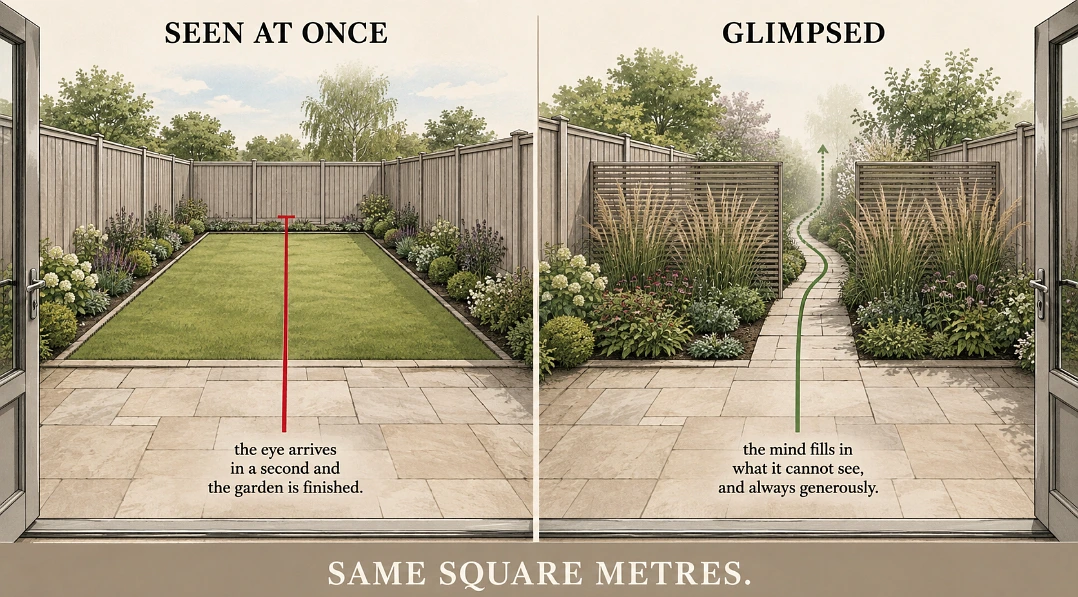
There is an old Japanese name for this, miegakure, which translates roughly as hide and reveal, and Japanese garden makers have been doing it deliberately for centuries. You obscure part of the view on purpose. The eye hits something at the halfway point, stops, and the mind fills in whatever is behind it, and what the mind invents is always more generous than what is actually there.
A garden you take in at one glance is a garden your brain finishes with immediately. A garden that unfolds in stages keeps handing you something else, and a space that keeps going feels bigger than a space that ends.
That is really the entire principle and everything below is just three ways of doing it.
Three Things To Put In A Garden That Make It Feel Bigger
One, A Screen Or A Spur Of Planting Placed Part Way Down
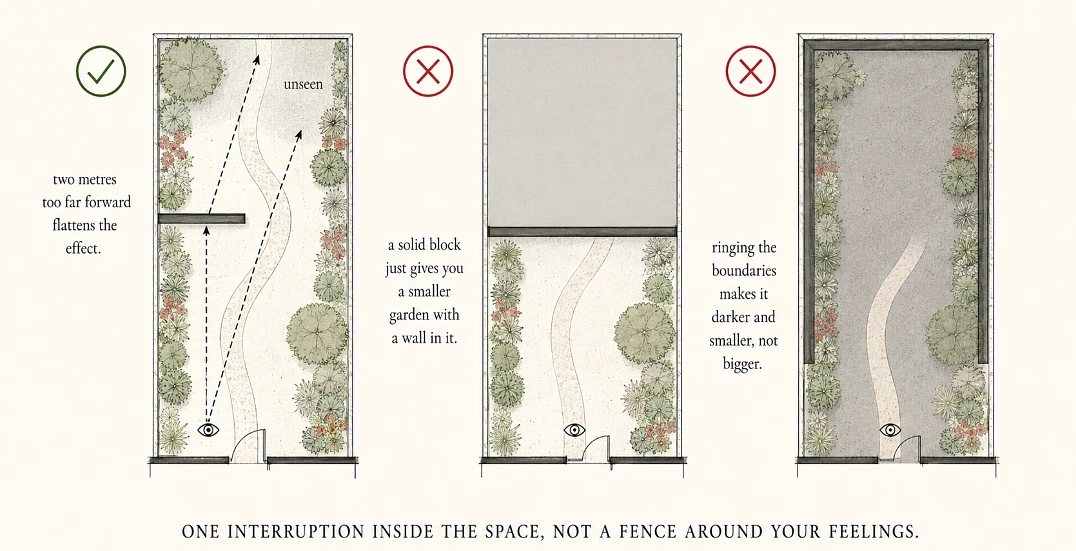
Not around the edges, that is the mistake. Across the middle, or partly across it, so the far end of the garden is glimpsed rather than seen.
It can be a slatted screen, a shrub group, a hedge that comes out from one side and stops short of the other, a trellis with a climber on it. What matters is that it interrupts, and that there is a gap or a path that carries the eye past it, because a solid block just gives you a smaller garden with a wall in it. You want to see through, around, or past, but not all at once.
The point where you place it matters more than the thing itself, and that is genuinely the difficult part, because it depends on where you sit, where the sun lands in the afternoon, and what you are trying to keep out of view. This is the piece of it homeowners struggle with alone, which is why people who bring in proper landscaping services at the design stage usually end up with a garden that works rather than one that has good things in the wrong places, since the screen going in two metres too far forward can flatten the effect completely.
And the warning that goes with this, because screening gets overdone constantly. Ringing the whole garden in screens on every boundary makes it darker and smaller, not bigger. You are placing one interruption inside the space, not building a fence around your feelings.
Two, A Pair Of Matching Pots In Two Different Sizes
This one is nearly free and it is pure trickery on your own brain.
Buy two containers of the same design, one large and one noticeably smaller. Put the large one at the far end of the garden and the smaller twin near the house. Because they match, your brain assumes they are the same size, and to reconcile that it decides the far one must be further away than it is. The garden reads as longer, or in a narrow plot you can run the same trick sideways and it reads wider.
Go big with the far pot as well. A large plant in a large container in a small garden borrows the feeling of a much bigger plot, which sounds backwards until you see it.
Three, One Tree, Standard Form
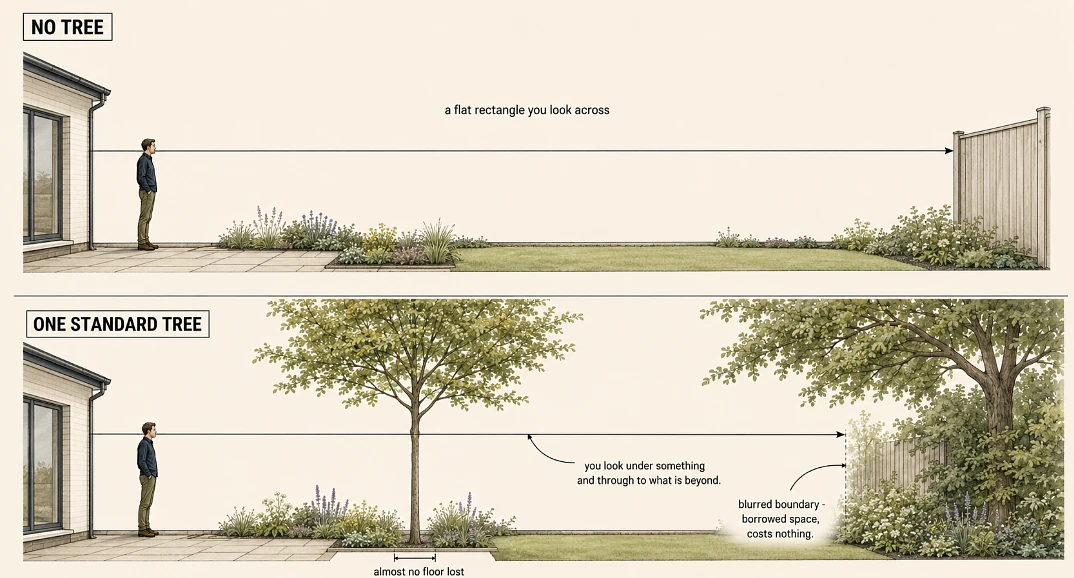
Most people refuse a tree in a small garden because they think it eats the space. A standard tree, the kind with a clear stem and the canopy starting above head height, takes almost no floor at all and gives you something the garden did not have before, which is height.
A garden with nothing above eye level is a flat rectangle you look across. Put a canopy in it and suddenly there is a layer overhead, you look under something and through to what is beyond, and the space gains a dimension instead of losing floor area.
A tree does the boundary work too. If a neighbour’s tree already leans over your fence, do not cut it back, use it, plant something similar on your side and the line where your garden stops becomes impossible to read. Blurred boundaries are borrowed space and they cost you nothing.
Two Smaller Moves While You Are At It
Texture does quiet depth work. Fine leaved things, small leaved shrubs and ornamental grasses, recede visually, and bold leaved things come forward, so fine at the back and bold at the front pushes the far end of the garden away from you.
Curves in the path help as well, but only real ones that take the path out of sight for a moment. Fussy little wiggles in a small garden look wrong and make the space feel fiddly rather than larger, so a path either genuinely disappears behind something or it may as well be straight.
The Test Before You Spend Anything
Walk to your back door, or to whichever window you look out of most, because that is where the garden gets judged from ninety percent of the time and it is usually nowhere near where people design from.
Can you see the far boundary from there without anything interrupting? Then that is the fix, and it is one screen or one shrub group in one well chosen spot, not a whole redesign, not a new patio, not a nursery run.
I would rather have a small garden I cannot see the end of than a large one I can take in from the doorstep in a single glance, and honestly most people would too once they have stood in both.
 Decor & Improvement Accessories