

Home & Decor Blogs: DIY, Interior Design & Lifestyle Ideas
How Workplace Design and Cleaning Standards Create Better Environments

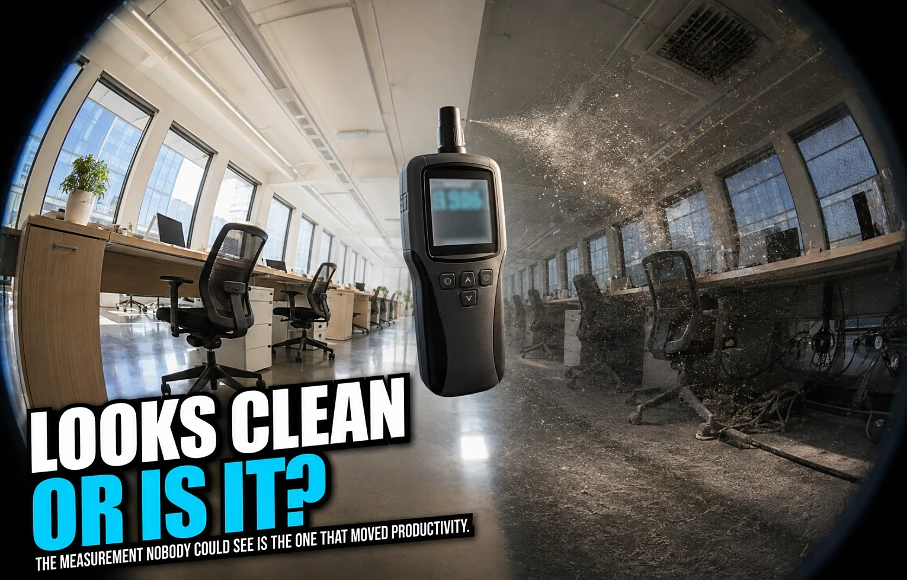
A well-designed office is not supposed to stop working the moment the furniture gets delivered.
It has to hold up for years afterward, staying comfortable and manageable long after anyone’s taken the opening photos. Most people think they can tell how clean an office is just by glancing round it, the desks and the glass and the floor, though a study out of Wageningen University found that assumption doesn’t hold up especially well.
David Serville, CEO of Crewcare in New Zealand, put something close to the same idea a few years back. You often don’t notice good cleaning, he said, but it’s worth noticing the cleaners every now and again. He meant it as a thank you note more than a research finding. A university in the Netherlands went and measured the same instinct properly.
This article was created in mutual collaboration with NAE Cleaning Solutions. While doing the deep research for it, I needed some live sourcing and real experience, and thanks are owed to their team for assisting with that.
So Why Doesn’t a Tidy Desk Seem to Be Enough?
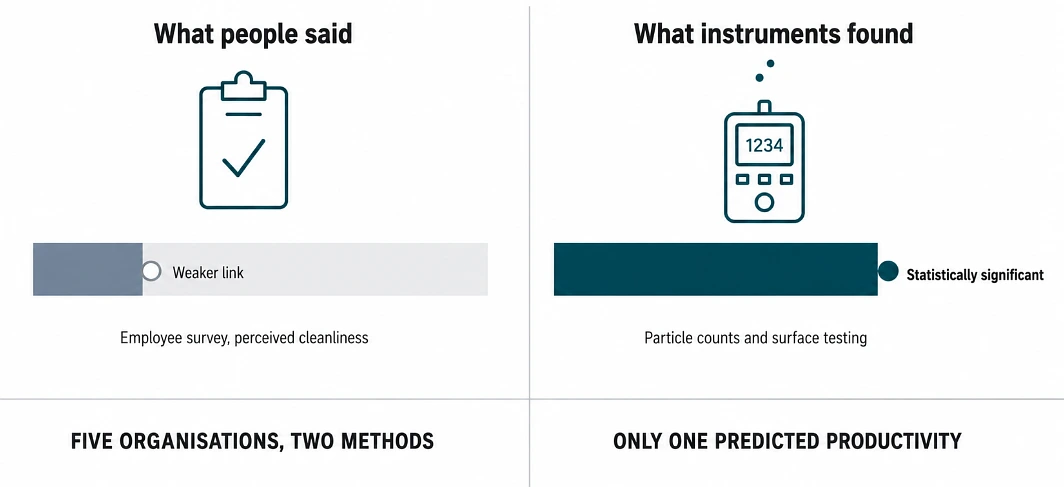
Researchers measured cleanliness across five non-profit organisations in the Netherlands, two completely different ways at once. One method asked employees directly, a survey capturing how clean they believed their own environment was. The other method skipped human judgment entirely, physically assessing surface cleanliness and counting airborne dust particles in the air of each workplace.
The measurement nobody in the office could see or consciously register correlated significantly with how productive employees said they felt. The visible tidiness people commented on day to day carried far less weight.
Which means an office can look reasonably kept, desks cleared, nothing obviously out of place, and still work against the people sitting in it, because whatever the study found moving productivity wasn’t sitting in plain sight to begin with.
What a University in the Netherlands Went and Measured
| What Got Measured | How | What It Predicted |
| Perceived cleanliness | Employee survey | Weaker link to reported productivity |
| Objective cleanliness | Particle counts, surface testing | Stronger, statistically significant link |
Higher satisfaction with the job overall also tracked with higher perceived productivity, a separate finding on its own.
Dust Does More Than Sit There
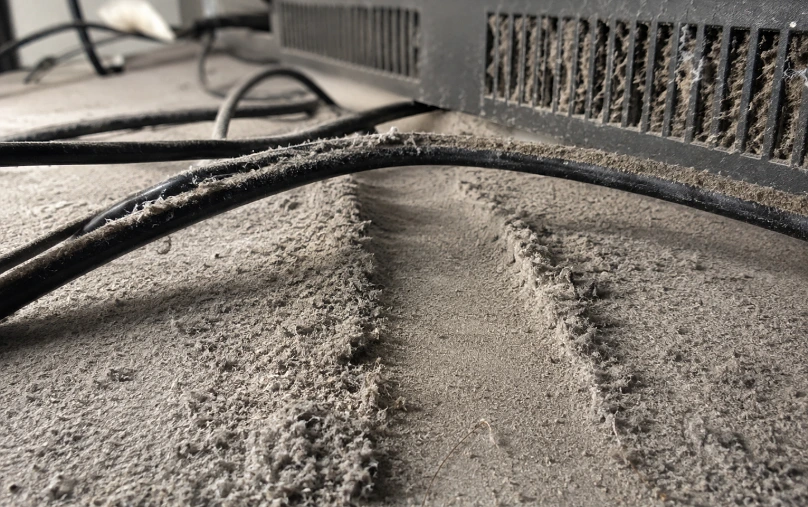
Out of sight, out of mind, the old habit of thinking goes. Dust settles below eye level, on ledges, behind monitors, inside vents, and most people stop consciously registering it within about an hour of sitting near it, the way a fridge hum disappears from awareness until someone points it out again.
Research out of Princeton’s Neuroscience Institute, led by McMains and Kastner, found something structurally similar happening with visual clutter more broadly. Clutter sitting in a person’s field of view competes for space in the visual cortex itself, and the brain keeps half-processing every object present, even the ones nobody’s consciously looking at. That background processing draws on the same limited attention a person needs for work, and this is different from the dust study, it’s about clutter rather than particles specifically, but the two sit close enough together that it’s worth knowing both exist.
Door Handles, Elevator Buttons, a Shared Keyboard
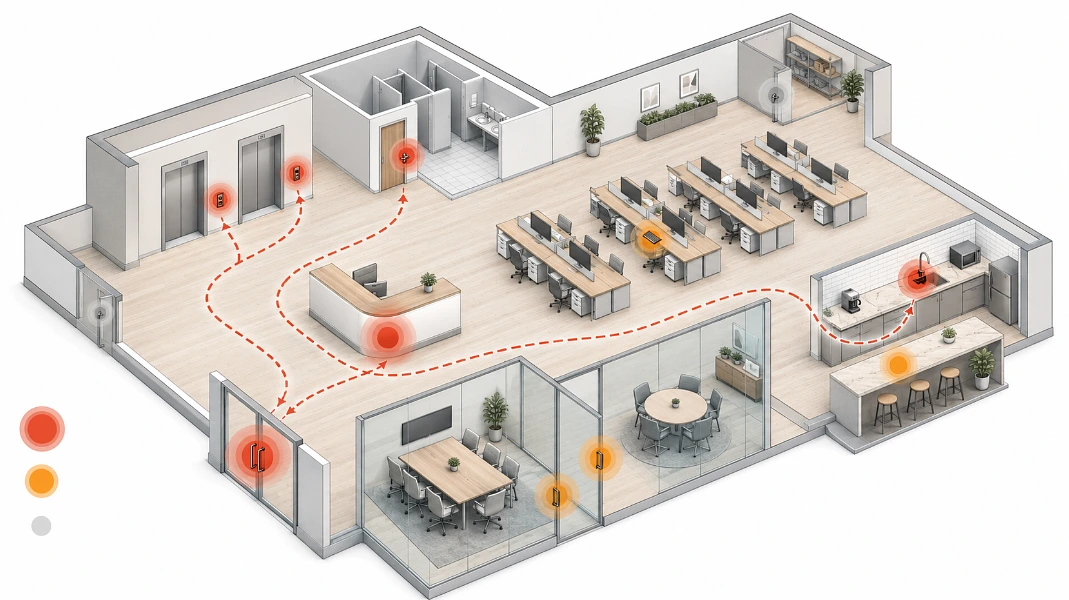
The CDC puts a real number on what these cost when nobody treats them differently from a clean desk sitting three feet away. $225.8 billion a year across US employers, tied to workplace illness transmitted largely through exactly these kinds of surfaces, working out to somewhere near $1,685 per employee. Documented absenteeism and reduced output, not guesswork.
A reception desk and a rarely used storage closet getting the identical five minutes of attention isn’t really thorough. The risk just isn’t sitting in the same place on both of them, and treating it like it wastes the time either surface actually needed.
Did Anyone Think About Cleaning When They Picked This Furniture?
This part carries less of a formal citation and more plain practical logic, but it holds up.
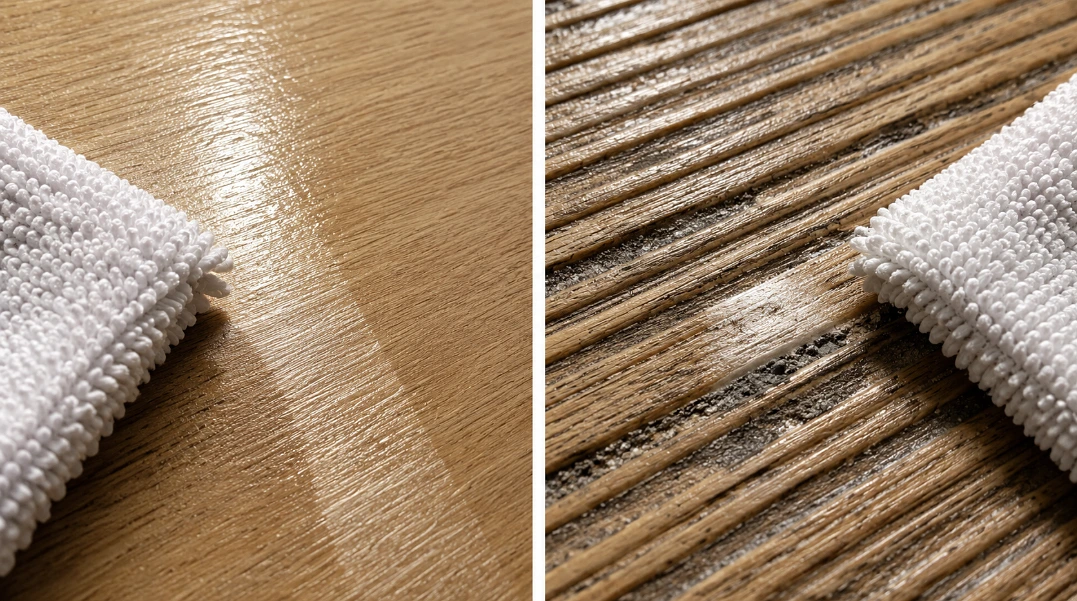
A smooth surface wipes down in seconds. A heavily textured one, chosen because it looked interesting in a showroom, eats up real minutes per pass, every day, for as long as the building’s in use, and furniture with a lot of small decorative gaps and recesses rarely gets cleaned into properly, because nobody has the time to chase grime through every groove on a Tuesday afternoon, week after week, year after year, until eventually it’s just how that piece of furniture looks now. Someone, ideally a facilities manager, gets consulted before finishes get finalised.
Is This Actually Why People Quit?
A JLL survey of healthcare employees found something worth sitting with. Among staff who said they were actively considering leaving their jobs, fewer than 60 percent described their workplace as clean and well maintained. Among the ones planning to stay, that figure ran past 70 percent.
A separate Future Workplace survey found a poorly maintained office sitting among the top three reasons employees gave for wanting to leave a job entirely, ranked right alongside pay and management and the workload itself. Restrooms carry an outsized weight in all of this too, ISSA puts the figure at roughly 91 to 94 percent of people who won’t return to a business after finding a dirty one.
When It Stops Being a DIY Job
A small office can usually manage its own basic upkeep. Growth changes that math, because cleaning tends to slip once a workplace passes a certain size.
Not because anyone stopped caring. Nobody’s actual job is noticing it slip.
At that scale, outsourcing starts making straightforward financial sense. Businesses looking for coverage shaped around their real footprint, not a generic package sized for nobody in particular, can look into regular office cleaning built around their own hours and traffic. Matching the plan to the actual building means an honest conversation before anything gets signed, frequency, which areas carry the most traffic, what happens the day something unexpected turns up.
Cleaning and design were never two separate problems. One builds the space, the other keeps it working.
 Decor & Improvement Accessories