

Home & Decor Blogs: DIY, Interior Design & Lifestyle Ideas
How to Choose a 4 Seater Couch for Your Living Room

A four seater runs 230 to 300cm wide. Measure the doorway before you measure the wall, because that is the number that sends sofas back
Most people start by looking at sofas. That is the wrong end of the job.
A 4 seater couch is 230 to 300cm wide, which is a serious amount of wall, and whether one works in your lounge is decided by measurements you can take this afternoon and by construction you cannot see in a showroom photo.
The Numbers That Decide Whether It Fits
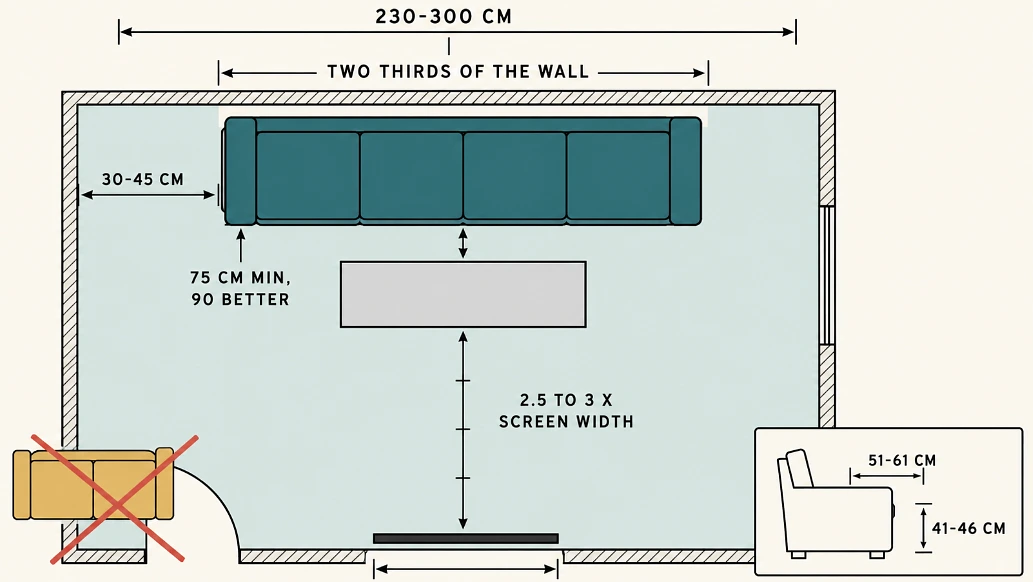
Depth and height barely change between a three seater and a four seater. Width is the number that scales.
| What to measure | The number to aim for |
|---|---|
| Sofa width | 230 to 300cm for a four seater |
| Sofa depth | 85 to 95cm, deeper for lounge styles |
| Seat height | 41 to 46cm off the floor |
| Seat depth | 51 to 61cm, or 61 to 71cm for deep lounge seats |
| Walkway around it | 75cm minimum, 90cm to feel comfortable |
| Gap to the coffee table | 30 to 45cm |
There is a proportion rule worth knowing too. The sofa should run about two thirds the length of the wall it sits against, so a 4.5m wall suits a sofa around 300cm and looks wrong with anything much wider.
If the sofa faces a television, allow roughly two and a half to three times the screen width between the two.
Measure the Doorway Before the Living Room
This is the step people skip and then regret at delivery.
A standard interior door is 76 to 83cm wide. A four seater is not going through that unless it can be tilted or comes in sections.
Measure the whole route in. The front door, the hallway, every turn, the staircase if there is one, and any tight corner where a long frame cannot pivot. Sofa height and depth matter more than width here, because a sofa gets tilted on its end to come through a door.
If the route is genuinely tight, modular is the honest answer, since the sections come in individually and assemble in the room.
Tape the Footprint on the Floor Before You Shop
Painter’s tape, ten minutes, and it saves a lot of arguing.
Mark the full width and depth on the floor, then live around it for a day or two. Walk the path you normally take through the room. Try reaching the window, opening the cupboard, getting past to the balcony door.
Compact rooms are not automatically out. A four seater works in a smaller lounge if you choose shallower depth, slimmer arms and a lower back, because those three things protect floor space without losing seats. Deep lounge styles are what make a small room feel swallowed.
The Frame Decides Whether It Lasts 5 Years or 20
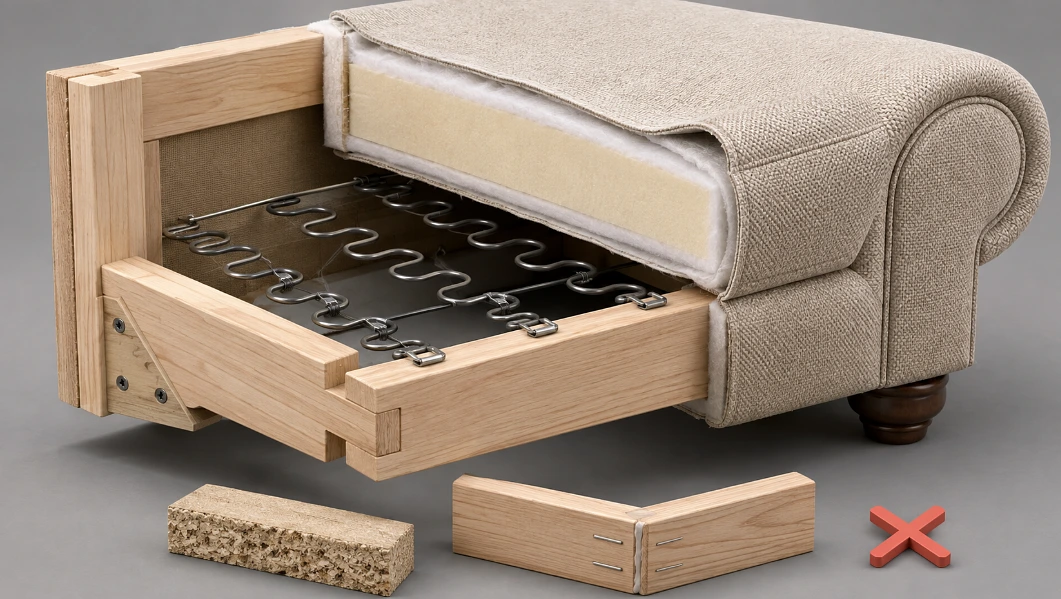
Everything that fails on a sofa fails underneath the fabric, and none of it is visible on a showroom floor.
Ask for kiln dried hardwood. Kiln drying pulls moisture out of the timber so the frame does not twist, warp or crack as it ages. Engineered hardwood is acceptable if it is at least seven layers of solid wood pressed together, and MDF, particle board and standard plywood are not.
Joinery matters as much as the timber. Look for mortise and tenon or double dowel joints with corner blocks at the seat rail corners. Sofas built that way last around 25 percent longer than ones without. Frames held together with staples, screws and glue alone are the ones that start wobbling in year three.
Two tests you can do in the shop:
- Lift one front corner off the floor. Hardwood is heavy, and if the frame twists as it comes up, the joinery is weak.
- Lean on an armrest. Armrests take your weight every time you stand up, and they should not flex.
Springs and Foam Are Where the Comfort Goes
The suspension sits between the frame and the cushions and takes every person who sits down.
Eight way hand tied springs are the premium option, tied individually by hand, and they are built for 12 years or more of daily use. Sinuous springs, the S shaped steel wire type, are the common alternative and give 7 to 10 years when properly specified.
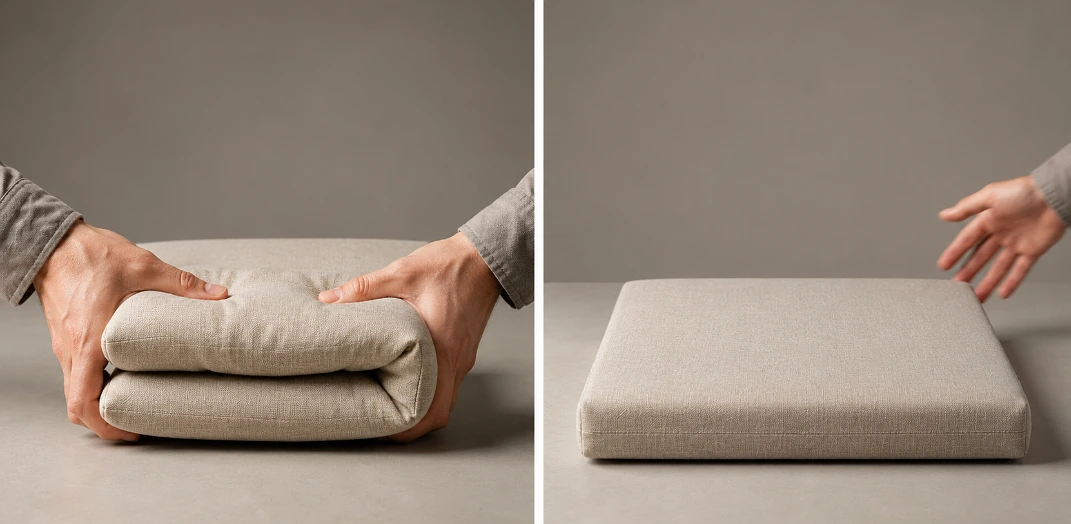
Foam density is the number to ask for on cushions. 1.8 lb per cubic foot is the minimum worth buying, and 2.0 or above is better. High resilience foam holds its shape rather than flattening into a dip where everyone sits.
There is a field test for it. Fold a loose seat cushion in half and let go. Good foam springs back in two or three seconds. Cheap foam takes five to eight and often keeps a visible crease.
Leather or Fabric Comes Down to How You Live
Both work. The difference is upkeep, feel and how they handle your household.
Leather wipes clean, which is why it suits homes with kids, pets or a lot of eating on the sofa. It develops a patina rather than looking worn out.
Fabric feels softer immediately, gives you far more colour and texture to choose from, and costs less at the same build quality. It also absorbs spills, so marks need dealing with quickly.
If you go fabric, the spec that matters is rub count. Look for 15,000 double rubs minimum for everyday use, and 30,000 or above for a busy family room. Performance fabrics like Crypton and tightly woven polyester blends sit at the top of that range.
On upkeep, fabric wants regular vacuuming and prompt attention to marks. Leather wants an occasional wipe and a conditioner once or twice a year. Both last longer if you rotate the cushions, which almost no one does and which makes a visible difference over five years.
Modular Sofas Solve Rooms That Fixed Sofas Cannot
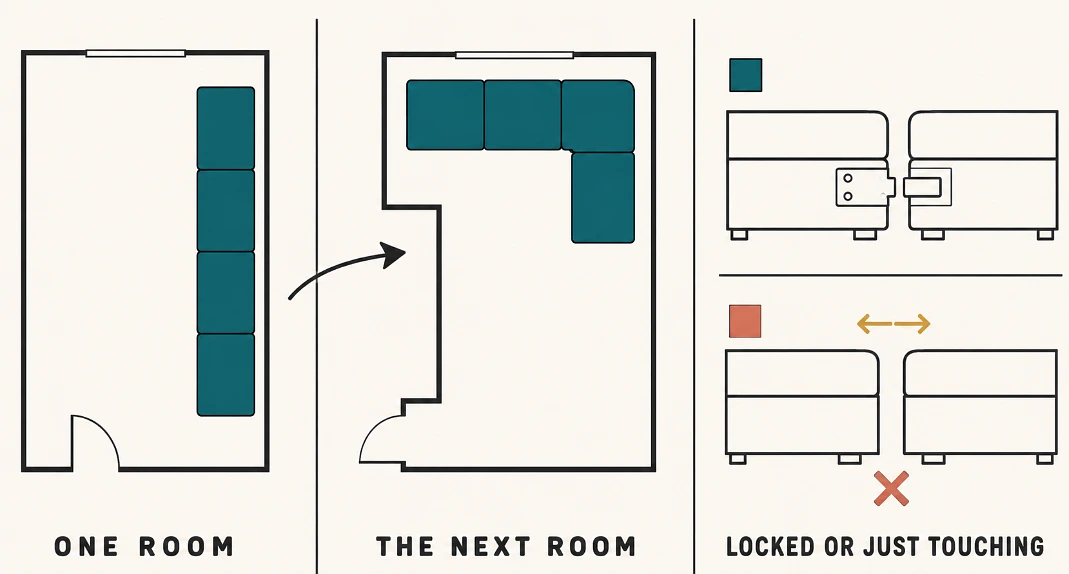
A modular four seater is the practical answer for awkward rooms, and for anyone who might move.
The sections reconfigure, so the same pieces can run along a wall in one home and turn a corner in the next. They also fit through doors that a fixed frame cannot, and you can add a piece later rather than replacing the whole thing.
The trade is the seams. Modular sofas have joins you can feel if you lie across them, and the sections can drift apart on hard floors unless they clip together properly.
Worth checking before you buy:
- Whether left and right corner configurations are both available
- How the sections connect, and whether they lock or just sit against each other
- Whether the range is still being made, since adding a piece in two years only works if the model exists
When you are comparing a fixed four seater couch against a modular one, the deciding question is usually whether your room is likely to change. Fixed sofas sit better and feel more solid. Modular ones adapt.
Read the Warranty Before You Pay
Warranty length tells you what the maker expects from their own product.
Manufacturers using kiln dried hardwood frames with reinforced joinery generally back the frame for life. A one year warranty is the maker telling you they expect problems.
Check the terms separately for frame, springs, cushions and upholstery, because they are almost never the same. And turn the sofa over if you can, since a proper opaque dust cover underneath is a small sign of a careful build, while black netting that shows the springs is the opposite.
What to Do Before You Buy
Measure the wall, the walkway and the doorway, in that order.
Tape the footprint and live with it for a couple of days.
In the showroom, sit back properly for a few minutes and then stand up, because standing up is where soft cushions and low seat heights cause problems.
Then ask the three questions that decide longevity. What is the frame made of, what springs are in it, and what is the foam density. A shop that answers all three without hesitating is usually selling something worth buying.

 Decor & Improvement Accessories