

Home & Decor Blogs: DIY, Interior Design & Lifestyle Ideas
How Luxury Buyers Are Learning to Trust a Home That Doesn’t Exist Yet


A little over half of home buyers now find the house they eventually buy online first, before an agent, before a phone call, before they’ve stood in the driveway. That’s just how shopping works for a finished house. For a luxury home that hasn’t been built yet, that’s the entire sales pitch, because there’s nothing else to walk through. No open house. No driveway to stand in. Just a screen, and whatever’s on it.
Frank Lloyd Wright put words to the actual gap this creates decades before anyone was rendering anything on a computer. He said a building has at least two lives, the one imagined by its maker and the life it lives afterward, and they are never quite the same. That’s always been true of architecture. What’s changed is that a buyer now has to fall in love with the first life, the imagined one, before the second one exists at all, and hand over a deposit on the strength of it.
Rendering Replaces The Site Visit A Buyer Can’t Take Yet
A floor plan tells you where the walls go. It tells you almost nothing about what a room feels like at 4pm in July, whether a kitchen island blocks the sightline to the yard, or whether the primary suite actually reads as private from the pool deck.
Buyers spending seven figures on something unbuilt aren’t willing to fill in those blanks with imagination anymore, not when the seller next door can show them the answer instead of asking them to guess it. A rendering does the job a walk-through used to do, and it does it before the foundation is even poured, which is the actual mechanism behind the trust, not the polish of the image itself.
Out Of State Buyers Commit Without Ever Seeing The Lot
Dallas is a useful place to watch this happen, mostly because a normal person doesn’t need to ask an insider what’s going on there, the sales data already says it plainly.
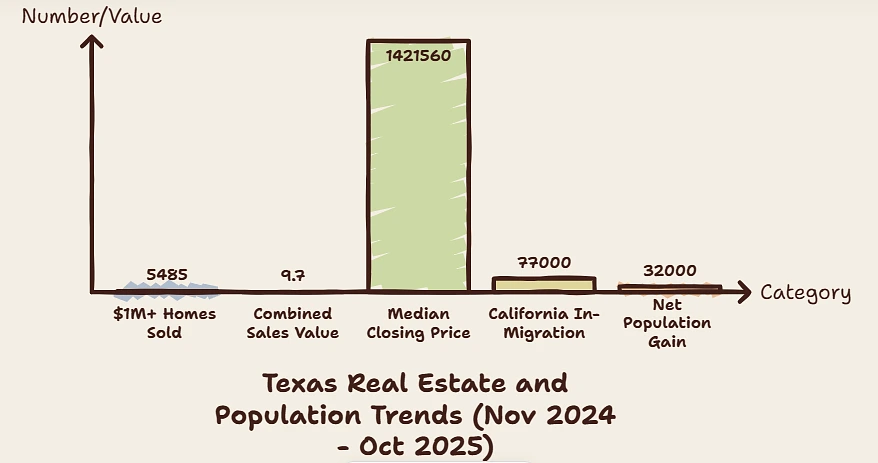
That’s a lot of very large, very fast decisions, and a meaningful share of the people making them aren’t local at all. Some of those California transplants are choosing a house from a different time zone, sight unseen except for the images someone sent them, before they’ve even set foot in the state. Miami’s pre-construction condo market runs on the same logic.
How A Rendering Earns Trust It Doesn’t Automatically Deserve
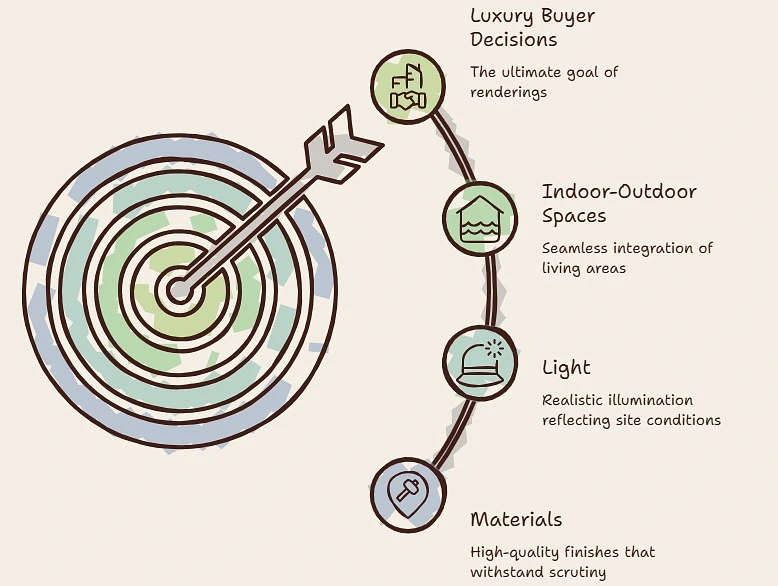
Not every image marketed as a rendering is doing the work described above. There’s a real gap between a pretty exterior shot and something detailed enough to carry a seven-figure decision, and the honest way to explain it is by what fails first.
Materials That Go Flat Under Scrutiny
Book-matched stone or brushed metal that reads as generic the moment someone actually zooms in. Luxury buyers zoom in.
Light That Doesn’t Match The Real Site
A patio rendered in soft golden hour light means nothing if the actual lot faces east and that patio sits in shade by two in the afternoon.
Indoor-Outdoor Spaces That Never Resolve Into One Place
A pool deck and a great room that each look impressive alone but don’t read as somewhere a person could actually live, moving between the two.
Get those three wrong and a rendering is decoration. Get them right and it’s doing the job a site visit used to do.
How Honest Should The Data Behind This Actually Be
Does a good rendering actually move buyers, or does the industry just say that about itself?
Worth being straight about this rather than repeating a talking point. The cleanest real number available is from Zillow, which found listings with a 3D home tour got more views on average and went pending faster than listings without one. That’s real and it’s sourced. It’s also a study of resale listings, homes that already existed, being toured virtually. It doesn’t measure pre-construction sales specifically, and treating it as though it does is the kind of stretch that shows up constantly in rendering-company marketing, quietly borrowing a number that was never about them.
What it does support, honestly, is the underlying behavior. Buyers self-select toward listings they can actually explore, and a pre-construction luxury buyer has less to explore than almost anyone else in the market.
How This Plays Out On One Actual Project
I’ve been talking with Alexander Grabalyuk at Cylind, a studio providing 3d rendering services in dallas, they do exactly this kind of work on luxury pre-construction projects, and one Dallas job in particular sits right inside everything above. Out of state buyers. A full sales package built before the foundation existed. The whole thing riding on whether the renderings could carry weight a floor plan never could.
That’s Wright’s two lives again, just compressed down to a single decision. The imagined life had to be convincing enough, on its own, to get someone to commit real money to a life that didn’t exist yet.
Trust – Transfers Once The House Is Real
Every one of these buyers eventually walks through the real front door and finds out whether the light actually falls the way the image promised, and that second life Wright talked about begins, the one that’s never quite the same as what was imagined.
A floor plan asks a buyer to trust their own imagination. A good rendering asks them to trust what they can already see. That’s a much easier thing to say yes to, and it’s the entire reason the sale itself keeps moving earlier and earlier in the process, before there’s a house at all, just an image doing the convincing.
 Decor & Improvement Accessories