

Home & Decor Blogs: DIY, Interior Design & Lifestyle Ideas
How to Pair a Wardrobe Closet and Wooden Dresser for a Cohesive Bedroom
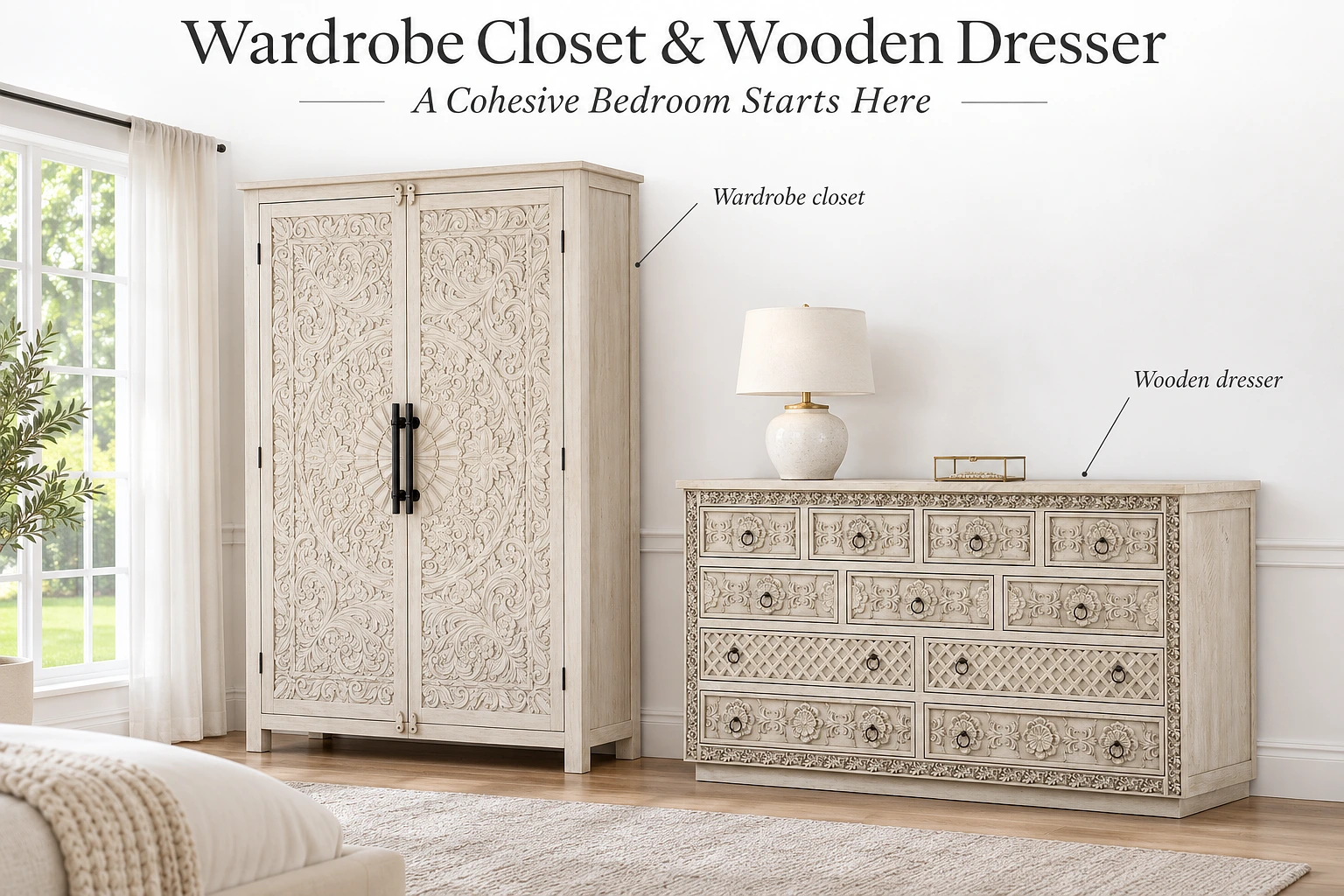
A wardrobe closet and wooden dresser can make a bedroom feel organized and comfortable when they work well together. They do not have to come from the same collection. What matters is how their finishes, shapes, and sizes relate and whether both pieces make getting dressed easier.
Perhaps you already own a dresser you love but need more hanging space. Or your bedroom has a small built-in closet that cannot hold everything. Either way, start with what your room and clothing need before choosing a matching finish.
Give Each Piece a Clear Job
Before shopping, separate the clothes you hang from the clothes you fold. This simple step helps you avoid buying two pieces that solve the same problem.
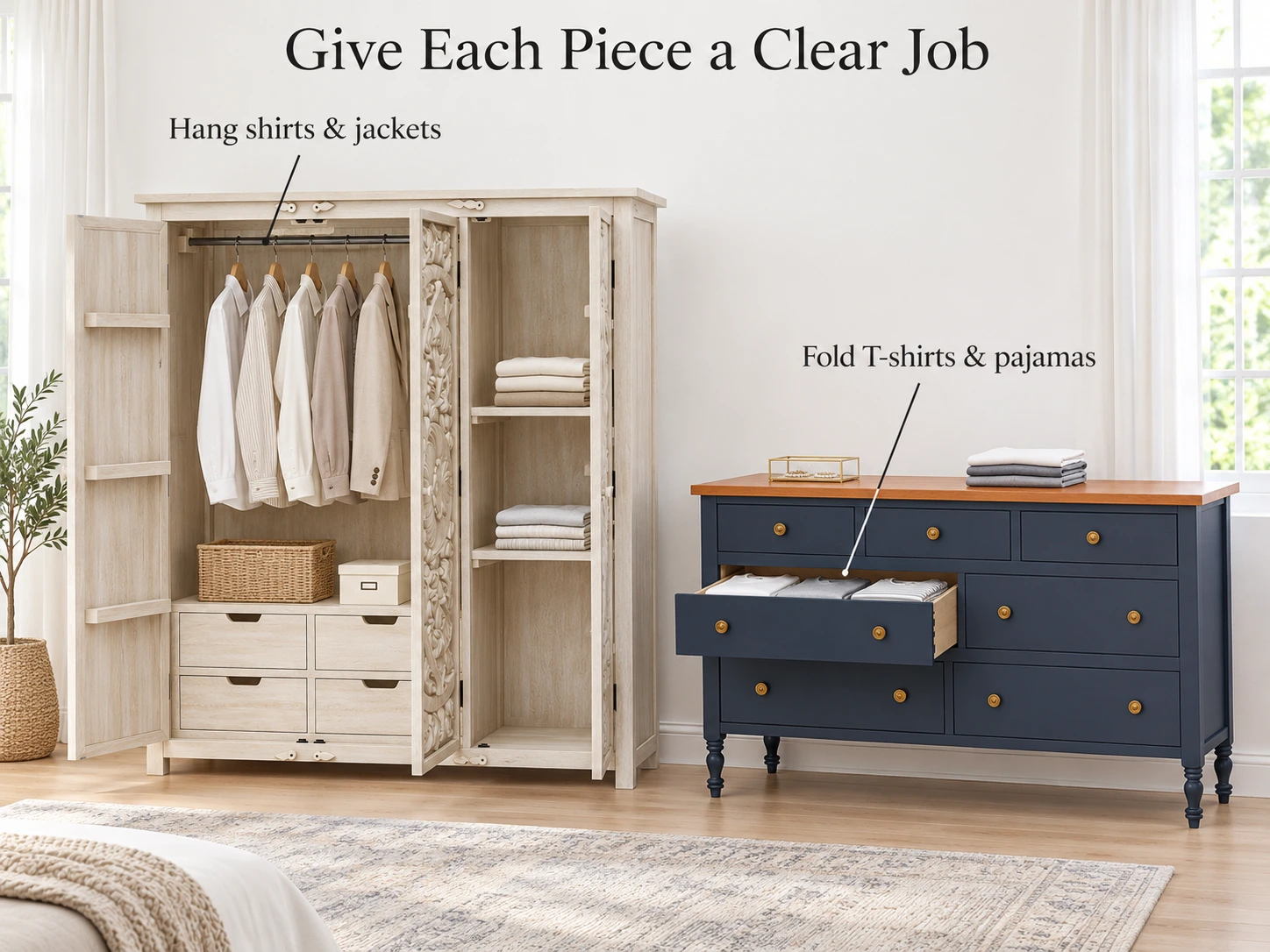
A wardrobe closet can provide hanging space for shirts, jackets, and dresses, with shelves for items that need their own compartment. Check the interior arrangement: a tall cabinet with mostly shelves will not solve a shortage of hanging space.
A wooden dresser gives folded clothing a dedicated place. Think T-shirts, pajamas, socks, and workout clothes. Compare usable drawer dimensions rather than drawer count alone; several shallow drawers may not suit bulky sweaters.
If your wardrobe already has generous drawers, a smaller dresser might be enough. Buy for the storage gap you actually have.
Choose a Connection Beyond an Exact Match
Furniture looks related when it shares a few recognizable details. That connection could be a warm brown finish, softly rounded corners, simple paneling, or similar metal handles.
Start with the piece you plan to keep longest. Identify one or two features you like, then look for those qualities in the second piece.
For example, an older dresser with rounded edges could sit comfortably with a newer wardrobe that has gently curved detailing. Their finishes can differ while their shapes provide a connection. Repeated shapes, hardware, and colors are common ways to connect furniture from different collections.
Matching collections are also a valid choice. If you prefer them, use bedding, artwork, and lighting to give the bedroom your own character.
Compare Finishes in Your Bedroom
Two finishes described as “natural brown” can look surprisingly different. One may appear golden, while another leans reddish or gray. Stain, grain, and lighting all influence the result.
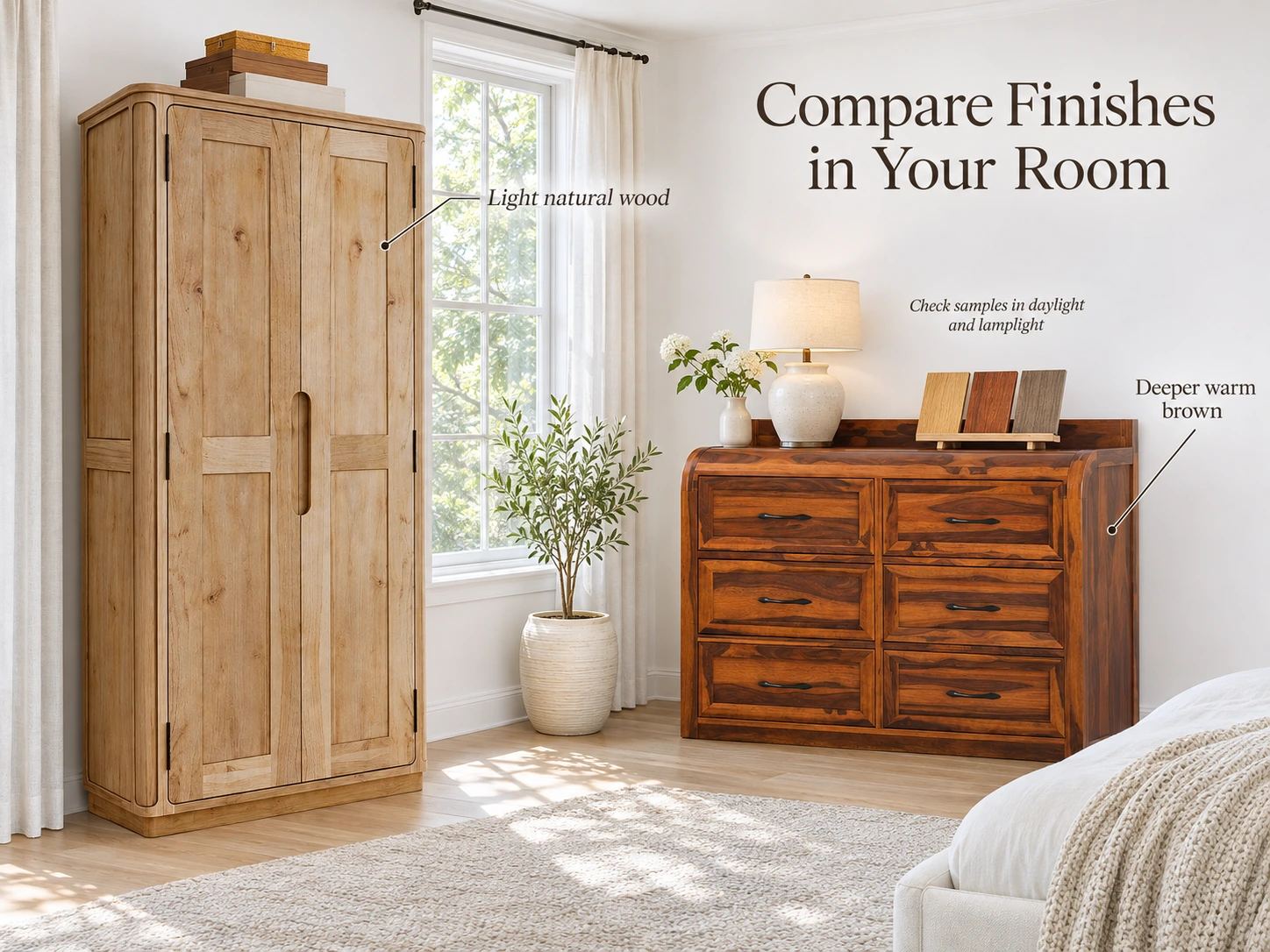
Request physical samples when available. View them beside your existing furniture in daylight and with your bedroom lamps on. Product photos help narrow the options, but screens are less reliable for judging a close color match.
When an exact match proves difficult, consider a clearer contrast. A light wood wardrobe beside a deeper brown dresser can look deliberate, especially when both have a similar warmth.
Remember the floor, too. A large wood floor already contributes color and grain to the room. You do not need every furniture surface to repeat it.
Balance the Tall Piece with the Wide Piece
A wardrobe introduces height; a dresser often adds a lower, wider surface. Use that difference to your advantage.
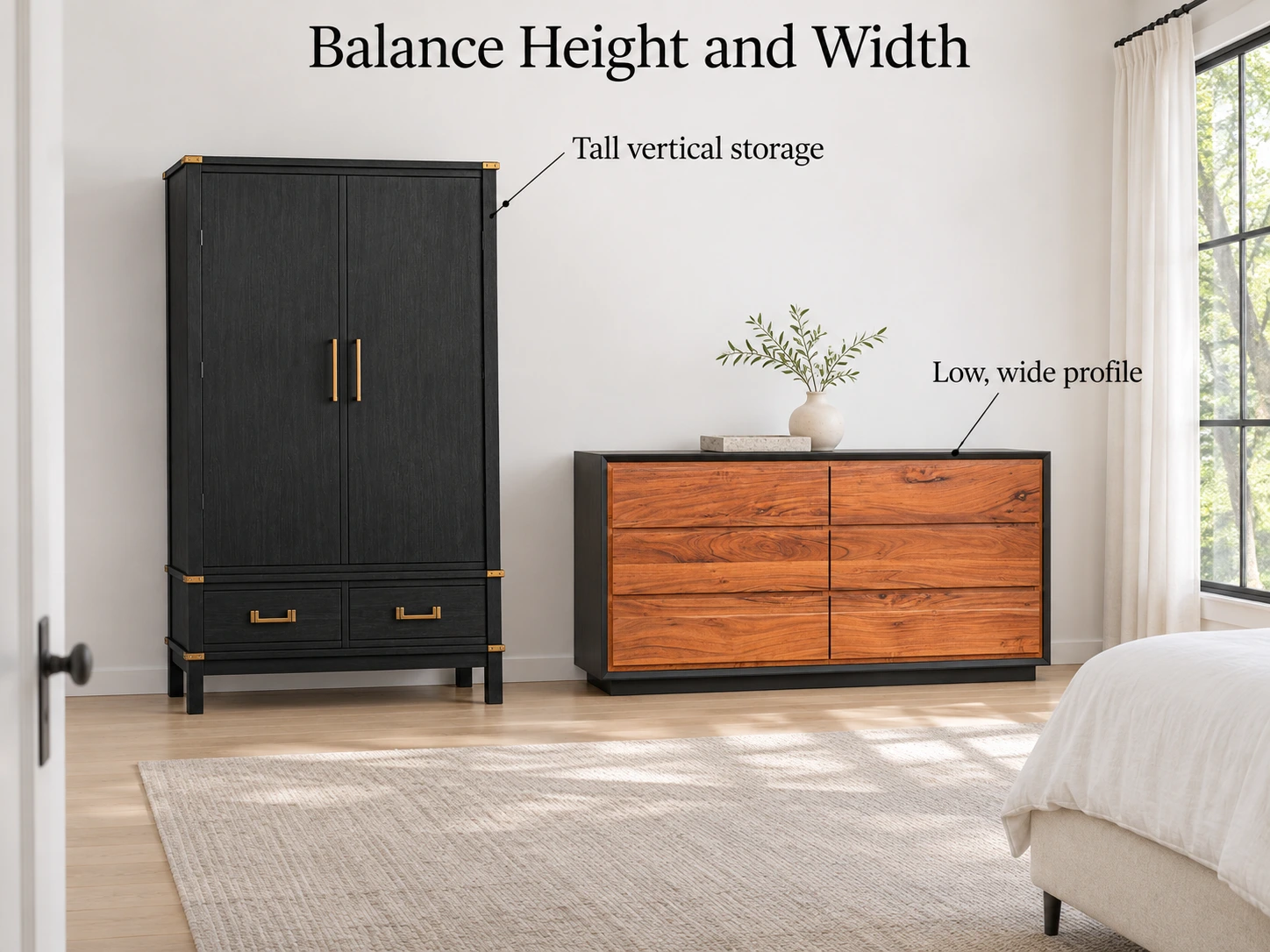
Look beyond measurements to how solid each piece appears. A dark wardrobe with thick doors and a heavy base will have a stronger presence than a pale cabinet with visible legs.
If the wardrobe is substantial, consider a dresser with simpler detailing. If the dresser has decorative carving or a striking grain pattern, a quieter wardrobe can give it room to stand out. Considering scale and distributing substantial furniture thoughtfully helps a bedroom feel balanced.
Take a photo from the bedroom doorway. It can help you spot whether one corner feels crowded or whether both pieces compete for attention.
Test the Layout with Everything Open
Furniture can fit against a wall and still be awkward to use.
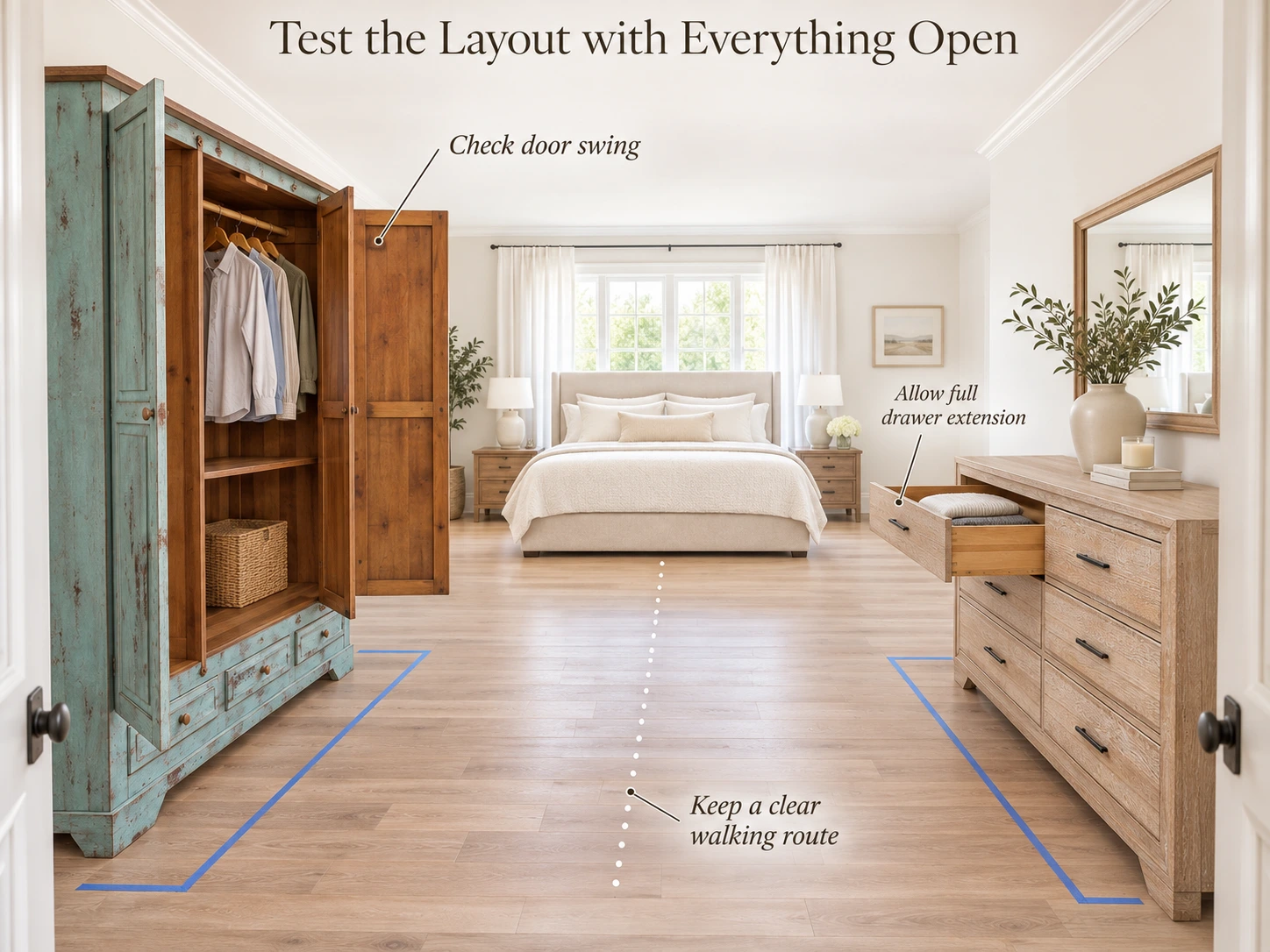
Mark each footprint with painter’s tape, then account for wardrobe doors and fully extended dresser drawers. Include room for someone to stand, bend, and reach clothing comfortably.
Try these placements against your actual floor plan:
- Along one wall: Useful when there is enough uninterrupted space and neither piece blocks the other’s doors or drawers.
- On adjacent walls: Creates a dressing area, provided the corner leaves both pieces accessible.
- On separate walls: Spreads storage around the bedroom when grouping it would crowd the bed.
Walk the route from the bed to the doorway and closet. Keep windows, vents, and outlets accessible. Follow the manufacturer’s anchoring instructions for both pieces.
Repeat a Detail, Then Keep Styling Useful
Once the furniture works together, accessories can strengthen the connection. Repeat a handle finish in a lamp or echo a wood tone in a picture frame. One or two small links may be enough.
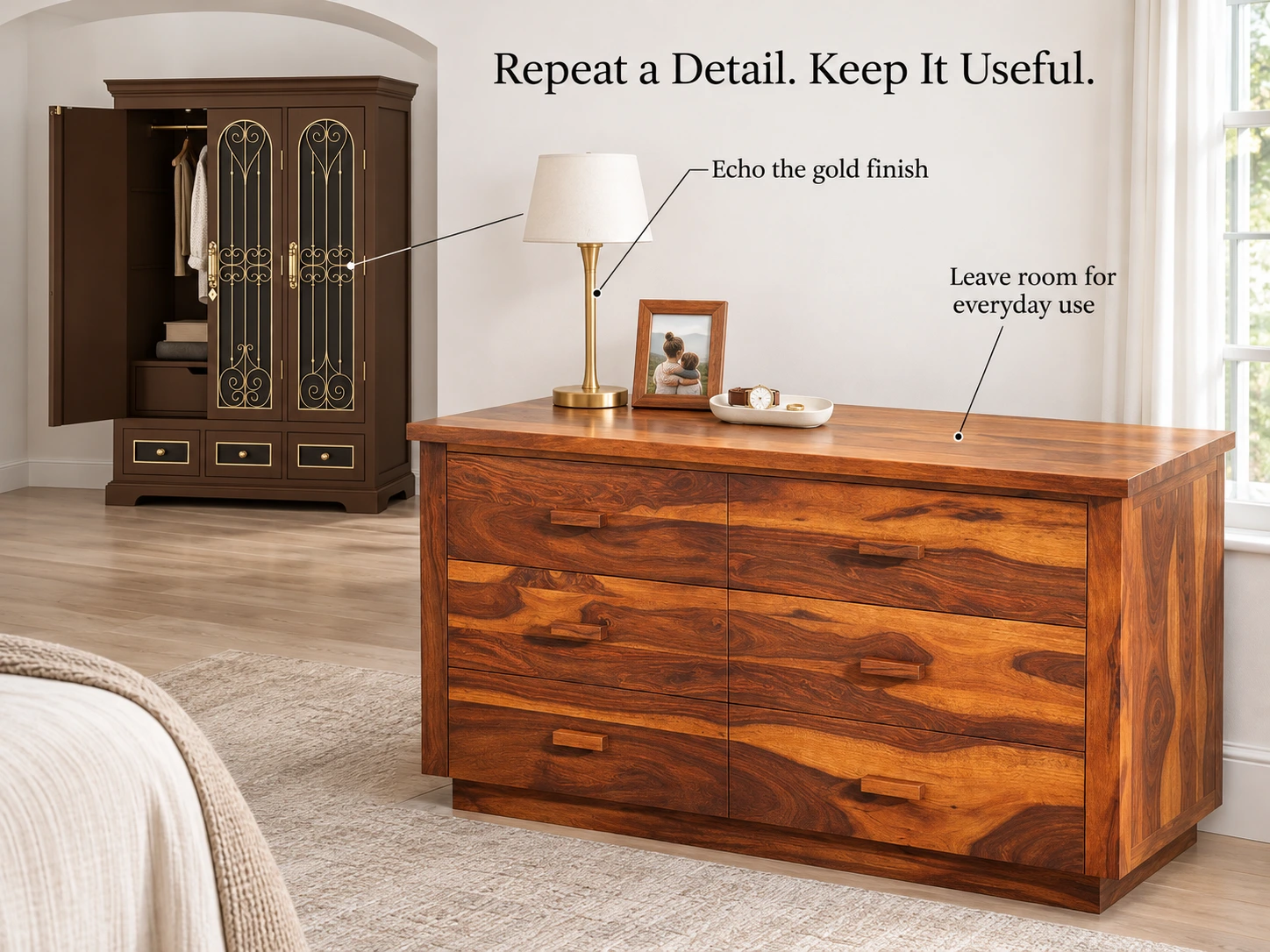
Keep part of the dresser top clear for daily use. A shallow tray for a watch or jewelry is helpful; a surface covered with decorations can leave everyday items spilling elsewhere.
Before replacing hardware, check hole spacing and compatibility. A small visual update should not create unnecessary damage.
Build Around Your Daily Routine
A cohesive bedroom should feel comfortable to live in. Give hanging and folded clothes separate homes, connect the furniture through a few shared details, and test the layout before ordering.
The most useful pairing is one that lets you find what you need, open every drawer comfortably, and move through the room without rearranging anything.

 Decor & Improvement Accessories