

Home & Decor Blogs: DIY, Interior Design & Lifestyle Ideas
Choosing the Right Size for Your Construction Dumpster Rental
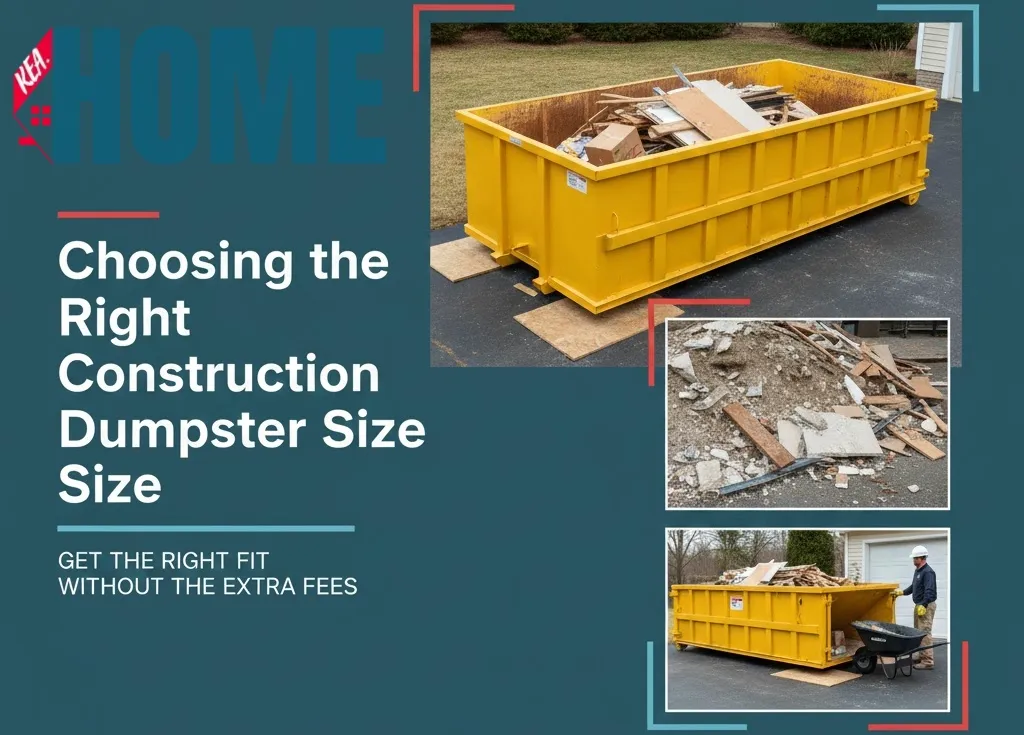
The idea of renting a construction dumpster rental seems easy until you are faced with a list of sizes and are at a loss on the size that will fit your project. Choose too small and you are paying the second haul. Choose too large and you have spent money on nothingness. The following is where to calculate what you really need.
What the Sizes Mean
Dumpster sizes are measured in cubic yards – that’s how much stuff they hold, not their physical footprint. Here’s what each size looks like and what it handles:
10-yard dumpster Dimensions: roughly 12 feet long, 8 feet wide, 4 feet high. Holds about 3 pickup truck loads of debris. Works for small garage cleanouts, single bathroom renovations, or minor landscaping jobs. Weight limit typically sits around 2-4 tons.
20-yard dumpster Dimensions: around 22 feet long, 8 feet wide, 4.5 feet high. This is the most popular size for residential work. Handles roof replacements on average-sized homes, deck removals, or flooring projects across multiple rooms. Weight limit usually falls between 4-6 tons.
30-yard dumpster Dimensions: approximately 22 feet long, 8 feet wide, 6 feet high. Good for major home renovations, new construction cleanup, or estate cleanouts where you’re emptying an entire house. Weight limit around 6-8 tons.
40-yard dumpster Dimensions: long, 22 feet, wide, 8 feet, high, 8 feet. It is business ground – full house demolitions, big building projects, or big business buildouts. Depending on the company, weight limit may take up to 8-10 tons.
Heavy Materials Change Everything
This is where human beings go wrong they decide to make an argument based on volume and forget about weight. A concrete or a dirt 10-yard dumpster will reach its capacity capacity with only half of it full. That thing still has to be lifted by the truck and transported on the highways.
Dense materials that eat through weight limits fast:
- Concrete and asphalt
- Brick and block
- Roofing shingles (heavier than they look)
- Dirt and sand
- Tile and stone
In the case of these materials, working smaller is better than bigger. Several rental businesses have special containers called heavy debris which are smaller but still rated at the weight – they are used to transport concrete and dirt.
Large and less heavy such as furniture, drywall and scrap pieces of lumber, and other construction waste? There is no need to think a lot about weight filling the container. That is when it is a matter of volume.
What Things Actually Cost
Prices vary by location, but ballpark figures help with planning:
- 10-yard: $300-450 for a week
- 20-yard: $400-550 for a week
- 30-yard: $450-600 for a week
- 40-yard: $500-800 for a week
The set weight allowance is available in most companies. Do it again and you are paying the overage charges, which range between 40 and 100 dollars per additional ton. That is why the question concerning heavy materials is so important.
The average rental days are 7-14. There is an additional charge of extended rentals, which are normally $10-20 a day. When your project will take more time, then include it in your budget or book your construction dumpster rental at the time when you are likely to produce the most amount of debris.
Where to Put It
You cannot fit in with only the dumpster footprint. The truck used in delivery should have space to move around – this is usually 60 feet of straight clearance to drop a roll-off container. Look at overhead obstructions also: taller containers may be blocked by power lines and tree branches as well as wires that hang down.
The positioning of the driveway will leave it on your premise but you will desire plywood sheets. The weight of the dumpster and the delivery truck may crack concrete, or destroy asphalt, particularly during hot weather.
Placement on the street ensures that your driveway remains in order even though most cities need to be permitted. Being caught without one would result in fines occasionally in hundreds of dollars. Most public works departments will have instructions on whether to place the call on the street or not.
Accessibility of it is not a decisive factor that you cannot be able to rent a construction dumpster. Other companies have smaller trucks when serving residential areas, or they have trailer-style dumpsters which do not require roll-off delivery.
Stuff You Can’t Throw In
Most dumpster rental companies prohibit certain items regardless of size. Mixing in prohibited materials can result in sorting fees or rejected loads:
- Hazardous chemicals, paint, solvents
- Batteries and electronics
- Appliances with refrigerants (fridges, AC units)
- Tires
- Mattresses (some companies allow these for an extra fee)
- Medical waste
- Asbestos-containing materials
These items need dedicated disposal facilities. Your local waste management department can point you to proper drop-off locations.
Common Mistakes
Underestimation of demolition wastes. Walls appear to be small when erect. Knock them down and that drywall, framing and insulation occupy much more space than anticipated. The debris that is created during a single room can be as much as 20 yards.
Forgetting expansion. The waste in construction does not pile up. Air pockets are created by irregular forms, fragments and mixed materials. What appears to be a small pile on the ground can usually occupy more than you would expect of a containing space.
Ignoring HOA rules. There are homeowners associations that do not allow dumpster placement, limit period of the rental and even demand prior notice. Confirm your HOA rules and then make a delivery date.
Waiting too long to order. Dumpster renting companies involved in construction are very active particularly in the peak seasons of renovations (spring and summer). You have to reserve several days in advance, more so large ones.
Loading Tips
How you load the dumpster affects how much you can fit:
Heavy things should be placed at the bottom and closer to the front of the container. Disassemble boxes and cardboard. Stuff in holes with small debris as opposed to air holes. Pieces of long material such as lumber must not stick out at angles but be flat.
Don’t load above the fill line. Overloaded containers cannot be legally shipped and the company will either issue you with money to pick up the excess contents or leave without accepting it until you fix it.
The walk-in dumpsters (with a door at one end) would be much easier to load heavy materials. Having loaded wheelbarrows you can push them rather than carry everything over high sides. When you are dealing with heavy lifting in your project, enquire whether they can do it or not.
Matching Size to Project
Quick reference for common projects:
- Bathroom remodel: 10-yard
- Kitchen renovation: 20-yard
- Roof replacement (average home): 20-yard
- Single room addition: 20-yard
- Whole house renovation: 30-yard
- Full deck removal: 20-yard
- Estate cleanout: 20-30 yard depending on house size
- New home construction cleanup: 30-40 yard
- Commercial demolition: 40-yard or multiple containers
When it comes to deciding between two sizes, it is normally better to go up one size than it would be to risk it overfilling. The difference in price between 20 yard and 30 yard is usually within $50-100 dollars whereas a second haul is significantly expensive.
Getting Your Construction Dumpster Rental
Call a few local companies and compare. Ask about:
- Total price including delivery, pickup, and disposal fees
- Weight limits and overage charges
- Rental period and daily rates for extensions
- Prohibited items
- Permit requirements for your area
- Scheduling flexibility if your project timeline shifts
Rental company will enquire on your project and guide you to select the appropriate size instead of pushing the largest one. When they lack questions, then it is a warning sign.

 Decor & Improvement Accessories