

Home & Decor Blogs: DIY, Interior Design & Lifestyle Ideas
From Entryway to Bedroom: 5 Unexpected Places to Hang a Modern Chandelier

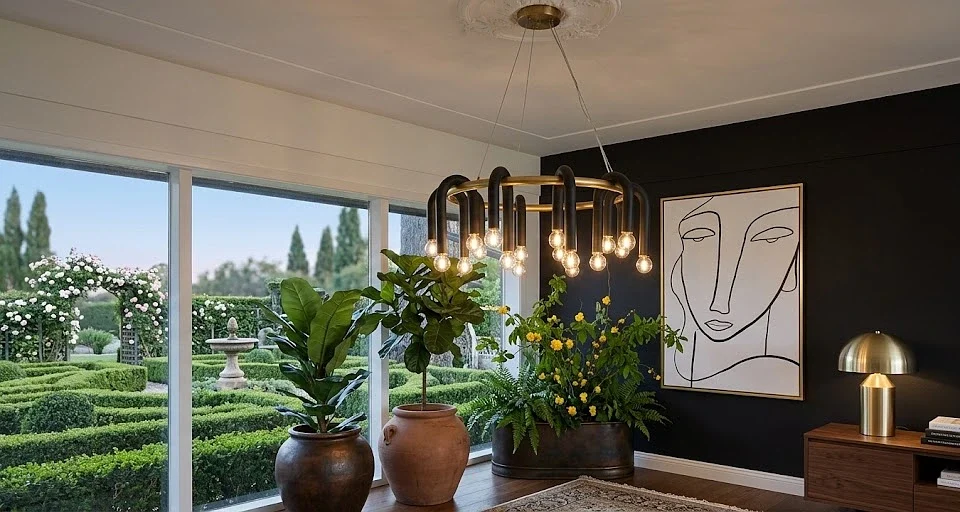
Walk through a well-stocked Modern Chandelier store today, and the display setups tell you something: less emphasis on dining rooms, more on spaces that weren’t traditionally in the conversation. That shift is happening for a reason, and the five spots below are where it’s most visible.
1. Entryway
Most entryways get a sconce on each wall and nothing else. A chandelier here does something wall lighting can’t — it pulls the eye upward, which is what makes a tight foyer read as less tight. The first design decision a visitor registers, before they’ve taken their coat off.
A few things affect how well it works:
- Tiered or elongated designs suit higher ceilings
- Semi-flush mounts handle lower ceilings without losing the effect
- Scale matters more here than in any other room — too large crowds the space, too small reads as an afterthought
2. Bathroom
Primary bathrooms have been shifting toward spa-style layouts for years, and lighting drives a lot of that feel. The moisture concern is legitimate — electrical safety standards under IEC 60529 require a minimum IP44 rating for fixtures in damp locations. Directly above a shower or tub, that requirement steps up to IP65 or higher. Outside those wet zones, a centrally hung chandelier is fully code-compliant and changes the character of the room in a way recessed cans never will.
3. Bedroom
The ceiling fan above the bed is functional. A chandelier is something else. It spreads ambient light across the room rather than pushing it straight down from a single point. Dimmer compatibility is non-negotiable here — the fixture needs to work across the full range from reading brightness down to near-dark. Placement: center it over the bed, not the room’s geometric midpoint. Those two points are rarely the same, and the difference in how balanced the room feels is noticeable.
4. Walk-In Closet
Flat overhead lighting in a closet makes colors look wrong. That’s a color rendering issue, not a matter of preference. Fixtures in the 2700K–3000K color temperature range give more accurate color rendering than cool fluorescent strip lighting — a distinction well-documented in retail display and residential lighting research by the Lighting Research Center at Rensselaer Polytechnic Institute. For a space where you’re deciding what matches what, that accuracy is the whole point. The chandelier doesn’t need to be large. Something compact handles it.
| Lighting Type | Color Temp Range | Color Rendering |
|---|---|---|
| Cool Fluorescent Strip | 4000K–6500K | Flattens fabric tones |
| Warm Chandelier (recommended) | 2700K–3000K | Accurate color reading |
6. Staircase
A staircase is one of the only spots in a house where a single fixture is visible from two floors simultaneously. That vertical space is either used or it isn’t. A cascading or multi-tier chandelier fills it in a way nothing else does. The clearance calculation works differently here — measure from the upper landing downward and confirm the lowest point of the fixture clears both the top of the staircase arc and the bottom landing. For stairwells with significant vertical height, adjustable suspension systems let you set the drop precisely.
 Decor & Improvement Accessories