

Home & Decor Blogs: DIY, Interior Design & Lifestyle Ideas
Signs Your Ceiling Has Serious Water Damage

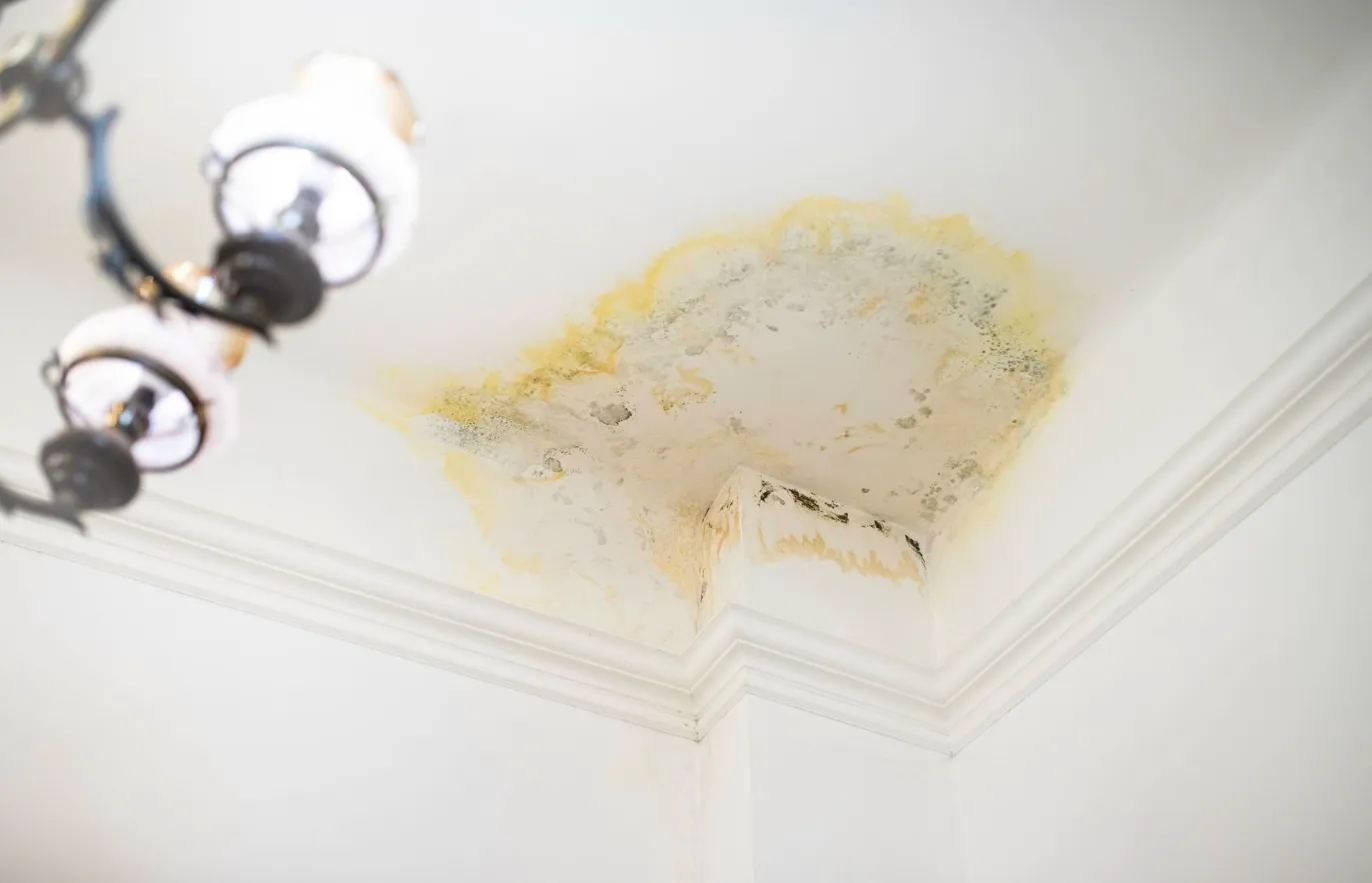
You probably weren’t staring at your ceiling when the stain first showed up. Nobody does. You notice it one random Tuesday, lying on the couch, glancing up, and suddenly there’s this brownish ring that definitely wasn’t there before. Except it was. It’s been growing for weeks, maybe longer, while water quietly ate through the material above your head.
About 14,000 people in the US deal with water damage every single day. The average insurance payout when someone files a water damage claim? Roughly $13,954. And plenty of damage never gets claimed at all because it builds up gradually, which most standard policies won’t cover. That’s money straight from your pocket for something that started as a mark you figured you’d paint over eventually.
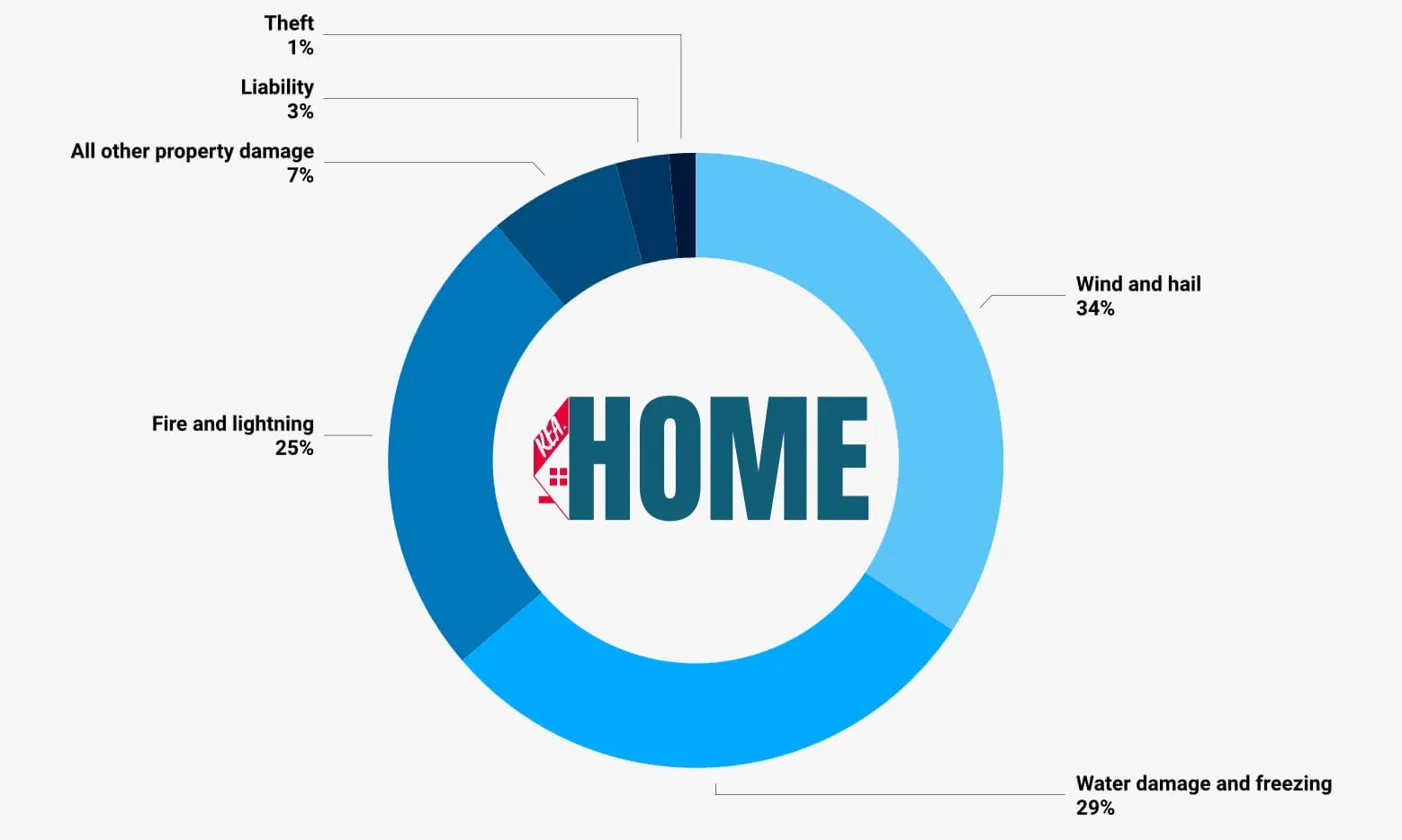
Types of Home Insurance Claims
Why Ceilings Get Water Damage
Roofs take the blame most often, and usually they deserve it. Cracked shingles, damaged flashing around vents and chimneys, underlayment that’s worn through after 20-odd years of weather, any gap gives rain a path inside. The water hits the attic, runs along a beam or rafter (sometimes travelling several feet sideways), and pools on top of your ceiling drywall. The stain you see downstairs might be nowhere near the actual entry point on the roof, which makes tracking it down a pain.
Plumbing is the other big one. A bathroom sitting directly above your living room is basically a ticking clock. Pipe joints loosen over the years, toilet wax seals degrade, and supply lines fatigue. These aren’t dramatic bursts, they’re slow weeps that saturate the ceiling material a little more each day until the drywall can’t absorb any more and starts showing it.
HVAC gets forgotten about constantly. Condensate drain lines clog. Ductwork sweats in a poorly ventilated attic. Bathroom exhaust fans that someone vented into the attic instead of outside all that shower steam has to go somewhere. If it’s dumping into an enclosed space above your ceiling, you’ve been creating a moisture problem every time anyone takes a hot shower.
10 Signs of Serious Ceiling Water Damage
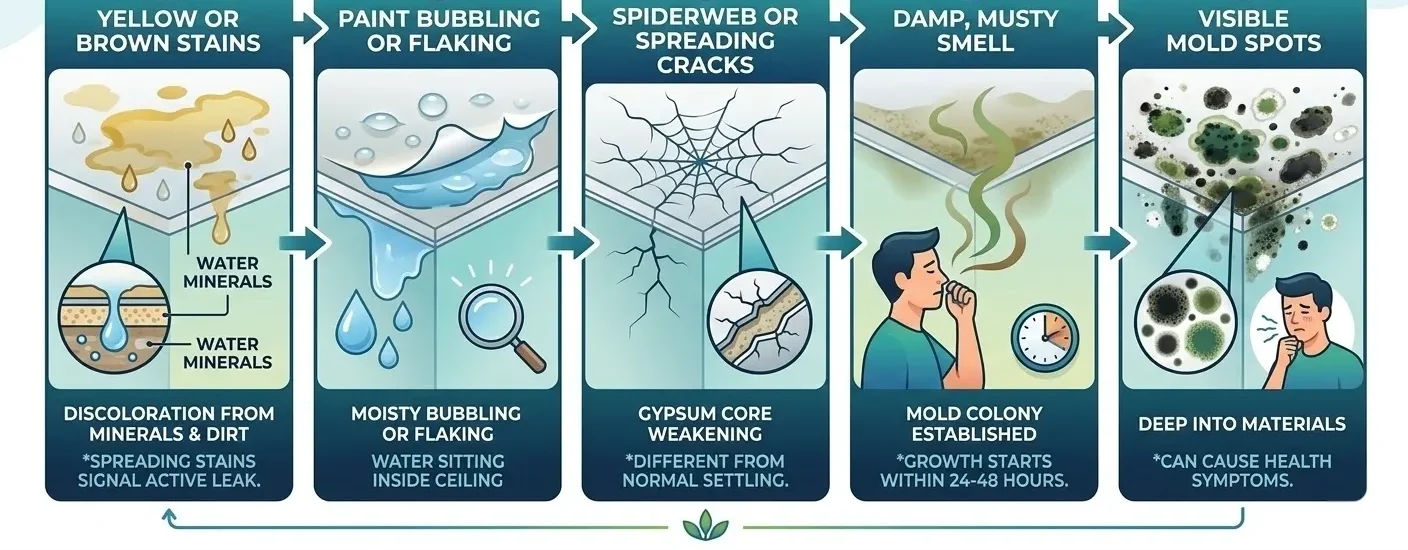
Yellow or brown stains are the ones everyone recognises. Water drags minerals and dirt through building materials and leaves discoloration behind as it dries. A stain that stays the same size might mean a one-off event, such as a single heavy rain or a spill upstairs. One that keeps spreading means the leak is still going.
Paint bubbling or flaking off happens when moisture behind the drywall breaks the bond between the paint and the surface. Small blisters at first. Then bigger bubbles that crack open or peel in sheets. This isn’t cosmetic. Water is actively sitting inside the ceiling with nowhere to drain.
Cracks that spread in a spiderweb pattern mean the gypsum core inside the drywall is weakening. Hairline cracks near room edges can be normal settling. Cracks radiating outward from a central point, or ones that keep growing? Different situation entirely.
A damp, musty smell even when everything looks fine. The EPA confirms that mold starts growing on wet surfaces within 24 to 48 hours of water exposure. It becomes visible to the eye after about 18 to 21 days in the right conditions. If you’re smelling it, the colony is already well established somewhere inside the ceiling.
Mold spots you can see black, green, and white patches in corners or around stained areas. The CDC notes that mold exposure causes symptoms ranging from a stuffy nose and coughing to wheezing and skin rashes, with worse reactions in people who have asthma or compromised immune systems. Mold on the surface almost always goes deeper into the material behind it.
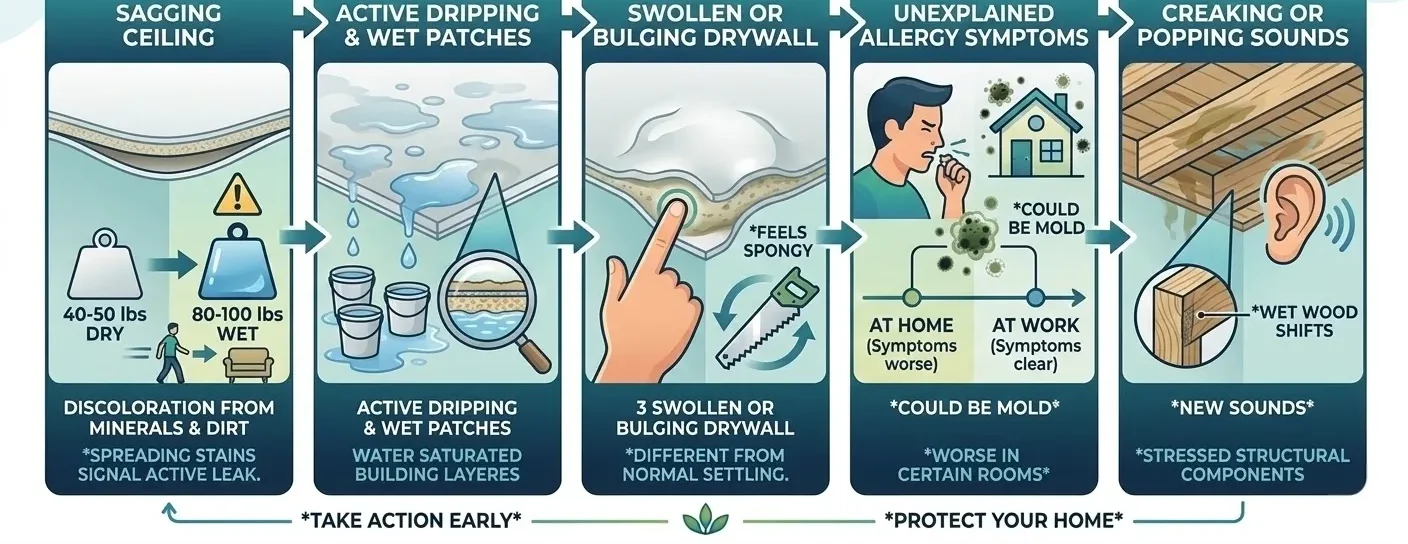
Sagging. This is the one that should genuinely worry you. Saturated drywall gets heavy. A standard 4×8-foot sheet of half-inch drywall weighs around 40 to 50 pounds dry. Wet, that weight can roughly double. The screws holding it to the ceiling joists weren’t built for that kind of load. Sagging means collapse is a real possibility; get people and furniture out from under it.
Active dripping or wet patches, water coming through visibly. A bucket catches the immediate mess, but the volume of water needed to actually drip through a ceiling means the leak above is significant. Don’t just manage the symptoms.
Swollen or bulging drywall feels spongy when you press it. Healthy drywall is rigid and firm. Once the gypsum core absorbs enough water to expand and deform, that section is done; it needs cutting out and replacing, not drying.
Allergy symptoms that don’t make sense, such as sneezing, headaches, and irritated eyes, happen at home but clear up at the office. Mold spores in the air trigger these reactions, and they’re easy to chalk up to seasonal allergies. If symptoms are worse in one specific room or after rain, pay attention to that pattern.
Creaking or popping from above. Wet wood framing expands, shifts, and settles differently than dry wood. New sounds from your ceiling, especially ones that coincide with weather changes or get louder over time, can mean structural components are stressed by moisture.
How Bad Is It?
A small, dry stain that hasn’t changed size in weeks is probably a past event that resolved itself. Worth monitoring, but not an emergency. Maybe you just repaint it and keep an eye on things.
Peeling paint combined with a faint musty smell and a stain that’s slowly growing is an active leak causing real damage. You need to find the source and fix it. Getting a professional to look at it makes sense at this stage because the leak could be coming from somewhere unexpected.
Sagging, visible mold, soft drywall, or actual water dripping through? That’s serious. Stop using the room. A trusted water damage restoration expert needs to assess it, not just a handyman with a bucket of joint compound. The ceiling could come down, and the mold exposure creates health risks that get worse the longer you wait.
| Severity | Signs | Action |
|---|---|---|
| Minor | Small dry stain, firm drywall, no smell | Watch it. Repaint if stable |
| Moderate | Growing stain, peeling paint, faint odour | Find the leak. Get a pro inspection |
| Severe | Sagging, mold, soft/spongy areas, dripping | Evacuate the area. Call restoration professionals now |
What to Do When You Spot Damage
Stay clear of anything that’s sagging. A chunk of waterlogged drywall coming down from ceiling height is heavier than people expect, and it can hurt you. If the water source is a pipe or appliance, shut it off. Roof leak? Tarped what you can from outside until a roofer gets there.
Pull furniture and anything valuable away from underneath. Stick containers under active drips. Get air circulating by opening windows and running fans, but leave the HVAC system alone if you think water might be near electrical components in the ceiling cavity. Wet wiring and running current is a combination you don’t want.
Photograph everything before you touch it. Insurance adjusters want to see the damage as it was discovered, not after you’ve torn half the ceiling down trying to find the source. The more documentation from the early stages, the less arguing later.
And call a trusted water damage restoration expert, not next week, now. Restoration crews have industrial dehumidifiers, moisture meters that read behind walls, and the experience to find leaks that have been traveling through your ceiling framing for who knows how long. A household fan pointed at a wet stain does almost nothing useful.
Keeping Your Ceiling Dry
Get on the roof twice a year. Clean gutters while you’re up there. Clogged gutters force water backward under shingles and into the roof deck. Small roof repairs cost almost nothing compared to the water damage they prevent.
Bathroom exhaust fans need to vent outside, not into the attic. Run them during showers and keep them going for 15 minutes after. Check your attic for proper ventilation if it feels damp or stuffy up there; moisture is building up with nowhere to go.
Leak detectors are maybe the most underrated $20 purchase you can make. Stick them near washing machine hookups, under sinks, near the water heater, and anywhere supply lines run above ceilings. A chirping sensor at 2 am beats waking up to a sagging ceiling and a $14,000 restoration bill.
The EPA recommends keeping indoor humidity below 50% to prevent mold growth. A basic hygrometer costs next to nothing and tells you whether your home’s humidity is under control or quietly creeping into the danger zone.
 Decor & Improvement Accessories