
Home & Decor Blogs: DIY, Interior Design & Lifestyle Ideas
Smart Fire-Resistant Materials for Safer Modern Homes
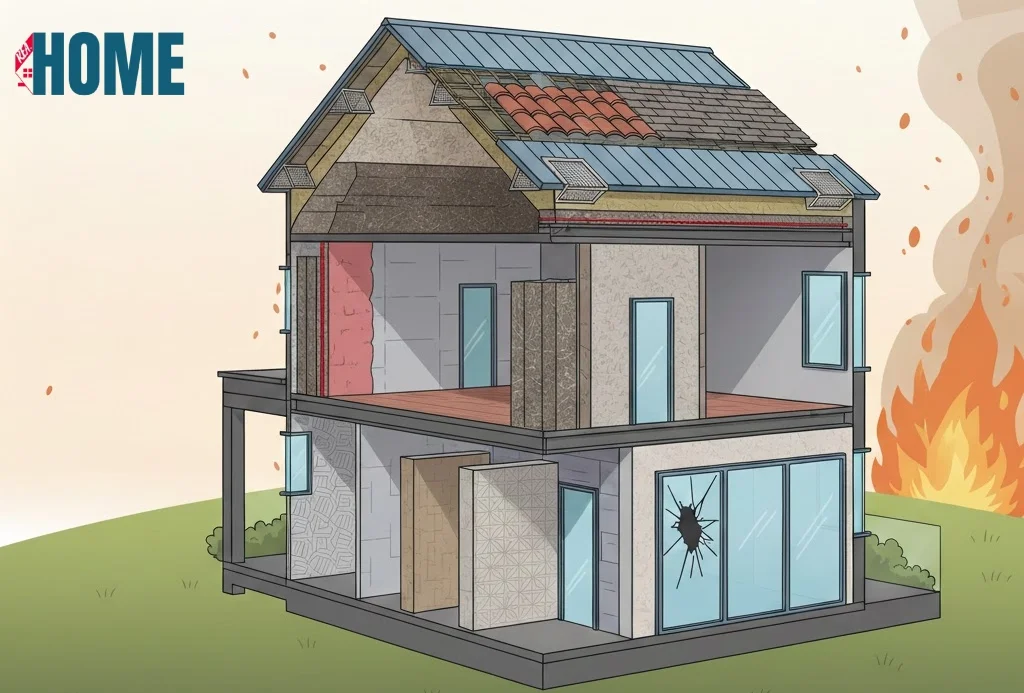
As global reports of wildfires and residential fires increase, there is in modern construction a shift to what may be termed as smart and resilient building materials. Though at a large scale, there is still use of traditional fire-resistant materials like concrete and steel, which do a great job, present-day home building is also very much about integrating into structures advanced systems that, in turn, delay flame spread, stand up to high heat, and buy precious time for evacuation.
Also, it is true that for fire resistance to improve, it is not just about putting in better wall panels. Instead, what is seen is that the role of the roofing systems, insulation, glazing technologies, and also meeting very closely to the building codes all come into play in the design of safer homes.
Fire-Resistant Roofing Systems
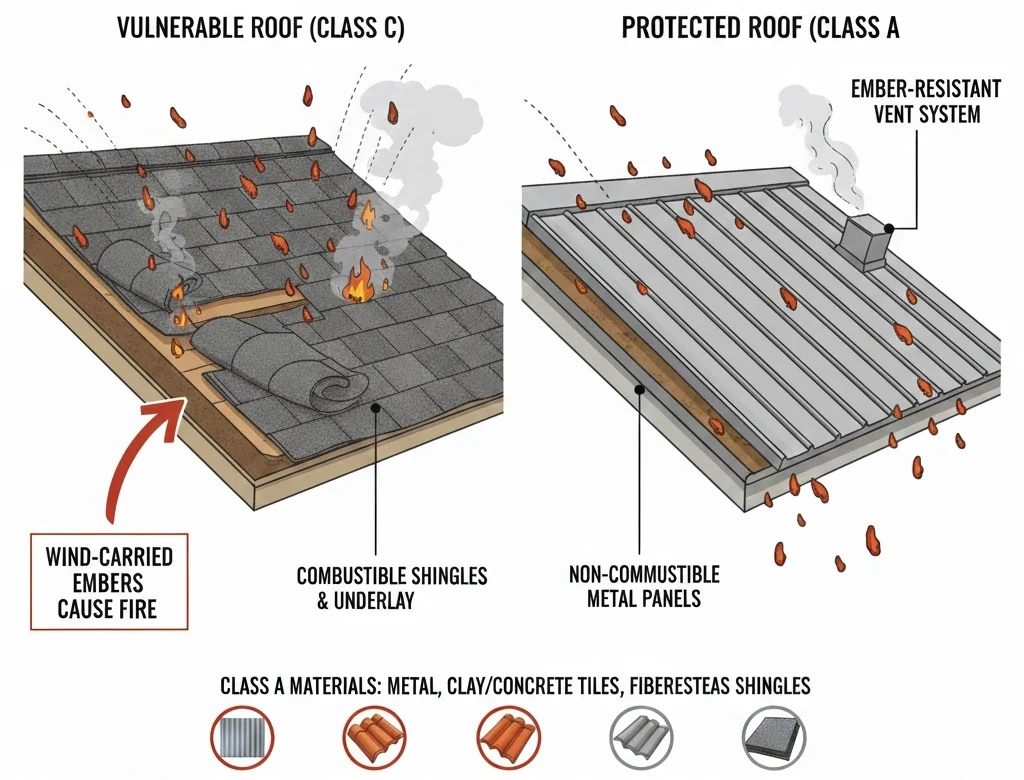
In a home, the roof is the element that sees the most action in a wildfire. Wind-carried embers will land on combustible roof materials and cause a fire to break out in a matter of minutes. That is why in high-risk areas building codes require Class A fire-rated roofing materials, which is the highest fire resistance classification available.
Materials that include metal roofing, clay tiles, concrete tiles, and certain asphalt shingles that have fiberglass reinforcement present better fire performance. In particular, metal roofing is noncombustible and also drops embers well. Also, concrete and clay tiles do very well because of their dense structure and non-flammable makeup.
Proper installation is key. Even fire-rated roofing materials will fail if there are gaps that allow embers in under the roof deck. Fire-resistant underlays and ember-resistant vent systems greatly improve overall performance.
Advanced Fire-Resistant Insulation
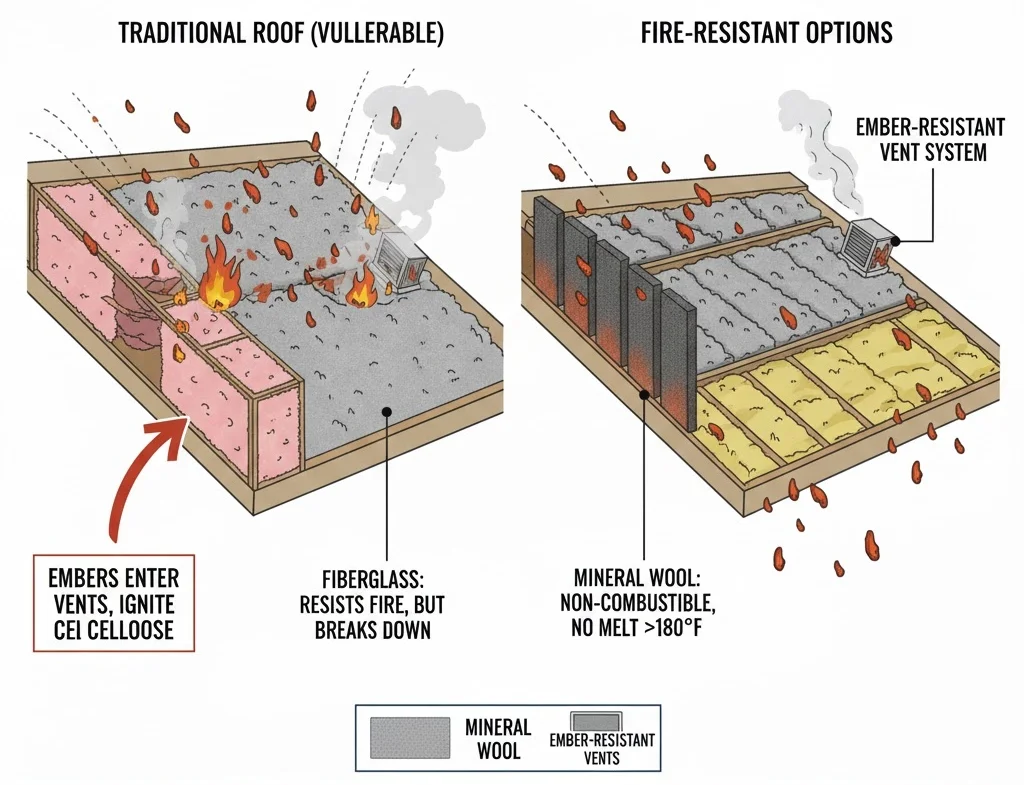
Insulation is a component that usually is left out of fire safety talk, which is a mistake, as it does play a large role in the extent of the damage a fire does. While fiberglass has some quality of fire resistance at first, in long-term heat exposure it will break down.
Mineral wool, which is also known as stone wool or rock wool, is the best option out there. Made from volcanic rock and slag, mineral wool is of natural non-combustible quality and will not melt at over 1,800°F (982°C). Also, it is very efficient for thermal and acoustic insulation.
Spray foam insulation is a different situation. Some formulations do have fire retardants, but the foam itself may still catch fire in some situations. For improved safety, builders tend to use spray foam with ignition barriers like fire-rated drywall or special coatings.
In fire-prone areas, attention should be given to attic insulation. Embers may cause traditional cellulose insulation to catch fire via venting systems. By installing ember-resistant vents and choosing non-flammable insulation materials, there may be a great reduction in this risk.
Fire-Rated Wall Assemblies
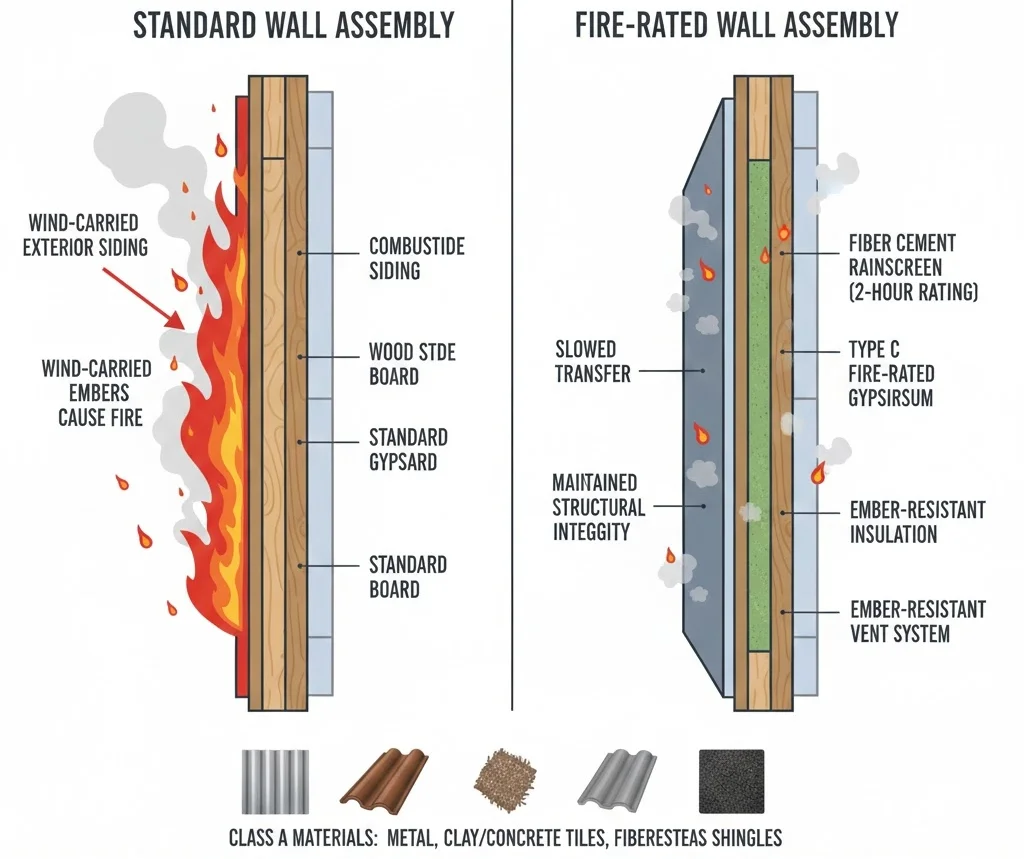
Walls are the main elements in flame spread prevention, which is seen both inside and out. Today there is in modern fire-rated assemblies the use of advanced gypsum boards, fiber cement panels, and magnesium oxide boards, which in turn improves structural resistance.
Type I and Type C gypsum boards, which include glass fibers and special additives for better heat performance. When installed right, these panels may offer up to a 2-hour fire rating, which is dependent on the assembly configuration.
Fiber cement boards do not burn at all, and they also preserve structural integrity during flame exposure. These are very appropriate for exterior cladding in fire-prone areas. Also, magnesium oxide boards put up a better fight against moisture and mold, which is why they are very much in demand in areas of high humidity and also high fire risk.
Intumescent Coatings and Structural Protection
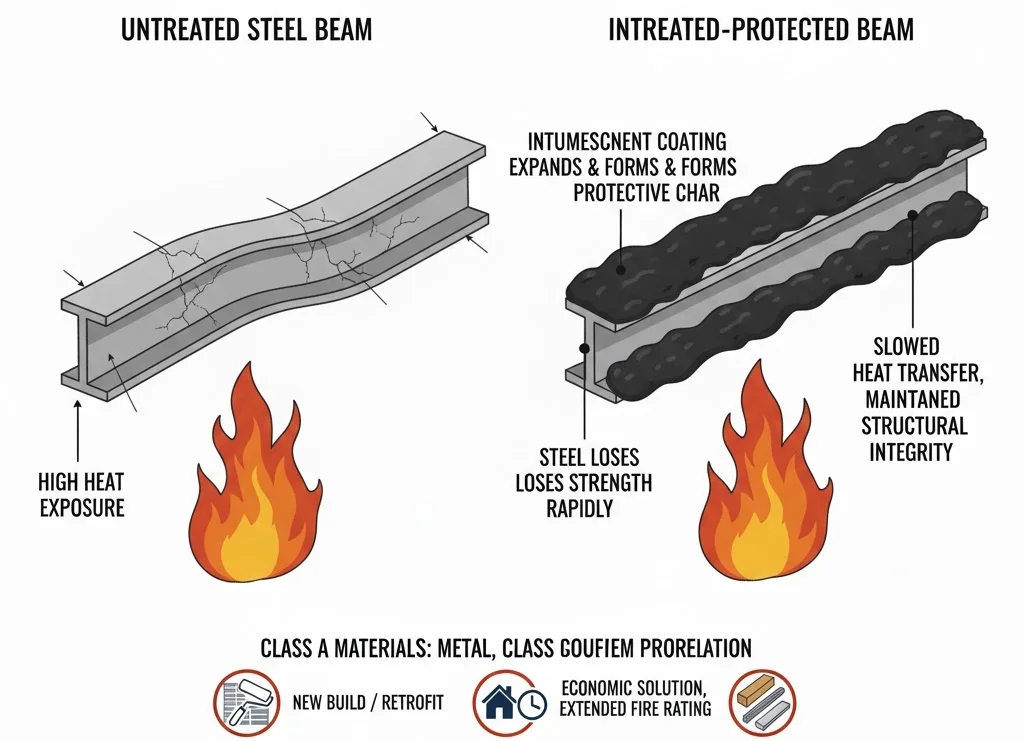
Intumescent coatings are at the fore of fire protection innovation. They go on like any other paint, but upon high heat exposure, they expand greatly, which in turn forms a protective char layer for the materials beneath.
Structural steel has a lot to benefit from the use of intumescent coatings, as steel will see a great reduction in strength when exposed to very high heat. What intumescent does is slow the rise in temperature, and in that time the structural integrity is preserved over long periods. Also, wood frame components can improve their fire performance with the right application of intumescent products.
These coatings are a common solution for new build and retrofit projects, which also put forth an economic way to improve fire performance without great structural intervention.
Fire-Resistant Windows and Glazing
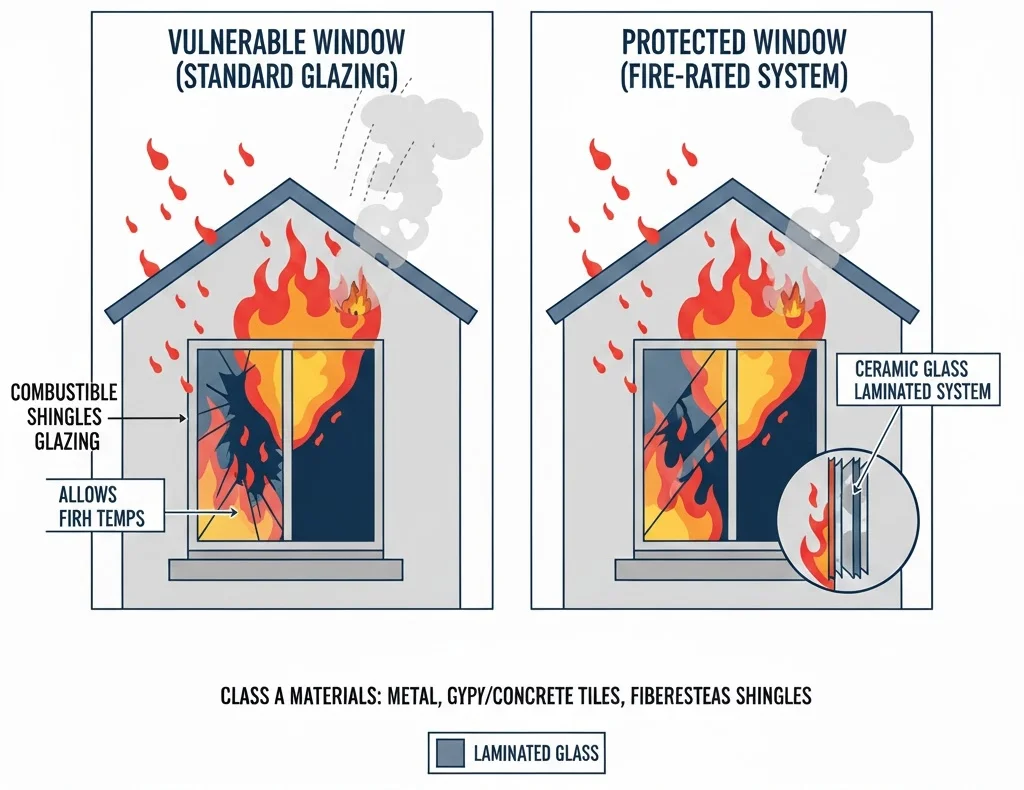
Windows are a common issue in fire. It is seen that standard glass will shatter at high temps, which in turn allows for greater fire spread. Fire-resistant glazing systems are a solution to this.
Ceramic glass panels stand up to very high temperatures and will not break, which makes them fit for high-risk roles. Also, there are multilayer laminated systems with fire-resistant interlayers that are used as a barrier to reduce the transfer of radiant heat.
Templing and lamination of glass is a moderate solution that is seen in areas of low fire risk. Though they are not as effective as dedicated fire-rated systems, they do perform better than typical glazing.
Building Codes and Compliance
Adoption of fire-resistant materials is a requirement that goes beyond design choice in many cases, as many regions have put in place very strict building codes to reduce fire risk. In the U.S. the International Residential Code and International Wildland-Urban Interface Code provide the framework for what is to be done in fire-prone areas.
Key requirements may include:
- Class A roofing materials
- Fire-resistant exterior wall coverings
- Ember-resistant vent designs
- Protected eaves and soffits
- Minimum defensible space around structures
Compliance, which in turn improves safety, also has the benefit of better insurance. In fire-prone areas, insurers may offer reduced premiums to homes that are either built or retrofitted with approved fire-resistant materials.
Long-Term Value and Risk Reduction
Investment in fire-resistant construction has present and future benefits. In terms of life safety that is improved, also these materials reduce repair costs, limit structural damage, and improve property resilience.
Home buyers today are paying more attention to fire risk, which is high in areas that see repeated wildfires. In many cases, properties that are built with the best fire protection systems do stand out in the market. For those looking to sell quickly, companies that specialize in We Buy Fire Damaged Houses can offer a fast and fair solution. Also, over time, the cost of insurance goes down, and maintenance is reduced, which, in the end, ends up balancing out the initial investment in better materials..
Making Strategic Decisions
Not all homes require the top tier of industrial fireproofing. It is seen that risk-based planning is the way to go. In the urban setting, which has quick access to emergency response, there may be internal fire control, which is enough; in the rural or wildfire-prone areas, there should be more focus on protecting the home’s exterior.
A large-scale approach to fire resistance, which includes roofing, insulation, wall systems, coatings, glazing, and code compliance, works as an integrated system. When these are thought through, there is great improvement in safety, durability, and peace of mind.
As seen in the growth of building tech, fire-resistant materials are becoming more available and affordable. In present-day design and build, what is being seen is the integration of these smart solutions, which in turn provide home and business owners with safer living spaces that are better equipped for today’s increasing fire risks.

 Decor & Improvement Accessories