

Home & Decor Blogs: DIY, Interior Design & Lifestyle Ideas
Transform Your Kitchen with Stunning Quartzite Countertops

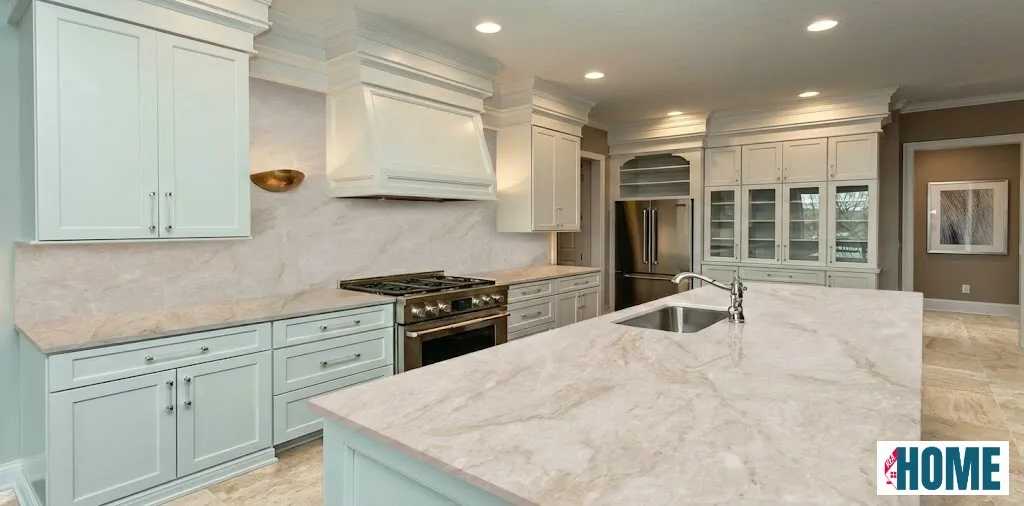
So you’re redoing your kitchen and the countertop decision is driving you mad. Granite, marble, quartz, quartzite, concrete everyone’s got an opinion and half of them contradict each other. Quartzite keeps showing up in these conversations, though, and once you understand what it actually brings to a kitchen, it’s easy to see why.
Quick distinction that trips people up constantly: quartzite and quartz are not the same thing. Quartzite is natural stone, mined from the earth, cut into slabs. Quartz (the countertop kind) is engineered ground-up minerals mixed with resins and pigments in a factory. Completely different products. If a price seems weirdly low for “quartzite,” you might be looking at engineered quartz by mistake.
How Quartzite Forms and Why That Matters
Quartzite was sandstone once. Millions of years of underground heat and pressure fused those sand grains into something dramatically harder and denser. The result is a metamorphic rock that scores around 7 on the Mohs hardness scale, sometimes reaching 8 depending on the variety. A steel kitchen knife sits at about 5.5 on that scale. So daily chopping and prep work won’t scratch it — though your knives might suffer if you skip the cutting board.
Granite, which is the default comparison, falls between 6 and 7 on the same scale. Marble is way down at 3 to 5. That gap between marble and quartzite is huge in real kitchen terms. Marble etches the second lemon juice or red wine touches it. True quartzite doesn’t etch from acids at all. You get marble’s elegance with none of marble’s anxiety.
One warning on shopping: some slabs labelled “soft quartzite” are actually marble or dolomitic marble that got mislabeled, whether intentionally or not. Real quartzite is hard. Full stop. There is no soft version. If something marketed as quartzite feels softer than expected, push back and ask the supplier to verify.
What It Looks Like
Every quartzite slab is different because it’s a natural material shaped by whatever was happening underground millions of years ago. Mineral deposits, trace elements, specific pressure conditions — all of it produces patterns and coloring that can’t be replicated. Two slabs from the same quarry won’t match exactly.
The variety you get across different quartzites is pretty wide. Taj Mahal has this warm ivory base with gold veining running through it works in almost any kitchen style. Super White looks so close to Carrara marble that untrained eyes can’t tell the difference, but it’s denser and far more resistant to staining. Sea Pearl brings in light greens and greys with a wave pattern. Mont Blanc goes heavy on grey-and-white contrast.
Colour range goes beyond whites and creams, too. Blues, greens, pinks, reds from iron oxide, deep charcoal, gold — there’s more out there than most people realize until they visit an actual stone yard. Lighter quartzites open up a kitchen and work well in compact spaces. Darker ones create weight and contrast, especially against lighter cabinets.
If you’ve been considering marble countertops but keep reading horror stories about maintenance and etching, quartzite gives you that same refined look without the constant worry. Same visual impact, much less hand-holding.
Handling Daily Kitchen Abuse
Hot pots from the stove won’t scorch it. Knives won’t scratch it during normal use. It handles the kind of daily punishment a busy kitchen dishes out better than almost anything else you can put on your cabinets. Granite holds up well too, but quartzite has that slight hardness edge.
Trivets are still a smart move for anything extremely hot sitting in one place for a while — that’s true of any natural stone. And while quartzite resists chipping under normal conditions, dropping a cast iron skillet on a thin edge could cause damage. Common sense applies.
The durability question people really care about is how long these things last. With basic care and regular sealing, quartzite countertops go for decades. You’ll probably redesign your kitchen out of boredom before the quartzite gives you a reason to replace it.
Keeping Them Clean
Quartzite is porous. Less so than marble, significantly more than engineered quartz (which has zero porosity). Those microscopic openings in the stone can absorb liquids over time, which is why sealing is non-negotiable.
Your fabricator handles the first seal at installation. After that, you’re resealing roughly once a year, maybe stretching to 18 months if your kitchen doesn’t see super heavy use. Some particularly dense quartzites can go even longer between seals.
Checking whether you need to reseal is dead simple: put a few drops of water on the surface. Water beads up and sits there? You’re good. Stone darkens under the water within five to ten minutes? Time to reseal. The whole process is a couple of hours and most people do it themselves.
Day to day, warm water and mild soap with a soft cloth handles everything. No vinegar-based cleaners, nothing with citrus acid, no abrasive pads — those eat through the sealant. Wipe up dark spills (wine, coffee, tomato sauce) reasonably quickly. Not because the stone will fall apart, but because no sealant lasts forever and there’s no point testing its limits with a puddle of merlot sitting there overnight.
Total Cost
Nobody’s going to tell you quartzite is budget-friendly. It isn’t. Installed prices in 2025 range from about $65 to $220 per square foot depending on the stone variety, your fabricator, where you live, and how complicated your kitchen layout is.
Common white quartzites that most stone yards stock run $65 to $85 per square foot installed. Mid-range stones with stronger veining or colour — Taj Mahal, Macaubas, and similar — tend to sit between $90 and $150. Rare or exotic slabs with unusual colour patterns push past $200.
For a small kitchen needing around 25 to 30 square feet of countertop, total project cost lands somewhere between $1,600 and $6,600. Bigger kitchens, islands, waterfall edges, multiple sink cutouts — all of that scales the price up.
Worth knowing: the stone slab is typically only about half your total cost. Fabrication, edging, cutouts, and installation make up the rest. Quartzite is harder to cut than granite, so fabricators need diamond blades, more time, and more expertise. Custom edges like ogee or bullnose add labour charges that wouldn’t be as steep with softer materials.
| Material | Installed Cost/Sq Ft | Sealing | Mohs Hardness |
|---|---|---|---|
| Quartzite | $65–$220 | Every 1–2 years | 7–8 |
| Granite | $40–$185 | Annually | 6–7 |
| Marble | $65–$105 | Every 6 months | 3–5 |
| Engineered Quartz | $50–$120 | None | ~7 |
Resale and Long-Term Value
Kitchen upgrades tend to pay back pretty well when selling a house. Quality countertop remodels recoup roughly 60% to 80% of their cost at resale according to remodeling industry data. That’s not a guarantee quartzite specifically will add X dollars to your sale price — nobody can promise that — but stone countertops signal to buyers that the kitchen has been taken seriously.
An NAHB study found 78% of homebuyers said they preferred stone countertops over other materials. Quartzite reads as premium without being impractical, and that combination moves properties. Buyers see it and think: this kitchen is done, I don’t need to redo anything here.
The less obvious value argument is cost per year. Quartzite costs more upfront than most alternatives, sure. But it lasts decades without replacement. A cheaper material that wears out or goes dull after eight or ten years and needs swapping out might actually cost more over the life of your home.
Shopping Tips That Actually Help
Go to a stone yard. In person. Samples and photos are useful for narrowing things down, but quartzite has natural variation across every slab and you need to see the actual piece going into your kitchen. Veining shifts, colours change from one end to the other, and how light hits the surface makes a real difference that a 3-inch chip sample can’t show you.
Look at the edges of the slab, not just the centre. Some quartzites have more porosity or colour variation near the edges. A decent fabricator will point this stuff out — if they don’t, ask about it.
And again — make sure you’re buying actual quartzite and not engineered quartz that someone’s labelled confusingly. Different material, different maintenance needs, different price bracket. The two get mixed up constantly.
 Decor & Improvement Accessories