

Home & Decor Blogs: DIY, Interior Design & Lifestyle Ideas
Metropolitan Area Network: Simple Home Setup
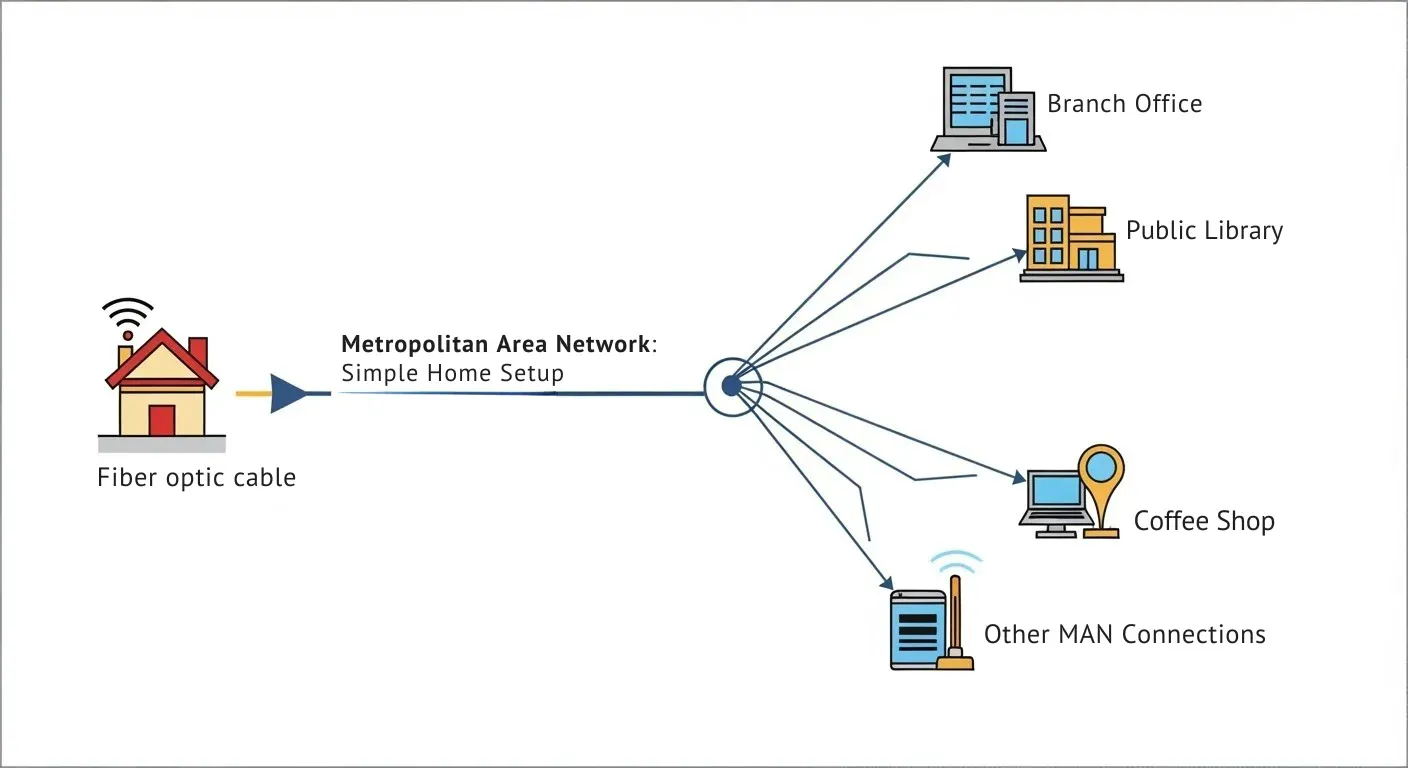
You are on the phone taking work calls in the attic office, you are watching a marathon game in the basement, and the gaming computer of your kid in the garage is downloading 4K magic without any stuttering whatsoever. However, when your living room turns into an online battlefield instead of a smooth connectedness, then it is time to start thinking bigger. Get into Metropolitan Area Network or MAN. Now, I can see what you are thinking. Is not that to skyscrapers and city you have nothing against you, follow me. Here, we are going to dispel the mystery around MANs and how to make one in your backyard that can cover your entire property just like a business system, without spending corporate money.
What Exactly Is a Metropolitan Area Network
You might picture a MAN as some massive web linking office towers across downtown, and yeah, that’s spot on for the big leagues. A Metropolitan Area Network connects computers, devices, and even entire buildings over a chunk of space think a few miles, like a neighborhood or campus. It bridges the gap between your cozy little Local Area Network (LAN, basically your Wi-Fi at home) and the wild Wide Area Network (WAN, hello, internet). We are talking gigabits per second, low lag, and enough bandwidth to handle a family of streamers without breaking a sweat.
For home setups, a “simple MAN” isn’t about conquering the city. It’s adapting those principles to your slice of suburbia. Imagine stringing high speed links across a sprawling house, guest cottage, or even your backyard shed office. You use affordable fiber optics or powerline adapters to create a backbone that feels enterprise grade but fits your wall art. No more dead zones or buffering horrors your Netflix flows as smoothly in the tool shed as it does on the couch. Traditional MANs rely on telecom giants with fiber rings and microwave towers, but at home, you’re the boss. You pick mesh systems or Ethernet runs to knit it all together. It’s empowering, really like giving your home superpowers without calling in the cable guy every week.
Why Bother with a Simple Home MAN Setup
In case your present arrangement allows you to leave the house and binge watch and Zoom without losing your poise, Well, I have too short a life in the coffee house to have spottily connections. To begin with, it is the reign of coverage. In a large house or one that has thick walls (glaring at you, you old brick charmers), even standard Wi-Fi slows down quicker than a bad diet. Home MAN scales that range, covering every nook to have smart fridge and smart thermostat talking without dropping the ball. One of my friends one time was in a gym he had at his garage, and it was also his Wi-Fi dead zone after becoming a man, Peloton was loading in a second and a third, and he was able to even maintain his workout.
Next are speed and reliability, and they are game-changers. We live in the age when everything is remote, work online, 8k stream, virtual family game night. A MAN-style setup is traffic-prioritized, so your video call does not stutter as the cat video plays itself on the background. Plus, think future-proofing. Children develop, their interests increase (welcome home server to store movies), and technology advances. Today is not tomorrow, today is the time to invest and not tear down walls in five years. And security? Oh boy. A MAN will allow you to divide your network, where a guest Wi-Fi with the in-laws is isolated on the network which does not have access to your bank application. It is the efficiency that comes in a peace of mind.
However, there is one more thing cost savings creep in as well. Home bundling saves on extenders and boosters which empty your wallet. It is a win environmentally, as the number of gadgets will be reduced, which will result in less e waste. And shall we pour the pleasure in: That smooth shift of kitchen tablet to living room television? Pure magic. It transforms the technology problems into wow, such as when my system allowed me to operate the grill cam when I was in the hammock. Never thought that barbecues would be high-tech.
| Feature | Standard Home Wi-Fi | Simple Home MAN Setup |
|---|---|---|
| Coverage Area | Up to 2,500 sq ft, spotty in edges | 10,000+ sq ft, seamless across property |
| Max Speed | 100-500 Mbps, drops with distance | 1-10 Gbps, consistent everywhere |
| Device Handling | Struggles with 20+ devices | Breezes through 50+ with no lag |
| Setup Complexity | Plug-and-play, but tweaks needed | Moderate DIY, tools like a drill |
| Monthly Cost Savings | Baseline | Up to $20 less on boosters/extenders |
| Future-Proof Factor | Good for 2-3 years | Solid for 5-10 years |
Planning Your Simple Home MAN The Prep Work That Saves Headaches
Stop before you go to grab the toolbox and have a brain dump. Draw a map of your room as though it were a treasure map. Note rooms, outside areas, and painful areas that does signal ghost you now? Counters: laptops, cell phones, smart bulbs, the old NAS disk with cobwebs. Jot bandwidth requirement 4K streaming consumes 25 Mbps per stream, and therefore x2 (so, chaos factor) should be multiplied.
Target next is $300-800 on basics, increasing with size. Wall-running Drill bits, cable testers, to prevent the meltdown of “why won’t this work? Indulge me: Once I forgot to map at all, and I made my attic into a cable underground. Measure twice, curse once, lesson learned. Check local regulations also; in case you are burying fiber outside, you may need a permit, but in indoors you can get away with whatever you like.
Gather intelligence on your back bone internet. The next upgrade of your ISP is the gateway upgrade to gigabit, provided you are not at that point yet. There are apps such as Wi-Fi Analyzer (free on Android) which scan interference and identify microwave ovens as the signal robbers they are. This stage is insignificant, although it is between a fine sail and a rough regretting. Believe me, a good plan will make I think I can a Nailed it.
Essential Gear for Your Home MAN Build
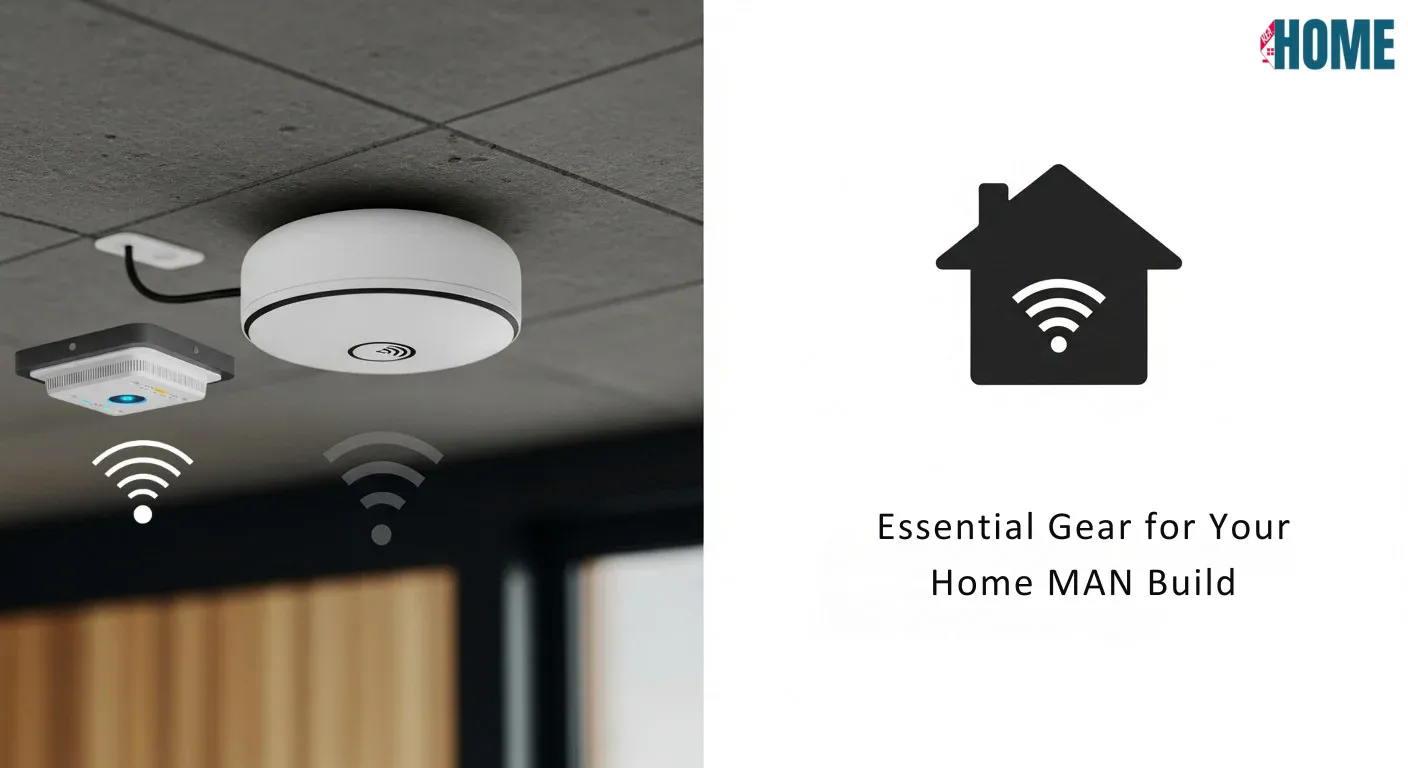
Shopping time, not spending time. Mainstream The router snatch a mesh system such as Eero Pro or TP Link Deco at a price of $200-400. These rogue boys form a network of nodes that either communicate wirelessly or wired and fake the distributed smarts of MAN. Wire Add a switch (Netgear 8-port gigabit, $20) to wired hubs. Cables? Cat6 Ethernet inside (0.50/foot), or for running outside (yard). Dreaming bigger? Predictably, cheap fiber kits on Ubiquenti are reaching 10G speeds at less than 100 dollars in the future you are going to high-five you.
Powerline adapters are a solution to the walls problem, and can be used to transfer data at 1Gbps through the electrical lines. To add the outdoor flair, weatherproof access points such as Ubiquiti UniFi will loop the shed. Included firewalls in new routers, and an additional layer of VPN such as ExpressVPN (8/month) used. I always like to add smart plugs to make remote reboots, as nothing is more adulting than being able to reboot the frozen router you are sitting on the couch. Stay small: Purchase modular to be able to expand without having to tear it.
Wiring Up Your Simple Home MAN
Alright, sleeves up. Step one: Consolidate your command center. Choose a cool and airy place to place the router and switch such as a closet or a basement rack (50 dollars on Amazon). Install the modem, then router through Ethernet. open the app, create a strong password (with letters, numbers, the weird symbol), and enable the WPA3 encryption. Boom, heartbeat established.
In the case of wired runs, snake the wires through walls or attics, and it can be done with a fish tape tool (approximately $15). Label ends (“Living Room TV – Don’t Touch!”) to avoid confusion. Outdoors? Bury fiber conduit or Ethernet in PVC-pipe: a 100-foot outdoor kit will cost 30. Link nodes: Use key room plug switches, daisy-chain to extend. Try them using a cable checker that costs $10 – green lights win dances.
Put mesh nodes in strategic locations central hallways, far ends. They are auto optimized, but adjust through app on “strongest signal” mode. Insert plug adapters in two adjacent holes, match them as a Bluetooth friend. Under two hours if prepped. On my initial attempt I was cursing a kink in the cable, but that “connected”.
Fine Tuning for Specific Needs Work, Play and Everything
The MAN of yours is not a one shoe fits all purpose one. Customize. To the work warriors, select router app: Tag video calls high, downloads low. Hide office device VLAN- do not put the delicate stuff on the smart toasters. The console was switched to the ping less than 10ms by ping to switch wire. I was practicing my Fortnite marathons up; I was no longer required to use the teenager excuses of the slow server.
Here bright streaming installations work commit a node next to the TV, 4K projection that does not stutter. SSID on the bulbs and cams hacks to oops, lights out, and not to the bank drained. Get out there, out to the patio, weather cameras or pool cameras. Warning humor: The MAN of my neighbor gave his grilling by application, he grilled less steak, and received more dad points.
| Use Case | Key Tweaks | Gear Add-Ons | Expected Boost |
|---|---|---|---|
| Remote Work | QoS for Zoom, VLAN for files | USB hub for multi monitor | 50% fewer drops, faster file shares |
| Gaming Sessions | Wired Ethernet, low-latency mode | Gaming switch with QoS ports | Sub-5ms ping, no frame skips |
| Home Theater | Dedicated node, 4K prioritization | HDMI over Ethernet extender | Buffer-free 8K, multi-room sync |
| Smart Home Chaos | Guest network for IoT | Motion-sensor plugs | Safer, 30% less interference |
FAQs
Can I set this up without tech skills?
Absolutely mesh apps guide you like a patient friend. Start with wired connections, then add wireless later.
What the ROI on gear?
Most setups pay off in 6–12 months thanks to fewer headaches and reduced add owns.
Fiber vs. Ethernet which wins?
Ethernet is great for cheap indoor runs. Fiber shines outdoors or across long distances. Both are speed demons.
Secure from hackers?
Yes just layer your defenses: strong passwords, VPN, updates, and a segmented network like a pro bouncer.
Expand to neighbors?
It’s possible with shared mesh links, but check your local laws and ISP rules. Keep it friendly, not freeloading.
Wrapping It Up
There you have it a simple home MAN setup that punches way above its weight. From grasping the basics to tweaking for triumphs, you’ve got the blueprint to banish connectivity blues. It’s not about geek cred; it’s reclaiming time from tech tantrums for what matters family flicks, focused work, or just scrolling without spite. Dive in, experiment, and share your wins (or woes) in the comments.

 Decor & Improvement Accessories