

Home & Decor Blogs: DIY, Interior Design & Lifestyle Ideas
The Ultimate Guide to Standard Door Width — What You Need to Know

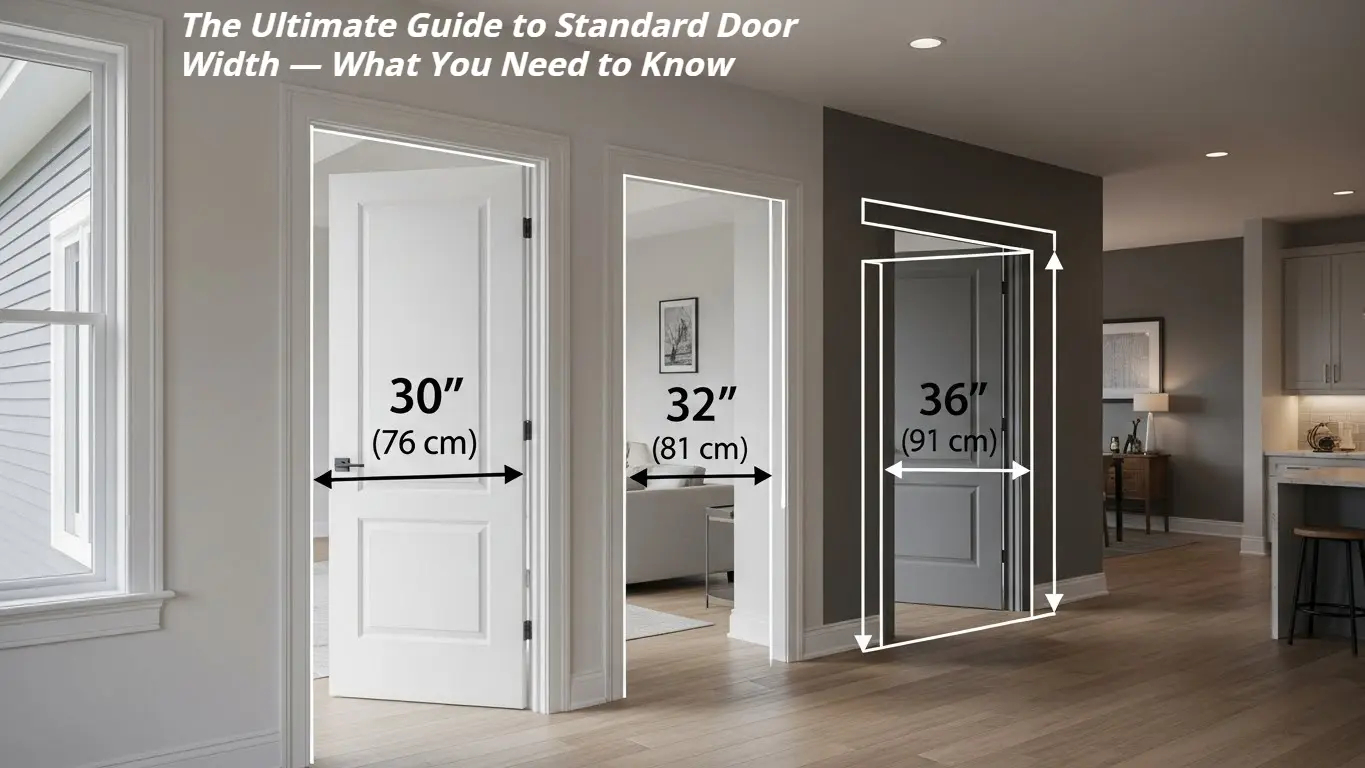
The standard width for an interior door in residential construction is 30 inches (76.2 cm), though common sizes run from 24 inches up to 36 inches. Front entry doors are almost always 36 inches (91.4 cm) wide.
Quick reference before we go deeper:
- Interior (residential): 30″ most common; 24″, 28″, and 32″ are widely used
- Exterior (front door): 36″
- Standard height: 80″ for both interior and exterior
That’s the answer if you came here for a number. The rest of this is what I tell people when they call me before ordering a door, because I’d rather spend ten minutes on the phone than have someone return a slab that doesn’t fit.
1. What “Standard Door Width” Actually Means
Standard widths exist so builders, manufacturers, and homeowners can all work off the same set of numbers. Frames, hinges, hardware, pre-hung kits, they’re all built around them. When I’m framing a wall, I’m not pulling a custom measurement out of the air, I’m building to one of these sizes because everything downstream depends on it.
Here’s where the numbers land across common door types:
| Door Type | Common Width | Notes |
|---|---|---|
| Interior | 24″, 28″, 30″, 32″, 36″ | 32″ is the most code-friendly; 36″ ideal for accessibility |
| Exterior | 36″ | Required width for most front and back entrances |
| Bathroom | 28″–32″ | 32″ recommended for aging-in-place |
| Closet | 24″–30″ | Depends on style (bifold, bypass, swing) |
| ADA-compliant | 36″ | Must provide 32″ of clear opening |
One thing worth flagging early. Even if your home doesn’t legally need to meet ADA rules, accessibility has shifted the whole industry. Furniture got bigger. Appliances got wider. More families want aging-in-place flexibility built in from the start. The 30″ door used to be my default spec. These days I’m pushing almost every client to 32″ or 36″ unless there’s a reason not to.
2. Interior Door Widths, Room by Room
Interior doors run from 24″ to 36″. A lot of older homes I’ve worked on still have 28″ or 30″ doors hanging in them, and the owners only realize how cramped that feels when they try to move a king mattress through one. If you’re building or renovating, go wider. They look better, feel less cramped, and stay useful as your life changes.
By room, here’s how I spec them:
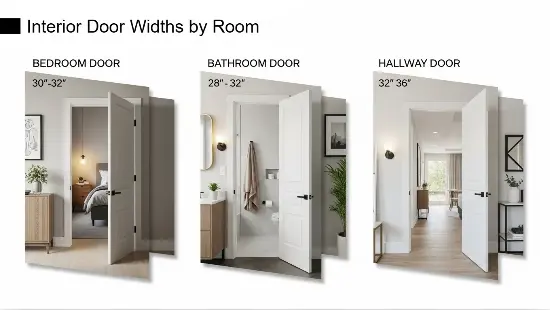
- Bedrooms: 30″ or 32″ works. If kids, pets, or oversized furniture are part of the picture, I push for 32″ every time.
- Bathrooms: This is where I see corner-cutting most often. Builders default to 28″ because the space is tight, but if there’s any chance you’ll need wheelchair or walker access later, fight for 32″. Trust me, retrofitting a bathroom doorway is not a fun job.
- Hallways: I usually run 32″. Bump to 36″ if you want the hallway to actually feel open, which it won’t otherwise.
3. Exterior Door Widths
Your main entry almost always needs a 36-inch door. I’ve helped enough people move furniture through narrower entries to know, anything less turns moving day into a problem. Try getting a couch or a fridge through a 32″ front door and you’ll understand why I’m firm on this one.
Wider exterior doors also make a house look more upscale from the street. A future buyer who’s caring for an aging parent, or has a stroller in the picture, will quietly add points for that 36″ entry without ever telling you why.
4. How I Measure for a Door
This is the section most articles skip, and it’s where I see the most expensive mistakes. So I’ll walk through it the way I’d walk a client through it on a job site.
Measure the jamb, not the slab. The jamb is the frame surrounding the door. The slab is the door itself. A lot of older doors I’ve replaced were fitted badly the first time around, so the slab is not a true reflection of your opening. I always measure the jamb. That’s the truth.
Three measurements I need before I order anything:
- Width (inside edge of jamb to inside edge of jamb)
- Height (from finished floor to the top of the jamb)
- Thickness of the door itself
On height, one catch I run into all the time. If tile or carpet is going in later, measure from the subfloor and account for what’s going on top. I’ve seen doors get ordered against bare wood and then bind on a fresh tile floor a month later. That’s an annoying fix and an avoidable one.
Rough opening vs door size. If you’re working with a stud wall or new construction, you’re measuring the rough opening, which is the space between the 2x4s. That number should be about 2 inches wider than the door itself. So if I’m hanging a 36″ door, I want a rough opening of roughly 38″. The extra space is for the jamb and for the shims I use to get the door plumb, level, and square. Skip that and the door will swing on its own, or stick, or both. I’ve seen plenty of doors do all three.
Jamb depth matters too. A standard jamb for a 2×4 wall with half-inch drywall on each side runs 4 and 9/16 inches deep. If your wall is thicker, the jamb needs to match, otherwise the trim won’t sit flush and the whole thing looks off.
5. Left or Right Handed, Inward or Outward
Before I order any door, I sketch it from the outside looking in. I mark which side the hinges are on, that gives me the handedness, left or right. Then I note whether it swings inward or outward. Most exterior doors I install are inward opening, but not all of them. Get this wrong on the order form and you’re either returning the door or living with one that opens the wrong way.
It sounds basic. People still get it wrong constantly. I keep a small notebook in my truck just so I never have to guess.
6. Nominal Size vs Actual Size (The One Thing Bifold Buyers Always Miss)
Here’s something almost no homeowner-facing article explains, and it catches people out every time they shop for a bifold closet door.
Manufacturers use two sizes, nominal and actual. Nominal is the category, the round number you see on the box. Actual is what the door really measures, usually up to half an inch narrower and an inch shorter than the nominal.
So a bifold listed as 36″ x 80″ nominal is actually closer to 35½” x 79″. That gap is intentional, it gives the door room to swing and slide without scraping the frame. But if you’re measuring your opening to the eighth of an inch and ordering by nominal size without knowing this, you’ll end up with a door that looks too small in its frame. I’ve watched homeowners go through this and it’s frustrating because it’s so avoidable.
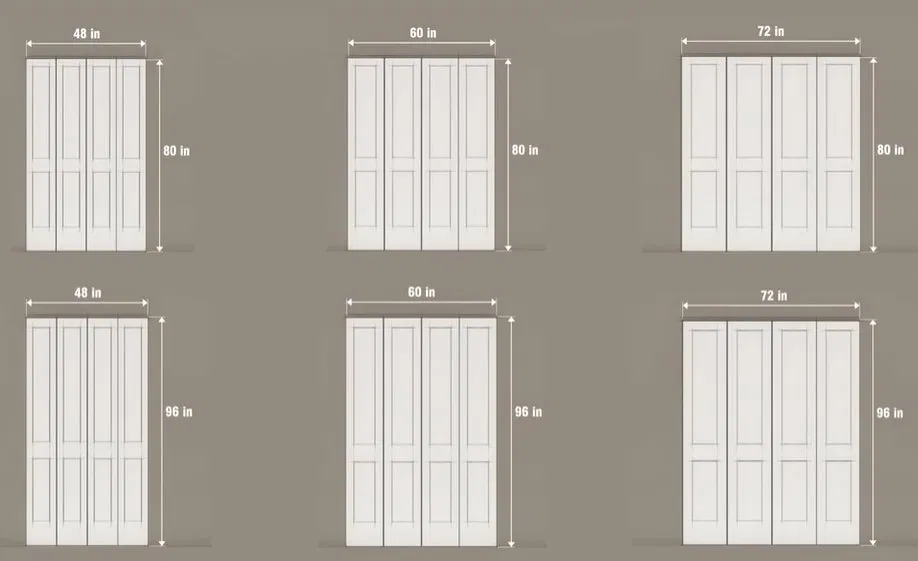
Standard bifold widths: 18, 20, 24, 28, 30, 32, and 36 inches. Heights are 80″ and 96″. Four-door bifolds (two pairs on a single track) come in 48″, 60″, and 72″ widths, also at 80″ or 96″ tall.
7. ADA Compliance and Clear Opening
ADA requires a 32-inch clear opening. That’s the part most homeowners don’t realize, a 32″ door does not give you a 32″ clear opening. The hinges, the door slab, and the frame all eat into that number.
To actually get 32 inches of clear walk-through, you need a 36-inch door.
You might not think ADA applies to you. Maybe it doesn’t, today. But wider doors make life easier for strollers, walkers, furniture deliveries, and pets that have decided they live with you now. There’s no version of the future where a wider door is the wrong call.
8. Closet Door Widths
Closet doors are the one place narrower is fine, because nobody’s walking through them. Typical widths run 24″ to 30″.
Style affects what you choose:
- Swinging closet doors: 28″–30″
- Bifold doors: usually 24″ or 30″ (remember the nominal vs actual thing)
- Sliding (bypass) doors: flexible, panels commonly 24″–36″
9. Door Thickness and Why It Matters
Most interior doors are 1⅜ inches thick. Exterior doors are 1¾ inches thick. The difference matters because a thicker door needs more clearance at the hinges and a heavier frame to hold it. If the rough opening was built for a 1⅜” interior door and you try to hang a 1¾” exterior slab in it, the math will not work out for you.
10. The Mistakes That Cost Real Money
A handful of patterns I’ve seen often enough to call them out:
- Going narrow to save space. You save a few inches of wall and lose every furniture-moving day for the next twenty years. Not worth it.
- Forgetting about future needs. Stroller now, walker later, maybe a wheelchair somewhere in between. Standard doors should be planned for a life, not a season.
- Confusing door size with opening size. The clear opening is always smaller than the door. Always.
- Measuring the old slab instead of the jamb. The slab might be wrong. The jamb is the truth.
In a tight space, the answer isn’t a narrower door, it’s a different mechanism. Pocket doors, sliding barn doors, and proper bypass doors all give you full-width access without eating floor space when they swing.
 Decor & Improvement Accessories