

Home & Decor Blogs: DIY, Interior Design & Lifestyle Ideas
Right-Hand vs. Left-Hand Doors: Pros, Cons & How to Choose

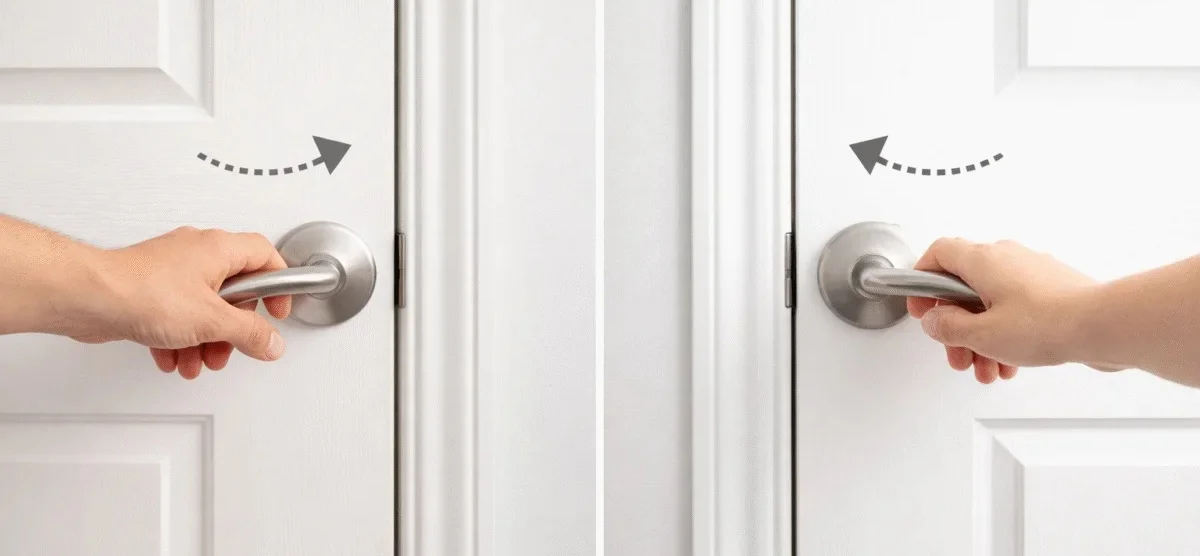
Stand outside the room. Look at the door. Hinges on your right? That’s a right-hand door. Hinges on your left? Left-hand door. That’s the whole rule. Everything else, the pros, the cons, which one you should actually buy, comes after you get that right.
I have witnessed individuals ordering the wrong door so many times that I cannot count. My neighbor did it last year. Wanted to replace his front door. Measured everything perfectly. Forgot to check the handing. Ended up with a door that swung into his coat rack. I had to return it. Restocking fee was 25%. Don’t be that person.
What “Right-Hand” Actually Means (It’s Not About Your Right Hand)
This is where people get confused.
A right-hand door swings open to the right when you’re standing outside. Hinges on the right side of the frame. Handle on the left. Push it and it moves away from you to the right.
Left-hand door? Same thing, flipped. Swings left. Hinges left. Handle right.
But that rule only works if the door swings away from you. If it swings toward you (inward), the same rule applies – you’re just pulling instead of pushing. Same rule. It just feels different.
It is described in the same manner by the Door and Hardware Institute. So do Wikipedia, if you desire the dry version.
What is the significance of this? Since when you order a right hand door on a left hand opening the hinges do not line up. The door is not going to close well. Or it shall shut but with an empty space. Or it will strike against a wall and make a dent. Ask me how I know.
The 30-Second Test That Actually Works
Forget the “stand with your back against the hinges” trick. That only works for inward-swinging doors and even then it’s easy to mess up. I’ve watched two grown men argue about it for twenty minutes. They were both wrong.
- Do this instead:
Step one: Figure out which side is the exterior. That’s the side you’re standing on when you open the door to go in. For a bedroom, it’s the hallway. For a front door, it’s outside your house. For a closet, it’s the room side.
- Step two: Look at the hinges.
That’s it. You don’t need to know if it swings in or out. You don’t need a level or a tape measure. Just eyes.
I helped a friend replace a bathroom door last month. He was convinced it was right-hand. I stood in the hallway, looked at the hinges, left side. Left-hand door. He didn’t believe me. We ordered a right-hand anyway. Guess what didn’t fit.
A contractor on Quora put it this way: “Stand outside. Look at hinges. Done.” Shortest answer in the thread. Also the most correct.
Right-Hand Doors: What’s Actually Good About Them
Honestly? Most doors in US homes are right-hand because builders don’t think about it. They just pick one. But that doesn’t mean it’s bad.
If you’re right-handed, and most people are, a right-hand door just works. You grab the knob with your left, push with your right. Feels normal. Try opening a left-hand door with your right hand while holding coffee in your left. Annoying, right? Not the end of the world. Just annoying.
Security people care about hinge placement. If your door swings inward and the hinges are on the outside, someone can pull the pins. That’s a real thing. The National Crime Prevention Council mentions it. A right-hand door that swings inward keeps hinges inside. So does a left-hand inward door, by the way. But most front doors are right-hand. So it works out.
One thing I’ve noticed in my own house – the front door is right-hand. Swings inward. Hinges inside. The door does not bang against anything. The light switch is on the left wall, and therefore when the door is open, I can still easily access it. No, that is not on purpose. Just luck. However, when you are planning a renovation, keep note of that stuff.
My dad’s right-hand door swings into the hallway. Every time someone comes out of the bedroom, they nearly hit whoever’s walking by. Bad placement.
The handing isn’t the problem, the swing direction relative to traffic is. But you don’t think about that until someone gets a door to the shoulder.
The Annoying Parts Nobody Talks About
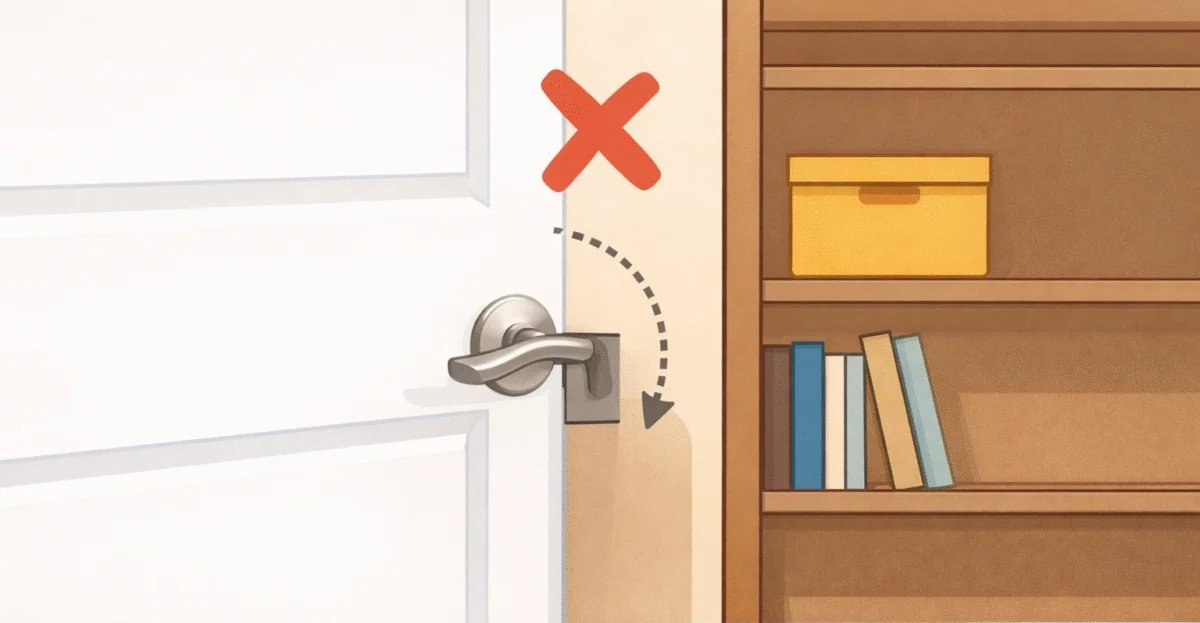
That cabinet thing. Let me be specific.
You have a pantry on the right side of the kitchen door. The door is right-hand. Opens to the right. Straight into the pantry door. Now you have two doors fighting each other. Or worse, a shelf. The door handle hits the shelf. Leaves a mark. Every time.
I saw this in a friend’s apartment. They put a bookshelf right where the door swung open. They just… lived with it. Closed the bookshelf door before opening the room door. Drove them crazy for two years until they moved.
Left-handed people have a legit complaint here. Reaching across your body to open a door isn’t comfortable. Over time, you pull unevenly. Hinges can be worn. This Quora thread has a contractor saying he’s replaced more hinges on right-hand doors in left-handed homes. Makes sense if you think about it.
Wind. Outward-swinging right-hand doors. If you live somewhere like Chicago or Oklahoma, wind catches the door and slams it. That’s not unique to right-hand, but if you’re choosing a hand for an outward-swinging exterior door, maybe don’t put the hinges on the side where prevailing wind pushes.
Warranty stuff is real. I looked up Jeld-Wen’s warranty guide.They mention improper handing for climate conditions can void coverage. Wood doors especially. If you live in a rainy area and your outward-swinging door faces the weather, you’re asking for trouble.
When Left-Hand Doors Just Make More Sense
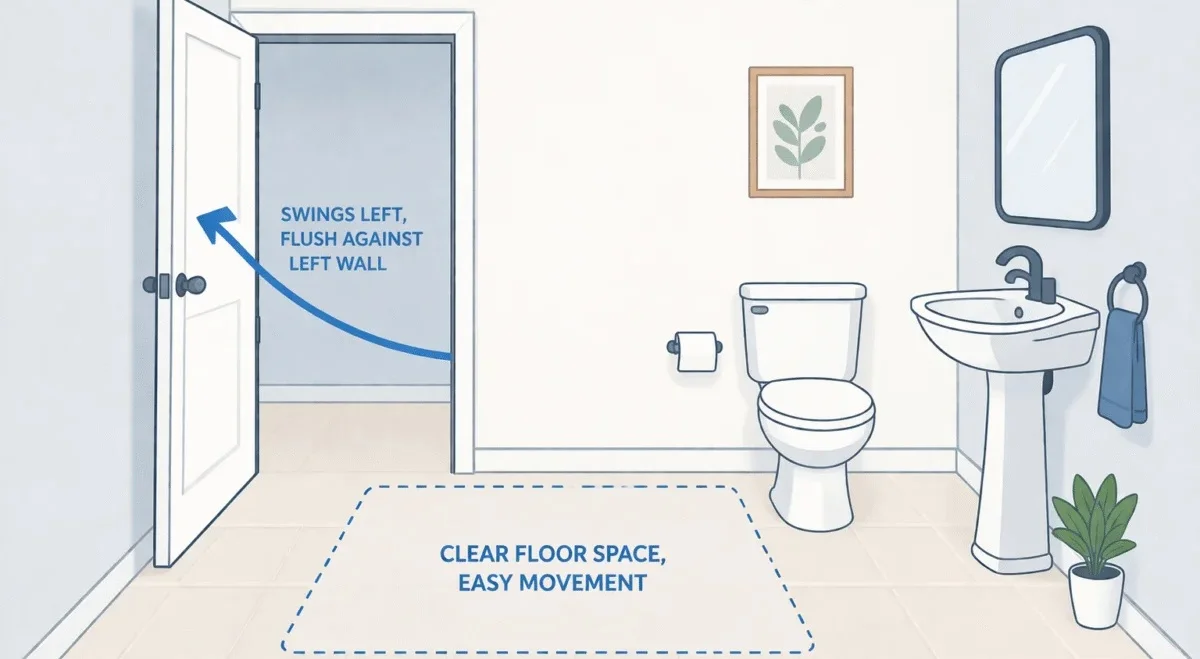
Tight spaces. That’s where left-hand doors shine.
Small bathroom. The door swings left. Wall on the left. The door opens flush against the wall. You gain like two feet of floor space. That’s huge in a tiny room.
I helped a neighbor with this last spring. Her powder room was maybe 4×6 feet. The original door swung right into the middle. You had to close it to use the sink. We swapped to a left-hand door that swung against the left wall. She cried. Not joking. She was so happy.
Left-handed people, obviously, this is for you. But here’s a twist. Even right-handed people might want a left-hand door in a kitchen where the fridge is on the right. The door swings left, away from the fridge. No dings. No slamming the fridge door into the room door. I’ve seen this in three different kitchens. Always a fight.
Emergency exit codes. The International Residential Code doesn’t say “thou shalt use left-hand doors.” It says doors should swing in the direction of exit travel. For a bedroom, that usually means inward. Handing itself isn’t regulated for homes. But check local rules. California has weird ones.
One practical thing: left-hand doors are less common. Walk into Home Depot. Count the right-hand vs left-hand prehung doors. You’ll see maybe 30% fewer left-hand options. Sometimes not in stock. Custom order means waiting 2-3 weeks and paying 10-20% more. I called a local door supplier last month to check. That’s what they told me.
So the left-hand isn’t weird or wrong. It’s just less common. And sometimes less common is exactly what you need.
How to Actually Pick the Right One (No, Seriously)
Forget the pros and cons lists for a minute. Here’s what you do.
Go stand in the doorway. Not the internet. Not a YouTube video. The actual doorway.
Open the door. Watch where it swings. Does it hit something? A wall? A light switch? A cabinet? Your kid’s backpack that’s always on the floor? That’s your answer. Pick the handing that avoids that thing.
I helped a buddy with his basement door last year. He had a right-hand door that swung into a support beam. Every time he opened it more than halfway – thunk. Drove him nuts. We swapped it to a left-hand door. Now it swings into open space. Problem solved. Cost him $120 for a new door slab and an afternoon of swearing.
What about handedness? Honestly, most people don’t care. I’m right-handed. I’ve lived with left-hand doors. It’s fine. You adjust in like two days. Unless you have a physical issue or you’re left-handed and really sensitive to it, don’t make this the deciding factor.
Room Layout Matters More. Way More
Measure the swing path. Take a tape measure. See what’s in that arc. If there’s a toilet, a fridge, a desk, a couch – you want the door to swing away from that. Not into it. Seems obvious. You’d be shocked how many people skip this step.
- Exterior doors? Different story.
Security first. Hinges inside. That generally refers to inward swing. Handing? Whatever makes the door not strike on your porch railing or your mailbox. I have also observed front doors which are unable to open fully because the house owner selected the incorrect handle. Then they are left to haul couches out of the back door.
Check Your Local Codes. This is Boring. Do it Anyway
California has strict egress rules. Some cities require doors to swing a certain way in case of fire. The International Residential Code is the baseline, but your local amendment might say something different. Call the building department. Ask. It takes ten minutes. Saves you from redoing the whole thing.
I know someone – a real person, not a “I know someone” made-up story – who installed a new back door without checking. Outward swing. Hinges outside. The city inspector made him rip it out and reinstall the inward swing. Cost him $800 extra. He’s still mad. It’s been four years.
One more thing. If you’re still unsure after all this, take a photo of your door frame from the outside. Show it to the person at the hardware store. Not the teenager at the register – find the old guy in the lumber section. He’ll know. They always know.
 Decor & Improvement Accessories