

Home & Decor Blogs: DIY, Interior Design & Lifestyle Ideas
Home Depot Rival Closing Hardware Chain Stores

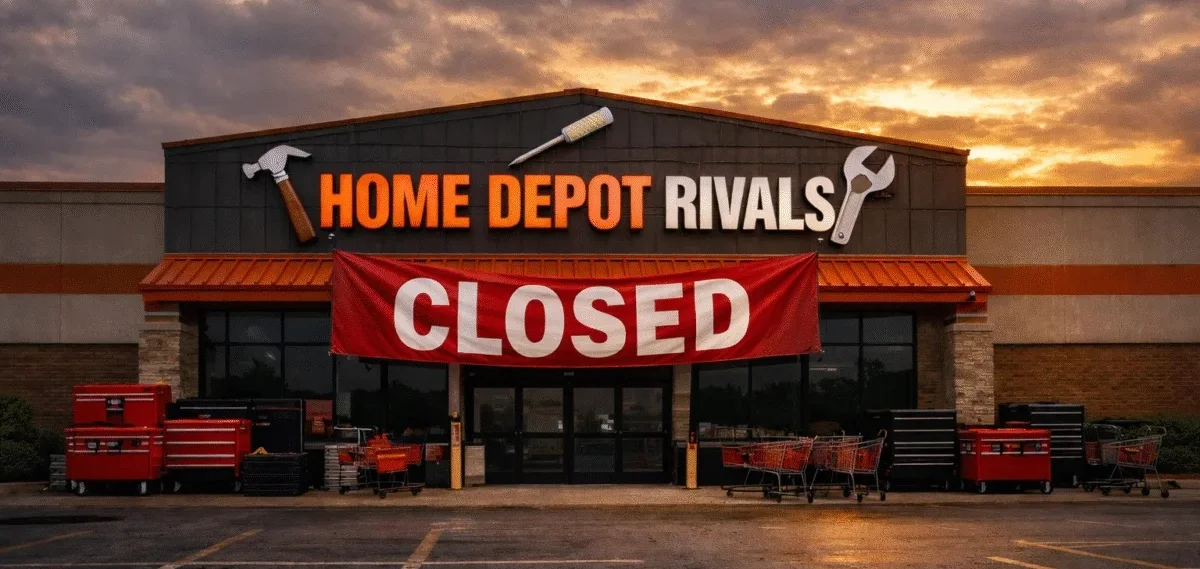
Home Depot rivals are closing stores across the country, and the reasons come down to three things: Home Depot and Lowe’s now control nearly half the entire U.S. hardware market as of mid-2026, mortgage rates near 7% crushed home sales and renovation spending, and Amazon keeps pulling customers who used to walk into a store for a $15 part.
Ace Hardware locations, True Value branches, Jerry’s Hardware & Rental in Minnesota, not one or two quiet closings. Stores that survived recessions, supply chain disasters, even a pandemic, are locking their doors for good.
Some of them operated for over a century. Kreuger’s True Value in Wisconsin? Founded in 1866. Gone. Ritter’s True Value in Pennsylvania ran for 117 years, four generations of the same family behind the counter.The owner told the local press he was done fighting. No spin, no pivot to e-commerce optimism. Just done.
That quote stuck with TheHomeTrotters because it captures something the industry data doesn’t. These aren’t failing businesses in the traditional sense. They’re profitable-enough operations that got slowly strangled by forces way bigger than them. A $2 million family store can’t absorb the same hits that a $157 billion corporation shrugs off. And right now, the hits keep coming.
So who’s closing, where, and what does it mean for the people who actually relied on these stores? We dug into each one.
Why Hardware Chains Are Closing; and Why It’s Not Just One Thing
Easy answer: Home Depot and Lowe’s control about 46% of the U.S. home improvement market, per Statista’s retail tracking data. Amazon grabs another chunk, roughly 12% and climbing. That leaves everyone else fighting over scraps.
But that’s been true for years. What changes? Home sales dropped. When people aren’t buying houses, they’re bored?
Mortgage rates. They parked near 7% through 2024 and barely budged, according to Freddie Mac’s weekly survey ripping out kitchens. A store owner TheHomeTrotters spoke with last year put it bluntly: “My regulars used to walk in with a project list. Now they walk in with a leak and a budget of forty bucks.”
That shift, from project shoppers to patch-it-and-pray shoppers, kills margins. A $600 bathroom remodel cart is profitable. A $12 tube of caulk and some plumber’s tape? Not keeping the lights on.
Then stack Amazon on top of that. Need a specific 3/8-inch carriage bolt at midnight? Ordered, arriving tomorrow. The U.S. Census Bureau’s retail figures confirm what everyone already feels, e-commerce keeps pulling dollars away from physical hardware stores.
No single factor does it alone. That’s what makes this brutal. Traffic drops. Then you’re forced to price-match online just to move what’s left on the shelf. Then one slow season hits and suddenly payroll doesn’t pencil out. It compounds. Fast.
Why True Value Stores Are Closing: From 159-Year Legacy to Liquidation
True Value’s story is different from Ace’s, and arguably worse.
The co-op filed Chapter 11 bankruptcy in 2024. By the end of that year, Do It Best acquired them. Stores technically stayed open. But “technically open” and “thriving” aren’t the same sentence.
Ritter’s True Value in Pennsylvania didn’t survive the transition. One hundred and seventeen years. Four generations of the same family running the register. Founded in 1908, before World War I, before the Great Depression, before most of the modern world existed. The owner’s quote to local media was short and raw: “We fought the good fight, but the big guys won.” No spin. No optimism about pivoting to e-commerce. Just done.
Kreuger’s in Wisconsin is even older. 1866. They started liquidating inventory in July with plans to wrap up by November. TheHomeTrotters did the math on that, this store predates the telephone. Alexander Graham Bell hadn’t made his first call yet when Kreuger’s was already selling hardware. And now someone’s marking down their remaining stock with fluorescent price tags.
Peter’s True Value in Michigan has its own strange arc. It started as a feed store in the 1880s. Evolved into hardware over the decades. Closed by September. Customers described losing the “whatever you need, we’ve got it” feeling, that confidence that you could walk in with a vague description of a problem and walk out with the right fix. You don’t get that confidence at a self-checkout kiosk.
Why did True Value crack when Ace didn’t? Cash. The co-op had been bleeding money as housing slowed and shoppers got pickier about where they spent. Bankruptcy was the pressure valve. Do It Best buying them kept the brand alive, but some stores are now rebranding to “True Value by Do It Best”, a hybrid identity that might confuse as many customers as it keeps.
Here’s what TheHomeTrotters wonders, honestly: does the branding even matter at this point? Ritter’s customers didn’t shop there because of the True Value sign. They shopped there because the Ritter family knew their name. A new logo doesn’t replace that.
| Chain/Store | Location | Years Open | Why It Closed |
| Jerry’s Hardware (Maple Grove) | Minnesota | 50+ | No buyer found; demand collapsed |
| Jerry’s Hardware (St. Louis Park) | Minnesota | 50+ | Same situation |
| Carnation Ace Hardware | Washington | 56 | Big-box and online competition |
| Wyoming Ace Hardware | Rhode Island | 22 | Owner retirement; sold to Aubuchon |
| Sussex Ace Hardware | Wisconsin | 33 | Accumulated debt |
| Ritter’s True Value | Pennsylvania | 117 | Market pressure post-bankruptcy |
| Kreuger’s True Value | Wisconsin | 159 | Liquidation after generational decline |
| Peter’s True Value | Michigan | ~140 | Consolidation under new ownership |
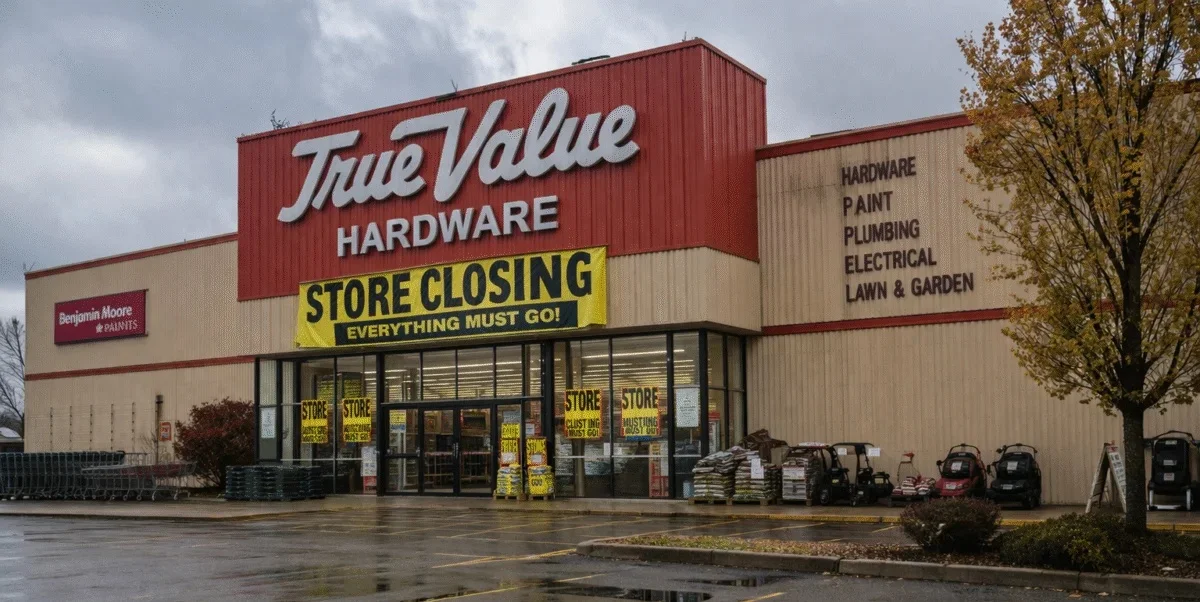
Jerry’s Hardware & Rental: 50 Years in Minnesota, and Nobody Wanted to Buy It
Here’s a detail that says more than any market analysis could, Jerry’s tried to sell. They actively looked for a buyer. Couldn’t find one.
This was a Do It Best cooperative member, owned by Jerry’s Enterprises (same parent company as Cub Foods). Not some underfunded solo operation. They had two solid Twin Cities locations in Maple Grove and St. Louis Park, a rental department stocked with everything from tillers to concrete saws, and a customer base that had been walking through those doors since the 1970s.
It didn’t matter.Demand for home improvement dropped, the numbers stopped working, and nobody stepped up with an offer. Both locations are closing permanently. It didn’t help that commodity items, the screws, brackets, and electrical tape that used to be grab-and-go impulse buys, increasingly went to Amazon. When a customer can order a 50-pack of drywall anchors for less than Jerry’s paid wholesale and have it on their porch by Tuesday, the foot traffic that keeps a store alive quietly bleeds out.
What TheHomeTrotters thinks gets overlooked in the coverage: Jerry’s rental side was genuinely hard to replace. Homeowners who needed a pressure washer once a year or a floor sander for a weekend project, where do they go now? Big-box rental counters charge more. Dedicated equipment rental companies aren’t really set up for someone who just wants to refinish their deck on Saturday.
The stores also ran kids’ DIY workshops. Free tool sharpening for seniors. Stuff that doesn’t show up on a balance sheet but absolutely shows up when it disappears from a neighborhood.
Their clearance sales are running now. If you’re local, it’s worth a drive, liquidation pricing on tools and seasonal gear tends to hit 30–50% off before bulk resellers swoop in and grab everything.
Ace Hardware: The “Helpful Place” Is Losing Helpful People
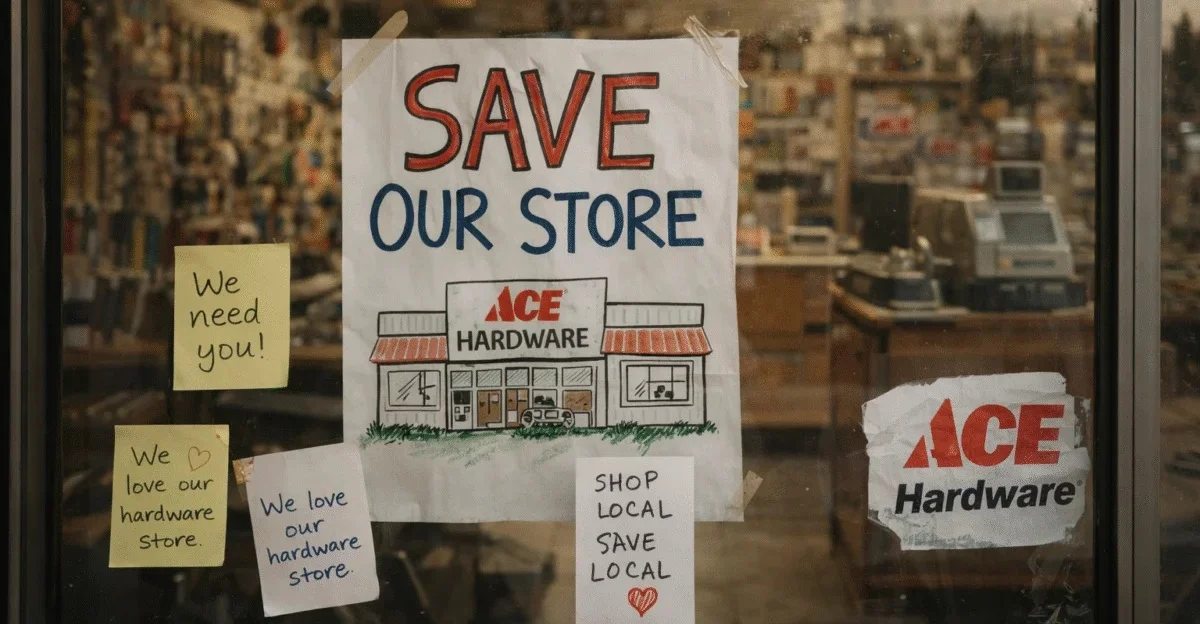
SEO Title: Small Town Ace Hardware Store Community Campaign to Prevent Closure
Ace Hardware as a corporation? Fine. The co-op pulls in billions annually and has thousands of locations. But here’s what the corporate numbers don’t tell you, individual Ace stores are independently owned. And individual owners are hurting.
Carnation Ace Hardware in Washington state closed after 56 years. Fifty-six. That store opened when Nixon was president. The owners cited what you’d expect, big-box pressure, online shopping, but there’s a layer underneath that. Carnation is a small town. Population around 2,000. When your customer base is that tight and even a fraction of them start ordering from Amazon instead of driving in, you feel it immediately. There’s no cushion.
Then there’s Wyoming Ace in Rhode Island. Family-run since 2003. The owners didn’t go bankrupt, they retired and sold to Aubuchon Hardware, which plans to reopen in a larger space. Sounds like a win, right? Maybe. But the family behind it spent two decades building something, and the reason they could sell rather than just close is because Aubuchon wanted the location. Not every retiring owner gets that lucky.
Sussex Ace in Wisconsin is the one that really stings.
The LeDonne family built that store from nothing. Thirty-three years of work. When debts started piling up, they didn’t quietly fold, they launched a “Save Sussex Ace” campaign, essentially asking the community to help cover what they owed. Think about that for a second. A business owner standing in front of their town saying “we can’t make it without you.” That takes guts. Whether it works or not, TheHomeTrotters respects the transparency. Most owners just put up the “Everything Must Go” banner and disappear.
What makes Ace closures hit differently than, say, a Lowe’s store trimming locations? Scale. An Ace owner stocks items for their town. Custom bird feeders because three neighbors on Elm Street are obsessed with cardinals. A specific wood stain because half the houses in the subdivision have the same deck. That hyper-local inventory knowledge walks out the door when these stores close. You’re not getting that at a 140,000-square-foot warehouse where the staff rotates every six months.
Home Depot and Lowe’s: Thriving While Everyone Else Bleeds
Home Depot grabbed roughly 29% market share by Q3 2026. Lowe’s holds around 17%. That’s the same 46% combined figure cited earlier, but the breakdown matters because it shows Home Depot alone commands nearly a third of every dollar spent on home improvement in the country.Their latest SEC filings paint a picture of businesses that aren’t just surviving, they’re redesigning how Americans buy hardware.
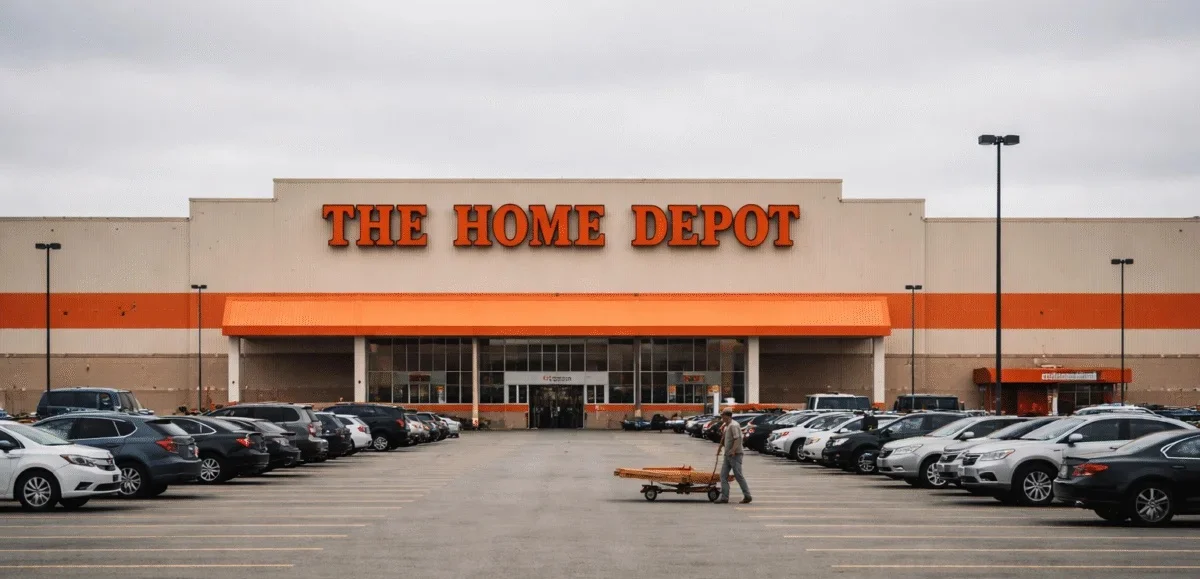
SEO Title: Home Depot Big Box Store Dominates as Small Hardware Competitors Close
Quick-pickup zones. That’s the big push right now. Order online, drive up, someone loads it in your trunk. Home Depot has been rolling these out aggressively across locations. Lowe’s is testing automated shelf inventory systems, not full robots stocking aisle nine, but close enough. Both chains expanded their tool rental fleets too, which is interesting timing given Jerry’s rental department just went dark in Minnesota.
But are they actually doing well? Depends on your definition.
Revenue is enormous. Growth? Flat to sluggish. Post-pandemic, the renovation boom cooled off hard. Lowe’s executives used the phrase “cautious consumers” during earnings calls, which, translated from corporate speak, means people are patching drywall instead of tearing it out. Home Depot’s same-store sales have been inconsistent. They’re winning relative to everyone else, sure. But the pie itself shrank.
Here’s something TheHomeTrotters finds worth noting. Both chains started investing heavily in community programming, free workshops, kids’ building events, project planning clinics. Sound familiar? That’s exactly what stores like Jerry’s and Sussex Ace were doing for decades. The difference is Home Depot backs it with a marketing budget. A family-owned Ace did it because the owner’s kid went to school with your kid.
Does the corporate version fill the gap? Partially. You’ll learn how to tile a backsplash either way. But nobody at a Home Depot workshop is going to remember that you tried this same project three years ago and gave up halfway through. That institutional memory of a customer, knowing their house, their skill level, their tendency to buy too little lumber and come back twice, it doesn’t transfer.
One more thing that gets buried in the market share conversation. Home Depot and Lowe’s aren’t immune to what killed the smaller chains. They’re just big enough to absorb the hits. If mortgage rates stay elevated and housing continues dragging, even these two will feel it deeper. They already are. The difference is a $157 billion company can ride out a bad year. A $2 million family store cannot.
What This Means If Your Local Hardware Store Just Closed
Forget the industry analysis for a second. What does this actually mean for you?
If Jerry’s was your go-to rental spot, you’re now comparing prices at Home Depot’s tool rental counter or searching for independent equipment rental companies, which tend to cater more toward contractors than homeowners. Expect to pay more. Expect less hand-holding about which sander works for your specific floor type.
If your Ace just shut down, the hyper-local inventory disappears. That owner who stocked a particular brand of wood stain because every deck in your neighborhood used it? Gone. You’re now scrolling through 47 options on a screen trying to figure out which one matches.
If your True Value went through the Do It Best transition and survived, give it a few months. TheHomeTrotters has seen mixed reports, some rebranded stores actually expanded their selection under new supply chains. Others feel hollowed out, running leaner inventory that misses the oddball stuff regulars depended on.
A few practical things worth doing right now:
Check liquidation sales at any closing store near you. Pricing on power tools, seasonal equipment, and bulk hardware (screws, brackets, fasteners) drops dramatically once a store enters clearance mode. Jerry’s and Kreuger’s both ran discounts in the 30–70% range.
Look into smaller surviving independents before they’re gone too. The National Hardware Show directory and Do It Best’s store locator can surface shops you might not know about. Some of these places are one bad quarter away from the same fate, spending money there now genuinely helps.
And honestly? Learn at your Home Depot or Lowe’s store. Not the brand. Your specific location. Figure out which department staff actually know their stuff versus who got hired last Tuesday. Build that relationship the same way you did at the independent shop. It won’t feel the same. But it’s what’s available.
FAQs
It’s a pileup. Home Depot and Lowe’s own nearly half the market. Amazon keeps growing its hardware share. Mortgage rates near 7% killed home sales, which killed renovation demand. Each factor alone is survivable, stacked together, smaller stores run out of room to breathe.
No. The co-op overall remains profitable with thousands of locations. But individual stores are independently owned, and some owners, Carnation, Sussex, Wyoming, are closing for reasons specific to them. Retirement, debt, shrinking local demand. The Ace brand will survive. Specific Ace stores might not.
True Value filed Chapter 11 bankruptcy in 2024 and was acquired by Do It Best. Stores remain open, many rebranding under “True Value by Do It Best.” But several legacy locations, Ritter’s (117 years), Kreuger’s (159 years), Peter’s (~140 years), closed during or after the transition.
Yes. Liquidation discounts typically range from 30–70% off. Tools, seasonal inventory, and bulk hardware see the steepest markdowns. Check directly with the store for timelines, most clearance windows run 4–8 weeks before everything remaining gets sold to liquidation companies.
Home Depot and Lowe’s are the obvious fallback for selection and availability. But check for surviving independents first, use. Do It Best’s locator or search your area on Yelp for hardware stores with strong reviews. Online co-ops and specialty retailers also carry niche items that big-box stores skip.
 Decor & Improvement Accessories