
Home & Decor Blogs: DIY, Interior Design & Lifestyle Ideas
Fun Wallpaper Designs for Children
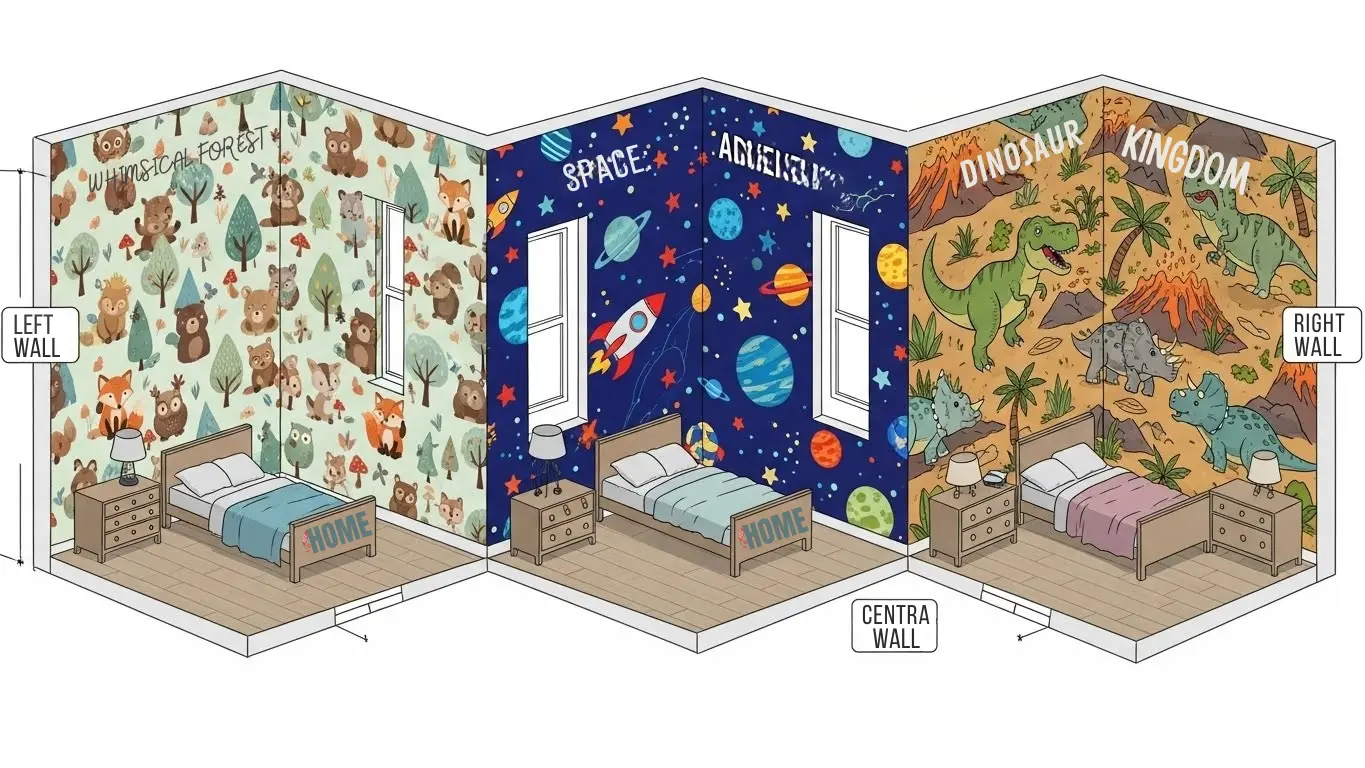
Children’s wallpaper isn’t a small decision. It’s probably the single biggest visual commitment in the room, covering every wall, setting the mood and living with your kid for years. At TheHomeTrotters, we’ve seen parents agonize over paint colors for weeks, then grab a wallpaper almost randomly. This guide fixes that. Specific designs, real developmental context, safety standards worth knowing, not just “pick something cheerful.”
Quick Summary: What Actually Matters When Choosing Children’s Wallpaper
Most parents come into this decision thinking about aesthetics. Fair enough , it’s a visual choice. But after going through the research and the practical realities, a few things stand out that don’t get said enough.
The developmental angle is real, not marketing fluff. Pattern complexity, color saturation and visual structure genuinely affect how kids feel and focus in their rooms. That’s worth knowing before you default to whatever’s on sale.
Age-appropriateness isn’t just about “what they like right now.” It’s about buying something with a shelf life. A toddler’s dinosaur phase ends. A well-chosen illustrated botanical or constellation wallpaper? That can quietly grow with a child for years without feeling babyish by age nine.
Safety certifications , OEKO-TEX, GREENGUARD Gold , aren’t optional boxes to check. Kids spend more time in their bedrooms than almost any other space. VOC emissions and chemical inks matter more here than anywhere else in the house.
And honestly? Peel-and-stick changed the game for families who don’t want to commit. It’s not a compromise anymore , the quality has genuinely caught up.
Fun Wallpaper Designs That Actually Hold Up, By Age Group
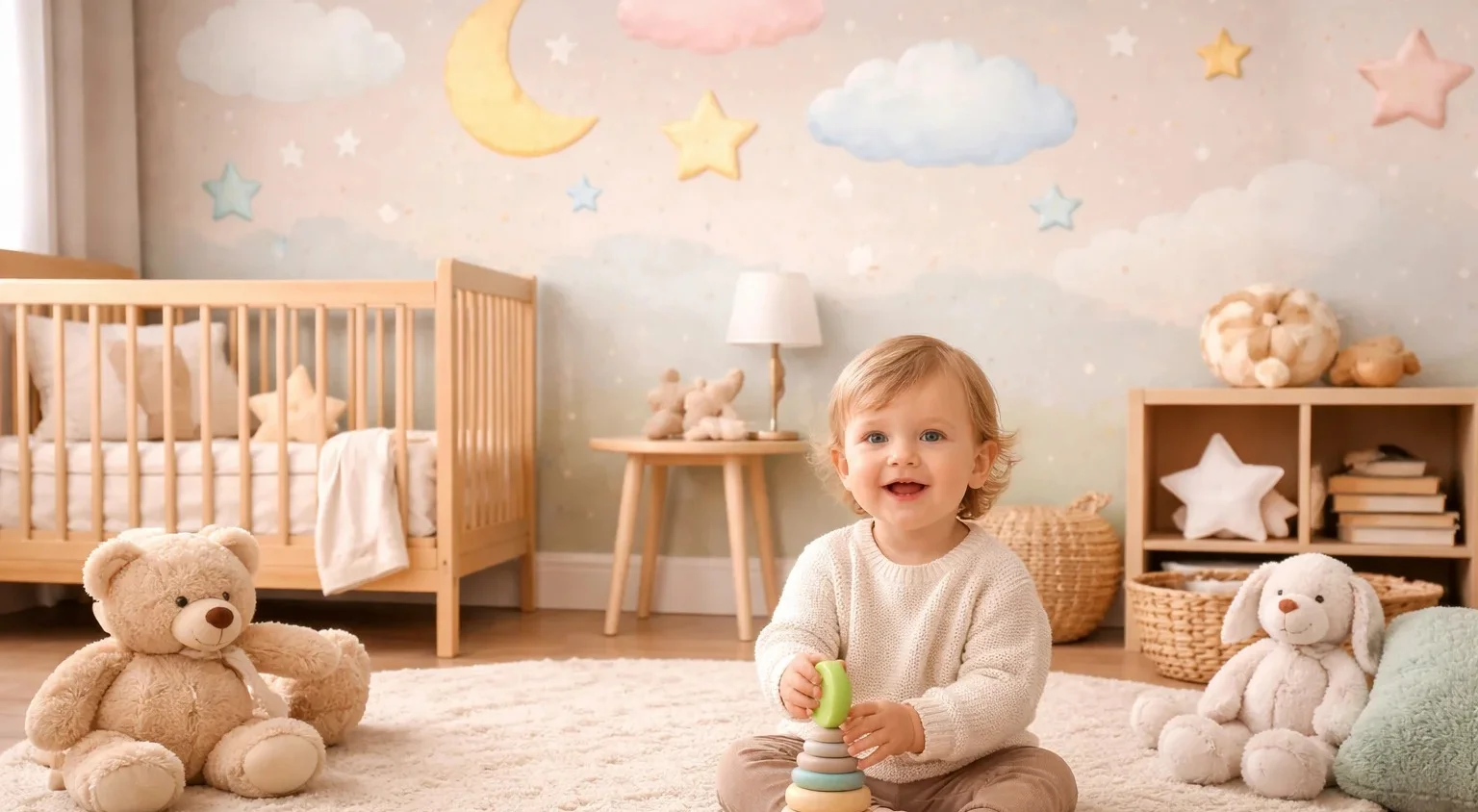
The mistake parents make most often: buying for right now. A three-year-old obsessed with dinosaurs will be eight before you know it. At TheHomeTrotters, we recommend thinking in phases and choosing designs with some longevity built in.
Toddlers (Ages 1–3): Soft Pattern, High Contrast
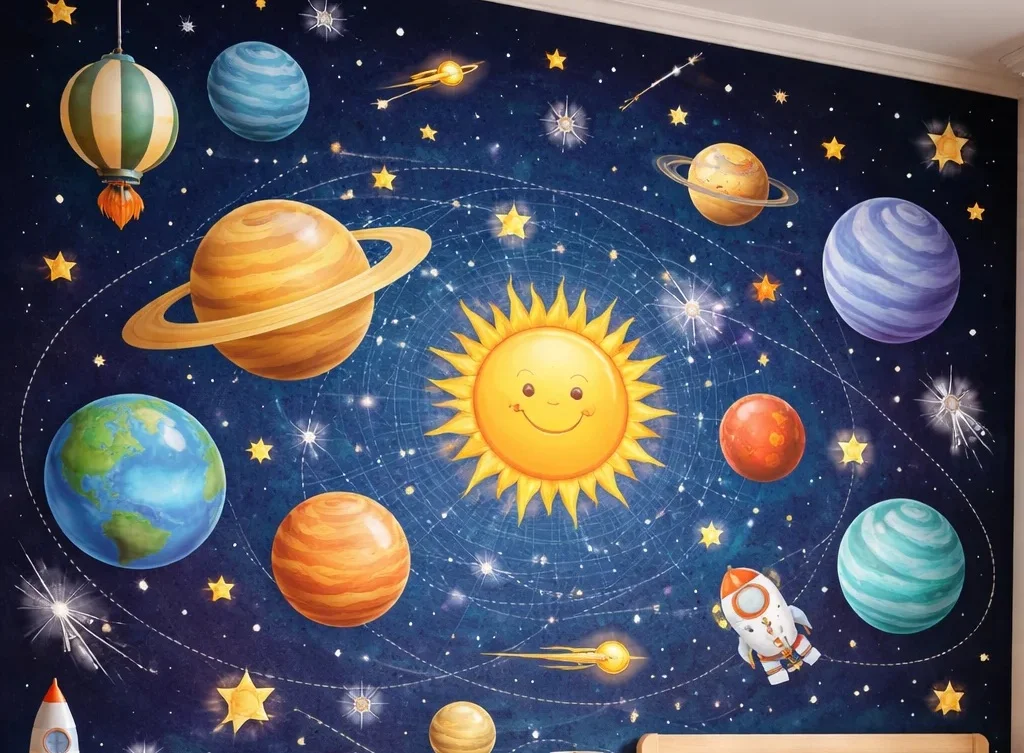
Infants and toddlers are still developing visual processing. The American Academy of Pediatrics notes that high-contrast patterns actually support early visual development, but that doesn’t mean aggressive or loud. Think black-and-white illustrated animals, soft geometric shapes or simple nature motifs in muted tones.
Designs worth considering:
- Illustrated woodland animals (foxes, owls, deer) in two or three colors, clean lines, no clutter.
- Cloud and star patterns in white on soft grey or sky blue.
- Simple botanical prints, leaves, stems, basic florals.
Avoid licensed character wallpapers at this stage. Kids change favorites fast and Peppa Pig at 2 feels very different at 5.
Preschoolers (Ages 3–6): Narrative Themes Work Well Here
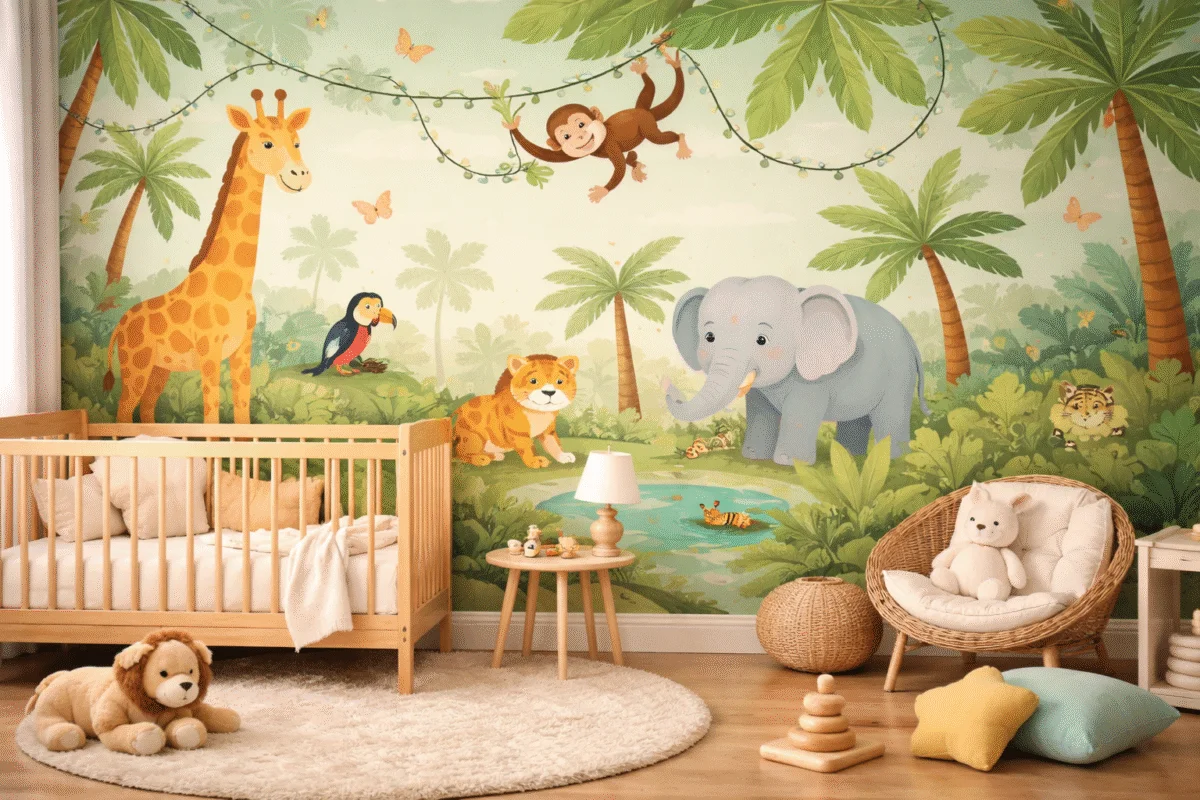
This is the window where themed rooms genuinely pay off. Kids this age engage deeply with characters and stories, the room becomes part of the play. A jungle wallpaper isn’t just a wall, it is the jungle.
Strong design directions:
- Jungle and safari themes, especially illustrated (not photographic), with friendly animal faces.
- Underwater scenes, whales, fish, coral, calming color palette with built-in curiosity.
- Fairy tale / enchanted forest, works for any gender, trees, mushrooms, small creatures.
One thing TheHomeTrotters consistently flags: avoid wallpapers where characters are too detailed and realistic-looking. Illustrated, slightly stylized designs age better and photograph better if you ever sell the home.
School-Age Kids (Ages 6–12): Let Them Have Input
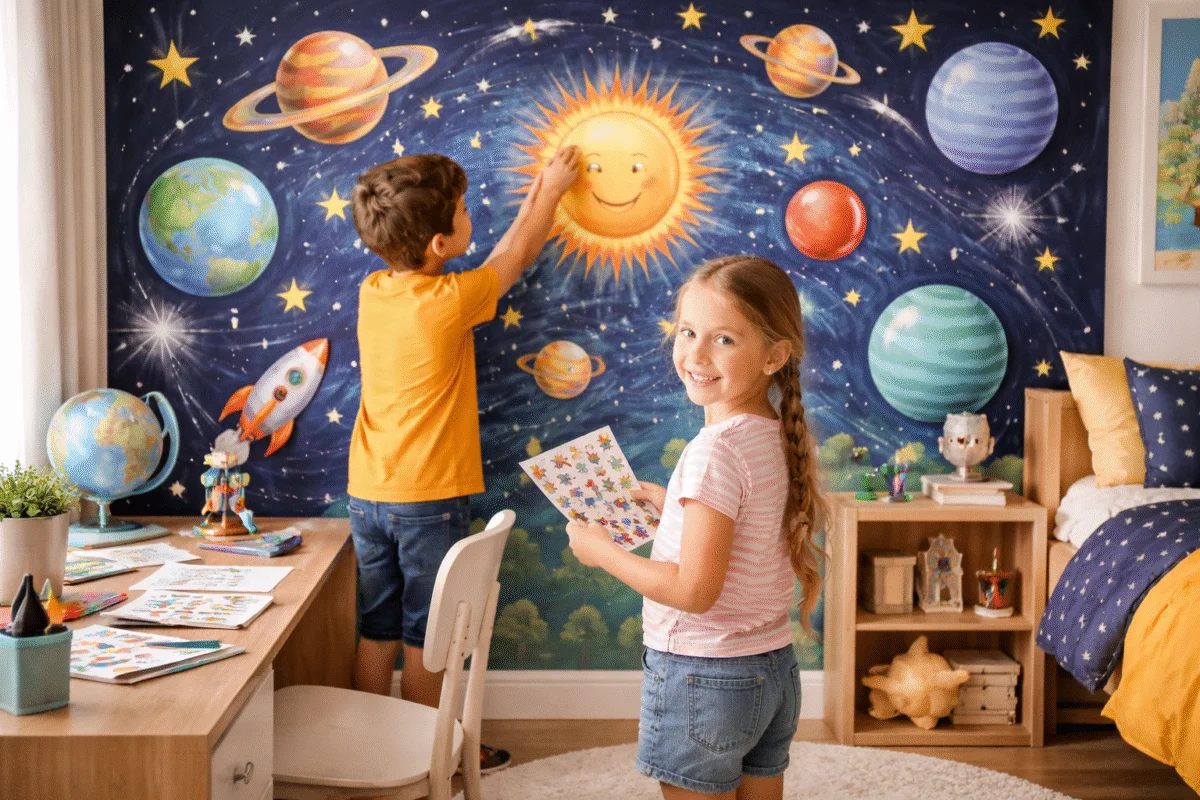
Genuinely. Kids who choose their own room design feel more ownership of their space and research from environmental psychology work at Salford University supports the idea that a sense of personal space improves children’s wellbeing and focus.
Design directions that tend to last:
- Space and astronomy themes: planets, constellations, rockets, works for years and doubles as genuinely educational.
- World maps (illustrated style: studies suggest passive exposure to geography visuals supports spatial reasoning.
- Abstract geometric patterns: mature enough to grow with them, specific enough to feel chosen.
Teenagers: The One Rule: Give Them Control
Don’t pick it for them. Seriously. A fifteen-year-old who didn’t choose their wallpaper resents it. Offer a shortlist, a budget and a veto. Peel-and-stick options (covered below) are particularly good here because the room can change without a full renovation.
Easy to Change Wallpaper for Growing Kids
Children change their minds quickly and that is perfectly normal. Temporary wallpapers solve this problem. Peel-and-stick designs allow parents to refresh the room without damage or high cost. This flexibility makes it easier to keep the room fun and age-appropriate over time.
| Wallpaper Style | Best For Age Group | Mood Created | Easy to Replace | Learning Value |
|---|---|---|---|---|
| Animal Themes | Toddlers to Age 7 | Happy and playful | Medium | Medium |
| Space Designs | Age 5 to 12 | Curious and bold | Medium | High |
| Fairy Tales | Age 3 to 8 | Magical and calm | Medium | Low |
| Educational Maps | Age 6 to 12 | Curious and focused | Low | High |
| Abstract Patterns | Teens | Cool and creative | High | Low |
How Wallpaper Actually Affects Kids (Beyond Looking Nice)
Here’s something most decorating guides skip over: the evidence on color and environment in children’s spaces is real, but it’s also more complicated than “blue = calm, red = energy.”
Research from the University of Texas found that stark white or beige rooms can actually increase inattentiveness in children, their minds, under-stimulated, wander. On the other hand, rooms with too much visual noise produce the opposite problem. The sweet spot is what researchers call moderate complexity, patterns with clear structure, not chaos.
What that means practically: a wallpaper with a repeating jungle pattern, animals spaced consistently, defined outlines, that works. A wallpaper with overlapping abstract splatters in five colors probably doesn’t, especially for younger kids.
Color matters too, though not in the oversimplified way you’ll usually read. According to research published in Frontiers in Psychology, color perception in children is culturally influenced and highly individual. A general framework that holds up reasonably well:
- Soft blues and greens, associated with lower cortisol in multiple studies, good for sleep spaces.
- Warm yellows and soft oranges, tend to support alertness without overstimulation, decent for play areas.
- High-saturation reds, shown to increase heart rate in some studies, use in small doses, not as a dominant wall color.
This isn’t interior design opinion. It’s basic environmental psychology and it should shape your wallpaper shortlist before you even open a design catalog.
Conclusion
There’s no perfect wallpaper. There’s the one that fits your kid, your walls, your budget and the next five years of their life and those four things rarely point to the same design immediately.
What TheHomeTrotters keeps coming back to: slow down on the theme, spend more time on the material and safety specs and involve your child earlier than feels necessary. Even a four-year-old pointing at what they like gives you something real to work with and a kid who feels like their room was chosen rather than assigned is a kid who actually wants to be in it.
Wallpaper is one of the few design decisions that surrounds a child completely. Every morning, every bedtime, every sick day spent in bed staring at the ceiling. That’s not pressure to get it perfect , it’s just a reason to think it through properly. Which, if you’ve made it this far, you clearly already are.
FAQs
Yes and really so. Wallpaper quality became so friendly that it no longer seemed like a frightening permanent investment on the part of the parent. Especially the rooms of kids, it is most likely the fastest developing area in home decor today.
Woodland animals, space, botanical prints, the reason is that they do not shout nursery when the child is older. licensed characters are beautiful on the first day and become obsolete all too quickly. Something to consider before purchasing.
If you want longevity, it should be covered with vinyl. Stick on in case you are sure that the room will be changed in a few years. In any case, look in GREENGUARD Gold or OEKO-TEX Standard 100, these are the rooms children spend their hours sleeping in every night and material safety is a real issue in this case.
Space retro, thick botanical prints, sparse line-art creatures and natural colors such as terracotta and sage. Nothing that seems like it would be right at a baby shower, parents are selecting designs that would expand with the child.
Allow the wallpaper to be the noisiest thing in the room. Basic furniture, two accessories that borrow one of the colors of the design, that is quite sufficient. The rooms which are most satisfactory to the eye are always the restrained ones.
Illustrated woodland and botanical. Gender-neutral, works from toddler years into early teens and doesn’t date quickly. Space themes are right behind, especially once kids hit school age and get curious about planets and astronomy

 Decor & Improvement Accessories