

Home & Decor Blogs: DIY, Interior Design & Lifestyle Ideas
Philadelphia Rental Utility Costs After 2025 Rate Hikes: What Landlords and Tenants Pay Now

If you own or rent property in Philadelphia, your utility bills climbed noticeably in 2025. PECO electric went up around 10%, PGW gas added 6.6%, and PWD water/sewer/stormwater tacked on another 9.4%. None of these happened at once, which made the cumulative effect sort of sneak up on people who weren’t watching their bills closely month to month.
A typical Philadelphia rental that ran maybe $270-340 monthly in utilities back in 2024 now lands somewhere between $325-420 depending on the unit size, how old the building is, and whether tenants blast the AC all summer or keep the heat cranked through January.
PECO Electric: The Biggest Jump
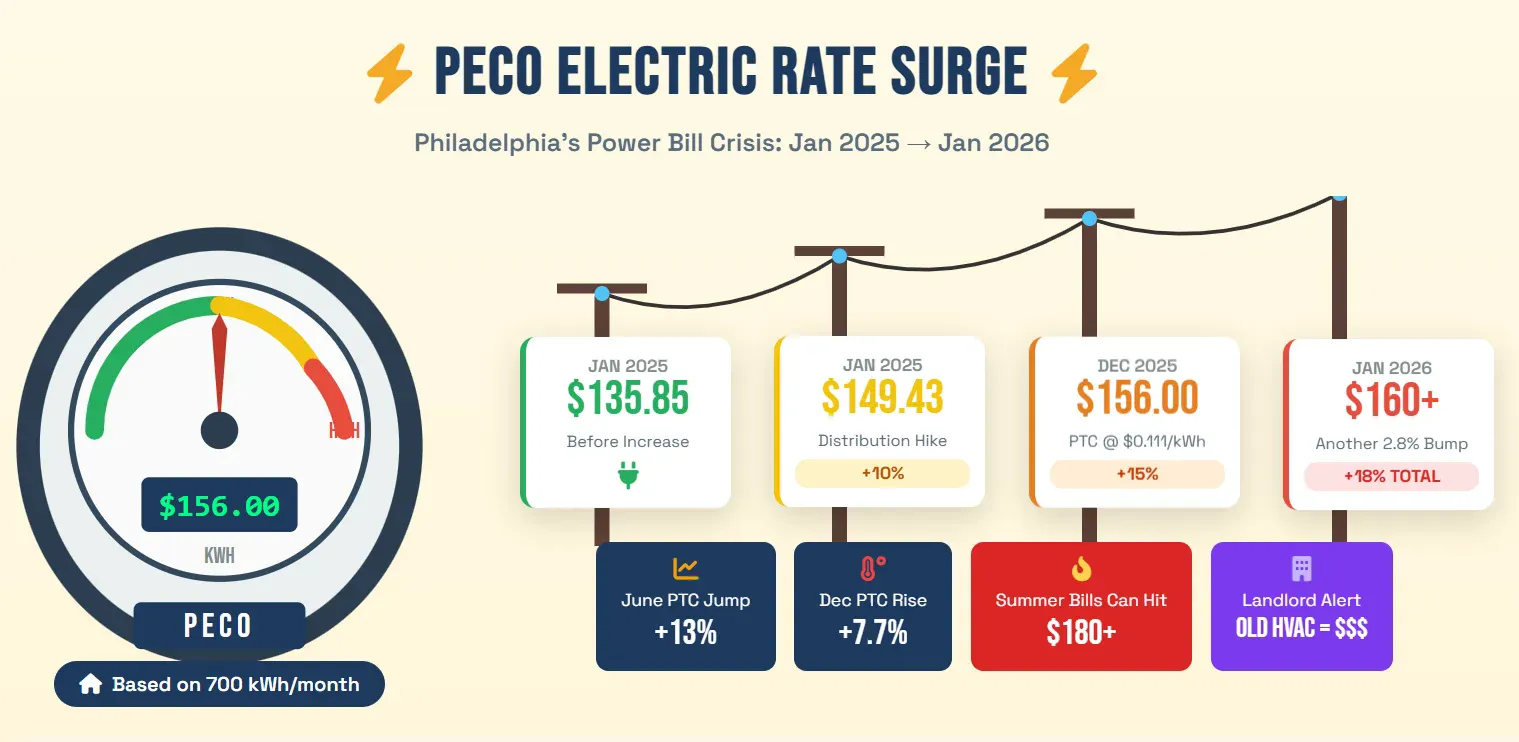
Electric took the hardest hit percentage-wise. PECO’s distribution rate increase kicked in January 1, 2025, pushing a typical 700 kWh residential bill from about $135.85 up to $149.43 pretty much overnight. That 700 kWh figure is what PECO uses as their benchmark for an average household, though actual usage swings wildly depending on whether you have window AC units, electric heat, or tenants who leave every light on.
The January increase wasn’t the end of it either. PECO’s Price to Compare rose approximately 13% to $0.09508 per kWh in June 2025 because of something called the Generation Supply Adjustment, which basically means wholesale electricity costs went up and PECO passed that along. Then in December 2025, the PTC climbed again by about 7.7% to $0.11129 per kWh.
By December 2025, that same typical residential bill sat at $156. And as of January 2026, another 2.8% bump went into effect as part of the ongoing phase-in that Pennsylvania PUC approved.
For landlords dealing with rising utility costs across their portfolio, the electric increases hit hardest on properties with older HVAC systems or buildings where the landlord covers electric as part of rent. Summer months especially can push bills well past that $156 average when tenants are running air conditioning.
PHILLY UTILITY BILL BREAKDOWN
PGW Gas + PWD Water/Sewer/Stormwater: What Landlords & Tenants Need to Know
PGW Gas: Smaller Percentage, Still Adds Up
Philadelphia Gas Works approved a base rate increase effective November 28, 2025, adding roughly $6 to the average monthly bill. For a household using about 61 Mcf annually, which is what PGW considers typical, bills went from $92.60 to $98.70 per month.
PGW had originally asked for a $105 million revenue increase, which would have meant about 15.7% higher bills. The PUC settlement knocked that down to $62 million, so residents got a somewhat softer landing than what was initially proposed. The residential customer charge also went up by $1 to $17.25, and the Gas Cost Rate adjusts quarterly so winter bills can fluctuate beyond just the base rate changes.
The increase is supposed to fund infrastructure safety improvements and system modernization, plus expanded Low-Income Usage Reduction programs starting in 2026 with $9 million allocated. Whether that makes the higher bills feel more justified probably depends on whether your building’s gas lines are from 1950 or 2010.
Winter months are when gas bills spike obviously, and Philadelphia winters have been unpredictable enough lately that budgeting for heating costs means building in more cushion than you might have a few years ago.
Water, Sewer, and Stormwater: The One Landlords Forget About
PWD raised typical residential water/sewer/stormwater bills by 9.4% effective September 1, 2025. The average monthly bill went from $81.77 to $89.42.
The stormwater piece is the one that confuses people who haven’t dealt with Philadelphia utilities before. Every residential property pays a flat monthly stormwater management fee of $19.03 plus a $2.01 billing and collection charge, totaling $21.04 per month. This applies to all residential properties including ones without active water service, which catches some landlords off guard when they buy a vacant property and still get stormwater bills.
The fee is based on average impervious area across city residential properties and funds stormwater infrastructure. Credits aren’t available for residential properties, though the Rain Check program offers free rain barrels if you want to manage runoff without actually reducing your bill.
The Water Liability Issue Most Landlords Learn the Hard Way
Here’s where Philadelphia gets tricky and where working with Bay Property Management Group or similar professional management makes a real difference for landlords who don’t want to deal with this personally.
Landlords bear primary legal responsibility for water and sewer bills with the Philadelphia Water Revenue Bureau even when tenants are supposed to pay. Unpaid amounts can lead to liens on the property, and the WRB doesn’t particularly care what your lease says about who handles utilities.
Under the Utility Service Tenants Rights Act, tenants facing shutoffs because their landlord didn’t pay can apply to become “tenant customers,” pay the water bill directly, and deduct those payments from rent. Property owners remain liable even if service shifts to the tenant’s name.
The practical reality is that if you’re a landlord and your tenant stops paying water or you have a vacant unit with an outstanding balance, that debt follows the property. Tenants get 30-day notices before shutoffs on rented properties and can request informal hearings through WRB at 215-685-6300.
For tenants trying to set up water service in their own name, you need owner consent, proof of residency, photo ID, and the landlord needs a valid rental license on file. If the rental license isn’t current, the application fails, which creates a whole separate headache for both parties.
What Philadelphia Rentals Actually Cost Now: 2024 vs 2025
| Utility | 2024 Average | 2025 Average (Post-Hikes) | Notes |
|---|---|---|---|
| Electricity (PECO) | $120–$160 | $150–$230 | Higher in summer with AC; typical 700 kWh bill hit $156 by December 2025 |
| Gas (PGW) | $80–$100 | $90–$100 | Typical 61 Mcf bill $98.70 as of late 2025; peaks during winter heating season |
| Water/Sewer/Stormwater (PWD) | $70–$80 | $85–$90 | Typical bill $89.42 including $21.04 stormwater as of September 2025 |
| Total | $270–$340 | $325–$420 | Excludes trash (~$20/month in some areas); many rentals have tenant-paid utilities |
These figures exclude internet and cable, which typically add another $60-150 depending on provider and package. Trash collection varies by whether the property is in a neighborhood with city pickup or requires private hauling.
Assistance Programs If Bills Get Unmanageable
Both PECO and PGW participate in LIHEAP for qualifying low-income households, and PWD offers the Tiered Assistance Program that caps bills at a percentage of household income. PGW’s Customer Responsibility Program provides similar income-based assistance.
The expanded Low-Income Usage Reduction program through PGW starting in 2026 with $9 million in funding should help some households manage gas costs, though eligibility requirements and application processes tend to have waiting periods.

For landlords, understanding these programs matters because tenants who qualify for assistance are less likely to fall behind on utility payments, which in the case of water means less risk of those bills becoming the landlord’s problem through the lien process.
What This Means Going Forward
No major new base rate filings have been announced for early 2026 beyond what’s already phased in, though the PGW settlement included a provision preventing new gas rate filings before March 2026. PECO’s January 2026 increase was the last scheduled piece of the current phase-in.
Quarterly adjustments to gas cost rates and supply charges will continue fluctuating based on wholesale energy markets, so monthly bills won’t stay perfectly static even without new rate cases. The pattern from 2025 suggests budgeting about 8-12% higher than whatever you paid the previous year isn’t unreasonable for planning purposes, though that depends heavily on weather patterns and whether any major infrastructure projects trigger additional surcharges.
 Decor & Improvement Accessories