

Home & Decor Blogs: DIY, Interior Design & Lifestyle Ideas
Why Epoxy Flooring Has Become a Go-To Choice for Modern Interiors


Most floors look great on day one. Give them six months of actual life — shoes, spills, furniture being shoved around, a dog that hasn’t figured out hardwood is not a racetrack — and the cracks start showing. Literally. Tiles split. Timber scratches if you breathe on it wrong and swells the moment moisture gets involved. Carpet? You already know. One red wine incident and you’re rearranging furniture to hide the evidence for the next three years.
That’s the frustration driving a pretty big shift in how people think about flooring. Looks matter, obviously, but performance over time matters more. And epoxy — a material most people still associate with factory floors and mechanic shops — has quietly become one of the more popular choices in homes, studios, offices, and retail spaces. Not because it’s trendy. Because it actually holds up.
What Epoxy Flooring Is
Two parts: a resin and a hardener. Mix them over a prepped concrete slab, and they trigger a chemical reaction that cures into a hard, plastic-like surface bonded directly to the concrete. It doesn’t sit on top the way planks or tiles do. It fuses with the floor underneath.
What you end up with is a smooth, continuous surface. No grout. No joins. No seams trapping crumbs and dust. Rooms instantly look cleaner and bigger for it, even before you put anything else in the space.
The catch — and it’s a significant one — is that the result depends almost entirely on how well the prep and application are done. Grind the concrete properly, prime it, layer the coats, cure it at the right pace, and you’ve got a floor that’ll outlast most things in the house. Rush it or skip steps, and you’ll get bubbling and peeling within months. This is why professional epoxy floor coating services are worth the conversation. The difference between a professionally applied system and a weekend DIY kit from Bunnings is enormous — not just in how it looks, but in how long it stays looking that way.
Why People Keep Choosing It
Epoxy ticks a lot of boxes at once, which is rare for any single flooring material.
Start with how it looks. Modern interiors tend to favour open layouts, clean lines, and not a lot of visual interruption between rooms. Epoxy does that naturally because there’s nothing breaking up the surface — no grout grid, no plank edges, no transition strips every time you move from kitchen to hallway. Light bounces off it. Spaces feel more open. It works particularly well alongside contemporary furniture and neutral palettes where you want the floor to sit quietly in the background and let everything else do the talking.
Then there’s durability, which is really where epoxy earns its keep. Foot traffic, furniture legs, dropped pans, kids on scooters, dog claws — it handles the lot without developing the wear patterns that show up on timber or laminate inside a year. It resists moisture too, and most household chemicals, which puts it ahead of a surprising number of more expensive options.
Maintenance is almost nothing. Sweep. Occasionally, mop with something gentle. Done. No grout scrubbing, no annual refinishing, no resealing. If you’ve ever owned a timber floor and spent a Saturday on your hands and knees with a bottle of oil and a rag, you’ll appreciate this immediately.
And it lasts. A properly installed epoxy floor will hold up for ten to twenty years in a residential setting. Some go well beyond that. Compare that to painted concrete, which needs redoing every couple of years, or vinyl plank that starts looking tired after five, and the maths works out pretty quickly, even though epoxy costs more upfront.
On the design side, you’re not locked into one look either. Gloss, matte, solid colours, metallic finishes, flake blends, subtle textures — there’s enough range to suit anything from an industrial loft conversion to a family home without the floor feeling like it’s trying too hard.
5 Reason why Epoxy Flooring Is So Popular in Modern Interiors
Epoxy flooring’s rise in popularity is not accidental. It aligns closely with what modern interiors demand today: simplicity, durability, and practical beauty.
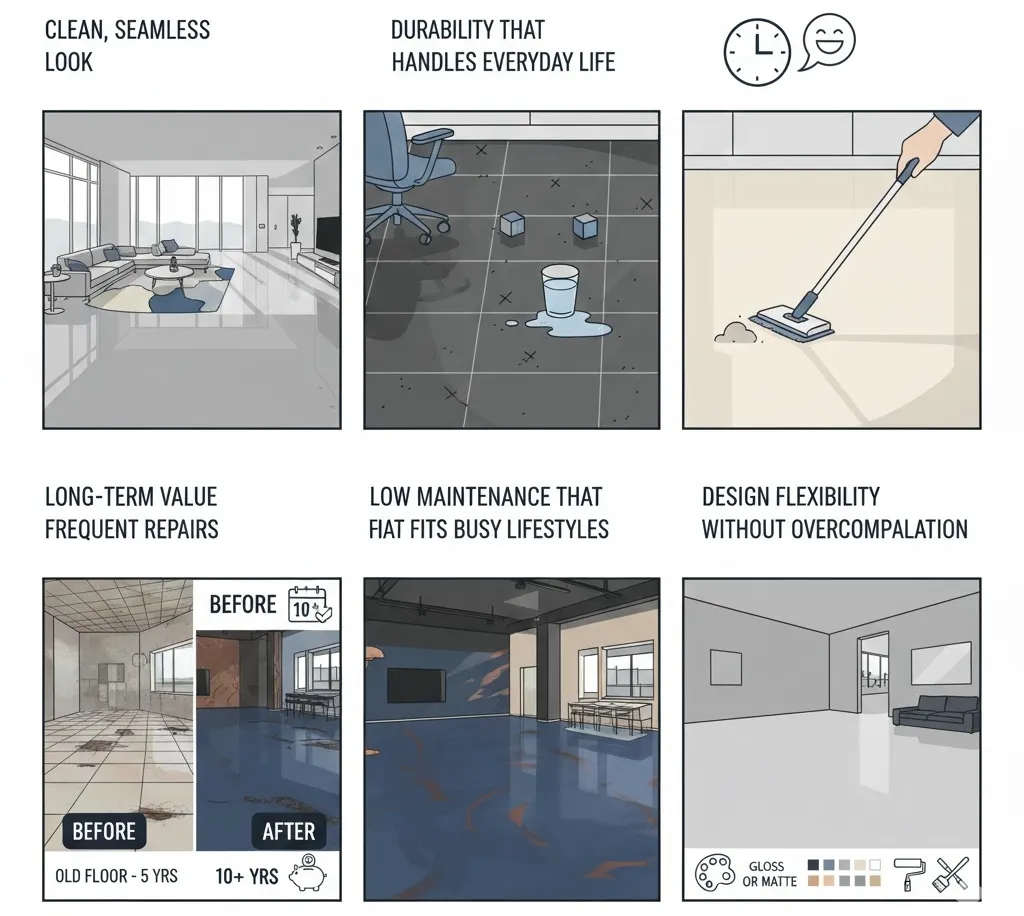
1) Clean, Seamless Look That Fits Modern Design
Modern interiors often lean toward open layouts, minimal detailing, and visual flow. Epoxy flooring supports this aesthetic naturally.
Key visual benefits include:
- Smooth, uninterrupted surfaces
- No visible joints or grout lines
- A polished appearance that reflects light
Because epoxy creates a continuous finish, rooms feel larger and more cohesive. It pairs especially well with contemporary furniture, neutral palettes, and modern lighting choices. Designers appreciate how epoxy acts as a quiet backdrop that allows other design elements to stand out.
2) Durability That Handles Everyday Life
One of the biggest reasons epoxy flooring has gained attention is its durability. Traditional floors often wear out quickly in high-traffic areas. Epoxy, by contrast, is built to withstand daily use without losing its finish.
It performs well against:
- Foot traffic
- Furniture movement
- Minor impacts
- Moisture exposure
This makes epoxy a practical option for households, studios, and workspaces where floors see constant activity. The surface holds its structure and appearance even as routines shift over time.
3) Low Maintenance That Fits Busy Lifestyles
Maintenance has become a major decision factor in modern interiors. People want floors that look good without demanding constant care.
Epoxy flooring supports this lifestyle by offering:
- Easy cleaning with basic tools
- Resistance to stains and spills
- No grout lines to trap dirt
For families, professionals, and creative spaces, this translates into less time spent cleaning and more time enjoying the space. The floor stays visually consistent with minimal effort, which adds to its appeal.
4) Long-Term Value Without Frequent Repairs
Epoxy flooring is often chosen for its long-term reliability. While traditional floors may need refinishing, regrouting, or replacement over time, epoxy holds up with fewer interventions.
Its longevity offers:
- Reduced repair needs
- Consistent appearance over the years
- Fewer disruptions due to maintenance
This value-driven benefit aligns well with modern interiors, where sustainability and smart investment matter just as much as style.
5) Design Flexibility Without Overcomplication
Despite its strength, epoxy flooring does not feel rigid or limited. It adapts well to different interior styles, from industrial to modern minimalist.
Design flexibility shows up through:
- Subtle texture variations
- Gloss or matte finish options
- Compatibility with different décor styles
Interior designers often appreciate how epoxy supports creative freedom without introducing visual clutter. It works quietly within a space rather than overpowering it.
Interior Spaces That Benefit Most From Epoxy Flooring
One of the strongest reasons epoxy flooring continues to grow in popularity is its versatility. It fits comfortably into both residential and commercial interiors.
Residential spaces commonly include:
- Kitchens that benefit from easy cleanup
- Basements where moisture resistance matters
- Garages transformed into usable living areas
- Home offices that need durability and style
Commercial and creative spaces often include:
- Studios and workshops
- Retail interiors
- Modern offices
- Showrooms
In design-focused environments, epoxy flooring is often paired with thoughtful layouts and styling guidance from studios where flooring choices are seen as part of a broader design narrative rather than a standalone feature.
How It Compares
Worth seeing the differences side by side:
| Flooring Type | Typical Lifespan | Maintenance | Moisture Resistance | Joins/Grout | Relative Cost |
|---|---|---|---|---|---|
| Epoxy (professional) | 10–20+ years | Very low | High | None | Mid |
| Timber/hardwood | 15–25 years (with refinishing) | High | Poor | Yes | High |
| Laminate | 10–15 years | Low–Mid | Limited | Yes | Low–Mid |
| Ceramic / porcelain tile | 20+ years | Mid (grout) | High | Yes | Mid–High |
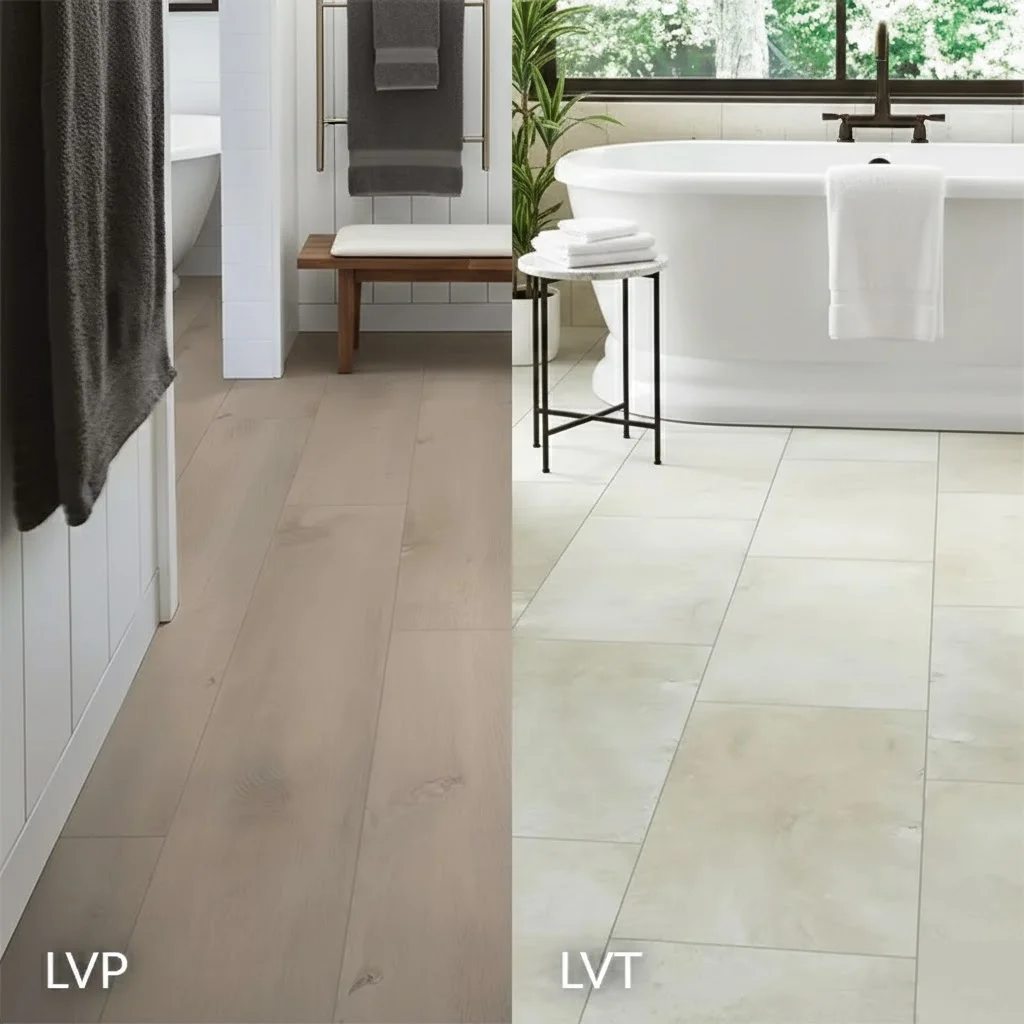
| Vinyl (LVP/LVT) | 5–10 years | Low | High | Yes | Low |
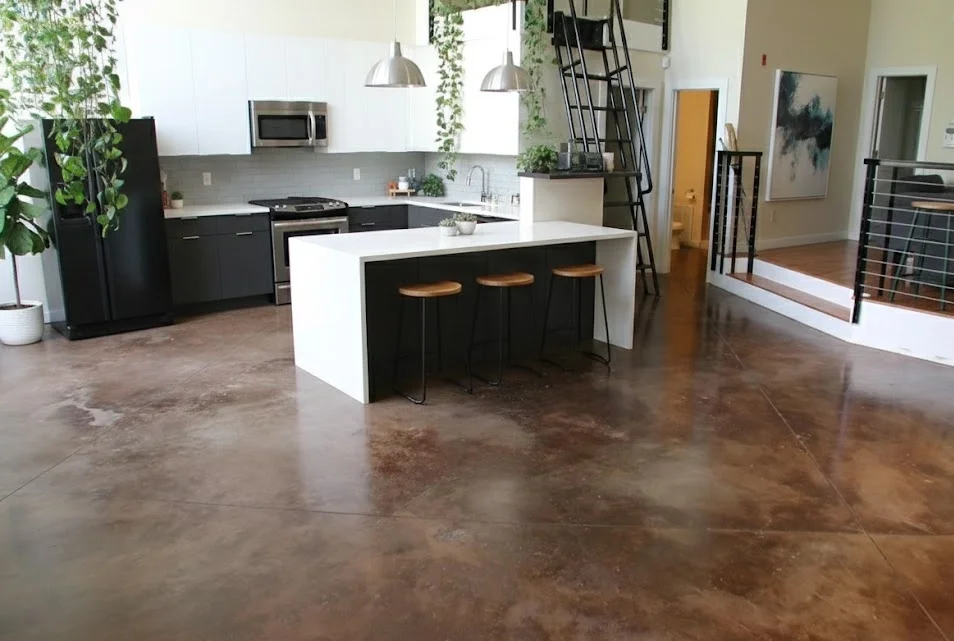
| Painted concrete | 1–3 years | High | Moderate | None | Very low |
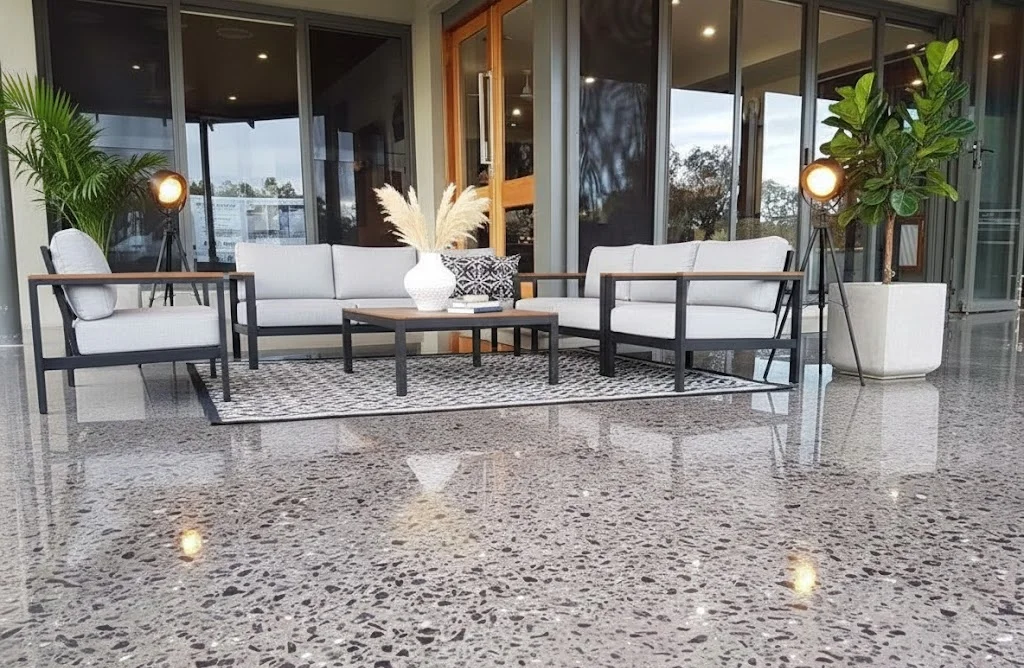
| Polished concrete | 10–15 years | Low–Mid | Moderate | None | Mid |
Nothing wins every column. Tile outlasts most things, but grout is a lifelong chore. Timber looks gorgeous until it doesn’t, and keeping it that way is a part-time job. Polished concrete comes closest to epoxy’s profile, but can’t handle chemical spills or staining the same way. Vinyl is cheap and water-friendly, but you’re replacing it in under a decade.
Epoxy’s advantage is that it’s strong across all of those categories at once, rather than brilliant in one and terrible in another.
Types of Flooring
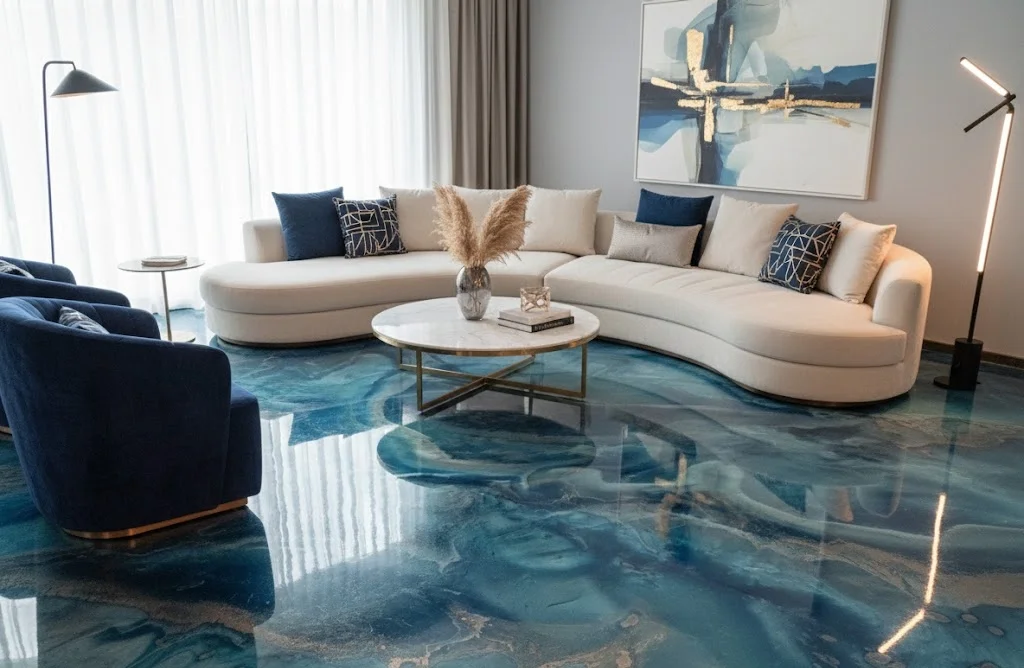
Epoxy Flooring
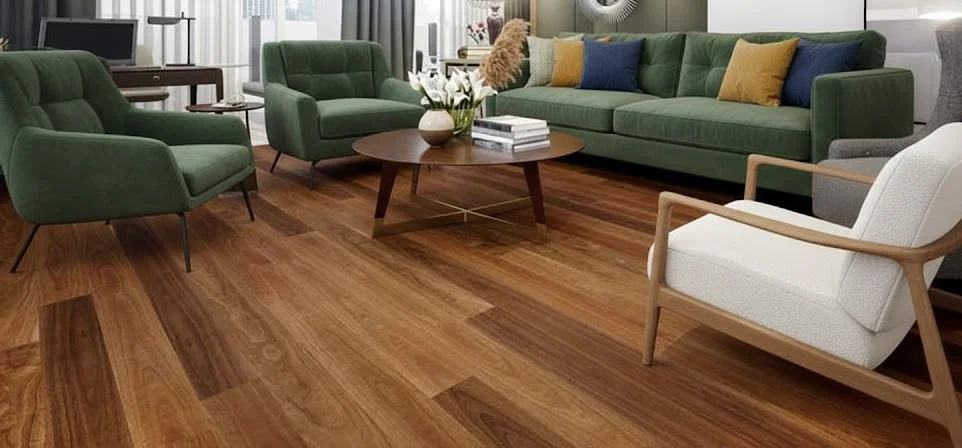
Timber/hardwood flooring
Laminate Flooring
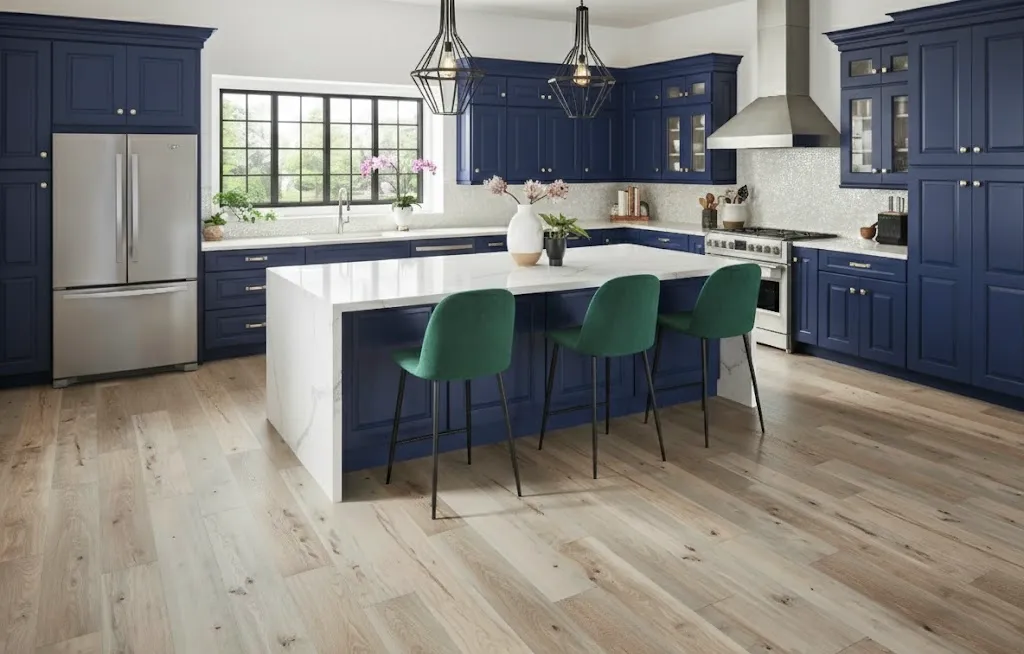
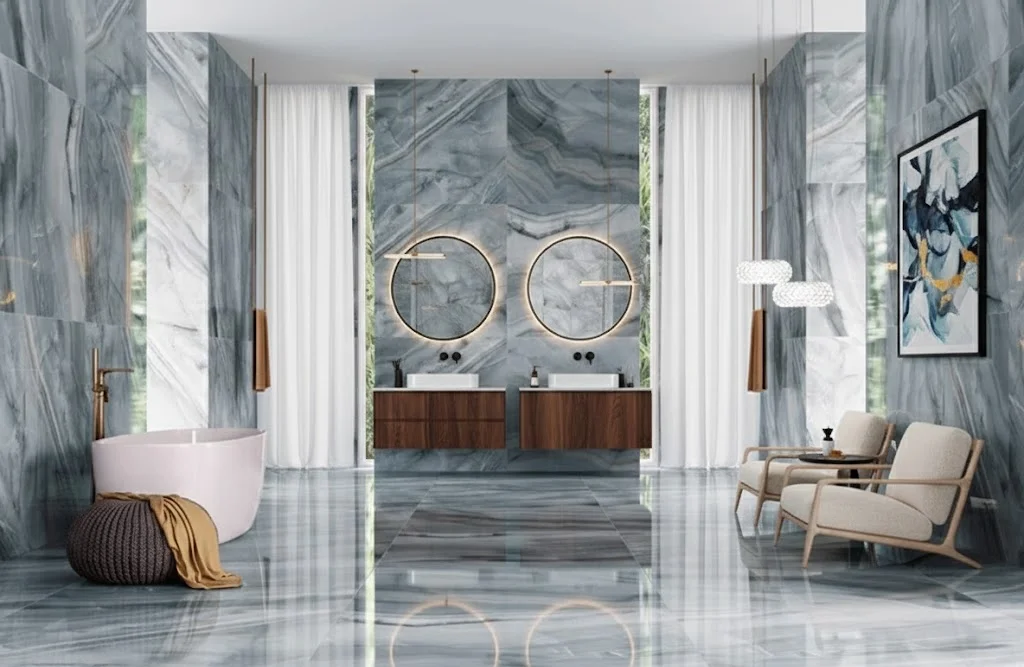
Ceramic/Porcelain tile Flooring
Vinyl (LVP/LVT) Flooring
Painted Concrete Flooring
Polished Concrete Flooring
Where It Belongs
Kitchens are an obvious fit — spills wipe up in seconds, and there’s no grout collecting grease and grime along every line. Basements benefit because moisture is always lurking in concrete slabs below grade, and epoxy handles that without delaminating the way timber products do.
Garages transformed into usable living areas might be the single most popular residential use case. Home gyms, workshops, art studios, extra living space — garages cop hot tyres, dropped tools, chemical spills, and general abuse that would destroy most other floors. Epoxy doesn’t care. Home offices work well too, especially if you want something that looks polished without requiring any thought after installation day.
On the commercial side: retail floors, showrooms, studios, creative offices. Anywhere that needs to look consistently good under constant foot traffic without a cleaner on permanent standby.
Designers tend to treat epoxy as part of a broader layout decision rather than a standalone choice. The floor supports the room. It doesn’t compete with it.
Where It Falls Short
Wouldn’t be fair to skip the downsides.
Sunlight is the big one. Standard epoxy yellows and chalks under prolonged UV exposure. If you’ve got a sun-drenched room with floor-to-ceiling windows, you’ll need UV-stable formulations or a polyaspartic topcoat. Without that, the colour shift after a year or two is noticeable and annoying.
It needs dry concrete at installation time. Any moisture trapped in the slab will cause adhesion failure — sections start lifting and peeling weeks or months later. Professional installers test for this. DIY attempts usually don’t, and that’s where most horror stories come from.
Glossy epoxy gets slippery when wet. Kitchens, laundries, any space where water hits the floor regularly — you need anti-slip additives mixed into the topcoat. It’s a simple fix during installation, but not something you can easily retrofit after.
And those retail DIY kits? They’re water-based, much thinner than professional-grade products, and they skip half the steps that make epoxy last. Fine for a quick cosmetic lift on a garage floor you don’t care much about. Not in the same conversation as a properly installed system when it comes to performance or longevity.
What Professional Installation Looks Like
The concrete surface gets mechanically ground or shot-blasted to create a rough profile that the coating can bond to. Cracks and divots in the slab get patched. Moisture gets tested. Then a primer coat goes down, followed by the base coat — this is where decorative flakes or metallic pigments get broadcast into the wet surface if you’re going for a particular look — and finally a clear topcoat for UV protection, chemical resistance, and the finish sheen you’ve picked.
Curing takes anywhere from a day to several days, depending on the product and the temperature. Cut this short, and the whole system is compromised.
The professional stuff — 100% solids epoxy — runs five to six times thicker than what you’ll pull out of a kit. That thickness is a huge part of why it lasts decades rather than years. And the prep work, boring as it sounds, is genuinely the difference between a floor that performs for twenty years and one that starts peeling before the first summer.
Bottom Line
Epoxy flooring keeps showing up in modern homes, offices, and commercial spaces because it solves a problem that most traditional floors don’t: looking good and staying good at the same time, for years, without demanding much in return. The upfront cost is higher than paint or vinyl but lower than timber, and spread across a decade or two of use, it’s hard to beat on value.
It’s not the right pick for every room. Sun-heavy spaces need UV protection. Wet areas need slip resistance. And professional installation isn’t optional if you want the full lifespan. But for spaces that need a floor, you can forget about — in a good way — it’s earned the attention it’s getting.
 Decor & Improvement Accessories