

Home & Decor Blogs: DIY, Interior Design & Lifestyle Ideas
How Renovation and Landscaping Work Together to Lift Property Value Across Australia

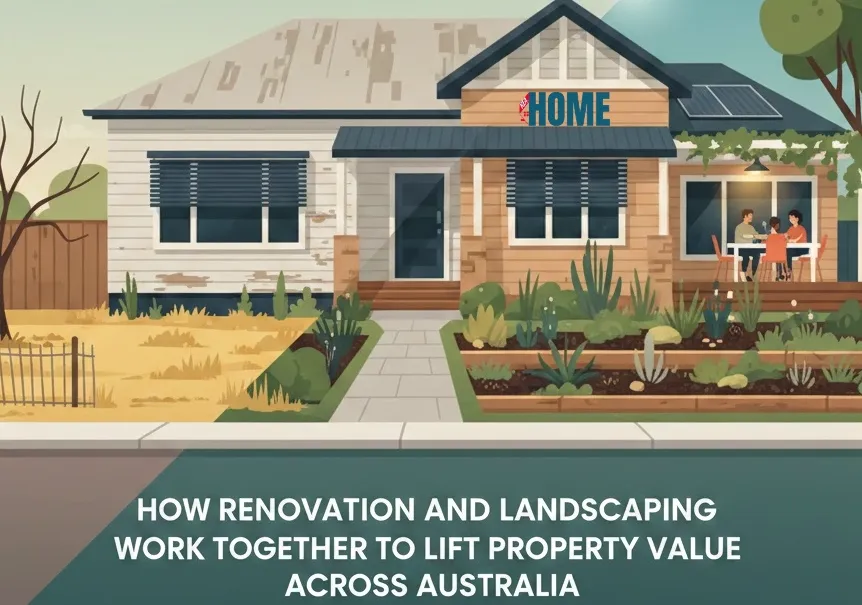
You’ve probably seen it happen. Someone spends $40,000 on a kitchen, marble benchtops and all, then walks outside to a yard that looks like it’s been abandoned since 2016. Buyers notice that. They walk through the front door impressed, walk out the back door concerned, and then start mentally subtracting from their offer.
The properties that sell well — the ones that photograph brilliantly and have agents fielding calls after the first open — almost always share the same trait. Inside and outside work together. The kitchen feels like it belongs with the garden. The alfresco connects to the living room like it was always meant to. Energy costs are obviously low. Everything says “someone thought about this properly.”
This guide covers how to sequence indoor renovations with outdoor improvements so they actually reinforce each other. There’s a phased execution plan, compliance stuff you’ll need to sort before touching anything, realistic budget tiers, and climate-specific details for both Melbourne and Cairns. Because what works on a temperate weatherboard in Coburg doesn’t work on a Queenslander in Yorkeys Knob.
The Money Behind Getting Both Right
Buyers are willing to pay more for homes that look comfortable and cost less to run. That’s not a guess. Domain’s 2025 Sustainability in Property Report found that energy-efficient houses nationally sell for 14.5% more than non-efficient ones — that’s about $118,000 extra. In Melbourne specifically, the premium hits 23.8%, worth roughly $197,000. Those figures include features like solar, insulation, and smart orientation, but the point stands: efficiency features that buyers can see and feel at inspection drive real price differences.
And it’s not just the house itself. A study out of the University of Western Australia looked at what street trees do to property prices across 23 suburbs in Perth. One broad-leaf tree on the verge bumped the median sale price by about $16,889. Trees signal that the neighbourhood is established, liveable, someone gives a damn. Pair that kind of kerb appeal with external shading on the house — which can block up to 90% of unwanted solar heat through glazing, according to the Australian Government’s YourHome resource — and you’ve got a property that looks greener, feels cooler inside, and costs less to keep comfortable.
The front yard matters more than most sellers realise. Clean paths, fresh mulch, layered planting, and warm lighting for evening inspections — these things reduce the perceived maintenance burden for buyers. A well-built deck or paved alfresco that connects to the living area? That shortens time on market because buyers can immediately picture themselves out there on a Saturday afternoon.
ABS data from November 2025 shows Australians approved around $1.19 billion in residential alterations and additions that month alone. People are spending real money on upgrades. The question is whether that money is going into the right places.
What Actually Moves the Dial (And What Doesn’t)
Not every dollar you spend comes back at sale. Cosmetic kitchen and bathroom refreshes, energy-smart additions like insulation and shading, and clean front landscaping consistently rank as high-signal improvements. The stuff buyers notice immediately.
ROI numbers you’ll find online should be treated as directional. They vary by suburb, by market conditions, by how well the work was done. What doesn’t vary much is buyer behaviour — people notice when a home will cost them less to run. They notice when the yard won’t eat their weekends. And they absolutely notice when they can walk from the living room onto a deck and picture themselves having friends over.
Some specific moves worth the money:
External shading on east and west glazing cuts heat load and air conditioning bills. LED retrofits in warm colour temperatures (2700–3000K) make rooms feel inviting in listing photos. Heat-pump hot water systems qualify for government incentives and reduce energy bills from day one.
Solar panels remain a good investment, but the economics shifted recently. Under the Small-scale Renewable Energy Scheme, tradable STCs still provide upfront discounts on eligible systems — and that runs until 2030. However, Victoria ditched its regulated minimum solar feed-in tariff from July 2025. The Essential Services Commission no longer sets a floor rate, meaning retailers now choose what they pay you for exported power — and many of those rates are extremely low. The practical takeaway: configure your loads to run during daylight. Washing machine, hot water, EV charging — all during solar production hours. Self-consumption beats exporting surplus that earns you almost nothing.
Sequencing the Work So You Don’t Waste Money
The most expensive mistake in a combined reno-and-landscaping project is doing things out of order. Rip up the front yard before the interior trades are done, and you’ll have trucks driving over your new planting. Paint the exterior before the deck is built, and you’re touching it up again.
Four phases keep things clean: assess, comply, phase, and execute.
Start by figuring out your timeline. Selling in three months? Focus on cosmetic, fast-turn stuff. Holding for five years? You can justify deeper energy and durability measures that pay off through lower bills over time.
Walk through the house and yard with buyer eyes. What would make you hesitate? Dim kitchens, poor flow between inside and outside, hot west-facing rooms that feel like saunas by 3pm, water-hungry gardens that look half-dead by February. Write all of it down. Then set your scope with a 10–15% contingency because you will find something unexpected — hidden rot under a deck, drainage that needs reworking, termite damage behind a wall.
Check compliance requirements before you finalise anything. NCC triggers, council permits, overlays, and local water rules can all throw a spanner into your timeline if you discover them mid-build.
The actual sequencing: tidy up and repaint first (it’s the cheapest, highest-impact work). Light kitchen and bathroom refresh second. Exterior repairs third. Front yard fourth. Alfresco and deck last — that ties the indoor-outdoor story together and gives you the cleanest possible finish right before listing photos.
Compliance: Get This Wrong and It Costs You Twice
Non-compliance doesn’t just delay a sale. It invites renegotiation. Buyers’ building inspectors will flag unpermitted work, and suddenly you’re either fixing it under pressure or accepting a lower offer.
Australia’s National Construction Code applies to alterations and additions, with NCC 2022 Amendments 1 and 2 now in force. Different states have adopted different timelines and provisions, so confirm where yours sits before scoping any work. Seven-star NatHERS energy provisions apply to most new residential work.
In Victoria, decks and verandas generally need building permits. Some small pergolas might be exempt depending on size, height, setbacks, and whether your property has any overlays — but “might be exempt” is not the same as “is exempt.” Check with your local council before you buy a single piece of timber.
In Queensland, small low unroofed decks may scrape through without approval in some council areas; otherwise you’re getting building approval through a private certifier.
Bushfire-prone land adds another layer. You need to determine your Bushfire Attack Level early and specify AS3959-compliant materials. Landscaping needs to support a defendable space around structures, which means careful plant selection and placement. In cyclonic areas like Cairns (Region C), every deck, pergola, and roofed structure needs uplift-resistant connections and proper bracing. Salt-laden coastal air demands corrosion-resistant materials too — standard fixings won’t last.
Water Rules You Can’t Ignore
Victoria’s Permanent Water Saving Rules allow irrigation systems only between 6pm and 10am. Hand-held watering is fine anytime, but anything automated needs to run within those hours. Design your irrigation schedule around this from the start.
Cairns runs an odd-even sprinkler schedule with no sprinklers at all on Mondays. Program controllers accordingly and favour drip lines under mulch — less evaporation, better root-zone moisture, and you’re not wasting water on paths and driveways.
Indoor Upgrades That Punch Hard for the Money
Fast, clean interior work signals to buyers that they can move straight in. No approvals headaches, no living through a renovation.
Kitchen light-refreshes deliver strong returns without touching the layout or services. Swap benchtops for engineered stone alternatives or a good quality laminate. Retile the splashback, upgrade tapware, put in LED task lighting. Keep the plumbing and electrical where it is and you control cost while still transforming the look.
Bathroom refreshes scale with ambition:
┌────────────────────────────────────────────────────────────────┐
│  BATHROOM REFRESH TIERS                                        │
├──────────────────────┬─────────────────────────────────────────┤
│  Cosmetic            │  $5,000 – $10,000                      │
│  (regrout, reseal,   │  Fastest turnaround. Big visual         │
│  new tapware, LED    │  improvement for minimal disruption.    │
│  lighting)           │                                         │
├──────────────────────┼─────────────────────────────────────────┤
│  Partial refresh     │  $10,000 – $20,000                     │
│  (new vanity, shower │  Feels like a different room without    │
│  screen, repaint)    │  moving any pipes or walls.             │
├──────────────────────┼─────────────────────────────────────────┤
│  Full within-walls   │  $20,000 – $35,000                     │
│  renovation          │  Everything changes but the walls stay  │
│  (new everything,    │  where they are. Biggest impact.        │
│  same footprint)     │                                         │
└──────────────────────┴─────────────────────────────────────────┘
Whole-home quick wins that cost relatively little but photograph well: repaint in warm neutrals to brighten and unify spaces. Replace yellowed downlights with high-CRI LEDs in 2700–3000K for living areas — the difference in how rooms feel under warm, accurate lighting is massive. Sand or replace tired floors in living zones. Add wardrobes and storage where they’re missing, because open inspections expose every storage shortfall.
Energy quick wins include draught-sealing doors and windows, topping up ceiling insulation where you can safely access it, and adding external shading to east and west windows. Heat-pump hot water systems qualify for SRES incentives for upfront discounts. All electrical and plumbing work needs to be completed by licensed trades with proper certificates — no shortcuts here.
Outside: What Buyers Actually Respond To
Front-yard triage creates kerb appeal faster than almost anything else you can do. Prune overgrowth. Pressure-clean driveways and paths. Fix trip hazards. Tidy edges. Lay 50–70mm of organic mulch. Replace thirsty turf with native or low-mow groundcovers. Install drip irrigation on a timer set within your local watering hours.
Alfresco areas and decking extend your liveable space, and buyers mentally add that square meterage to the home’s footprint even though it’s technically outdoors. Australian decking costs vary significantly depending on what you’re building:
┌────────────────────────────────────────────────────────────────┐
│  DECKING COST GUIDE (per square metre, installed)              │
├──────────────────────────────┬─────────────────────────────────┤
│  Treated pine, ground level  │  $200 – $300                   │
├──────────────────────────────┼─────────────────────────────────┤
│  Hardwood or composite       │  $300 – $500                   │
├──────────────────────────────┼─────────────────────────────────┤
│  With roofing and stairs     │  $500 – $800+                  │
├──────────────────────────────┼─────────────────────────────────┤
│  Elevated, cyclone-rated     │  $800 – $1,000+                │
└──────────────────────────────┴─────────────────────────────────┘
Material choice depends on your region and how much maintenance you’re willing to do. Composite costs more upfront but requires almost zero ongoing work. Timber looks beautiful but needs oiling every year or two, and it won’t forgive you if you skip it.
Lighting and Trees
Solar bollards, low-glare step lights, and warm-toned fixtures with motion sensors at entries improve both safety and ambience. Shielded path lighting avoids harsh glare while making the property feel welcoming for evening inspections — and plenty of buyers inspect after work when the sun’s going down.
Where space and council rules allow, plant a broad-leaf canopy tree in the front yard. Beyond the direct property value benefit, it provides microclimate cooling, signals long-term liveability, and makes the whole streetscape look better. Just confirm with your council first — some have preferred species lists or setback requirements.
Landscaping Consultant Melbourne
Melbourne’s mix of sloping sites, heavy clay soils, and council overlays makes structural landscaping more complicated than most owners expect. Retaining walls above certain height thresholds need engineering. Proximity to easements demands careful coordination. Clay soils common across much of Melbourne can heave and shift if subsoil drainage isn’t designed properly, and that movement can crack paths, shift footings, and cause water ingress into the house.
For complex front-yard makeovers involving structural retaining on sloping blocks, drainage on clay soils, and council sign-offs, engage a trusted landscaping consultant Melbourne to deliver compliant landscape construction that protects the house and lifts kerb appeal before sale. Tight pre-sale timelines need a team that can turn around design approvals quickly and deliver clean, compliant work without blowing the schedule.
Melbourne’s temperate climate means your design needs to admit winter sun from the north while shading hot west aspects in summer. Eaves, adjustable shading, or deciduous vines on pergolas let you modulate seasonal sun exposure without permanent fixed structures that block winter warmth. For planting, drought-tolerant natives like Lomandra, Westringia, Correa, and Callistemon work well when grouped by water needs with substantial mulch for moisture retention.
House Renovation Builders Cairns
Region C cyclonic requirements in Cairns aren’t something you can learn on the job. Uplift-resistant connections, proper bracing, and cyclonic-rated fixings need builders who work with these specifications regularly and know the certifier expectations inside out. Getting it wrong isn’t just a compliance problem — it’s a safety one.
Deep verandas, high-level louvres, and fly-roof concepts shade the roof deck and drive convective cooling through the house. Done well, this kind of tropical detailing reduces air conditioning dependency significantly while making the home feel open and connected to the outdoors. Buyers in Cairns know what good tropical design looks and feels like, and they know when it’s been done cheaply.
For cyclonic-grade extensions or a shaded alfresco upgrade that meets local wind ratings and optimises cross-ventilation, partner with experienced house renovation builders Cairns who can design, certify, and build for Region C conditions. Ask for evidence of recent certifier approvals and get fixed-scope quotes with defined inspection milestones.
Tropical planting and water management suit humidity-resilient natives like Xanthostemon chrysanthus (golden penda). Heavy-mulch beds and swales slow heavy rainfall runoff. Program irrigation controllers to the odd-even schedule, ban sprinklers on Mondays per local rules, and consider soil moisture sensors to avoid overwatering — because in Cairns, the problem is often too much water rather than too little.
Budgets: Three Scopes That Actually Work
Matching scope to budget stops you from overcapitalising. Here’s what each level looks like:
┌─────────────────────────────────────────────────────────────────┐
│  SCOPE vs BUDGET vs TIMELINE                                    │
├──────────────┬──────────────────┬───────────┬───────────────────┤
│  Scope       │  Budget          │  Timeline │  What's Included  │
├──────────────┼──────────────────┼───────────┼───────────────────┤
│  Fast        │  $10k – $20k     │  2–4      │  Whole-home paint │
│  refresh     │                  │  weeks    │  in neutrals, LED │
│              │                  │           │  upgrades, tapware │
│              │                  │           │  swaps, front yard │
│              │                  │           │  cleanup with      │
│              │                  │           │  mulch, native     │
│              │                  │           │  infill, path      │
│              │                  │           │  lighting.         │
├──────────────┼──────────────────┼───────────┼───────────────────┤
│  Mid-range   │  $40k – $70k     │  4–8      │  Above, plus      │
│              │                  │  weeks    │  cosmetic kitchen  │
│              │                  │           │  and bathroom      │
│              │                  │           │  refresh, new      │
│              │                  │           │  floors in living  │
│              │                  │           │  zones, external   │
│              │                  │           │  shading on west   │
│              │                  │           │  windows, compact  │
│              │                  │           │  deck or patio     │
│              │                  │           │  with shade sail,  │
│              │                  │           │  drip irrigation.  │
├──────────────┼──────────────────┼───────────┼───────────────────┤
│  Full        │  $120k – $180k   │  8–16     │  Kitchen replan    │
│  lifestyle   │                  │  weeks    │  within existing   │
│  lift        │                  │           │  walls, full bath  │
│              │                  │           │  reno, laundry     │
│              │                  │           │  upgrade, storage, │
│              │                  │           │  large deck or     │
│              │                  │           │  verandah (wind-   │
│              │                  │           │  rated where       │
│              │                  │           │  needed),          │
│              │                  │           │  permeable paving, │
│              │                  │           │  native replanting,│
│              │                  │           │  coordinated       │
│              │                  │           │  lighting.         │
└──────────────┴──────────────────┴───────────┴───────────────────┘
A 90-Day Execution Plan
Front-loading compliance checks and ordering prevents the schedule blowouts that cost you real money.
Days 1–14: Compliance scans, site measure, concept design, trade bookings, and ordering long-lead items. Benchtops, tapware, decking materials, and shade structures all have lead times that can stall a project if you leave ordering until the trades are ready to install. Get this done first.
Days 15–45: Interior works. Repainting, lighting upgrades, kitchen and bathroom refresh elements, minor carpentry, storage additions. While walls are open or floors are being worked on, trench conduits for future EV charging and garden lighting — it costs almost nothing to do this now and saves a fortune later.
Days 46–75: Outdoor and structural work. Hardscape first, then planting, drip irrigation, pergola or deck installation, and any required inspections. This order means heavy machinery and foot traffic happen before planting goes in, not after.
Days 76–90: Finishing. Detail cleaning, touch-ups, interior and alfresco styling, and professional photography. Shoot late afternoon to capture warm lighting and garden ambience at their best. Write listing copy that specifically mentions energy features, outdoor living spaces, and compliance documentation — these details matter to serious buyers who are comparing multiple properties.
Measuring Whether It Worked
Track a few things before and after the work is done.
Log temperatures in problem rooms (especially west-facing ones) before and after shading improvements. Compare monthly energy and water usage to the same period the year before. When you list, monitor days on market versus the suburb median and pay attention to what buyers say during opens about the alfresco, the move-in readiness, the garden.
Put together a handover pack: manuals, building approvals, energy certificates, irrigation schedules, a plant list with watering tips, and warranty documentation. Mention all of it in the listing copy. Buyers respond to properties where someone has obviously thought things through — from the first inspection through to settlement, that level of care comes across in everything.
 Decor & Improvement Accessories