

Home & Decor Blogs: DIY, Interior Design & Lifestyle Ideas
5 Best Kitchen Bay Window Ideas for Your Home

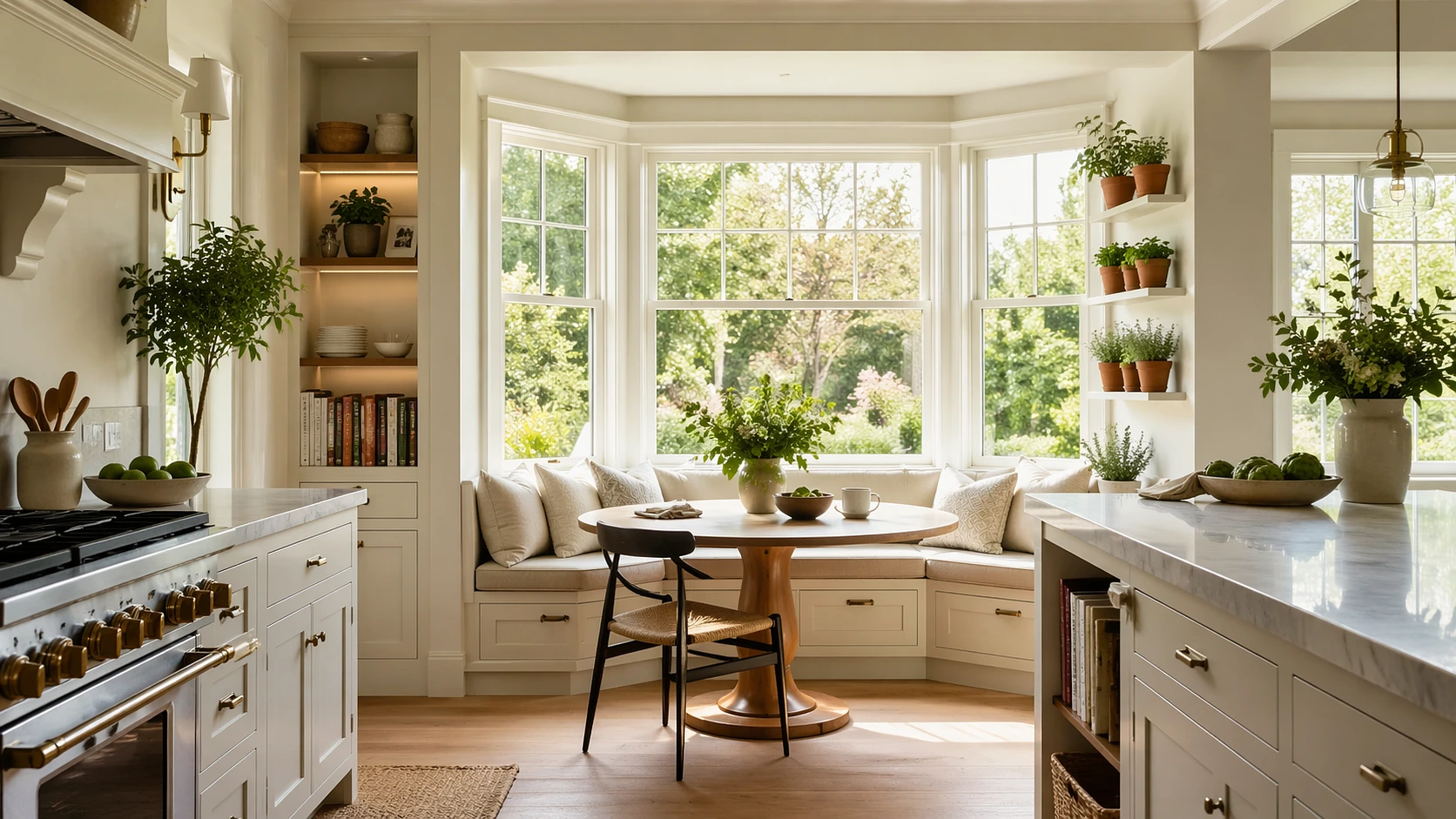
Bay windows in a kitchen are genuinely underused. Most people hang a curtain, maybe put a small plant on the sill, and call it done. Which is a shame, because that protruding pocket of space — with light coming from three directions — is probably the most architecturally interesting spot in the entire room.
These five ideas actually work. Not just aesthetically, but in terms of how a kitchen functions day to day.
1. Built-In Breakfast Nook
Pull a small table into that bay pocket and build a wraparound bench with storage underneath. The bench seats tuck flush against the three window faces, the table sits in the middle, and suddenly, you’ve carved a proper eating area out of a room that probably didn’t have one.
What makes this work specifically in a bay window — and not just any corner — is the light. Morning coffee with the sun coming from the side and front simultaneously hits differently than sitting under overhead kitchen lighting. The built-in storage under the seat handles everything you currently have no good place for: extra linens, seasonal cookware, and that pasta maker used twice a year.
Cushions should be removable with zipper covers. That detail sounds minor until the first time something spills.
2. Extended Kitchen Countertop
Most kitchens are short on counter space. A bay window that sits at counter height is basically a free extension — you just have to build it out.
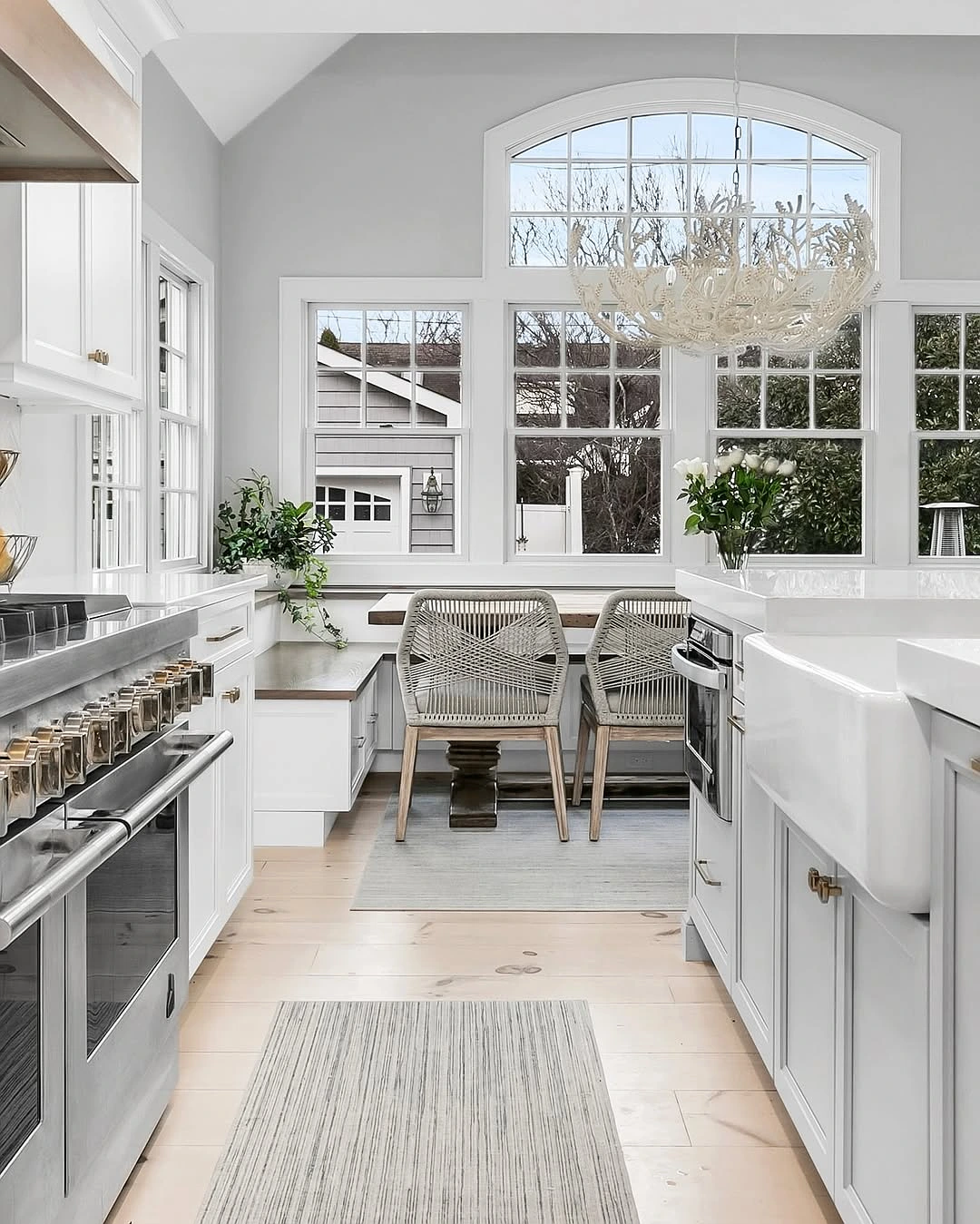
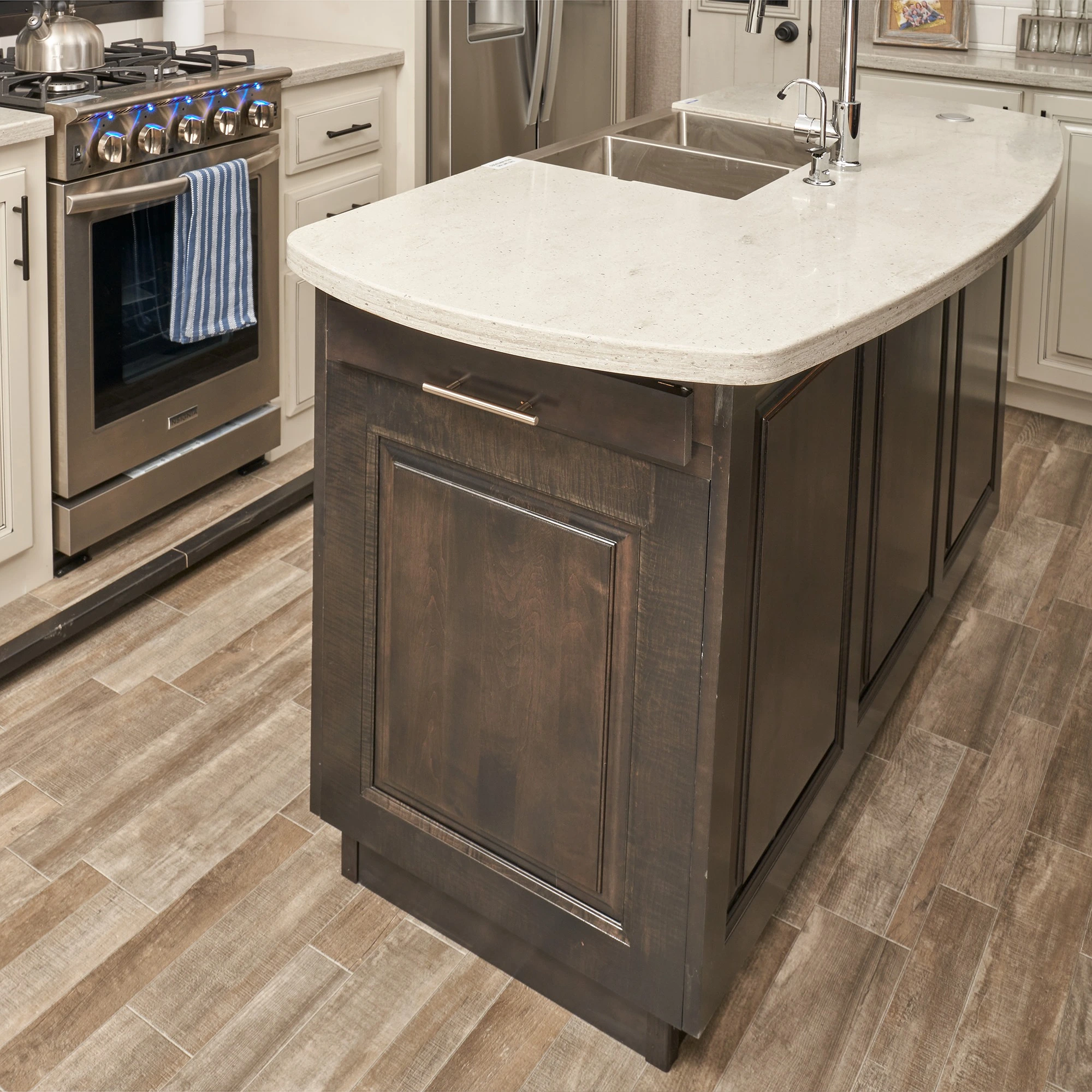
A contractor can pour or cut a countertop material that wraps from your existing counter surface right into the bay, following the angles. Suddenly, you’ve got an extra four to six square feet of prep space, or a dedicated coffee and small appliance station that doesn’t eat into your main work area.
The three-sided window situation means whatever sits there — espresso machine, toaster, stand mixer — gets natural light on it from multiple angles. From a pure functionality standpoint, this might be the most practical of all kitchen bay window ideas on this list.
Stone or solid surface materials work best here because they handle the slight temperature variations near the glass better than wood over time.
3. Indoor Herb Garden Setup
Bay windows face outward, usually catching good sun depending on orientation. South or west-facing ones get enough direct light to actually grow basil, parsley, chives, mint, thyme — not just keep them alive but genuinely thrive.
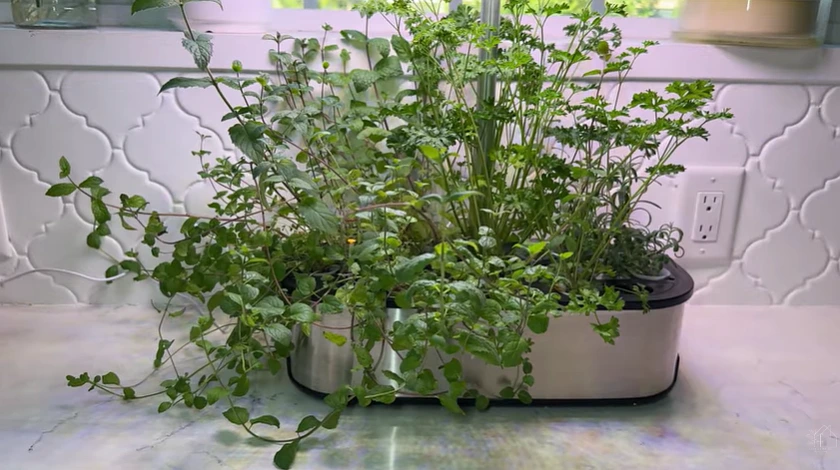
A few narrow shelves across the three window panes, staggered so each pot still gets light, give you a functional herb wall right where you cook. No more buying plastic-wrapped basil at the grocery store that wilts in three days.
Terracotta pots work better than plastic for this. They breathe, which prevents the overwatering rot that kills most indoor herbs. A tray underneath each shelf handles drainage without staining the sill.
Worth checking orientation before committing to this one. North-facing bay windows won’t cut it for most herbs — you’d end up with leggy, pale plants reaching desperately toward insufficient light.
4. Window Seat with Open Display Shelving
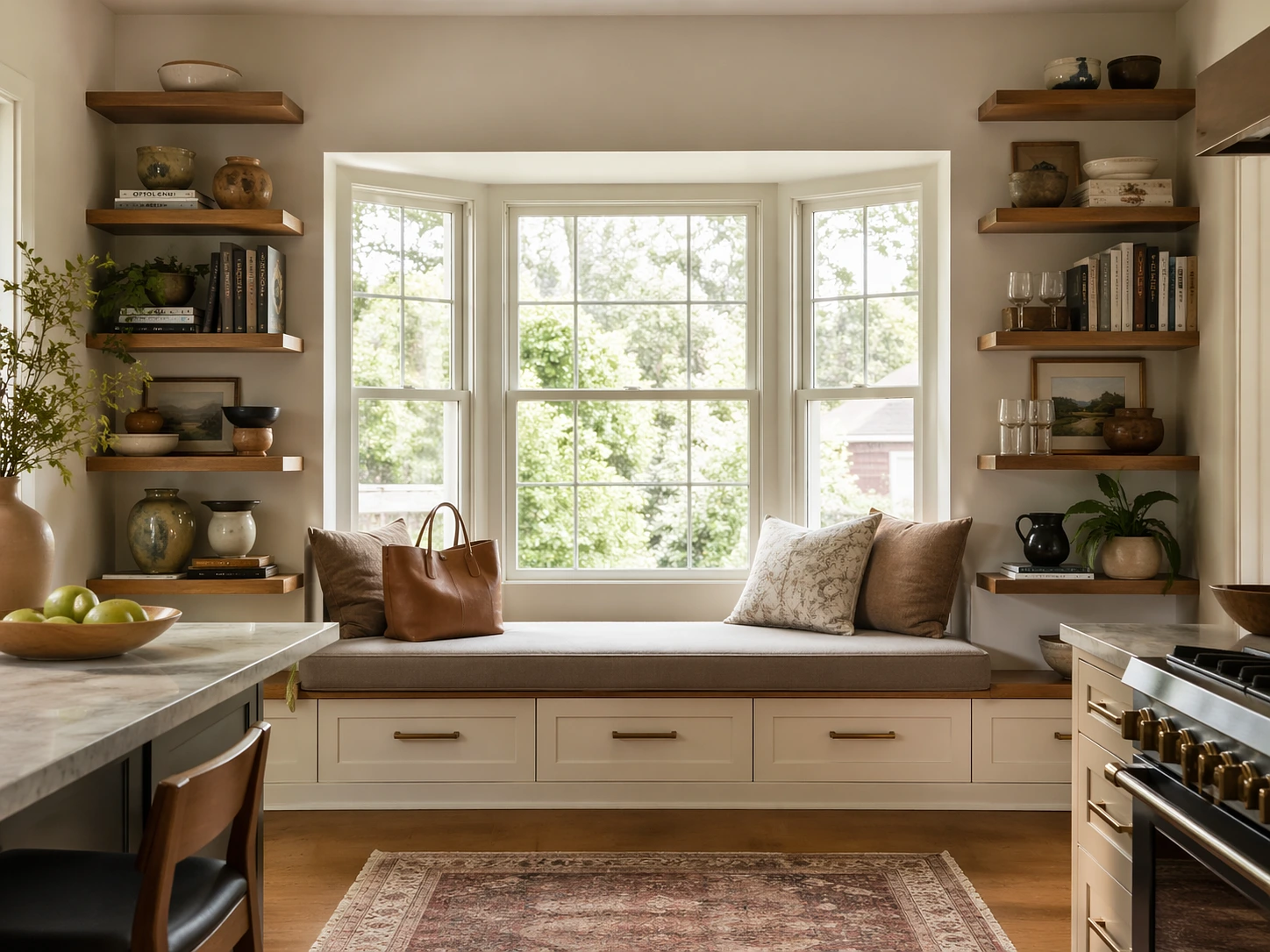
Different from the breakfast nook. This one’s more living-room adjacent in feel — a cushioned window seat running the width of the bay, with open shelves flanking each side going up to ceiling height.
The shelves on either side of the window display cookbooks, collected pottery, glassware, and anything worth looking at. The seat itself is just a seat — a place to sit while someone else cooks, somewhere to set grocery bags while you unload them, occasionally somewhere a kid does homework while dinner’s being made.
What this does spatially is give the kitchen a focal point that isn’t the stove or the refrigerator. The eye goes to the window wall, the shelving frames it, and the whole thing reads as intentional rather than incidental.
Floating shelves rather than cabinetry keep it feeling open. Closed cabinets on either side of a window tend to make the space feel boxed in.
5. Banquette Dining with a View
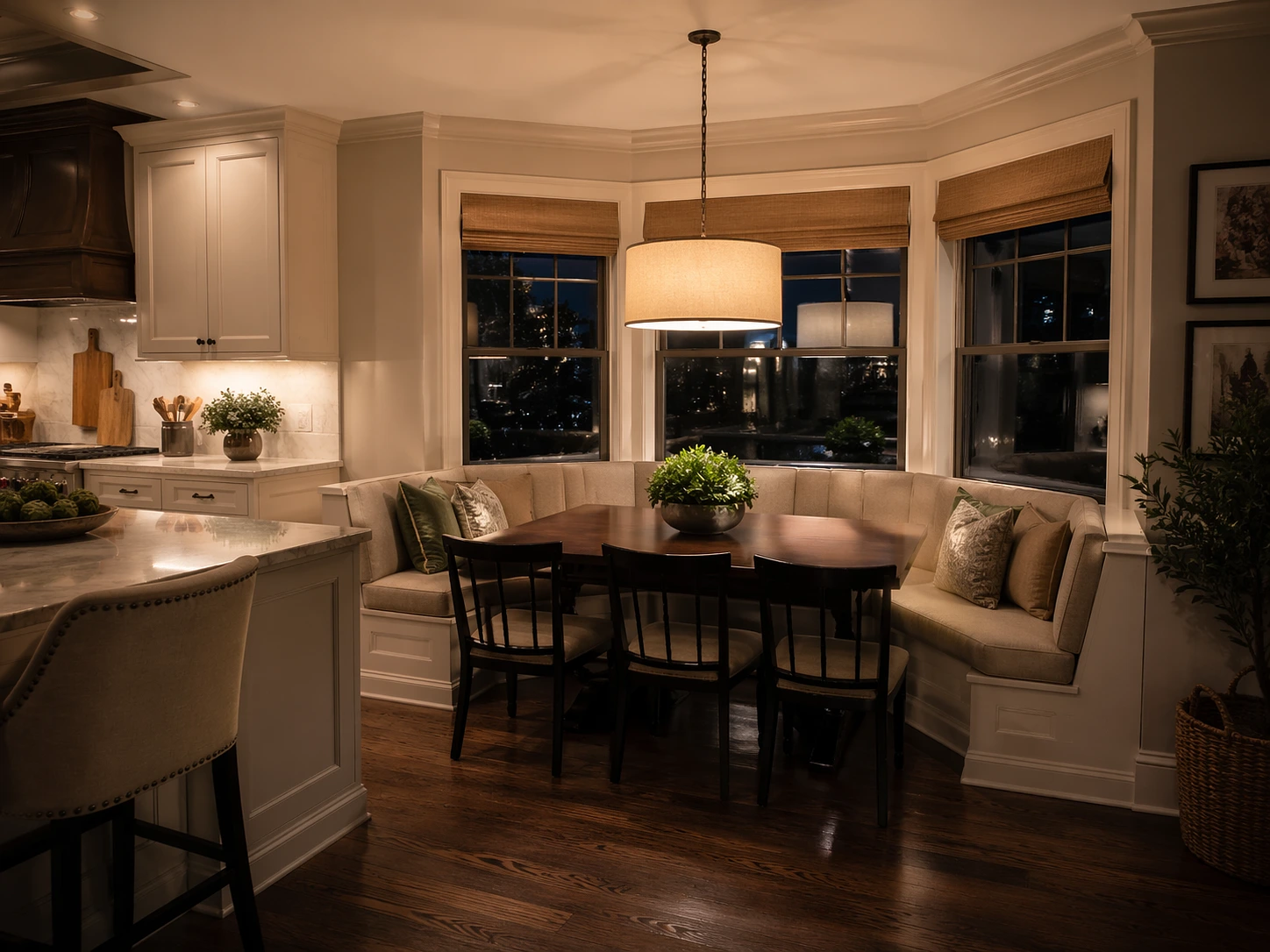
Different from the breakfast nook in scale and intention. A banquette setup treats the bay window as the anchor for a proper dining arrangement — one long upholstered bench following the window angles, a dining table extending outward into the kitchen, and chairs on the open side.
This works particularly well in kitchens without a separate dining room. The bay window creates a natural boundary, making the eating area feel like its own space even when it’s technically still in the kitchen.
Bench depth matters here: 18 to 20 inches is comfortable for actual sitting and eating. Less than that, and it feels cramped. The upholstered version is warmer than wood, but performance fabric is non-negotiable in a kitchen — spills aren’t hypothetical.
Some people add a pendant light directly over the table to anchor the zone further. Against a bay window backdrop, especially in the evening when the glass goes dark and reflective, that single light source over a dining table creates a genuinely good atmosphere.
Bay windows were designed to bring more of the outside in. Covering them with blinds and ignoring the architectural opportunity is just leaving something on the table. Any of these five directions will make that space actually earn its place in the room.
 Decor & Improvement Accessories