

Home & Decor Blogs: DIY, Interior Design & Lifestyle Ideas
Smart Design Choices That Make Home Remodeling Projects More Functional and Stylish

Overview
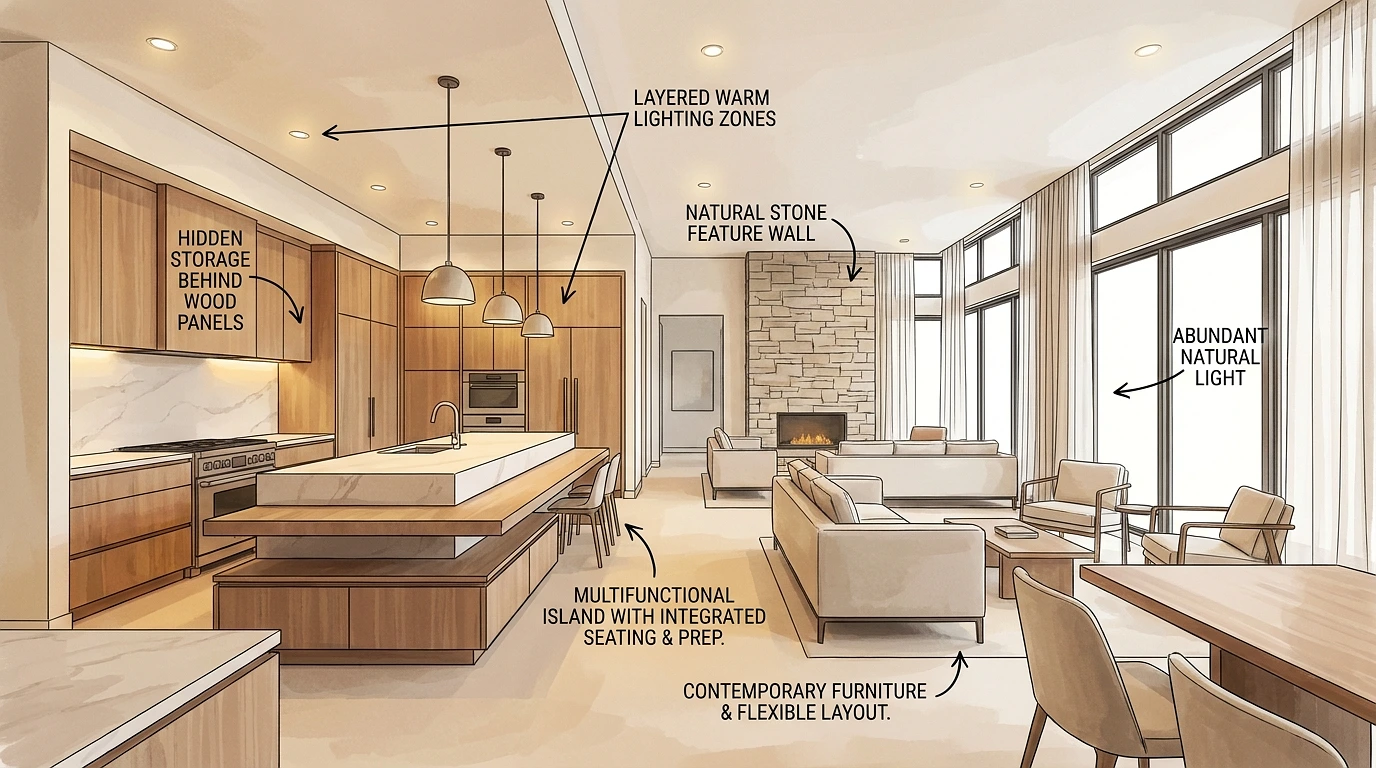
Smart home remodeling in 2026 is all about creating an aesthetically pleasing space while also ensuring functionality and sustainability in the long run, all with a flexible and multi-purpose interior design. Important strategies include increase in natural daylighting by larger windows, introducing energy-efficient systems for comfort and open connected floor plan to help with flow.
Most people start a remodel chasing one thing a nicer kitchen, a bigger bathroom, more light somewhere. Then around week three, the conversation shifts. It stops being about how things look and starts being about how the space actually works on a Tuesday morning when everyone’s running late.
That’s when it clicks. A remodel isn’t really a decorating job. It’s a lifestyle decision. The good ones make daily life smoother in ways you barely notice. The bad ones look amazing for six months and then start annoying everyone who lives there.
Modern remodeling has moved firmly toward efficiency, flexibility, and long-term value. Families want rooms that pull double duty without feeling cramped. Open layouts, smarter storage, durable finishes none of these are trends anymore, they’re just the baseline. Working with experienced people like Homecraft Remodeling helps homeowners avoid the classic mistake of choosing what looks impressive over what actually works on a daily basis.
Why Functional Remodeling Creates Better Long Term Results
Even a beautiful house can make you go crazy if it’s in the way of your lifestyle. Little day-to-day nuisances which slowly take away the happiness of even an expensive renovation are bad lighting, awkward kitchen flow, bathroom with no place to hang a towel.
Functional remodeling fixes the problem at the source. It pays attention to how people actually move through a space where the coffee gets made, where the bags get dropped, where homework happens and designs around those patterns instead of against them.
Smart layouts make a home feel bigger and more organized without changing the square footage. They also future-proof the place. Kids grow up. Work-from-home turns permanent. Hobbies change. Flexible design choices keep the home working through all of it without forcing another remodel five years down the line.
5 Practical Design Choices That Genuinely Make a Difference
Here are five remodeling decisions that consistently deliver real results not just nice photos. Each one is grounded in how people actually live, with examples to show why it works.
1. Create a Dedicated Drop Zone Near the Main Entry

Why it matters: The rest of the house really depends on how it is looking when you get inside the front door in the first 10 feet. There is nowhere for keys, bags, shoes or mail to be placed that does not result in clutter — on kitchen counters, dining tables, anywhere flat.
Practical example: A family of four in Delaware added a 3-foot-wide built-in drop zone just inside their side entry a bench with shoe storage below, hooks for backpacks above, and a small charging shelf for phones and keys. Result? The kitchen counter stayed clear for the first time in years. Mornings got noticeably less stressful.
2. Choose a Kitchen Island That Works as a Workstation
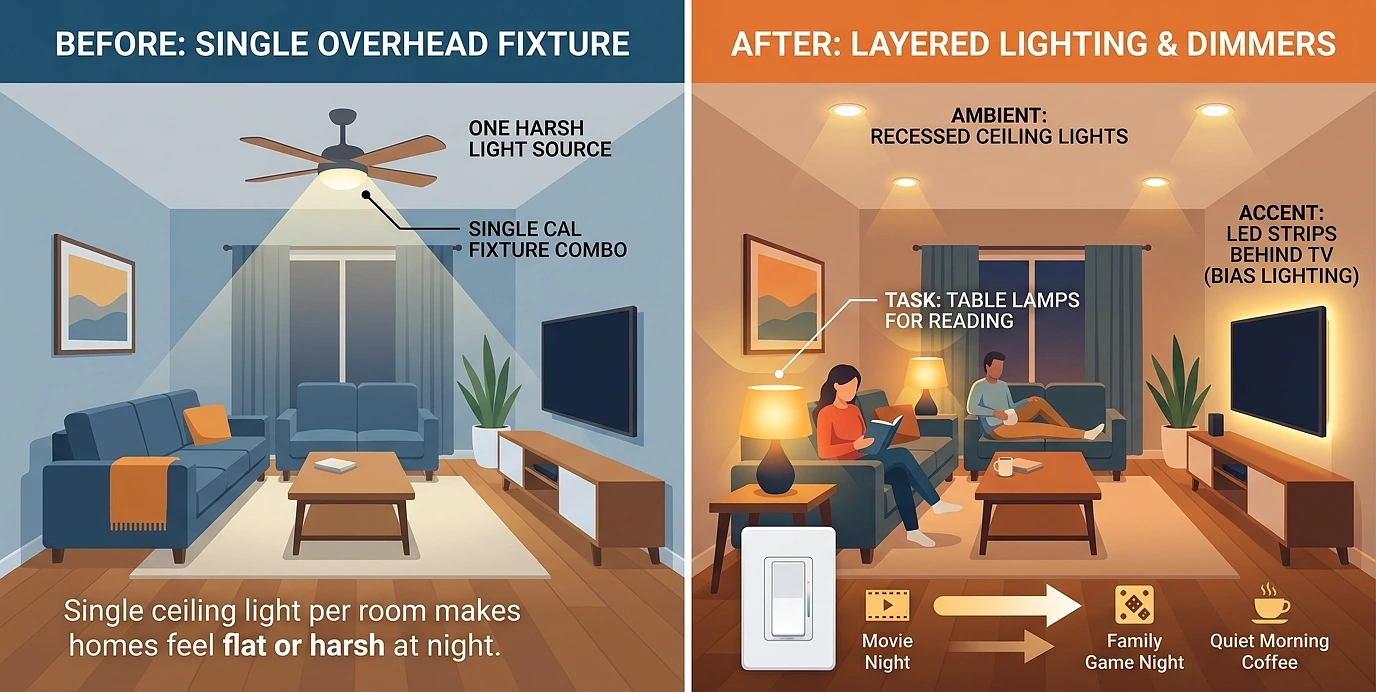
Why it matters: A kitchen island isn’t only additional counter area today. It’s the place where homework is done, laptops are opened, conversations are held, and snacks are prepared in most houses. It can be designed as a genuine workstation, altering the whole kitchen function.
Practical example: Instead of a basic 6-foot island with cabinets underneath, a homeowner went with 8 feet, built-in outlets, a deep prep sink, USB ports, and a 24-inch bookshelf at one end. It now serves as breakfast bar, homework station, charging hub, and prep surface all without crowding the cooking zone.
Add outlets and charging ports during the build retrofitting them later is a nightmare.
3. Install Layered Lighting Instead of a Single Overhead Fixture
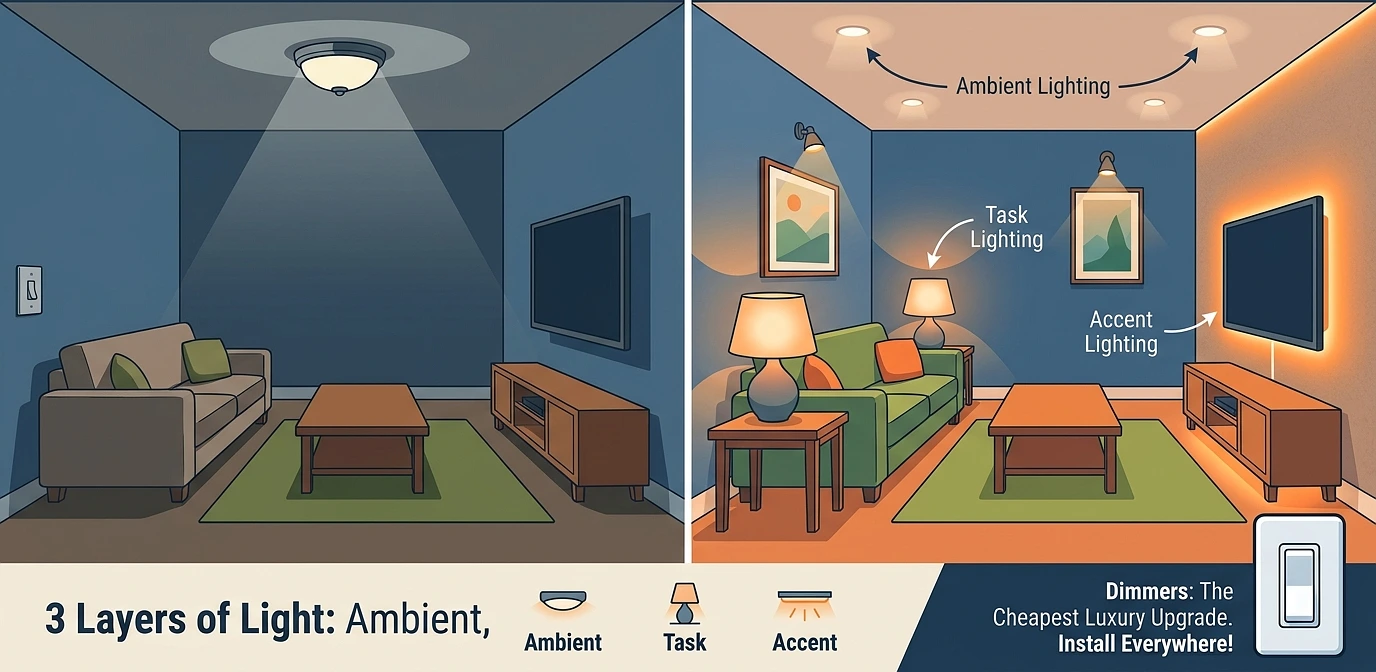
Why it matters: One ceiling light per room is the single biggest reason homes feel flat or harsh at night. Real lighting design uses three layers ambient, task, and accent to make a space adaptable and warm.
Practical example: A living room that used to have only a ceiling fan light got upgraded with recessed lights on a dimmer, two table lamps for reading, and discreet LED strips behind the TV unit. The same room now works for movie night, family game night, and quiet morning coffee just by switching what’s on.
Dimmers are the cheapest luxury upgrade in any remodel. Install them everywhere.
4. Hide Storage Inside Underused Spaces
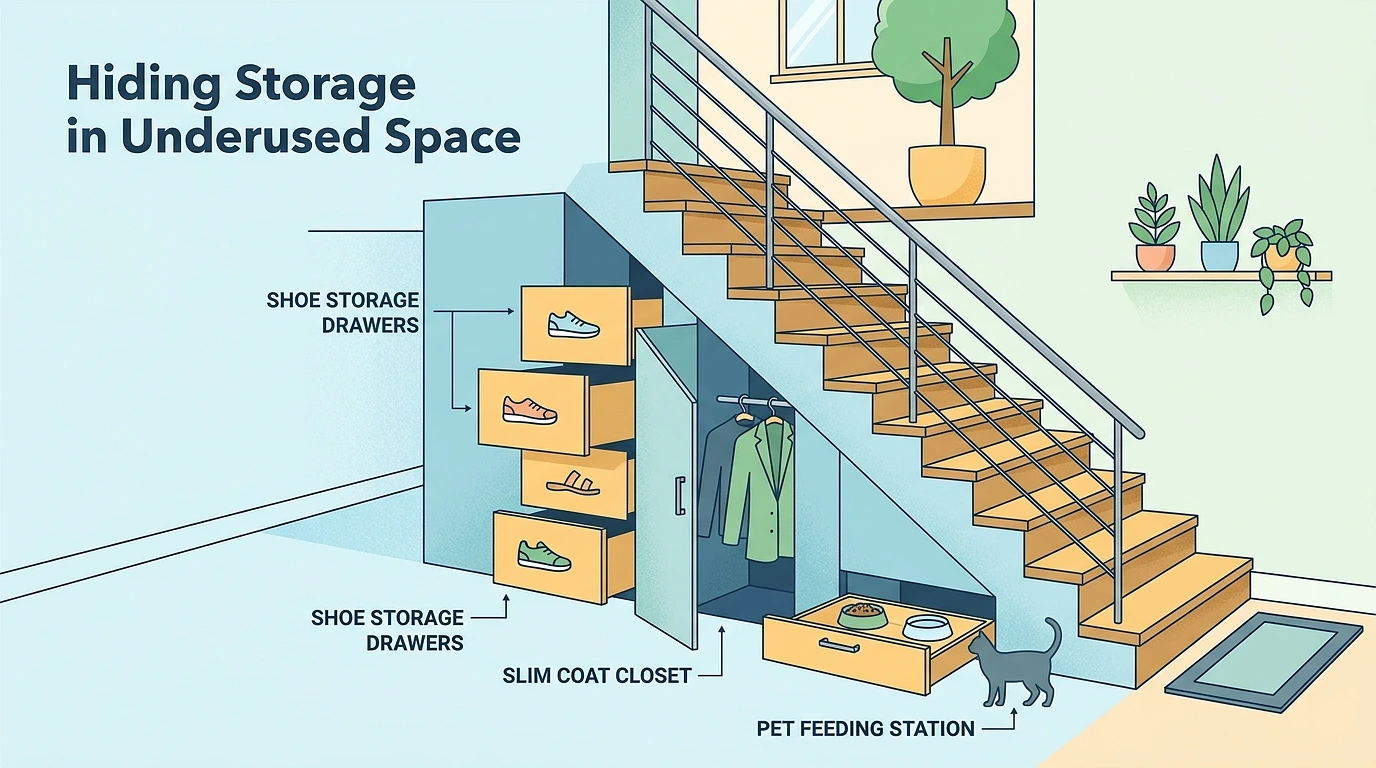
How it applies: Dead space exists all over the house, under stairs, above doorways, under window benches, in the thick walls. Smart Remodels transform that unused space to clever storage without any visual disruption.
Practical example: A homeowner converted the dead space under their staircase into three pull-out drawers (for shoes), a slim coat closet, and a small pet feeding station. None of it shows from the hallway, but it killed the need for a separate mudroom entirely.
Walk through your home and ask, “what’s behind this wall?” there’s usually 6 inches of usable depth.
5. Pick One “Forever” Material and Build the Room Around It
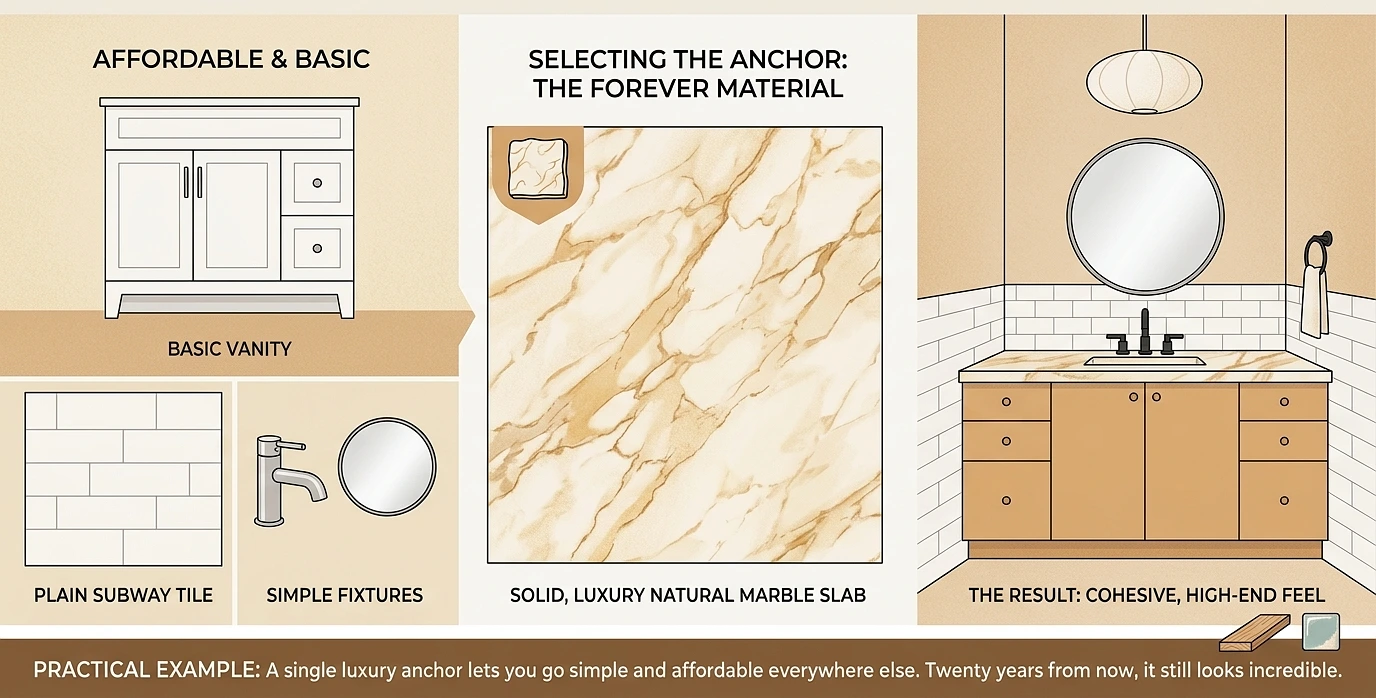
Why it matters: Trends fade. Quality materials don’t. When you anchor a room around one timeless, high-quality material natural stone, solid wood, real brick, hand-glazed tile every other decision becomes easier and more cohesive.
Practical example: A bathroom remodel anchored on a single slab of natural marble for the vanity countertop let the homeowner go simple and affordable everywhere else matte black fixtures, plain white subway tile, basic mirror. The marble carries the whole room. Twenty years from now, it’ll still look incredible even if everything else gets refreshed.
One luxury anchor lets you save on everything else without the room feeling cheap.
The Growing Demand for Open and Adaptable Layouts
Standard layouts partition residences into too few spaces and limit natural light and communication between rooms with walls between them. Homeowners are increasingly opting for open floor plans as they are aesthetically pleasing and allow the three elements of life in the home (cooking, dining, living) to flow.
But “open concept” doesn’t mean “no walls anywhere.” The smartest remodels use partial openings, half walls, archways, and sliding panels to create flexibility without losing definition between zones. A spare bedroom becomes an office. A formal dining room becomes a homework hub.
Professionals working on Home Remodeling in Delaware projects often recommend open concepts because they multiply the perceived size of a home without requiring expensive structural expansion. Homecraft Remodeling uses these strategies often to balance spaciousness with practical, defined zones.
Material Choices That Support Durability and Comfort
Picking materials based on looks alone is one of the most expensive mistakes you can make during a remodel. Some surfaces scratch in months. Others stain, swell, or fade after a single season. Durability has to be part of the conversation from day one not an afterthought.
Smart material picks for high-traffic areas:
- Engineered hardwood or luxury vinyl plank handles kids, pets, and spills without losing character.
- Quartz countertops basically indestructible, no sealing needed.
- Porcelain tile outlasts ceramic, mimics stone, costs less than marble.
- Semi-custom solid wood cabinetry outlives MDF by decades.
- Matte-finish hardware hides fingerprints and ages well.
Homes built on durable materials cost less to maintain over 10 years than homes built on trendy but fragile finishes even when the upfront cost is higher.
Balancing Modern Trends With Timeless Design
Copying others’ ideas is the quickest route to an out of style remodel. Bold colours, dramatic patterns, statement finishes – they are not all the time in style and have an expiration date after which you’re tying yourself to expensive options that feel dated.
The reliable formula:
- Keep big-ticket items neutral flooring, cabinets, counters, tile.
- Add personality through replaceable things paint, hardware, light fixtures, textiles, art.
- Invest in architectural details that age well crown molding, paneling, real wood, natural stone.
- Skip aggressive trends in anything you can’t easily change later.
The approach will help keep a home up-to-date without going with the flow and preserve its resale value. Homeowners can walk this line by choosing to enjoy the cozy, comfortable feel of a modern home while avoiding any functionality or style that will look dated in 2030, with the help of Homecraft Remodeling’s professional contractors.

 Decor & Improvement Accessories