

Home & Decor Blogs: DIY, Interior Design & Lifestyle Ideas
3 Ways AI Video Gives Your Home Listing an Edge That Photos Alone Cannot

Listings with video pull about four times the enquiries of photo-only ones. That figure has held steady across industry surveys for a few years now, and it makes sense when you think about how people actually browse. They skim photos in seconds. A video makes them stop and watch, even a thirty-second one. The catch has always been that a decent property video costs real money and real effort, which is why only about 9% of agents bother making one for a listing.
That gap, between what works and what people actually do, is exactly where AI video tools have started to matter for anyone selling a home.
Your Listing Gets More Attention, and It Gets It Faster
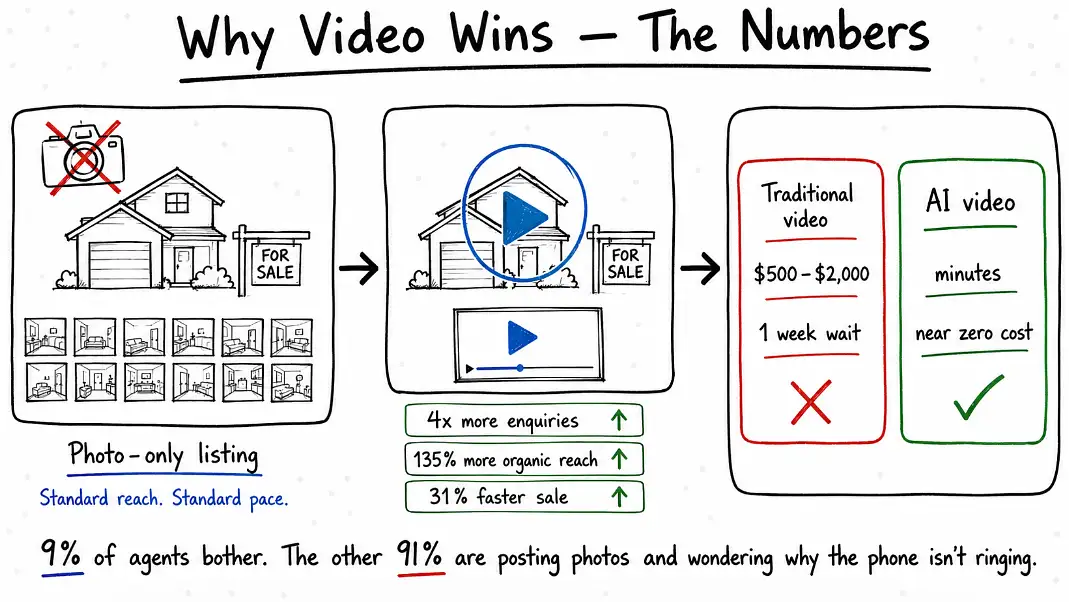
The basic maths is hard to argue with. Video on social gets shared about twelve times more than text and image posts put together, and Facebook posts with video get around 135% more organic reach than photo posts. So when your agent shares your listing on their channels, which is how most properties get their first eyeballs now, the video version reaches a far bigger audience than the same listing with just photos.
- Video is shared about 12 times more than text and image posts combined
- Facebook video gets roughly 135% more organic reach than photo posts
- Listings with video sell up to 31% faster
- They pull 49% more qualified leads, not just clicks
- A traditional videographer runs $500 to $2,000, plus a week’s wait
But here’s the bit that matters to you as the seller. Listings with video sell up to 31% faster, and they bring in 49% more qualified leads. Not just more clicks. More people interested enough to book a viewing or make an enquiry. And that’s the distinction that counts. Ten curious clicks mean nothing. Three serious enquiries could mean a bidding situation.
The reason most sellers never get this is cost. A professional videographer for a walkthrough runs anywhere from $500 to $2,000, depends on your area and what you want, drone shots, editing, music, captions. That’s on top of the photography you’re already paying for. Then there’s the timeline. Most videographers need a week to deliver the final cut, so your listing is already live with just photos while you sit there waiting for the video to land.
Buyers Get a Feel for the Space That Photos Just Can’t
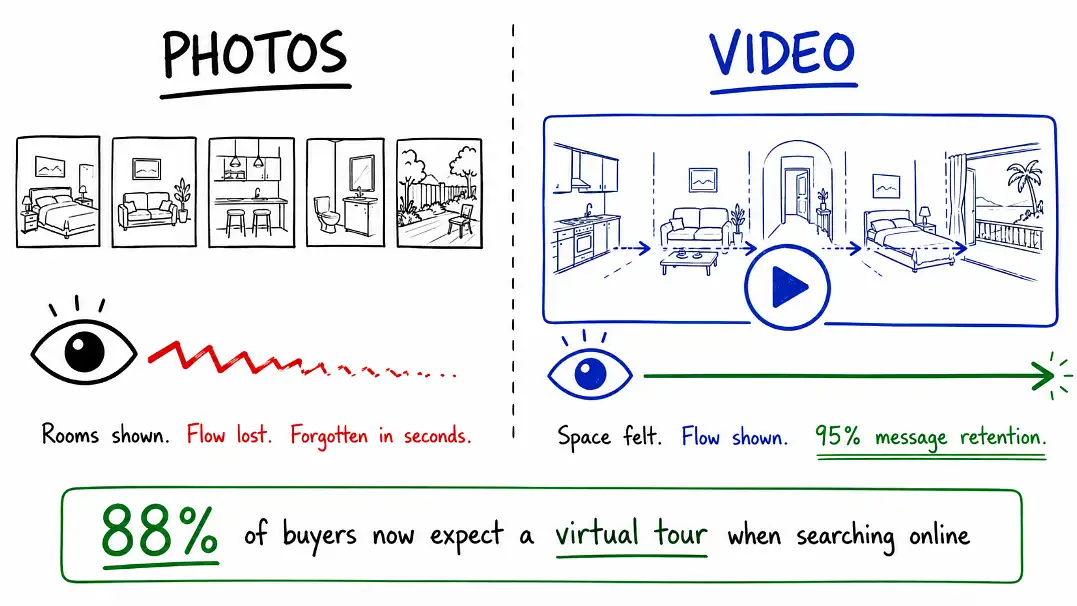
There’s a stat that gets thrown around, that people retain 95% of a message they watch on video versus 10% when they read it as text. Whether those exact numbers hold up or not, the point is obvious to anyone who’s browsed listings. You forget individual photos almost straight away. You remember how a video made the space feel.
- Photos show rooms, video shows flow
- 88% (number vary based on surverys some say 63%, some 90% some 87%) of buyers now expect virtual tours when searching online
- A walkthrough gets a buyer emotionally committed before they visit
- Newer models like Seedance 2.0 look close to a real shoot, not a choppy slideshow
Photos show rooms. Video shows flow, how the hallway connects to the living area, how the light moves through the kitchen across a twenty-second pan, what the view off the balcony looks like when you’re standing there instead of staring at a cropped wide-angle shot. That sense of one space leading into the next is something static images can’t make, no matter how many you upload.
This matters most when you’re selling to buyers who can’t easily visit. Relocating families, interstate buyers, overseas investors. 88% of buyers now expect a virtual tour when they’re searching online. A video walkthrough doesn’t replace a physical inspection, but it gets a serious buyer emotionally committed before they’ve stepped inside, and that commitment turns into faster offers and a stronger negotiating position for you.
The newer AI models have made this a lot more convincing too. Something like Seedance 2.0 generates video with smooth transitions and realistic movement between scenes, not the choppy slideshow effect the earlier tools produced. The output looks close enough to a professionally shot walkthrough that most buyers scrolling won’t clock the difference. And the ones who do care about production quality are already impressed you bothered with video at all, since so few listings have it.
You Control the Story Instead of Hoping the Photos Tell It
This is the part sellers underestimate. Photos are passive. A buyer looks and forms their own read. Maybe they notice the dated light fixture before the new hardwood floors. Maybe the wide-angle lens warps the proportions and the master bedroom looks smaller than it is. You’ve got zero control over what they focus on.
- Photos are passive, the buyer decides what to focus on
- Video lets you sequence what they see and when
- Captions flag things photos can’t, like “new roof last year”
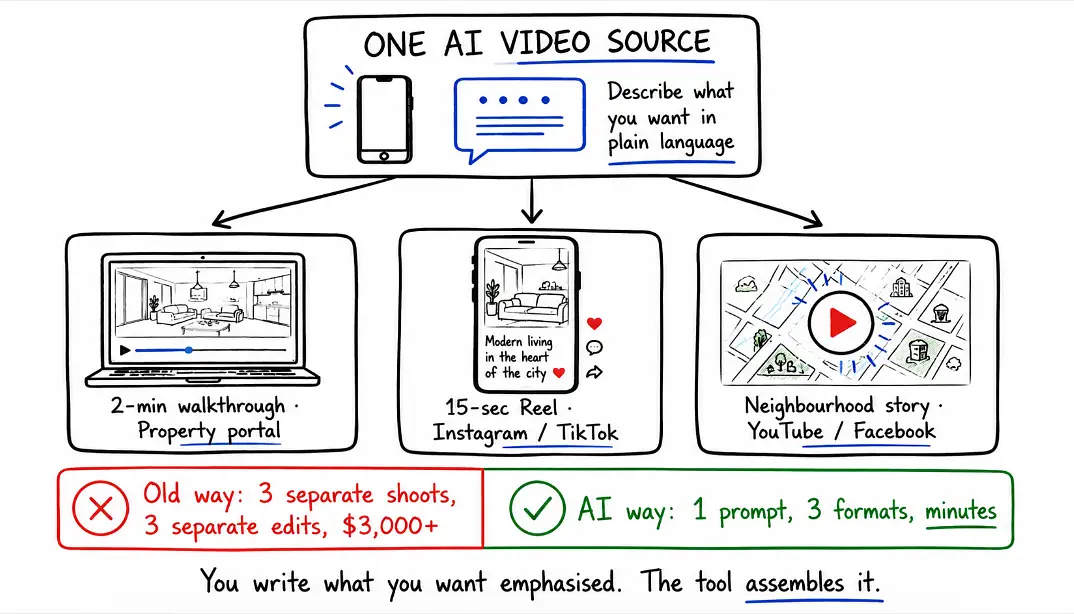
- One source makes a portal walkthrough, a Reels clip, and a YouTube version
- AI does it from a plain-language prompt, no editing skills, no $1,000 shoot
Video lets you sequence the whole experience. You decide what the buyer sees first, the renovated kitchen, the open-plan living area, the landscaped garden. You control the pace, whether the camera lingers on the marble countertop or moves quickly past the laundry. Captions can flag details photos leave ambiguous, things like “new roof installed last year” or “north-facing living room, afternoon sun” that a buyer would never pick up from images alone.
AI video tools put that kind of editorial control within reach without any editing skills. You write a prompt describing what you want emphasised, what order the rooms appear in, what mood the music should set, and the tool assembles it. You’re not learning Premiere Pro or hiring an editor. You’re describing what you want in plain language and getting back something that would’ve cost you a thousand dollars and a week of back-and-forth with a videographer two years ago.
And it gets really useful when you’re listing across platforms that all want different things. The same source footage can give you a polished two-minute walkthrough for the property portal, a quick fifteen-second vertical clip for Instagram Reels or TikTok with text overlays and trending audio, and a longer neighbourhood-context version for YouTube or Facebook where you’ve got room to tell the story of the area. Each one takes minutes to generate from the same material instead of needing separate shoots and separate edits.
Short-form vertical video is where the reach really multiplies. Platforms are pushing video hard right now and rewarding it with far more organic distribution than image posts. A thirty-second property clip on Instagram or TikTok that catches someone mid-scroll does more for your listing than twenty static photos on a portal the buyer has to deliberately click through. The barrier used to be editing time and platform know-how. AI tools have taken both out of it.
Most sellers treat the listing video as a nice-to-have, something you do if the budget stretches that far after photography and staging. The numbers say that’s backwards. Four times the enquiries, 31% faster sale, almost 50% more qualified leads, and the cost of making it with AI tools is close to nothing next to a traditional shoot. The agents who get this are already using it. The ones who don’t are still posting twelve photos and wondering why the phone isn’t ringing.
 Decor & Improvement Accessories