

Home & Decor Blogs: DIY, Interior Design & Lifestyle Ideas
6 Modern Bathroom Design Ideas for Stylish Wall Finishes

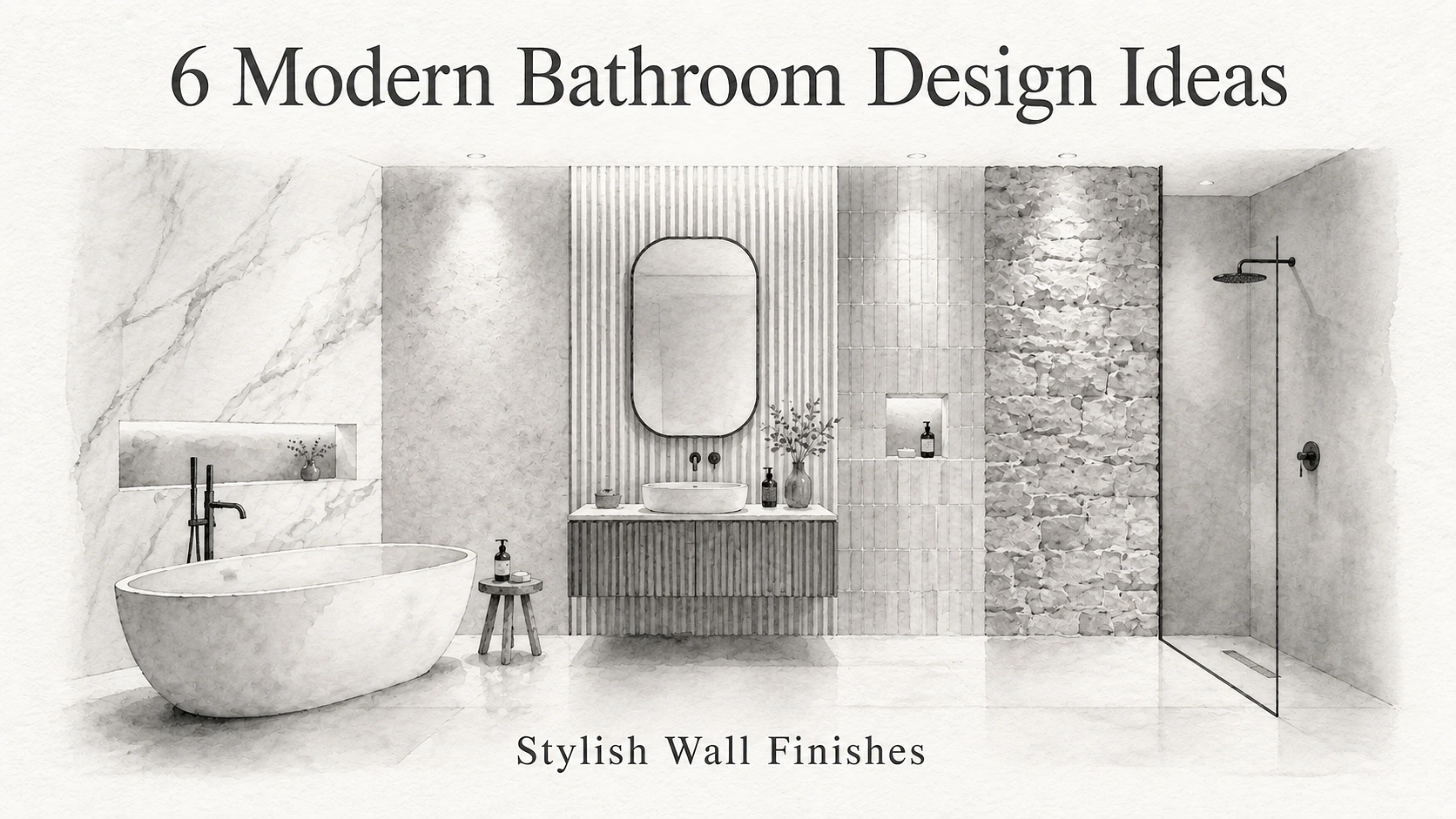
The wall finish in a bathroom is doing more work than any other surface in the house. It is taking steam every morning, it is taking direct spray if it is anywhere near the shower, it is collecting soap and hard water spots that no one is noticing until the grout starts going yellow, and on top of all that it still has to look good enough that you are not regretting it 2 years in. And the way most of us are choosing it is from a photo, which is fine for the photo and less fine for the 10 years of wiping that come after it.
These 6 finishes are the ones that are holding up in a real house, where no one is drying the shower walls after every shower, and I will say which one I would pick and why.
1. Large Format Slabs With Almost No Grout Lines
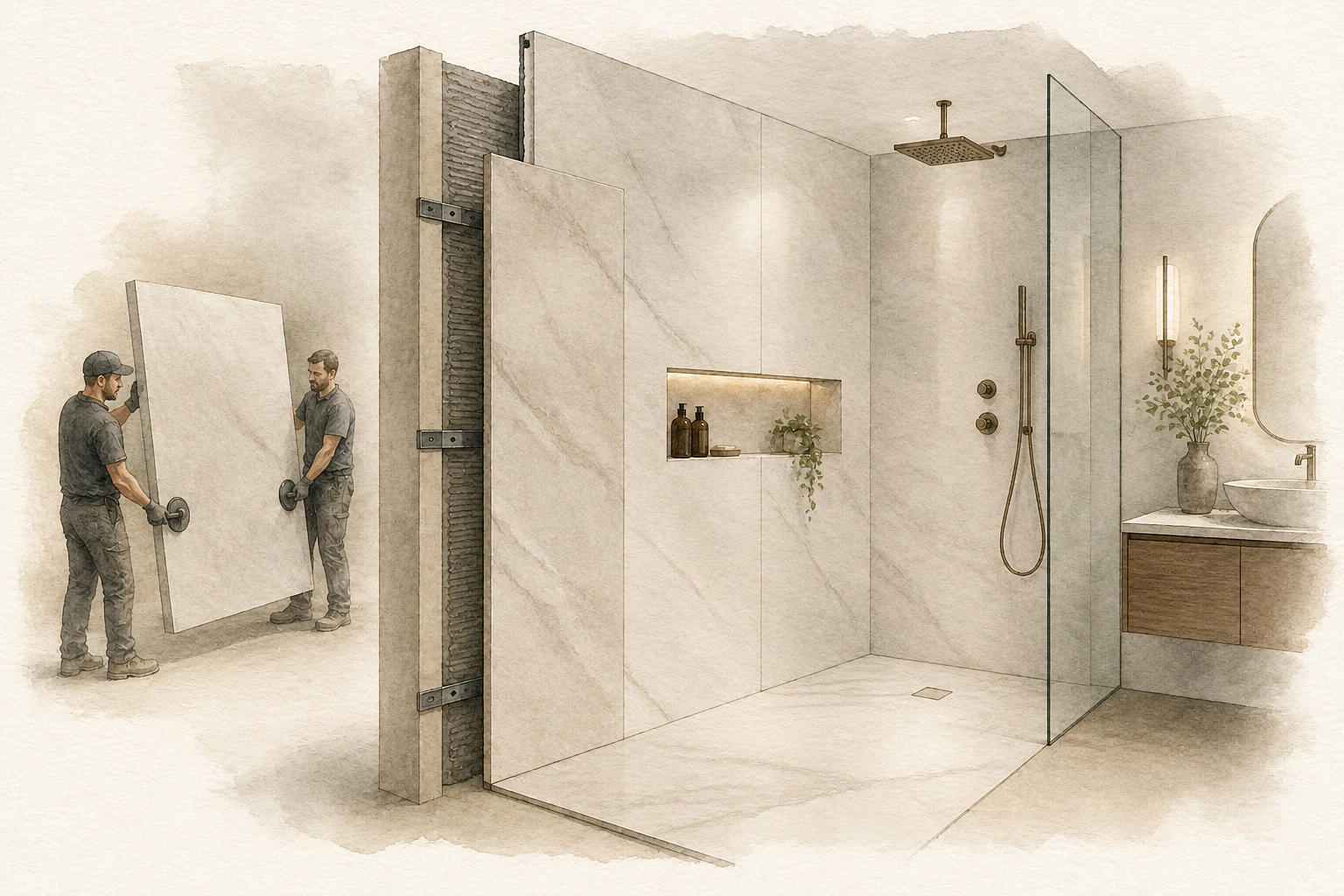
A tile of 800×1600mm or bigger is covering a full shower wall in 2 or 3 pieces where a normal tile is taking 30, so you are looking at 2 or 3 grout lines instead of dozens, and grout is where every bathroom wall problem is starting. The mould, the yellowing, the cracking, the staining, all of it is living in the grout and nowhere else.
I like this one personally and the reason is simplicity. A 1200×2400mm porcelain slab is covering a standard shower wall floor to ceiling in 1 piece per section, the room is looking bigger and tidier because nothing is breaking up the surface, and 5 years from now, when the silicone at the edges would normally be peeling and someone would be cleaning sealed joints and regrouting, there is almost nothing on a slab wall to regrout.
A 1200×2400mm slab is weighing 35 to 40kg and it is cracking the moment it is sitting on a hump in the wall, so this is not a weekend job. The install needs:
- 2 people, minimum, for every piece.
- Suction cup lifters, because there is nothing to hold a slab by.
- A wall levelled with self levelling compound before the first slab goes up.
- An installer who has done slabs before, and who is charging more than standard tiling for it.
2. Vertical Layouts That Make Low Ceilings Feel Taller
This one is more about installation direction than the tile itself, and it is surprising how much it changes. The same 300×600mm tile laid horizontally is making the room feel wider, and stood on its end the eye is following the long edge upward and the ceiling is feeling higher. In a bathroom with a standard 2.4m ceiling, which is most bathrooms in most homes, vertical is adding the feeling of maybe 15 to 20cm of height, so not a transformation, but enough that the room is feeling less squashed, especially with a light colour and grout matched to the tile so the lines are not interrupting the pull upward.
Should it go on all 4 walls? No, and this is where people are overdoing it. All 4 walls vertical can feel odd, like the room is being stretched, so the wall to do is the one facing you when you walk in, because that is the wall your eye is hitting first and where the effect is registering. Keep the rest horizontal or square and let the 1 wall do the job.
3. Geometric and 3D Tiles on One Wall Only
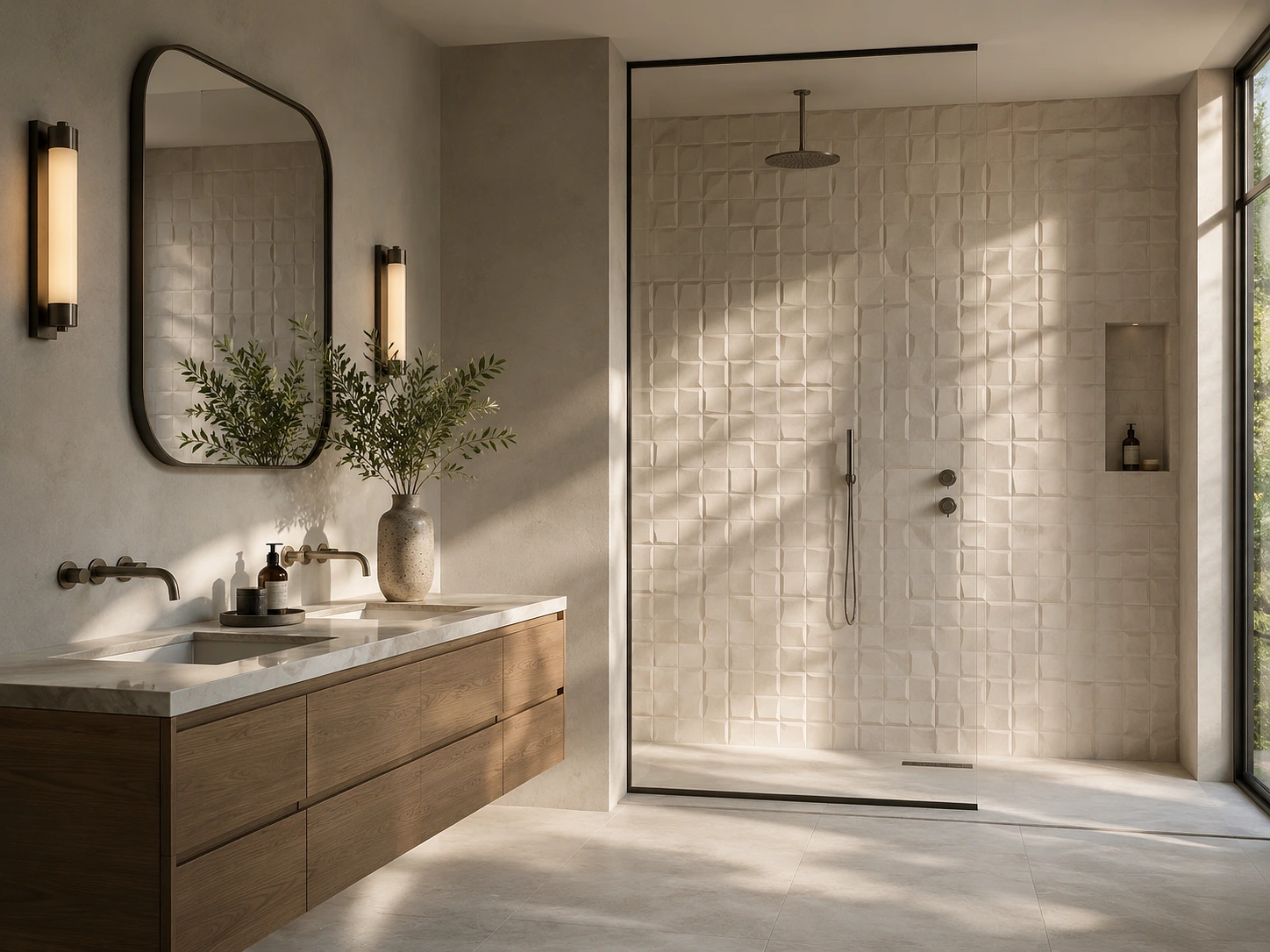
Everyone has seen the geometric and 3D tiles in a showroom, where they are looking incredible under lighting that was set up by someone whose job that is, and then the same tile is going up in a bathroom with 1 downlight in the middle of the ceiling and it is looking flat. That is not the tile, it is the light. A faceted surface needs light coming in from the side so the facets are throwing shadows, and a downlight straight above is lighting every face evenly and the shadows are gone, so the texture you paid extra for is not showing.
The one wall rule is there for a reason too. A whole bathroom in 3D tile is visual noise, every surface is competing and nothing is winning, so it goes on the wall behind the basin or the back wall of a walk in shower and nowhere else. And cleaning is the other thing to be honest about, because every ridge and groove is a place for soap scum and hard water to collect, and in a shower area with hard water that is showing within weeks. A flat geometric pattern with a little surface variation is giving you the interest without creating maintenance traps.
4. Marble Look Porcelain Instead of Actual Marble
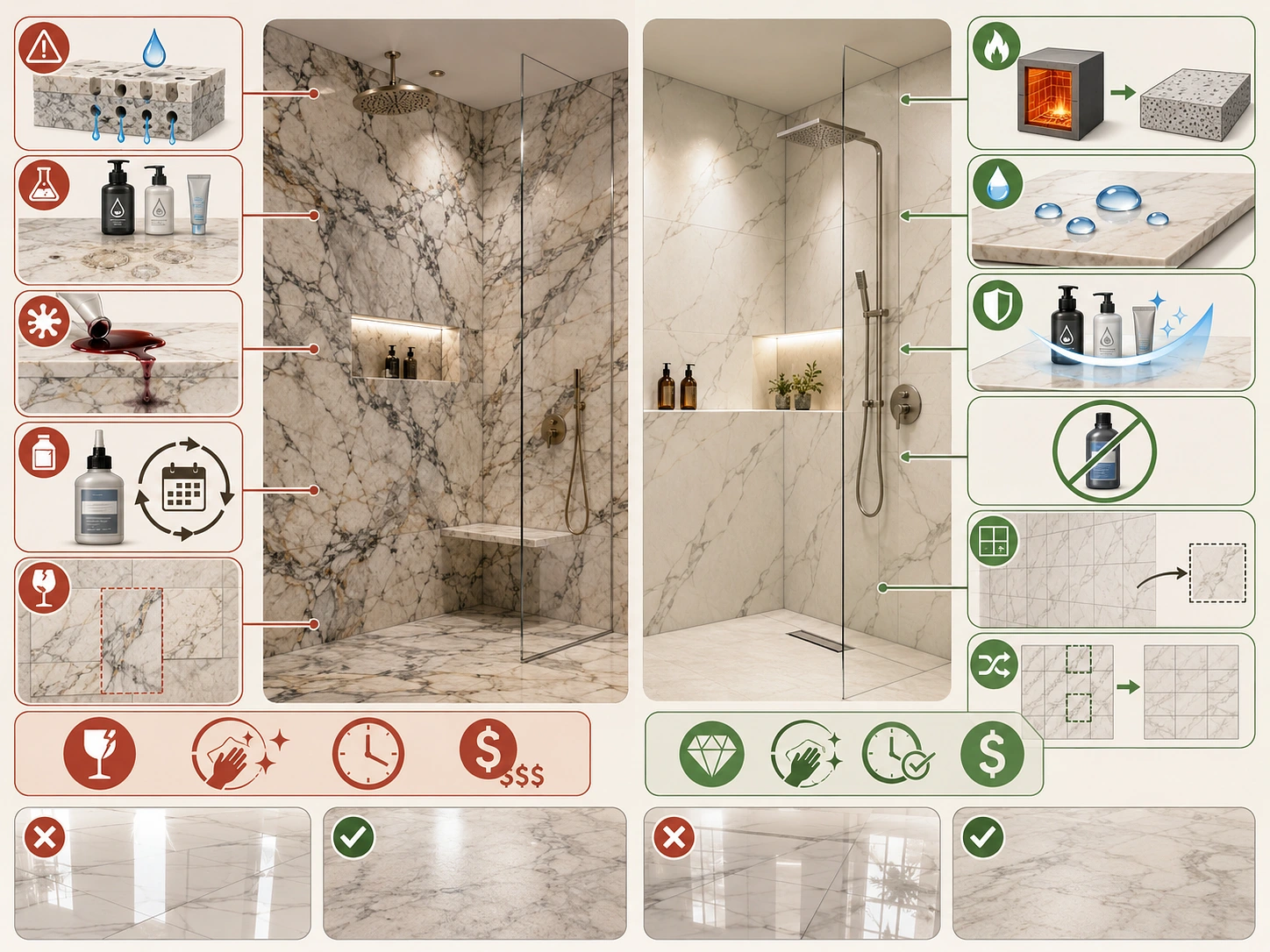
Real marble in a bathroom is beautiful for about 18 months and then the bills start. It is porous, it is etching the moment shampoo or body wash or some toothpastes are touching it, it is staining unless it is being resealed every 6 to 12 months, and the veining that made you want it also means every slab is different, so when 1 tile cracks 4 years from now, matching it is close to impossible. The people selling marble are not lying to you, it is gorgeous, they are only not the ones resealing it. Marble look porcelain is going through vitrification instead, fired until the body is nearly non porous with water absorption under 0.5%, so household chemicals are doing nothing to it and it is never needing sealing in its life.
Does Porcelain Look Fake Up Close?
From across the room, no, good porcelain is hard to tell from the real thing now. Up close on a big wall you may be spotting the same vein pattern twice, because a manufacturer is working from a set of maybe 8 to 15 faces per range and the printing repeats. Buy from a range with more faces and ask the fitter to mix the layout so 2 identical faces are not sitting next to each other, and that is the whole problem handled.
Matte Or Gloss?
Matte, or soft lapped. If you are comparing across different bathroom tile design collections you will see both, and the high gloss ones are looking less convincing, because real marble is not mirror shiny either, it has a soft sheen, and matte porcelain is copying that far better than a polished one does.
5. Soft Neutral Gradients Using the Same Colour Family
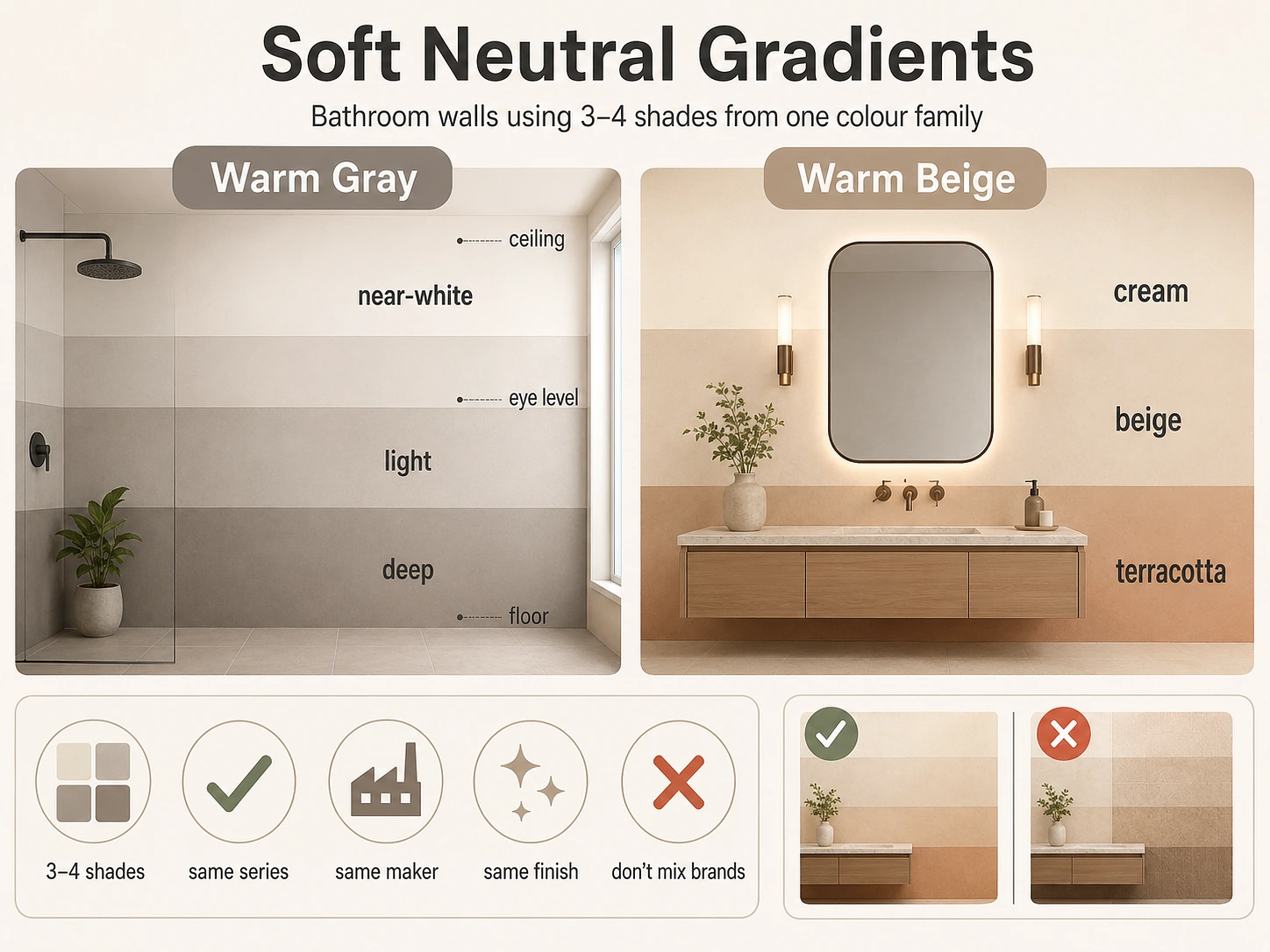
Instead of 1 colour across every wall, pick 3 or 4 shades from the same family and let the wall go darker at the floor, lighter at eye level and close to white near the ceiling. A warm grey set is doing this well, and so is a warm beige set running from something near terracotta at the base up to cream above the mirror. Most people walking in will not notice it was planned, they will only feel that the room is warm and has some depth to it, which is what a wall finish is for, being part of the room and not the thing you are staring at. Buy every shade from the same series by the same maker, because 2 brands with the same colour name are coming with a different gloss and a different texture, and the gradient is reading as 2 batches that never matched.
6. Matte and Paper Matte Finishes for Wet Areas
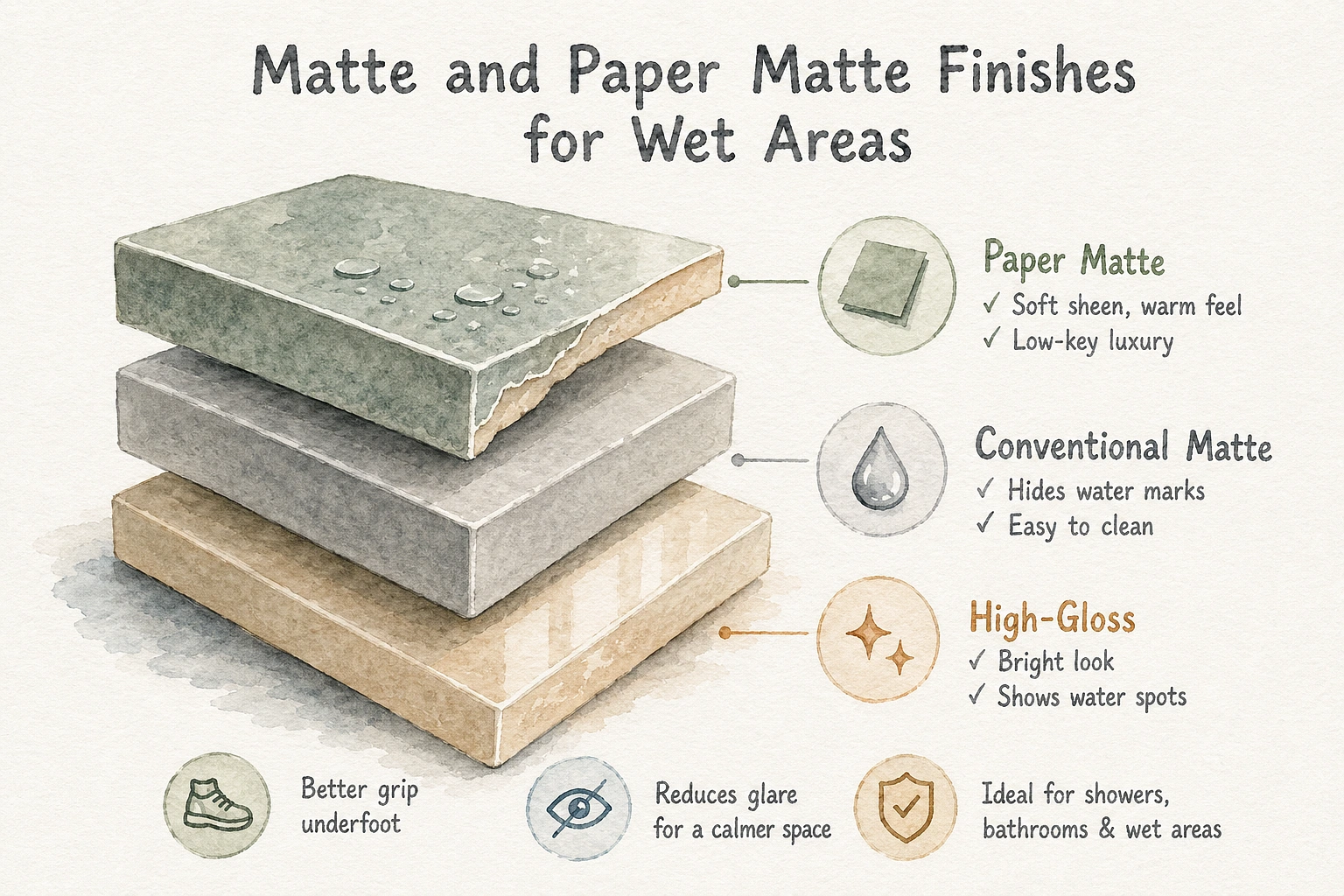
There are 3 finishes on the market now and they are behaving very differently once there is a shower in the room:
- High gloss is bouncing light around and looking bright and big, which is why it is in every showroom photo, and in a real shower it is showing every water mark, every smear of soap scum, every toothpaste splash and every fingerprint by the light switch, so you are either wiping walls daily or accepting that they look dirty 12 hours after you cleaned them.
- Normal matte has no reflective coating, the marks are almost invisible on it, and a damp cloth with a neutral pH cleaner is keeping it clean looking between cleans.
- Paper matte sits between matte and satin, it feels like thick card to the touch with the faintest sheen, warmer than flat matte without shining, and it is what the better hotels are using now.
In wet areas matte is also giving slightly better grip if it goes on the shower floor, and it is cutting the glare from the lighting, which is making the room calmer at 6 in the morning when the last thing you want is every wall throwing light back at you.
All bathroom wall finishes here are workable, the question is only which one your bathroom is going to be kind to, and that is coming down to how much daylight it gets, how hard your water is, how often the walls are really getting wiped, and whether you want the tile to be the thing people notice or the thing behind it. Sort those out before opening a catalogue, because the catalogue is showing you the showroom lighting and it is never showing you the hard water.
 Decor & Improvement Accessories