

Home & Decor Blogs: DIY, Interior Design & Lifestyle Ideas
1,500 Sq Ft Roof Replacement Cost: What the Job Actually Runs and What Inflates It

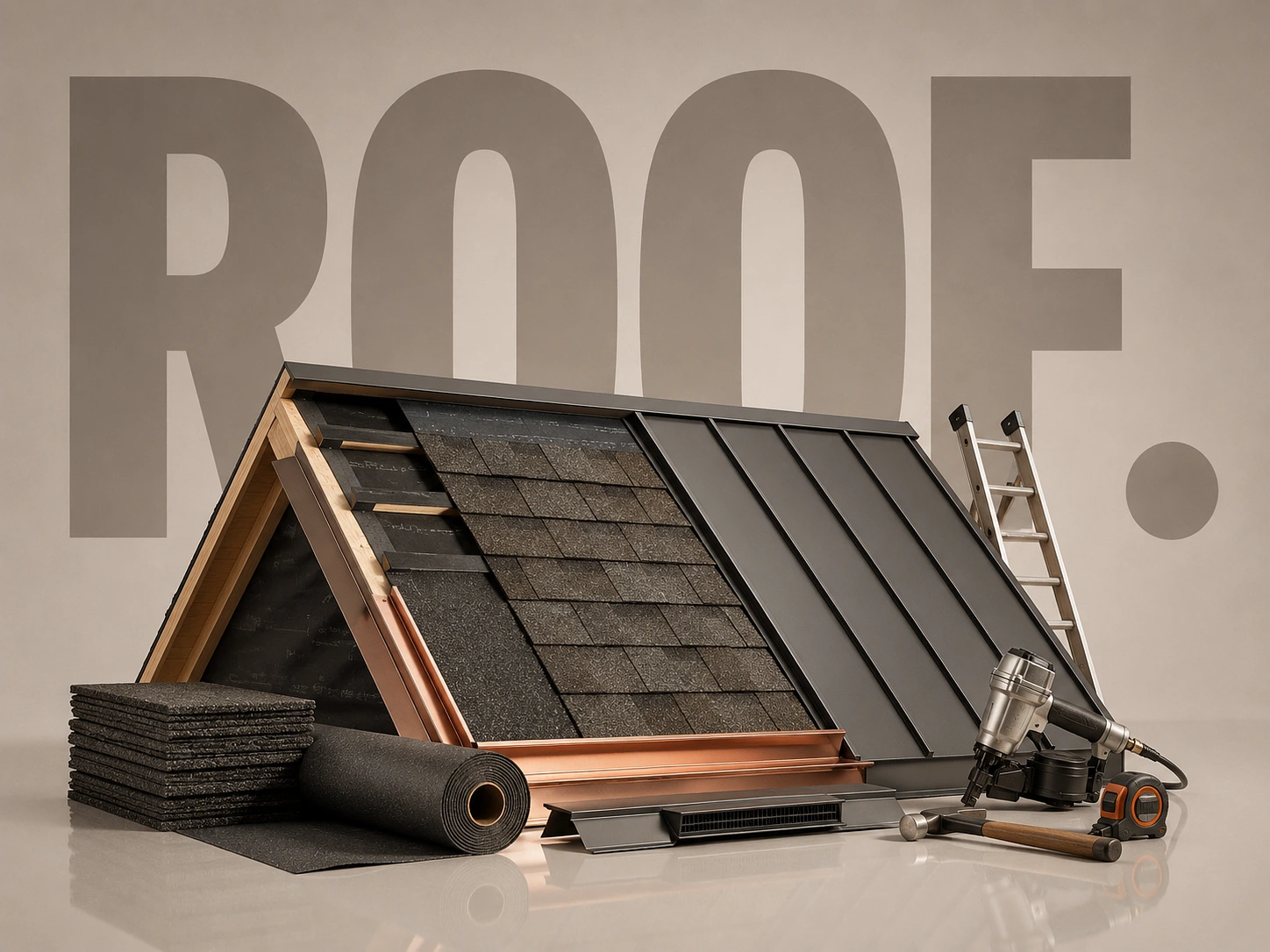
Standard asphalt shingles for a 1,500-square-foot home can cost anywhere from $7,000 to $18,000 for a complete roof replacement; most homeowners end up with between $9,000 and $12,000 when tear-off, disposal, and basic flashing are taken into account. Metal raises that to between $14,000 and $25,000. Slate and tile can cost more than $30,000. These are national averages; high-priced areas, such as coastal Florida, portions of California, and any place with stringent wind or hurricane regulations, can raise all of these figures considerably.
That range is intentionally broad. What the team discovers beneath your old shingles, the material you choose, the steepness of the roof, and whether the contractor itemized the price or gave you a single lump sum without a breakdown all affect how much you really pay.
Your Roof Is Bigger Than Your House
This is the first item that confuses people, and practically everyone who attempts to create a budget based on the square footage of their house is caught. The roof of a 1,500-square-foot house is not 1,500 square feet.
One square is equivalent to 100 square feet for measuring roofing. 16 to 20 squares of material, or 1,600 to 2,000 square feet of real roof area, are usually required for a 1,500-square-foot house. More at times. Three factors determine the difference: overhangs, roof pitch, and architectural elements like valleys or dormers.
The most important one is pitch. A ranch-style house with a low-slope roof is around ten to fifteen percent larger than the footprint. Because the angled surface covers more area, a steep roof on a Cape Cod or colonial may be 30 to 40% greater than the floor underneath it. The roofing prices of two houses with the same floor plans but differing roof pitches can range significantly. The steeper roof also costs more per square in labor since the crew must wear more safety gear and work more slowly.
Therefore, when a contractor quotes you “per square,” be sure you are aware of the exact number of squares on your roof rather than the number you estimated based on the interior of your house.
What Each Material Costs on a 1,500 Sq Ft Home
This is where the range in that opening number comes from. Material choice is the single biggest cost driver and the prices below reflect full replacement including labour, tear-off, and disposal on a standard-complexity roof.
Asphalt 3-tab shingles.
- Cheapest option. Thinner, flat profile, shorter lifespan — roughly 15 to 20 years.
- Total installed cost on a 1,500 sq ft home: roughly $5,200 to $8,500.
- Less common now because architectural shingles cost only slightly more and last longer.
Architectural (dimensional) asphalt shingles.
- The current standard. Thicker, textured profile, 25 to 30 year lifespan.
- Total installed: roughly $7,000 to $18,000 depending on brand, region, and roof complexity.
- Most contractors default to this unless you ask for something else.
Standing-seam metal.
- Lasts 40 to 60 years. Handles heat and wind better than asphalt. Reflects more solar energy.
- Total installed: roughly $14,000 to $28,000 depending on panel type and region.
- Makes the most financial sense in hot climates or if you plan to stay in the house long term — the higher upfront cost spreads thin across decades of no replacement.
Clay or concrete tile.
- Lasts 50+ years. Heavy — your roof structure needs to support it.
- Total installed: roughly $20,000 to $35,000+.
- Common in the Southwest and Florida. Rare elsewhere because the structural reinforcement needed to carry the weight adds cost on top of the material itself.
Slate.
- Can last over a century. Extremely heavy, extremely expensive, and requires installers who specialise in it.
- Total installed: $25,000 to $50,000+.
- Realistically only makes sense on high-value properties where aesthetics and longevity justify the price.
Remember that these ranges are predicated on a standard-complexity roof, which is a very straightforward shape with few valleys, one or fewer chimneys, and no distinctive features. Because the crew must spend more time cutting, flashing, and working at angles on a roof with a steep pitch, numerous dormers, skylights, or intricate hips and valleys, all of these values will increase. The mrremodel.com guide shows averages running closer to $19,000 for a 1,500 sq ft replacement when factoring in mid-to-higher complexity and regional variation.
A Roof replacement Cost Guide that breaks down costs by home size and material type is worth checking against your contractor’s quote — not because the guide replaces a real estimate, but because it gives you a baseline to spot when a number looks unusually high or suspiciously low for the material you picked.

The Line Items That Inflate the Bill After Tear-Off
The material and labour quote is the number you see first. It is not the number you pay. There are costs that only become clear once the old roof comes off, and a few that should have been in the original estimate but weren’t.
Rotted decking. This is the most common surprise. The plywood or OSB sheathing underneath is revealed when the contractor removes your old shingles. Sections of that decking will be mushy, bent, or rotted through if moisture has been seeping through for years due to a slow leak, inadequate ventilation, or malfunctioning flashing. Each 4×8 panel costs between $50 and $120 to replace individual sheets. When five to eight panels on a roof need to be replaced, the cost increases by $400 to $960, which no one could have adequately estimated prior to tear-off because no one could see the damage until the shingles came off. According to industry data, between 15 and 20 percent of roof replacements reveal decking damage that requires repair.
Tear-off and disposal. This is included in some quotes but not in others. Depending on whether it’s a single layer of asphalt (quick) or several layers or heavier material like tile (slow, heavy, more disposal), stripping the old roof can cost anywhere from $1,000 to $3,500. This line item includes the dump trailer, the haulage, and the landfill fees. If your quote simply states “roof replacement” without mentioning tear-off, find out if it’s included or if you’re having an overlay, which entails new shingles being nailed on top of old ones. Although overlays are less expensive, most manufacturers would void the warranty since they conceal any issues underlying.
Flashing. the metal components that surround vent pipes, skylights, chimneys, and the intersection of a roof and a wall. Reusing old flashing increases the likelihood that it will fail before your new shingles. Chimney flashing alone can cost anywhere from $300 to $600, depending on the size and number of corners of the chimney. If flashing isn’t mentioned explicitly in the remark, it most likely indicates that they want to repurpose the current pieces.
Permits and inspection. For a complete roof replacement, the majority of towns demand a building permit, and many also want an inspection following the project. Depending on where you live, permit fees might range from $100 to $500. If you sell the house later, there will be a code compliance issue because some contractors handle this, others leave it to you, and some completely neglect it.
Drip edge. Water is directed into the gutters rather than behind them by a metal strip running along the margins of the roof. It appears in some quotes but not in others. The cost of the material is negligible, but if the inspector demands it and it’s not included in the estimate, an add-on will be provided.

How to Read a Contractor’s Quote Without Getting Lost
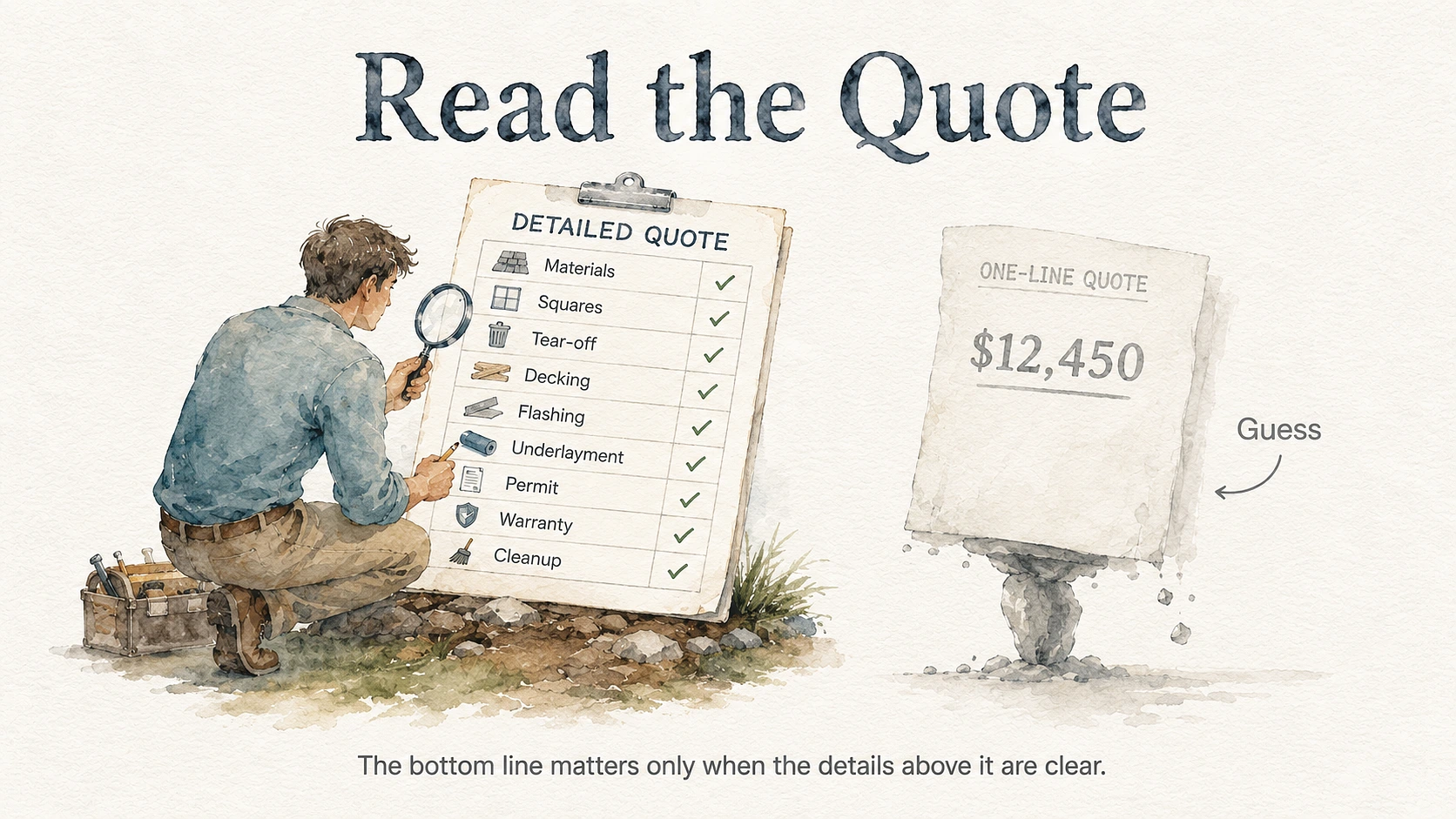
The majority of homeowners consider the bottom line and decide whether to accept it or request a reduction. However, the bottom figure is only significant if the lines above it are precise enough to make the contractor answerable.
A quote worth signing should specify at minimum:
- Exact material — brand name, product line, shingle type (3-tab vs architectural), colour. Not just “asphalt shingles.”
- Number of squares — the actual measured roof area, not an estimate based on your home’s footprint.
- Tear-off included or not — and whether it covers one layer or multiple.
- Decking repair rate — what they charge per sheet if rot is found. This should be stated upfront even if the number of sheets is unknown.
- Flashing — new or reused, and which components (chimney, vents, walls, valleys).
- Underlayment type — synthetic felt or ice-and-water shield in valleys and eaves.
- Permit and inspection — included or homeowner’s responsibility.
- Warranty terms — separate lines for manufacturer material warranty and contractor workmanship warranty. These are different things with different durations.
- Cleanup and disposal — dump fees, magnetic nail sweep of the yard, gutter cleanout.
If you are comparing two or three quotes and one of them is just a single number on a letterhead with no line items, that’s not a quote, that is a guess dressed up as a commitment. And it is almost always the one that grows after tear-off because nothing was specified, so nothing was locked in.
Getting multiple bids is still the move — not to find the cheapest number but to see which contractor specifies the most and explains the differences. MrRemodel.com connects you with licensed local contractors who provide itemised estimates based on your actual project, not ballpark ranges pulled from national averages.
When Timing Changes What You Pay
The roofing industry has a busy season and it follows the weather. Most of the country experiences peak demand from late spring to early fall; contractors are booked, personnel are overworked, and prices reflect this. Because summer demand declines and contractors are seeking to fill their schedule before winter shuts down outside work in colder places, late September through November is usually the cheapest window.
That said, waiting for the off-season only works if your roof can wait. If shingles are curling, granules are piling up in your gutters, and you can see daylight through the attic boards, the cost of water damage from one bad storm will exceed anything you might have saved by waiting three months. The timing discount is real but it only makes sense on a roof that isn’t actively failing.
One more thing worth knowing — material prices have been climbing steadily. Asphalt shingles in particular have gone through multiple manufacturer price increases over the past couple of years, and contractors pass those through because they have no margin to absorb them. A quote from six months ago may not hold today, which is another reason to get estimates close to when you actually plan to start.
The bottom line on a 1,500 sq ft roof is that nine to twelve thousand is a realistic budget for architectural asphalt with a clean tear-off and no major surprises underneath. If the first quote comes in at six thousand, something is probably missing from it. If it comes in at eighteen or twenty, either the roof is steeper or more complex than average, you’re in a high-cost region, or the contractor is pricing in work that others left out. The only way to know which is to read the line items — not just the total.
 Decor & Improvement Accessories