

Home & Decor Blogs: DIY, Interior Design & Lifestyle Ideas
How to Heat an Above Ground Pool Without the Running Costs Destroying Your Budget
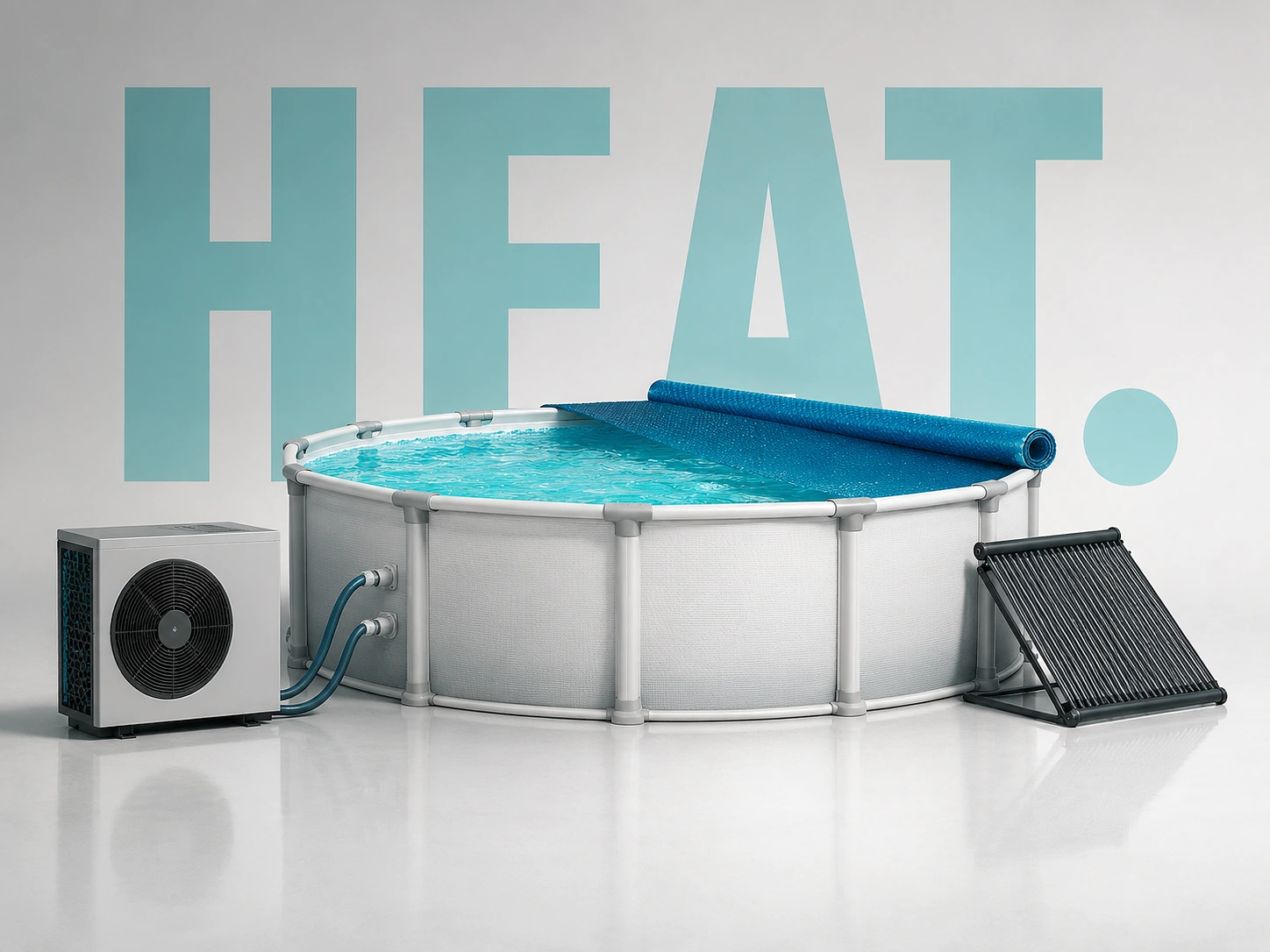
A pool sitting up on legs or a frame loses heat about 25 to 40% faster than an in-ground one the same size. All four walls out in the open air instead of tucked into soil, so warmth goes through the floor, the walls, and the water surface all at once.
Three heater types work for these pools. Heat pumps run $50 to $150 a month, gas heaters run $300 to $500, and solar costs nearly nothing after install but can only do so much. The rest of this comes down to pool size, climate, and how often you actually swim.
Why These Pools Burn Through Heat Faster Than You’d Think
Most heating guides are written with in-ground setups in mind. The BTU sizing, running costs, and capacity numbers they quote all assume the walls are surrounded by soil acting as natural insulation. A freestanding pool doesn’t get any of that.
The walls on a typical setup are uninsulated metal or resin sitting in open air, and wind moves around the entire perimeter freely. That wind exposure alone pushes evaporation rates up by 40 to 60% compared to a ground-level pool, and evaporation is the single biggest driver of heat loss in any pool, responsible for roughly 70% of total heat loss in most configurations. Wall conduction stacks on top of that, and on a 24-foot round pool in moderate 70°F conditions the combined losses through walls, floor, and surface can have your heater working overtime before you’ve even factored in overnight cooling.
What that means practically: the BTU rating on a heater designed for an in-ground pool of the same water volume will be undersized for your setup. Add at least 25% to whatever the basic sizing formula gives you, and in windy or exposed backyards push that closer to 40%.
One fix that costs almost nothing and makes a real difference. Foam board insulation fixed to the outside walls. One to two inches of rigid foam panel with an R-value of 5 to 10, sealed against weather, cuts wall heat loss by 65 to 80%. It won’t win any beauty contests but the shorter heater run time pays for the panels in a matter of weeks.
Heat Pumps: $50-$150 a Month, But They Take Their Time

A heat pump doesn’t generate heat the way a gas burner does, it pulls warmth from the surrounding air and transfers it into the water, using a fraction of the electricity and running about five times more efficiently than direct electric resistance heating. Speed is where you pay for that efficiency though. One to two degrees Fahrenheit per hour is the typical rate, so going from 65°F to 82°F means eight to seventeen hours of run time.
That’s not as bad as it sounds because the pump isn’t really meant to heat a cold pool from scratch every time. It holds temperature. You set it, it keeps the water where you want it, and the monthly cost stays between $50 and $150.
The efficiency does shift with the weather and this is worth knowing before buying. Heat pumps have something called COP, coefficient of performance, and at 80°F air it sits near 6.0, so for every unit of electricity you get six units of heat into the water. When the air drops to 50°F the COP falls to about 2.5, still better than gas but the pump is working noticeably harder and costing more than those summer figures suggest. Anyone trying to stretch the season into cooler autumn mornings should factor that in.
On cost, $2,000 to $7,000 for the unit plus $500 to $1,000 for install. Against gas running costs a heat pump usually pays for itself in two to four years.
Gas: $300-$500 a Month, But the Pool Is Warm in Two Hours

Gas does one thing none of the others can, it heats the pool fast no matter what the air temperature is doing outside. A properly sized unit turns cold water into a swimmable pool in a couple of hours, not half a day.
Natural gas runs around $3 to $5 an hour and propane can hit $7 to $9, so across a month of regular use you’re looking at $300 to $500. Some propane setups in colder areas push past $800 during heavy use. On the purchase side it’s actually cheaper than a heat pump though, $1,500 to $6,000 for the unit. If there’s no gas line running to the pool area already, adding one costs another $500 to $1,500, and propane avoids that problem but carries the highest hourly cost of any option plus you’re paying for tank refills.
Who gas actually makes sense for: someone who swims three or four times a month and wants the pool warm fast each time. In that scenario gas can work out cheaper overall than a heat pump running all week to hold temperature on a pool nobody’s using. But once you start swimming daily or even four or five times a week, the monthly gas bill overtakes what a heat pump would have cost pretty quickly.
Solar: Almost Free to Run, But Only as a Helper
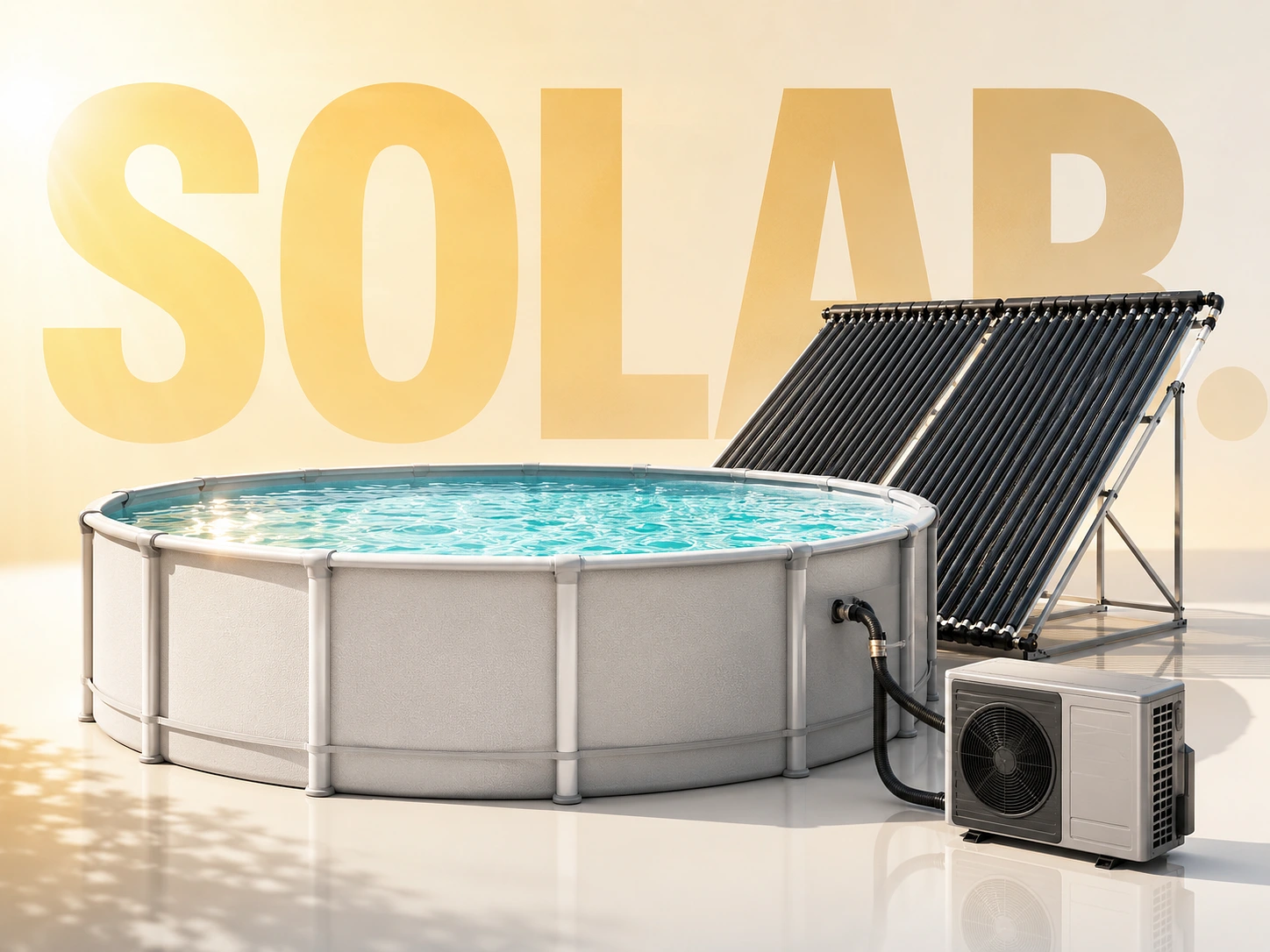
Solar has the lowest running cost of any option, basically nothing after install beyond the pump electricity that pushes water through the panels. No fuel, no compressor, no moving parts.
It can raise your water a few degrees on sunny days and stretch the usable season by a few weeks on either end of summer. That’s about it though. It can’t heat a cold pool on demand, can’t hold temperature through a cold night, and doesn’t work after dark or on cloudy days.
Where solar actually works well is paired with a heat pump. The panels add free heat while the sun is up, the pump runs fewer hours, and the combination cuts monthly cost while extending the pump’s lifespan because it cycles less. As the main heater on its own, solar falls short. As an add-on that reduces how hard everything else works, it’s genuinely useful.
Install runs $2,500 to $5,000 and the panels need roof or yard space equal to about 50 to 100% of the pool’s surface area. Heavy shade or a wrong-facing roof kills it regardless of cost.
The Solar Cover Trick That Cuts Every Heater’s Bill
Whatever system you go with, a solar cover changes the economics of it dramatically. A cover sitting on the water surface when the pool isn’t in use reduces overnight heat loss by up to 70%, mainly by blocking evaporation, which is where most heat escapes.
In real terms, a pool that drops three to four degrees overnight without a cover might only lose one degree with one on. Your heater runs an hour or two in the morning instead of four or five. Because the cover is doing half the work of holding heat, you can sometimes get away with a smaller, cheaper heater than the BTU formula suggests. Over a full season that difference adds up to hundreds of dollars in saved gas or electricity.
A decent cover for a freestanding pool costs $50 to $200. It is the single highest-return purchase in the entire heating setup and it works the same whether you’re running gas, a heat pump, or solar underneath it.
Sizing: What BTU Rating Actually Fits
The basic formula is straightforward.
Multiply the pool volume in gallons by 8.34 (weight of water per gallon), then multiply by the desired temperature rise and the number of hours you want to reach it. That gives you the BTU per hour your heater needs to produce.
For a freestanding pool you don’t stop there though. Add 25 to 40% to that figure for the exposed wall heat loss. If the pool sits in an open yard without a fence or hedge acting as a windbreak, lean toward the higher end.
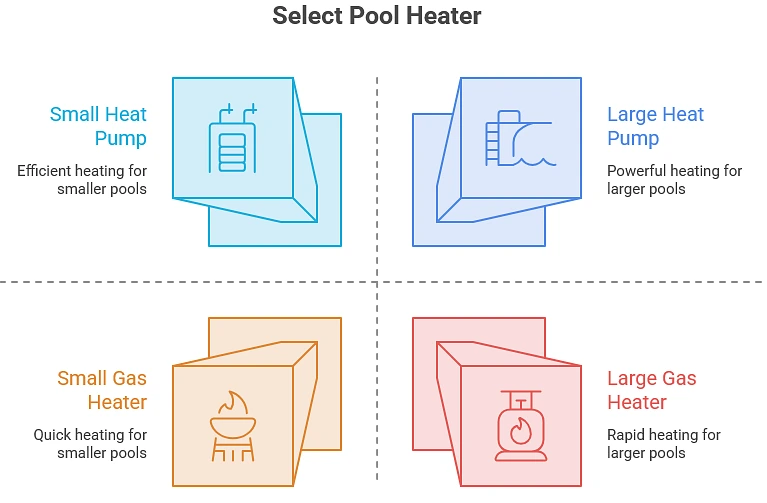
Quick reference for common sizes:
- 15-foot round (~5,000 gallons): minimum 50,000 BTU gas heater, or a heat pump rated for pools up to 5,700 gallons.
- 18-foot round (~8,000 gallons): minimum 75,000 to 100,000 BTU gas, or a heat pump rated for 5,300 to 6,600 gallons.
- 24-foot round (~13,000 gallons): minimum 100,000 to 125,000 BTU gas, or a heat pump rated for 10,500+ gallons.
- 12 x 24 foot oval (~8,500 gallons): similar capacity requirements to the 18-foot round.
Those are bare minimums. Pool technicians usually add another 20 to 25% buffer on top for real-world conditions, because the formula assumes calm air and no overnight losses, which is not how any backyard actually works.
So Which One
A pool heater is one of those purchases where the cheapest option upfront is rarely the cheapest over three years. Gas looks reasonable at $1,500 for the unit until you’ve paid $300 a month for fuel across two seasons and realise your running costs have overtaken the price of the heater itself. Heat pumps cost more to buy but the monthly bills are a fraction of gas, and for someone swimming regularly that gap compounds fast.
Whatever you pick, get the cover. A $50 solar blanket saves more per season than almost any heater upgrade you could make.

 Decor & Improvement Accessories