

Home & Decor Blogs: DIY, Interior Design & Lifestyle Ideas
The Basement Checkup Homeowners Should Do After Heavy Rain

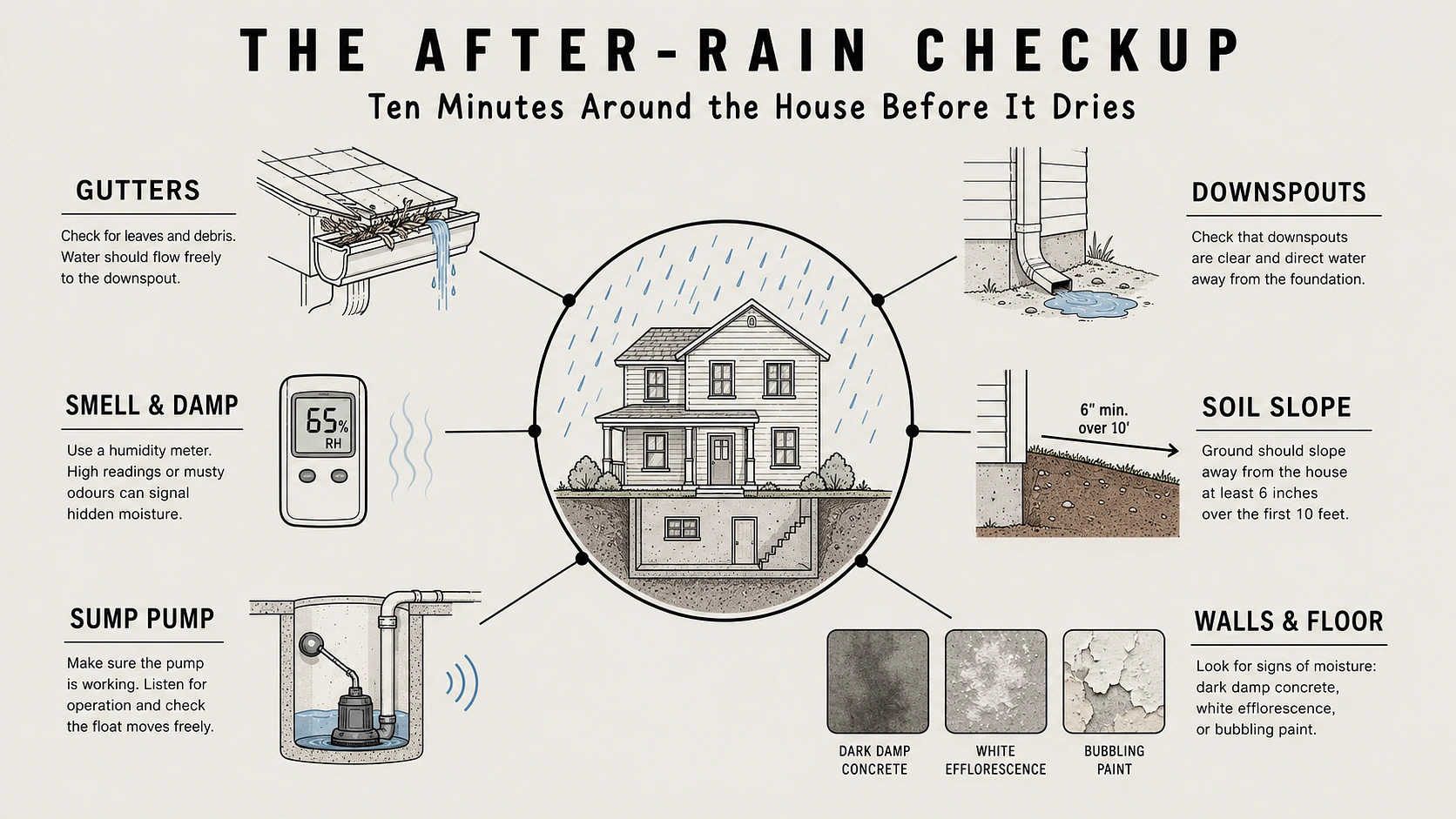
After a hard rain, take a few minutes to walk around the house before everything has a chance to dry. That is usually when the little problems are easiest to spot.
You might see water dripping from one section of gutter even though the rest is working fine. There could be a puddle near the steps that was not there after the last storm. Downstairs, the basement may smell a little stale or feel heavier than usual.
None of that means the foundation is in trouble. Sometimes a gutter is simply clogged. Sometimes the basement air feels damp because it has been raining for two days. The point is not to assume the worst. It is to notice what changed.
Water around a basement can behave differently once the soil is soaked. It may drain away with no issue at all. In other cases, it settles beside the house and finds a small opening around a window, a door, or a crack that has been there for years without causing trouble.
This is why it helps to look around while the storm is still fresh in your mind.
Start Outside
It is easy to head straight for the basement, especially if that is where you are worried about finding water. Still, the outside of the house often gives you a better clue about where the problem started.
Begin with the gutters. Look for a section that is sagging, packed with leaves, or leaving streaks down the siding. Those streaks are often a sign that water has been spilling over instead of moving toward the downspout.
Then check where the downspouts end. Some stop so close to the house that nearly all the roof water gets dropped beside the foundation. During a quick shower, that may not cause much trouble. After hours of rain, it can leave the ground beside the house completely soaked.
Keep walking and look at the soil. Does it slope away from the foundation, or has it settled into a low area? Is water sitting in a window well? Has mulch been piled high against the bottom of the siding?
It is also worth looking at patios, driveways, and walkways. These surfaces move over time, even when the change is hard to notice. A concrete path that once carried water away from the house can eventually tilt back toward it. You may not realize it has happened until the same part of the basement starts getting damp.
Pay Attention When You Open the Basement Door
Before turning on every light and checking the walls, notice the smell.
Basements are not known for smelling especially fresh. Older ones often have a mix of concrete, dust, stored belongings, and laundry. What stands out is a smell that suddenly seems stronger after rain.
Damp cardboard has its own smell. So does wet carpet. Wood shelving, old furniture, insulation, and the space behind finished walls can all hold moisture without showing an obvious puddle.
Walk through the room slowly. The odor may be stronger near one wall or in a corner where boxes have been stacked for years. It could be near a window, the basement stairs, or the sump pit.
You may not know what is causing it right away. That is fine. Figuring out where the smell is strongest at least gives you somewhere to start.
Look for New Marks, Not Every Mark
Most basement walls are not perfect. They collect scratches, old stains, repaired cracks, paint drips, and patches left behind by previous owners.
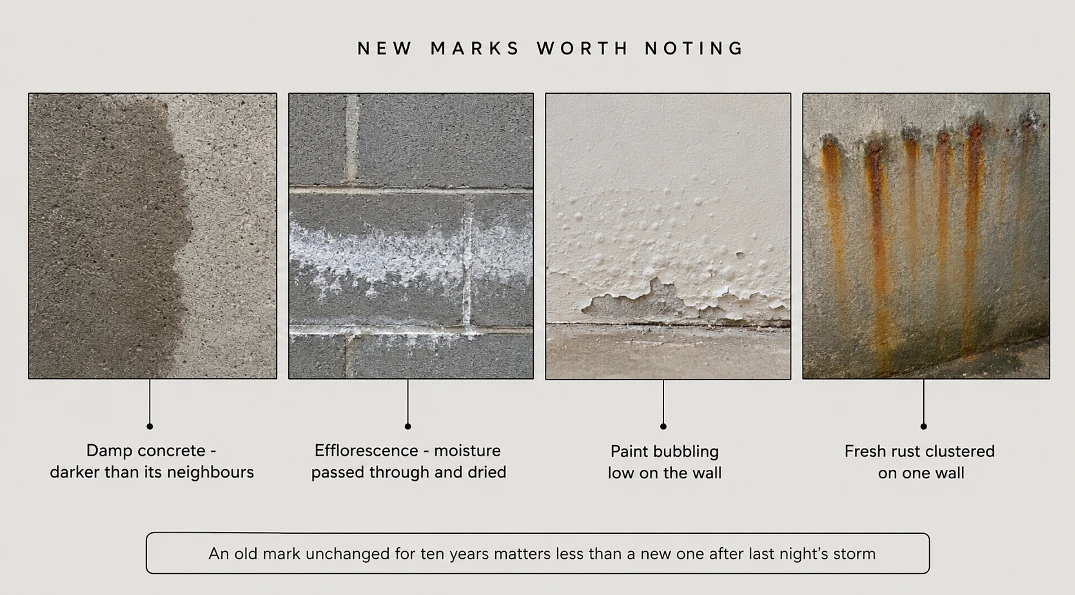
An old mark that has looked the same for ten years is probably less important than a small dark patch that appeared after last night’s storm.
Wet concrete often looks darker than the area around it. Paint may start to lift, bubble, or peel near the bottom of the wall. In some basements, the first sign is only a thin damp line where the wall and floor meet.
White powder on concrete or block is also common. It is usually efflorescence, which is left behind after moisture moves through the masonry and dries. It can often be brushed off, but it still shows that moisture has passed through that area.
Rust can tell a similar story. A rusty nail or pipe is not unusual in an older basement. Several fresh rust marks along the same damp wall are more noticeable.
If water is still coming in, take a photo before cleaning it up. A short video is even better when there is a drip or a small stream. By the next day, the wall may look completely dry, and it can be difficult to explain exactly what happened.
I would also take a short video if the water is dripping or running along the floor. Basement leaks have a habit of disappearing before someone arrives to look at them.
Look Under Things
It is easy to scan the basement walls and miss what is happening on the floor.
Water often appears where the wall meets the slab. It may also come up near a floor drain, around the edge of a sump pit, or through a low spot in the concrete. Sometimes the only sign is a faint line in the dust showing where water traveled before drying.
Look underneath a few storage bins and boxes, especially those placed against exterior walls. Moisture can stay trapped under a plastic tote even when the rest of the floor seems dry. Cardboard can absorb water without leaving a noticeable puddle.
Finished basements require a little more digging. Check around baseboards, behind couches, and inside closets located along outside walls. Carpet may feel colder or softer in a damp area before it looks wet.
Moving a few things now is better than discovering a month later that the bottom of every box has gone soft.
Listen for the Sump Pump
During heavy rain, a sump pump may turn on frequently. That is not automatically a problem. It may simply be doing exactly what it was installed to do.
You should still pay attention to how it sounds.
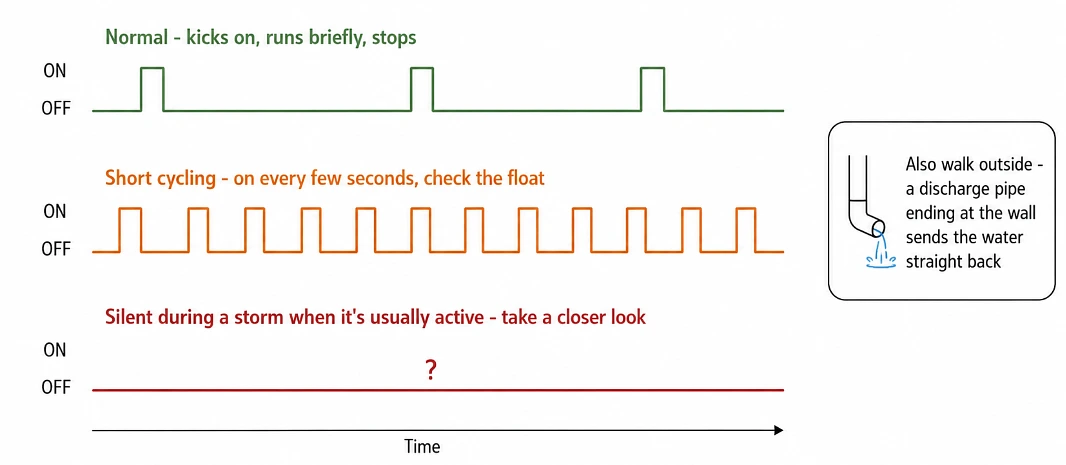
When the sump pump is working normally, you will usually hear it kick on, run for a short time, and then stop. Strange noises are harder to ignore. Grinding, rattling, or a pump that keeps turning on every few seconds can mean something is not working the way it should.
If you can see into the pit safely, check whether anything is blocking the float. Small pieces of debris can sometimes keep it from moving freely. It is also worth walking outside to see where the discharge pipe ends. I have seen plenty of setups where the pump works fine, but the water is released so close to the house that it eventually finds its way back.
The opposite can be a warning sign too. If the pit is normally active during storms but the pump has not made a sound, take a closer look.
The Basement Can Feel Damp Without Any Water on the Floor
Not every moisture problem leaves behind a puddle. Sometimes the first thing you notice is that the basement feels clammy when you walk downstairs. The carpet may feel cool, the air seems heavier, or the usual basement smell becomes harder to ignore.
Rainy weather can raise the humidity indoors, especially in a basement with limited airflow. Moisture can also pass slowly through concrete walls and floors without ever creating an obvious leak.
A small humidity meter can help take some of the guesswork out of it. Leave it on a shelf for a few days and see how much the reading changes during wet weather. That gives you a better idea of whether the room only feels damp occasionally or whether high humidity is a regular issue.
A dehumidifier can make a noticeable difference in a basement like this. It may help with the smell and keep moisture from settling into rugs, furniture, and anything being stored downstairs.
It still has its limits. If rainwater is coming through a crack, under a door, or along the edge of the floor, running a dehumidifier will not stop it. It may dry the room afterward, but the place where the water is getting in still needs attention.
Some Problems Are Simple. Others Keep Coming Back.
There are plenty of basement moisture problems that homeowners can address without turning them into a major project.
Cleaning the gutters, adding a downspout extension, clearing leaves from a window well, improving airflow, and getting cardboard boxes off the floor are all good places to start.
The situation changes when the same signs appear after nearly every storm.
Repeated puddles, widening cracks, damp finished walls, peeling paint, or mold that keeps returning should not be ignored. The same is true if a wall appears to be leaning or bowing, or if the sump pump runs constantly but the basement still gets wet.
Water near electrical outlets, wiring, appliances, or the breaker panel requires extra caution. Do not walk through standing water to unplug something or reach the panel.
When a problem keeps returning, it is usually better to have someone look at it than to continue cleaning up after every storm. Homeowners on Long Island can also review common basement and foundation warning signs from ACM Basement Waterproofing to get a better idea of what may be happening before deciding on the next step.
Keep Notes, Even If They Are Brief
You do not need to create a complicated home maintenance log. A note in your phone works fine.
Write down the date, where you noticed water, whether the sump pump was running, and anything else that seemed different. Take a few photos and make a note of any change you made afterward.
For example, you may add a downspout extension and find that the corner stays dry during the next storm. That tells you the drainage outside was probably part of the problem.
If the same wall becomes damp no matter what you change, you have a pattern that may need more attention.
Make It a Habit After Big Storms
Checking the basement after heavy rain does not need to take all afternoon. Ten minutes is usually enough.
Walk around the outside of the house. Look at the gutters and downspouts. Check the basement walls, the edges of the floor, and the areas underneath storage items. Listen to the sump pump and notice whether the room smells different.
You are not trying to convince yourself that every stain is a serious problem. You are simply learning what is normal for your basement and what is not.
The sooner you notice a change, the easier it usually is to figure out where the water is coming from. That can mean the difference between extending a downspout today and replacing damaged flooring later.
 Decor & Improvement Accessories