

Home & Decor Blogs: DIY, Interior Design & Lifestyle Ideas
Gas Ducted Heating in Plain English: How It Works, What It Costs, and How to Read the Quote

Gas ducted heating is one central gas furnace pushing warm air through hidden ducts to every room, and in cold parts of Australia it has been the default whole home answer for decades. Quotes for gas ducted heating in Geelong typically land in the $3,000 to $9,000 band installed, the same spread you’ll see across most cold region markets. Whether you should still buy one in Victoria in 2026 is a different question, and the answer has genuinely shifted this year. Start with the machine anyway, because half the bad quotes out there depend on buyers not knowing how it works.
How Gas Ducted Heating Works
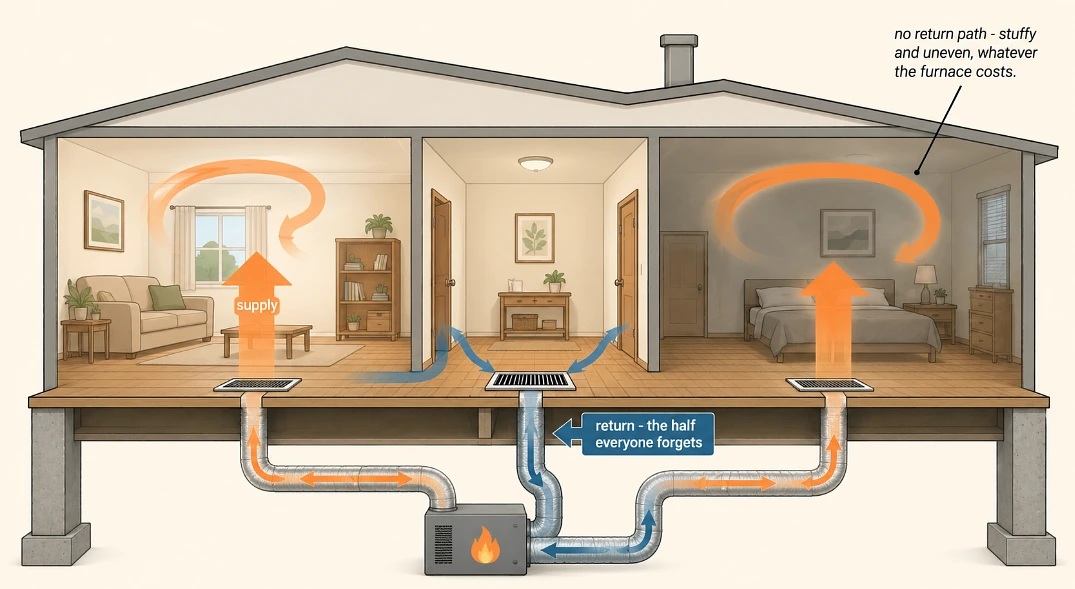
A gas furnace warms air, a fan pushes it through insulated ducts to floor or ceiling outlets, and the cooled air travels back through return air vents to be reheated and sent around again. The part people miss is that return path. Every room getting warm air needs a way to send air back, through a dedicated vent or the gap under a door, and a room with no return path goes stuffy and uneven no matter how good the furnace is. Keep that one fact, it explains half of all comfort complaints.
The Five Quote Lines to Check Before Signing
Quotes for these systems only compare fairly when they specify the same five things, so here is what each line means and what to check.
- Star rating. This is the efficiency band, and it matters because a gas heater loses 10 to 35 percent of the energy it burns straight up the flue. A higher star unit costs more on the invoice and less every winter for fifteen years. Make every bidder quote the same star band or the prices are describing different machines.
- Outlet count and placement. More outlets cost more, but placement decides evenness. Warm air rises, so where outlets sit relative to windows and doorways shapes whether a room heats or just swirls. A bidder who counts outlets without walking the rooms is estimating, not designing.
- Return air. The quote should name the return path, where the vents go and how air gets home from each zone. If it doesn’t mention return air at all, that’s the line to question first.
- Zoning. Motorised dampers inside the ductwork open and close like small doors, letting a wall controller run day areas and night areas separately, and most homes do well with four to eight zones. Zoning adds upfront cost and repays it only if rooms genuinely sit empty for long stretches. Heating the whole house at once anyway means the dampers add cost without earning it back.
- Servicing inclusions. Victorian guidance is blunt on this one: gas heaters should be serviced at least every two years by a qualified gasfitter, with carbon monoxide spillage testing included. A quote that bundles the first service has priced in reality. One that never mentions servicing has left the safety obligation to you.
Reverse Cycle Costs Half as Much to Run as Gas
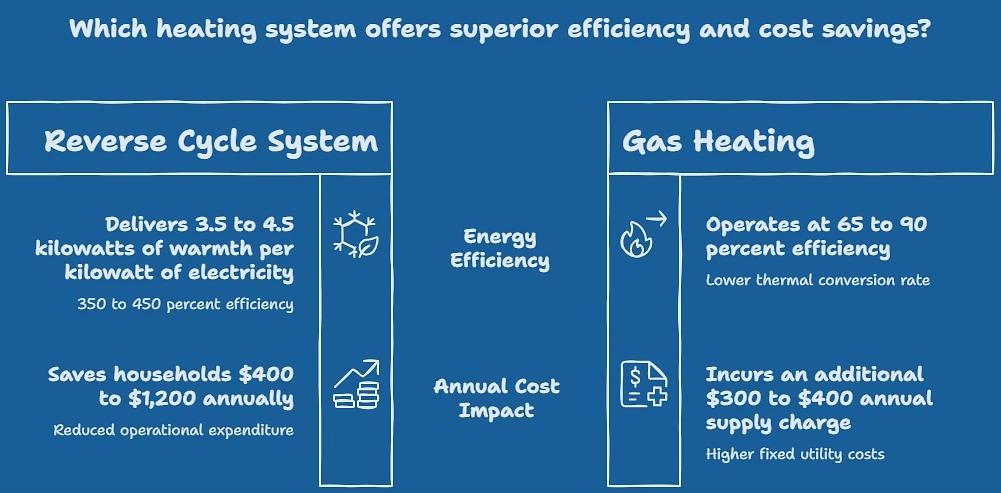
A reverse cycle system doesn’t make heat, it moves it, delivering 3.5 to 4.5 kilowatts of warmth for every kilowatt of electricity it draws, an efficiency of 350 to 450 percent against gas’s 65 to 90. At current Victorian prices that works out to roughly half to a third the cost per unit of warmth, and households making the switch typically save $400 to $1,200 a year on heating, before counting the $300 to $400 annual gas supply charge that disappears entirely if the home leaves gas altogether.
Victoria Now Pays You to Replace Gas Ducted Heating
The state has put money and law behind that arithmetic. The Victorian Energy Upgrades program offers up to $5,530 off when replacing a gas ducted heater with an efficient reverse cycle system, applied as an upfront discount at the invoice. And under Victoria’s Gas Substitution Roadmap, announced rules due from 2027 will steer many end of life gas heaters toward electric replacements, so check the current requirements before committing either way.
A working gas ducted unit is worth keeping. Service it every two years, run tight zones, and spend nothing replacing what still runs. A dead one is not worth resurrecting: once the unit reaches end of life in Victoria, the rebate, the running costs, and the 2027 rules all point the same way, and buying brand new gas ducted here in 2026 only still makes sense for a shrinking set of homes, very large, very cold, ductwork already sound. Even then it’s a bet against the direction the state is moving.
If you’re pricing it around the region anyway, get both quotes for the same house, put the rebate against the reverse cycle number, and decide off the gap.
 Decor & Improvement Accessories