

Home & Decor Blogs: DIY, Interior Design & Lifestyle Ideas
5 Reasons Metal Roofing Fits Seattle Homes, Starting With Moss

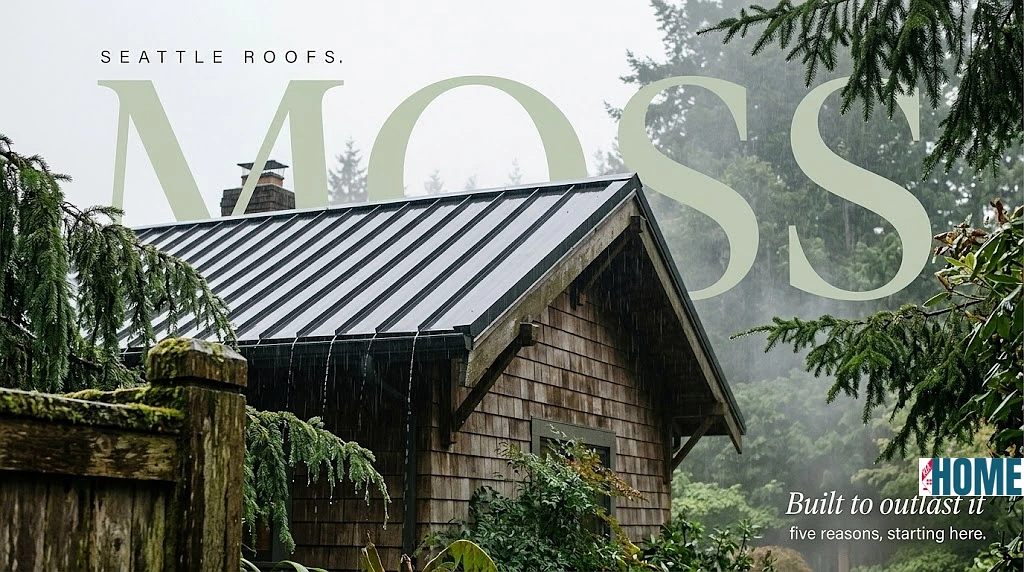
Ask a Seattle roofer what kills roofs here and the answer isn’t rain, it’s what the rain feeds. Moss and algae are the single biggest threat to shingle life in this region, and they’re the reason the same asphalt roof that lasts 28 years in Sacramento gets replaced at 20 here. Metal is the one common roofing surface moss can’t colonize, and that fact has been quietly moving metal roofing in Seattle from barns and warehouses onto ordinary houses. The other four reasons are below, with the local numbers attached.
1. Moss Can’t Get a Grip, and Moss Is What Kills Seattle Roofs
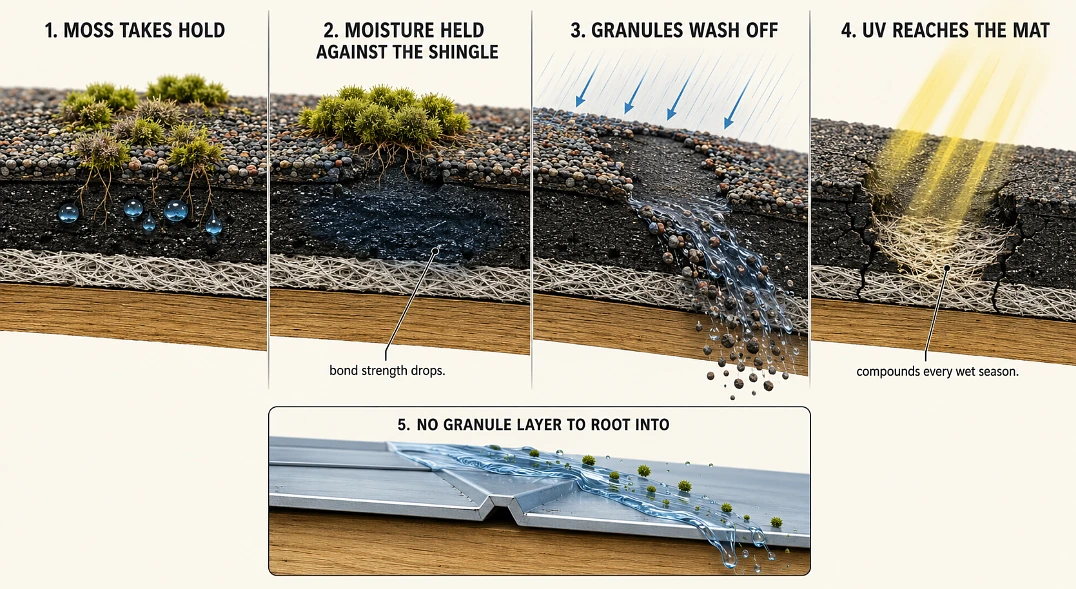
The failure cycle on Puget Sound asphalt is specific and well documented. A moss patch takes hold in the granules and holds moisture against the shingle, the asphalt under the wet patch loses its bond strength, the next heavy rain washes the loosened granules off, and the bare spot exposes the mat underneath to UV, which accelerates everything. Once that cycle starts it compounds every wet season, which in Seattle is most of them. Metal gives moss nothing to work with, no granule layer to root into and a smooth surface that sheds the spores along with the water. One honest caveat from the crews who install everything: under heavy tree cover nothing is fully moss proof, and even a metal roof appreciates the occasional soft wash. But there’s a difference between wiping something off a smooth panel and watching it eat a shingle field, and that difference is measured in years of roof life.
2. Thirty Eight Inches of Rain Meets a Roof With No Exposed Fasteners
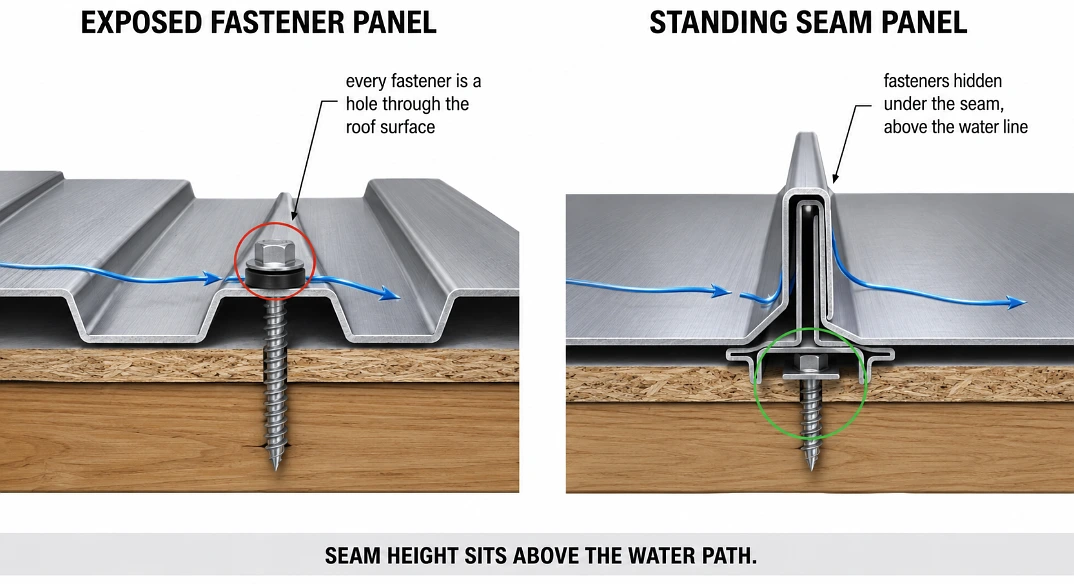
Seattle gets around 38 inches of rain a year, and the number understates it because the real stress is the long damp overcast stretches between the rains, when a textured roof never fully dries. Metal sheds water faster than shingles or cedar because there’s no texture holding it, and standing seam systems raise the stakes further with zero exposed fasteners, which removes one of the most common leak points on any roof. The panels carry baked on coatings built for exactly this kind of continuous moisture exposure, and the interlocked seams hold their line through the windstorm season that peels shingle tabs off the neighbors.
3. Asphalt Here Lasts 18 to 25 Years, Metal Runs 40 to 70
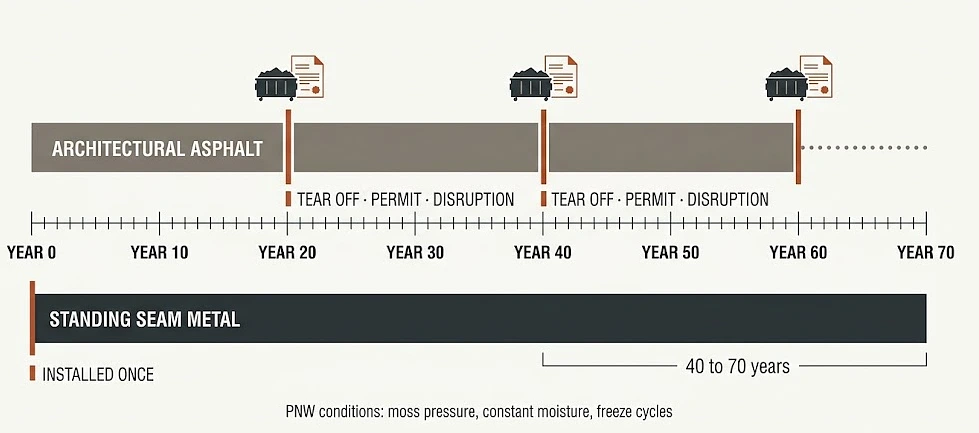
The packaging on architectural shingles promises 25 to 30 years, and in Pacific Northwest weather the practical number lands between 18 and 25, because moss pressure, constant moisture, and freeze cycles all collect their tax. Metal runs 40 to 70 years, and Washington contractors make a stronger claim than the lifespan itself: standing seam is the roofing system in this state that consistently delivers the lifespan printed on its spec sheet. Put plainly, one metal roof outlasts two and sometimes three asphalt roofs, which means one tear off, one permit, one set of disruptions instead of a replacement cycle you’ll fund twice more.
4. The Rain Noise Myth, and What It Looks Like on the House
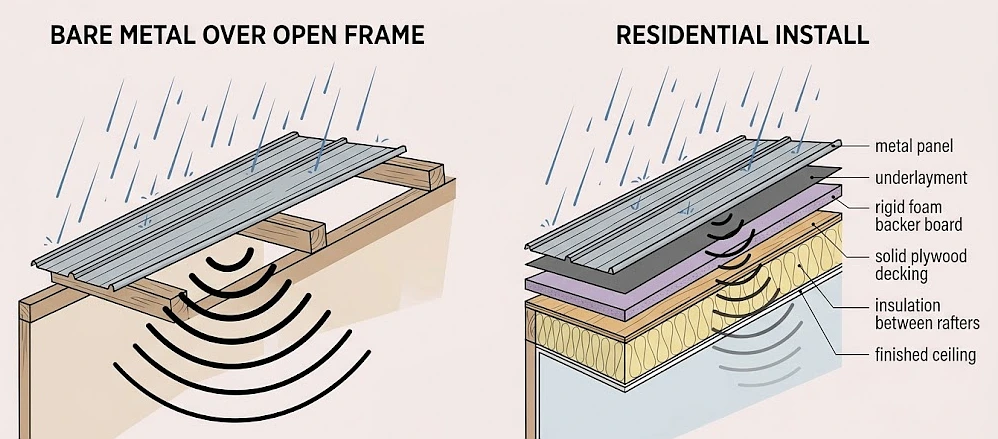
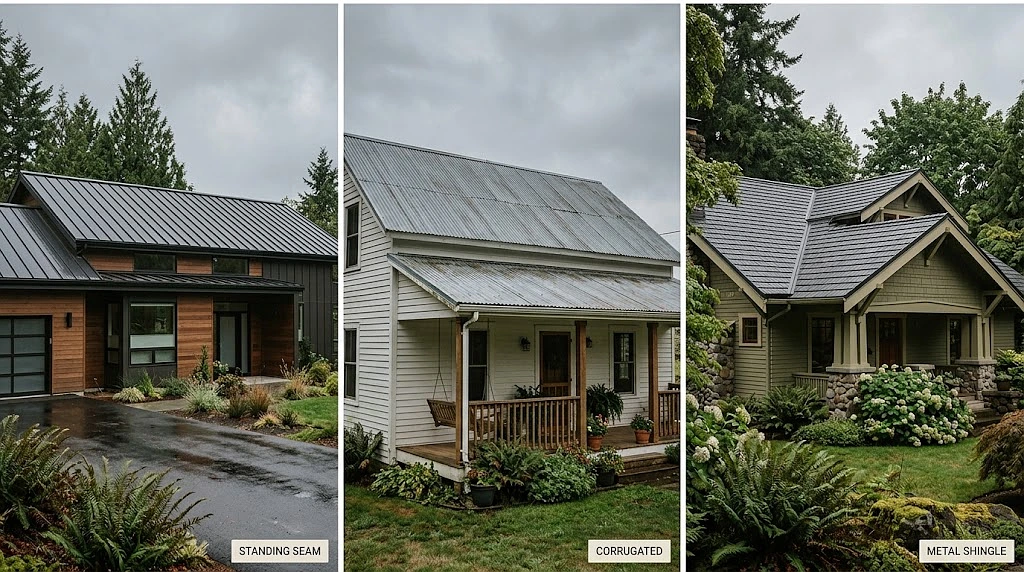
The drum sound people worry about belongs to bare metal over an open barn frame. A residential install goes over solid decking with a rigid foam backer or vented underlayment absorbing the impact noise, and the result sits in the same range as any other roof in a rainstorm. On looks, the profile range covers more ground than people expect, standing seam reads clean and modern, corrugated suits farmhouse and industrial tastes, and metal shingle profiles mimic traditional roofing closely enough to sit comfortably on a Craftsman bungalow. The finishes hold their color through years of exposure, and as a modest bonus, metal paired with decent attic ventilation trims HVAC use by 5 to 10 percent in this climate. Not a reason to buy on its own, but a real number, unlike the solar reflection pitch written for Phoenix that keeps appearing in articles about the cloudiest major city in the country.
5. What It Costs Here and Why the Math Still Works
Standing seam in Seattle runs about $12 to $20 per square foot installed, which puts a 2,000 square foot roof at $24,000 to $40,000, against $7 to $15 per square foot for architectural asphalt. So metal costs roughly double up front, and the per year math is where it comes back: amortized over real local lifespans, asphalt works out near $1,100 a year of service and metal near $800, before counting the second tear off asphalt owners fund in year 20. The labor is a real part of the metal price, panels get cut and formed on site as an interlocking system built for your specific roof, and that’s also why quotes vary and why the installer matters more than the panel brand, because metal rewards precision and punishes shortcuts for decades either way. Comparing at least three bids is the move, and the questions that separate the bids are the ones about seam profile, underlayment, and who exactly is doing the forming.
 Decor & Improvement Accessories