

Home & Decor Blogs: DIY, Interior Design & Lifestyle Ideas
The Benefits of Reliable Backup Power for Your Home
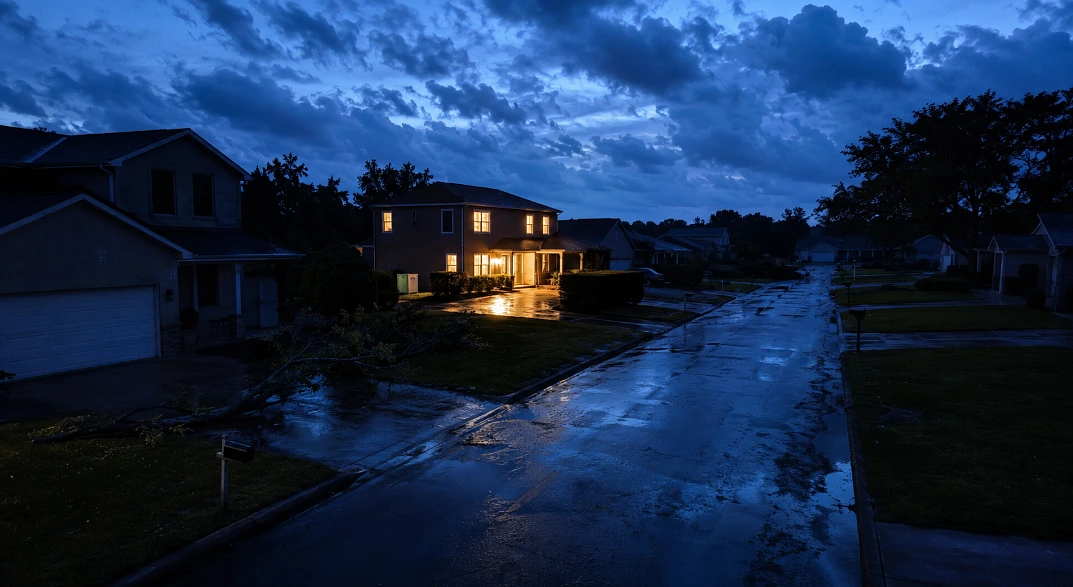
When the power goes out, a house tells you what it actually runs on. The hum you never noticed stops. The fridge goes quiet, the AC winds down, the wifi light dies, and within about ten minutes every person in the home has wandered into the same room asking the same question. It is a small moment, and it used to be a rare one.
It is not rare anymore. The average American home went about 11 hours without power in 2024, the worst year in a decade, and nearly double the average of the ten years before it. In 2022 that number was around five and a half hours. So it doubled in two years. That is the real reason backup power went from a nice idea to a serious conversation at normal kitchen tables, and the benefits of it are not abstract anymore. Each one has already been proven somewhere, in a reported event, on ordinary streets. Let me walk through them that way, benefit by benefit, with the proof attached. And at the end I will tell you what I would actually put in my own house, for whatever that is worth.
Benefit One: It Keeps The House Livable Through Heat And Cold
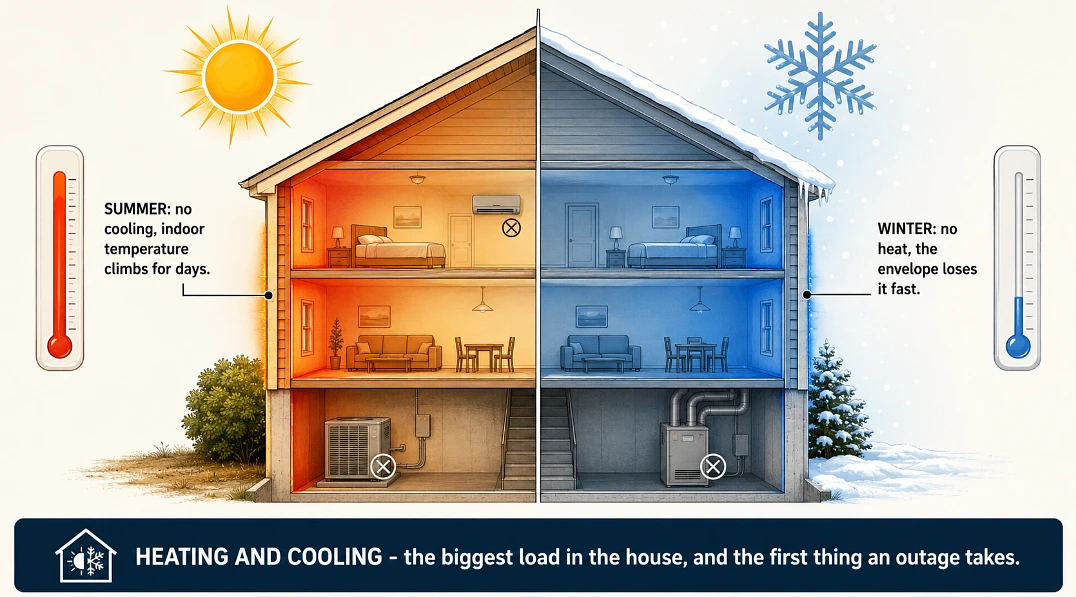
In July 2024, Hurricane Beryl knocked out power to 2.6 million customers in Texas, a lot of them in Houston, in the full heat of summer. Days of it for many homes. No AC in a Houston July is not an inconvenience, it is the reason people end up sleeping in their cars with the engine running or leaving the house entirely. The Texas freeze of February 2021 taught the winter version of the same lesson, homes losing heat in weather the homes were never built to face alone.
So the first benefit is the plainest one. Backup power keeps the house livable. Not comfortable, livable. The heating and cooling load is the biggest thing a home runs, it is the first thing an outage takes, and it is the difference between waiting out a storm in your own bed and figuring out where your family is going to sleep tonight.
Benefit Two: It Saves The Fridge And Freezer From The Four Hour Countdown
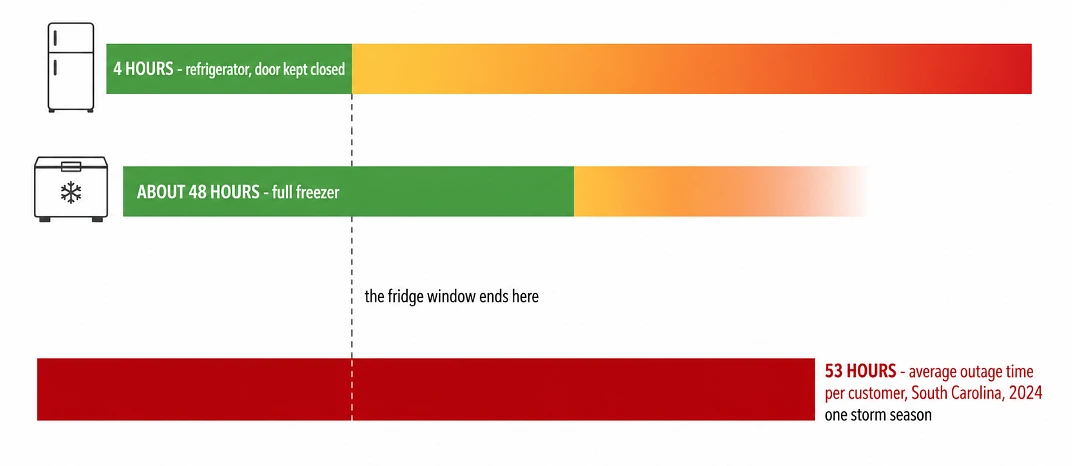
Food safety guidance gives a closed refrigerator roughly four hours before things start becoming unsafe, and a full freezer somewhere around two days. Hold those numbers next to what the outages are actually doing now.
After Hurricane Helene came through in September 2024, customers in South Carolina ended up averaging around 53 hours of outage time for the year, the longest in the country, most of it from that one storm. Fifty three hours against a four hour fridge window. That is not close. Every household in that gap threw out the fridge and lost some or all of the freezer, the groceries, the meat someone stocked up on, the breast milk, the leftovers that were the week’s plan. Do it twice in a few years and you have quietly paid a real chunk of a generator without getting the generator.
Hence the second benefit, and it is proven at scale every hurricane season now. Backup power is the only thing that makes the fridge window irrelevant.
Benefit Three: It Keeps The Sump Pump Running When The Storm Needs It Most
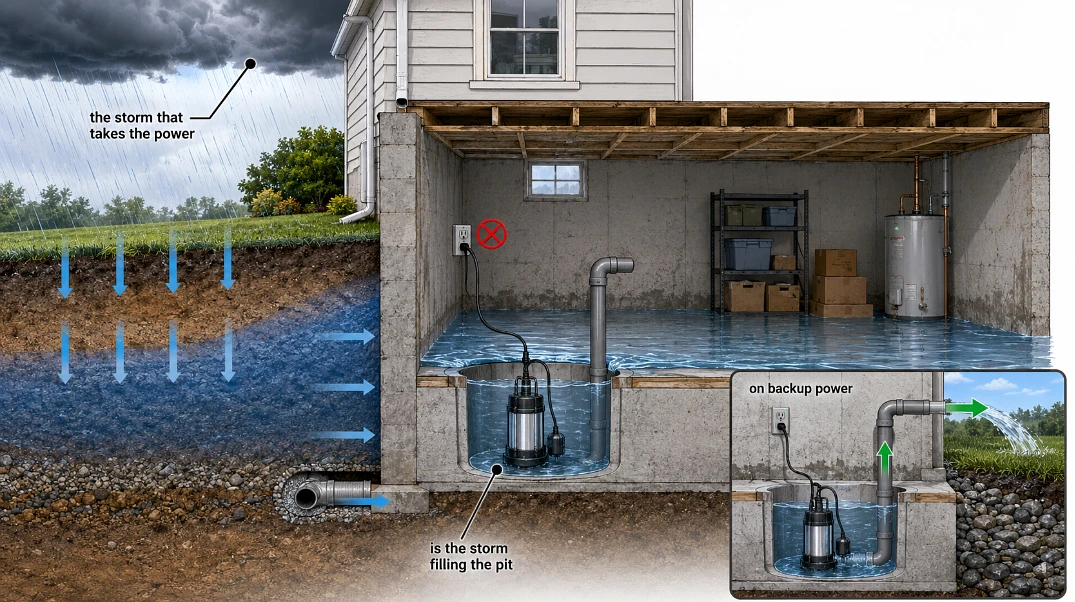
This one deserves more attention than it gets, because it is the cruelest pairing in the whole subject.
The same storm that takes your power down is the storm dumping water around your foundation. Which means the sump pump dies at the exact moment it has the most work to do. Not a coincidence, the same event, every time. A basement that has stayed dry for fifteen years floods during the one weekend the pump had no electricity, and the damage bill from that single wet basement can pass the cost of the backup system that would have kept the pump alive.
Is that a niche worry or a normal one?
Normal, and getting more normal. Weather caused 80% of all major US outages over the last two decades, and the last ten years produced roughly twice as many weather outages as the decade before. The storms are the outages. If your house depends on a pump, your house depends on power most on the day it is least likely to have it.
Benefit Four: It Protects Your Income And Your Medical Equipment
Two quieter benefits, and for some families they outrank everything above.
A home is a workplace now. An outage used to cost you a dark evening, now it costs a work day, missed meetings, a laptop dying at 40 percent, and for anyone self employed it is straight lost income with no one to bill it to. A survey in 2025 found 45% of Americans hit an outage in just the first half of the year, and in the South the extreme weather outages averaged around 95 hours. Four days. Nobody’s job survives four days of dead house on goodwill alone.
And some homes carry more than a job. A CPAP machine, an oxygen concentrator, insulin and other medication that has to stay cold. For those households backup power is not a comfort purchase and it never was. It is the thing that lets a medically fragile person stay home through a storm instead of checking into a hotel or a hospital hallway.
Benefit Five: A Whole House System Carries The Loads A Portable Cannot
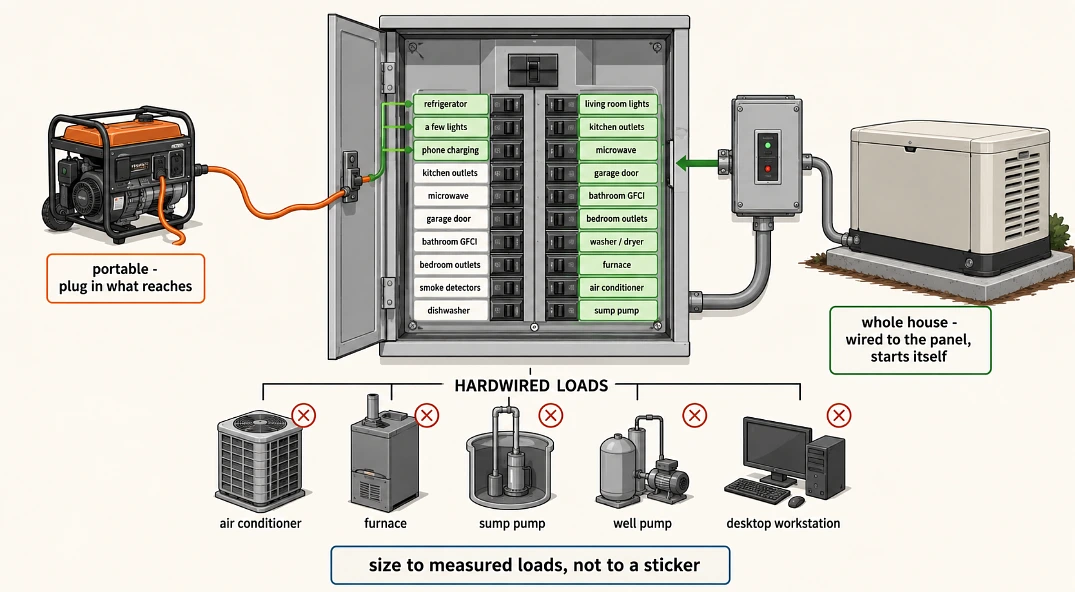
A portable generator is genuinely useful and I will not pretend otherwise. It can hold the fridge and some lights and charge the phones, and for a short outage in mild weather that covers a lot.
But look back at the actual list this article just built. The AC or the furnace. The sump pump. The well pump if you have one. The home office. The medical gear. Those are hardwired, heavy loads, and they are exactly what a portable unit and an extension cord cannot carry. That load list is the honest reason whole house generators exist, a system sized for the full panel, wired in, that starts itself when the grid drops whether you are home or not. The fridge does not care that you were out of town. Neither does the sump pump. Automatic is not a luxury feature in this category, it is half the point.
One honest warning though. Whichever route you go, sizing matters more than brand, so have someone calculate your actual loads instead of guessing from a sticker. An undersized system that trips when the AC and the well pump start together protects nothing.
The Setup I Would Choose For My Own Home
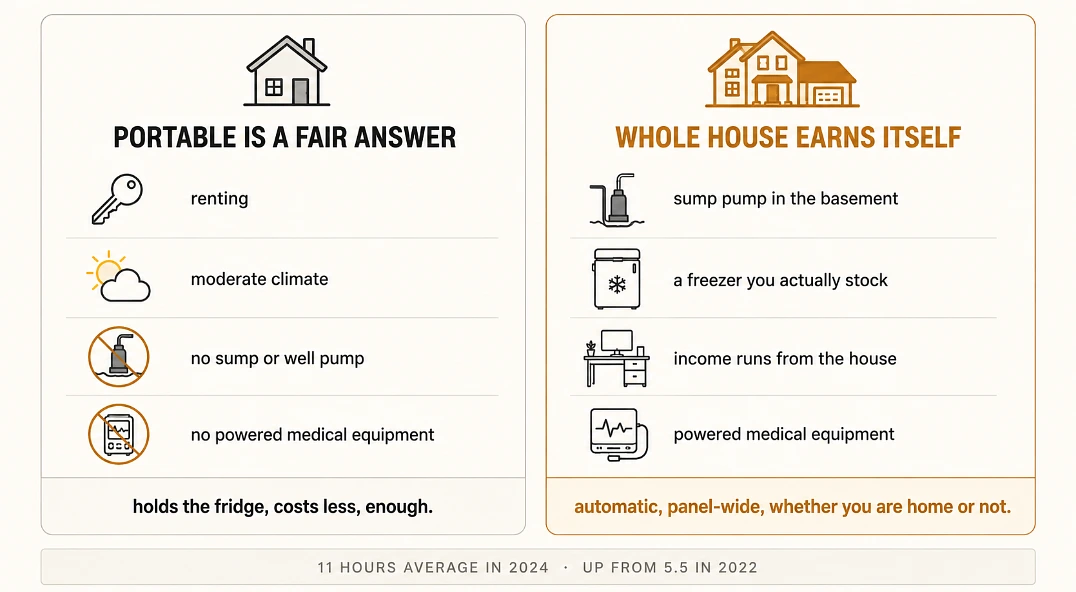
It depends on the house, and I mean that practically, not diplomatically. A renter in a mild climate with no pump and no medical equipment can hold the fridge with a portable and be fine. That is a fair answer and a cheaper one.
But for my own place, with a basement pump, a freezer I actually stock, and a job that lives on the desk upstairs, I would go whole house and stop thinking about it. The data is only moving one direction, 11 hours a year on average now, 80% of it weather, and the weather is not calming down. At some point the question flips. It stops being whether you can justify the generator, and becomes whether you can justify betting the basement, the food, and the work week on a grid that just doubled its downtime in two years. I know which side of that bet I want to be on when the hum stops.

 Decor & Improvement Accessories