

Home & Decor Blogs: DIY, Interior Design & Lifestyle Ideas
Why The Same Floor Looks Fine In The Morning And Tired By 4pm

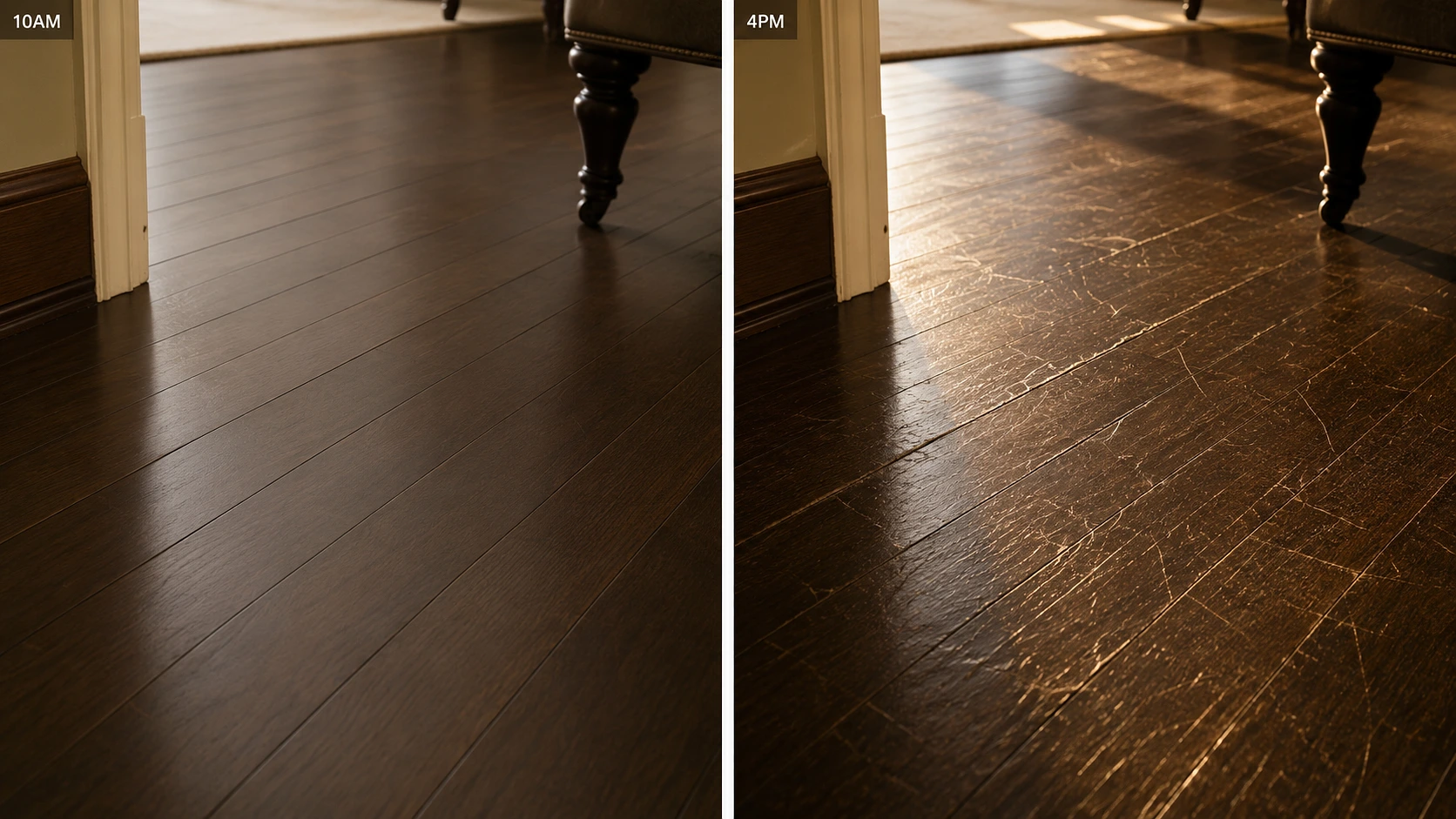
It’s not your imagination. And it isn’t the floor getting worse over the course of a day either.
It’s the sun.
Low angle light at certain hours throws shadows into every scratch, every worn patch, every old refinishing line sitting on a horizontal surface, the same wear that flat overhead light hides completely a few hours earlier. So the floor someone genuinely thought looked fine that morning can look tired the second afternoon light starts raking across it sideways. Designers apparently walk in and clock a floor’s real condition in about five seconds. The person who’s lived there for six years hasn’t noticed a thing.
The Floor Is The Only Surface In A Room That Changes With The Light
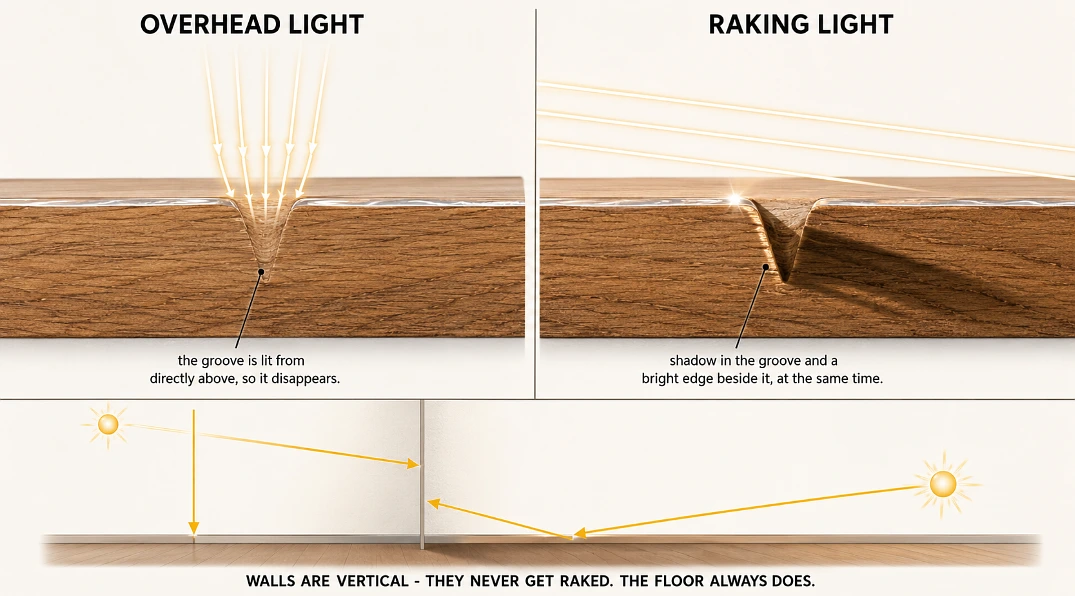
Walls don’t do this. Neither does art, or furniture, mostly, they’re vertical, they read roughly the same whatever time it is or wherever you’re standing in the room.
A floor lies flat. Which means it’s the one surface actually catching light at a raking angle whenever the sun’s low, morning, late afternoon, that low west facing window glare in winter that everyone complains about for the wrong reason.
There’s an actual name for this in trades that deal with surfaces professionally, raking light, and I only found out how far it goes when I went looking, conservators use it on paintings to find cracks and old repairs, woodworkers use it mid sanding to catch marks they’d otherwise finish right over. Same trick, wildly different objects. Light travelling nearly parallel to a flat surface throws shadows into every groove and bright reflections off every raised edge at once, and a scratch that’s basically invisible under noon light becomes a hard shadow the moment the sun drops low enough to rake across it.
Which means a designer’s fast read isn’t some trained instinct picking up on something invisible to everyone else. It’s someone who’s learned, probably the hard way at some point, to check a floor more than once a day, because they know flat light lies.
Dark Glossy Floors Give This Away The Worst
Not every floor betrays itself equally, and this bit’s worth knowing if you’re trying to judge your own.
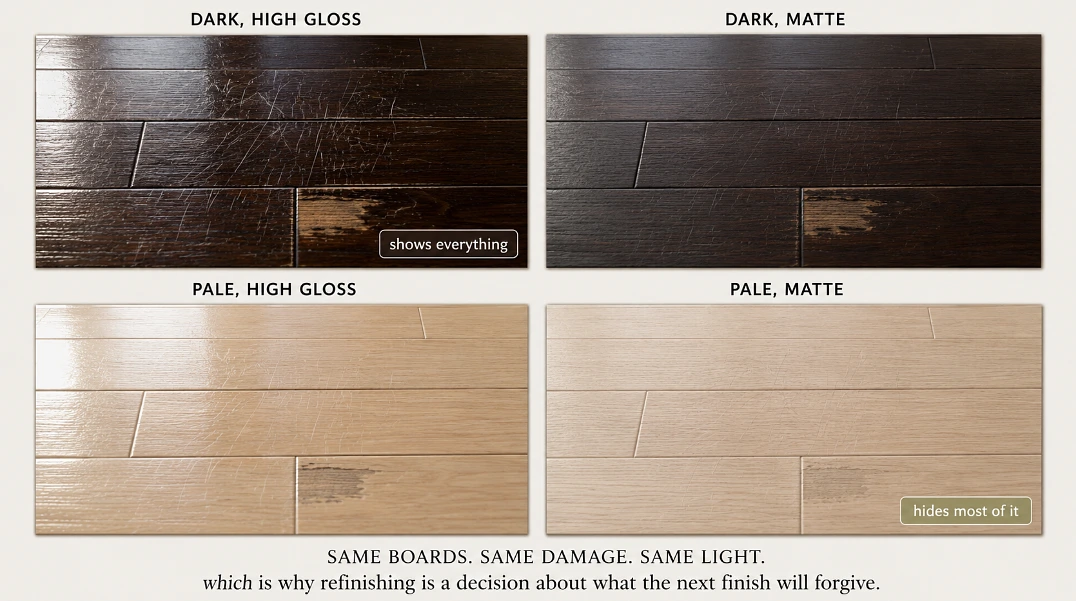
High gloss finishes behave almost like mirrors. Any irregularity in the surface disrupts the reflection and gets noticed instantly under raking light.
Dark stains push the contrast further, the shadow sitting in a scratch against the bright reflection off its edge, both at once, which is exactly why the same scratch on a pale floor barely registers.
Matte and satin finishes scatter light instead of bouncing it cleanly. That scatter eats some of the contrast that would otherwise expose the wear.
Two identical floors, identical damage, and they can look completely different depending purely on what finish is sitting on top. That’s the actual reason refinishing is a decision about which finish forgives or exposes whatever wear turns up next, not just a decision about sanding out what’s already there.
You Can Actually Test This Yourself In About A Minute
Before anyone books a contractor, there’s a genuinely useful check anyone can run at home, and it turns up in flooring guides, restoration blogs, even a woodworker’s notes on testing scrap timber before a project, which tells you it’s not a marketing gimmick, it’s just how people who work with wood actually check a finish.
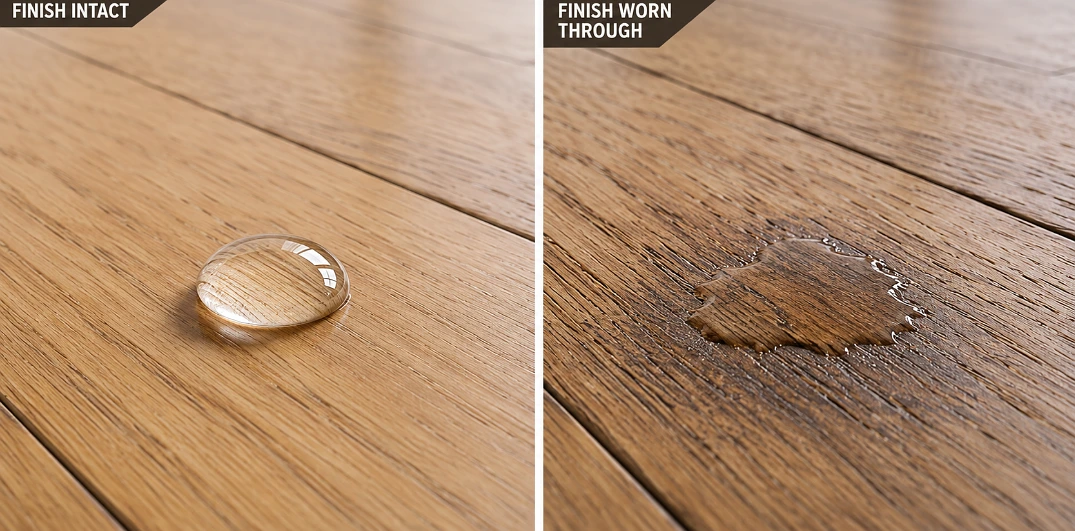
Drop a little water on the floor. In an out of the way spot, near the wall, under a piece of furniture, somewhere it won’t matter if it leaves a mark. Wait about a minute.
Beads up and just sits there? The finish is still doing its job, even if it’s thin.
Soaks straight in and darkens the wood? The finish underneath is worn through in that spot, not just cosmetically tired, actually gone, and that’s not something raking light was even needed to catch, that’s the floor telling you directly.
Run that same test at a threshold and in the middle of a room and you’ll sometimes get two different answers on the same floor, because thresholds wear first. Which loops right back to why designers check there.
A Real One Of These Took Sixteen Days
People who’ve actually gone through a refinish tend to describe the same thing, it takes longer than expected and the middle of the process looks worse before it looks better.
One home blogger who documented her own floor refinishing start to finish wrote that the whole job, demo to walking on the floors again, ran roughly sixteen days, and that was before the furniture even came back in. Sand, stain, then three separate coats of sealer, with the crew coming back each morning to lightly sand and reseal and let it dry overnight again. She admitted the floor looked patchy and almost rustic partway through, enough that she got nervous and called the flooring guy, who told her that was normal, it just hadn’t been sealed yet.
Another homeowner who’s refinished hardwood five separate times across different houses said something that stuck with me, every single time she’s done it she’s learned something new, which tells you this isn’t a job where experience makes it routine, apparently even the fifth time still teaches something.
That’s worth knowing going in. The floor looking rough mid process isn’t a sign something’s gone wrong. It’s just what the middle of a real refinish actually looks like before the final coats go on.
The One Spot Where This Gets Caught Every Single Time
Designers don’t scan a whole floor hunting for scratches, apparently. They scan the transitions.
The doorway. The hallway threshold. The exact seam where one room’s flooring meets another, where an old refinishing job stops and a newer patch starts. That’s where raking light and daily wear both concentrate at once, because a threshold gets walked across from every angle constantly, and unlike the open middle of a room, it’s where afternoon light from one side and shadow from the other collide directly on the join.
It’s also the one place in a home almost nobody crouches down to look at properly. You’re always walking through it. Never standing still on it, looking down.
A Real Editor Put This Better Than I Just Did
Real Simple’s Associate Editorial Director Leslie Corona once described walking into a home as walking into a story that’s already being told, where every small detail reveals something about the people living there.
I keep coming back to that line for this specific topic, because a tired, light exposed floor is one of the loudest details in that story, whether the person living there has clocked it or not. And it isn’t a detail a touch up marker actually fixes. A scratch that only shows under raking light needs the surface texture itself dealt with, not a colour match sitting on top of the same texture that’s still going to scatter the same light the next low sun hour that comes round.
That’s really where a proper hardwood floor restoration earns its cost over a quick patch job, it sands back the actual texture causing the shadow lines instead of disguising them with stain.
So Go Look At Your Own Floor Properly
Not under the lighting you’re used to. That’s the exact lighting hiding the most from you.
Walk it at a low sun hour, morning or late afternoon works, and check the thresholds first, not the open middle of the room. Still reads clean at that angle, in that light? Genuinely in good shape.
Suddenly looks rougher than you remembered? That’s not the floor getting worse over the course of one day. That’s raking light finally showing you what was sitting there the whole time.
 Decor & Improvement Accessories