

Home & Decor Blogs: DIY, Interior Design & Lifestyle Ideas
Is Marble Tile a Good Kitchen Floor? The Chemistry Decides, Not the Care Routine

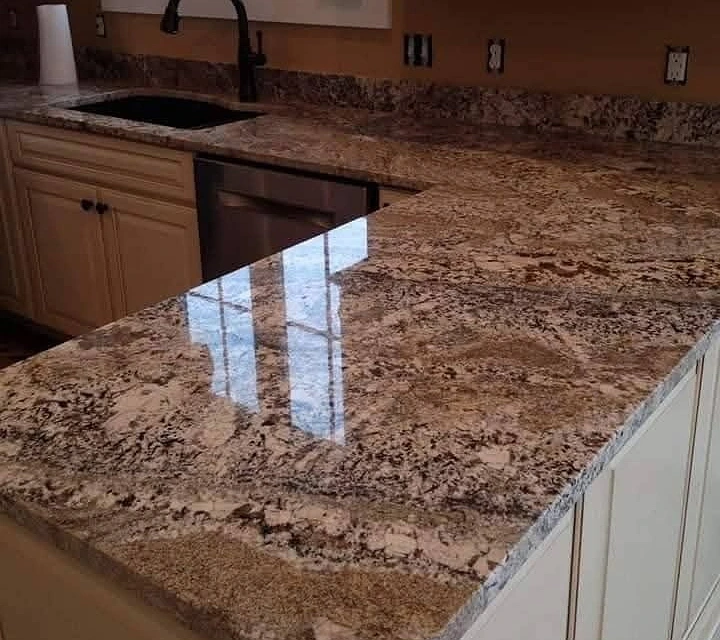
Quick answer: Marble can absolutely work as a kitchen floor, but in a kitchen that actually gets used, what decides how it holds up is chemistry, not how careful you are about it. Marble is calcium carbonate, and calcium carbonate reacts with acid, so the moment lemon juice or vinegar or wine or a splash of tomato sauce lands on a polished marble floor, it leaves a dull rough mark called an etch, usually within seconds of hitting the surface. Sealing it won’t stop that from happening, which is the part most people get told wrong.
The finish you pick does far more to manage it than any cleaning routine ever could. So below is why the reaction happens in the first place, why the standard “just seal it and you’re fine” advice falls apart, and when marble is still the right floor for a kitchen despite all of it.
Why marble and acid don’t get along
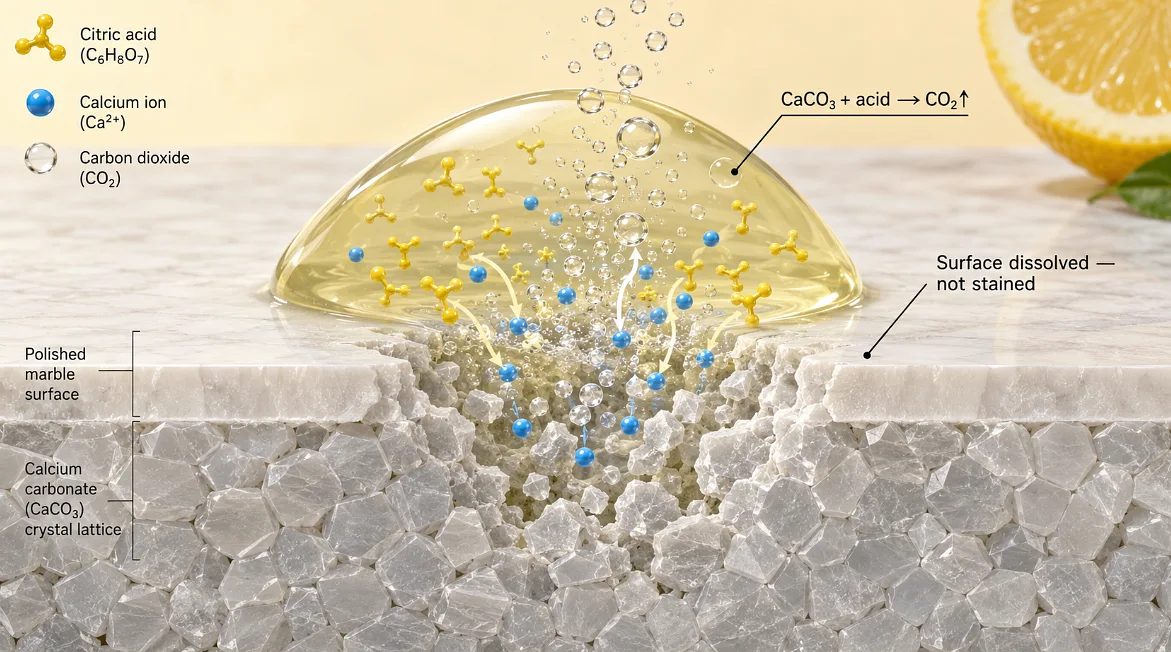
Marble is really just limestone that got cooked and compressed underground over a very long time, and like limestone it’s made mostly of calcium carbonate, CaCO3. The trouble is that calcium carbonate and acid don’t coexist quietly. When the two meet, you get a chemical reaction that gives off carbon dioxide and pulls the calcium right out of the stone into whatever liquid is sitting on it.
And you can actually watch this if you ever want to see it for yourself. Put a drop of something acidic on a piece of polished marble and you’ll see tiny bubbles start to fizz up off the surface, and those bubbles are CO2 coming off as the stone dissolves.
The cloudy dull spot it leaves behind is the layer of marble that’s now gone. It’s the same slow reaction that eats away at old marble statues left standing in acid rain for a century, except on your kitchen floor it doesn’t need a century, it needs about thirty seconds.
Which is the whole problem, when you get down to it. The acid isn’t sitting on top of your marble staining it, the way coffee would. It’s eating into the marble and taking a thin layer of the surface with it, so what you’re left looking at afterward isn’t a bit of dirt you can work at, it’s a spot where the polished surface simply isn’t there anymore.
An etch isn’t a stain, and that’s the difference that trips people up
People run these two together all the time, and it matters more than you’d think, because what you can do about each one is completely different.
A stain is some colored thing, red wine or coffee or oil, that’s soaked down into the pores of the stone and is sitting there inside it. That you can often draw back out with the right poultice, given a bit of patience. An etch is a different animal. There’s no foreign substance to remove, because the surface layer itself is what’s missing, so there’s literally nothing to clean, you’re looking at absence, not residue. Scrubbing does nothing, and it does nothing because the dullness isn’t something on the floor, it’s the floor itself in that spot having lost its finish. The only real fix is to hone and re-polish the stone back to a matching surface, which is a job, not a wipe-down.
In a kitchen, the etch is the one that’s going to get you. Stains you can usually stay on top of. Etches just sit there permanently until somebody refinishes the floor.
The stuff on your kitchen floor that does it
Pretty much anything with a pH under about 5 will etch marble the moment it touches, and a kitchen floor sees a fair amount of it over a normal week, often without you noticing until later:
- Lemon, lime, orange juice, anything citrus, the citric acid in those is genuinely aggressive on stone.
- Vinegar in any form, including whatever’s hiding in the salad dressing that just dripped off the counter onto the floor.
- Wine, and red more than white.
- Coffee and, a bit more gently, tea.
- Tomato in its various guises, sauce, ketchup, salsa.
- Even fizzy water and soft drinks, where it’s carbonic acid doing milder but real damage.
- And plenty of “all-purpose” cleaners, which is how a lot of people end up etching their own floor while they’re trying to clean it.
How deep the etch goes comes down to how strong the acid is and how long it sat there before anybody dealt with it. A splash you catch and wipe right away might barely register, while a drip you don’t spot under the kitchen table for an hour will leave its mark.
Why sealing won’t save you
Here’s where I want to be straight with you, because this is the bit the advice usually gets backwards and people spend real money expecting a protection they’re not actually getting.
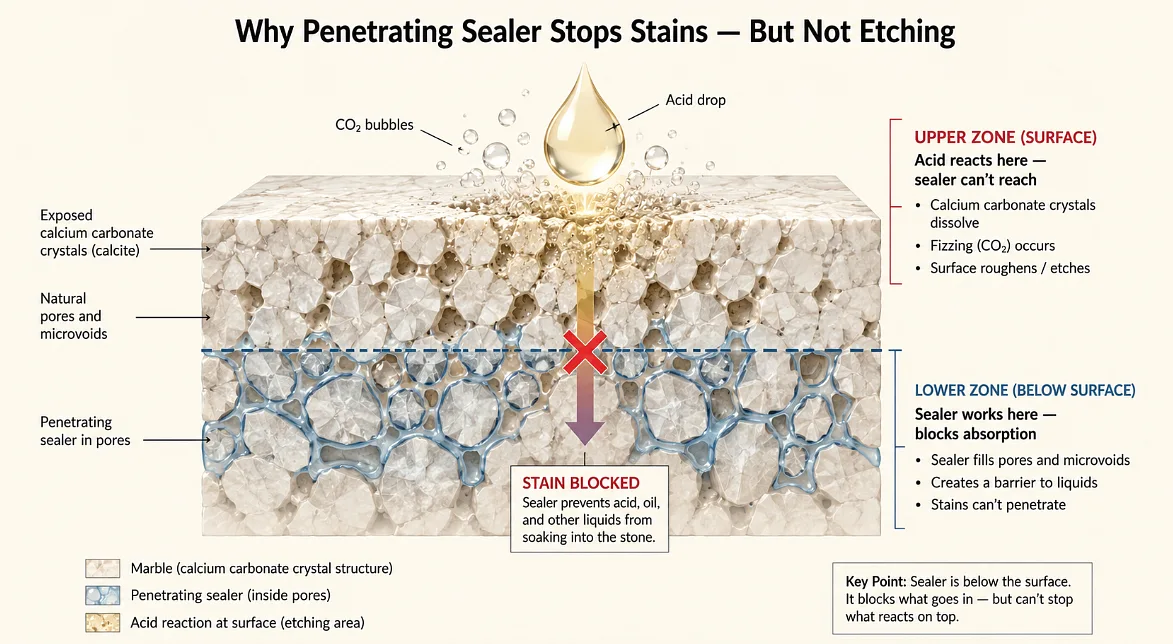
A penetrating sealer works by soaking into the marble and filling up the pores, so liquids absorb more slowly, which genuinely does help with staining. But against etching it does nothing at all, and the reason is simple once you see it. The acid doesn’t need to soak in to do its damage, it reacts with the surface on contact, in the first second, and it gets to that surface straight through whatever sealer you’ve put down. So a marble floor you sealed last week etches just as easily as one you never touched. If somebody’s telling you to seal your kitchen floor so it won’t etch, they’ve quietly mixed up the two problems, and following that advice leaves you with a floor full of dull patches and no idea why the sealing didn’t take.
Where marble actually works in a kitchen, and where it really doesn’t
None of this is me telling you marble’s a bad kitchen floor, by the way. It’s me saying you have to be honest with yourself about which kitchen you’ve actually got.
Put a polished marble floor in a kitchen that mostly looks pretty and occasionally produces a cup of coffee, and it can stay gorgeous for years without much drama. Put that same polished floor in a busy family kitchen, kids and spills and acidic food finding the ground on a regular basis, and it’s going to etch, and you’ll be staring at dull patches inside the first year wondering where the shine went.
The thing that genuinely changes the outcome here isn’t a product or a routine, it’s the finish you choose:
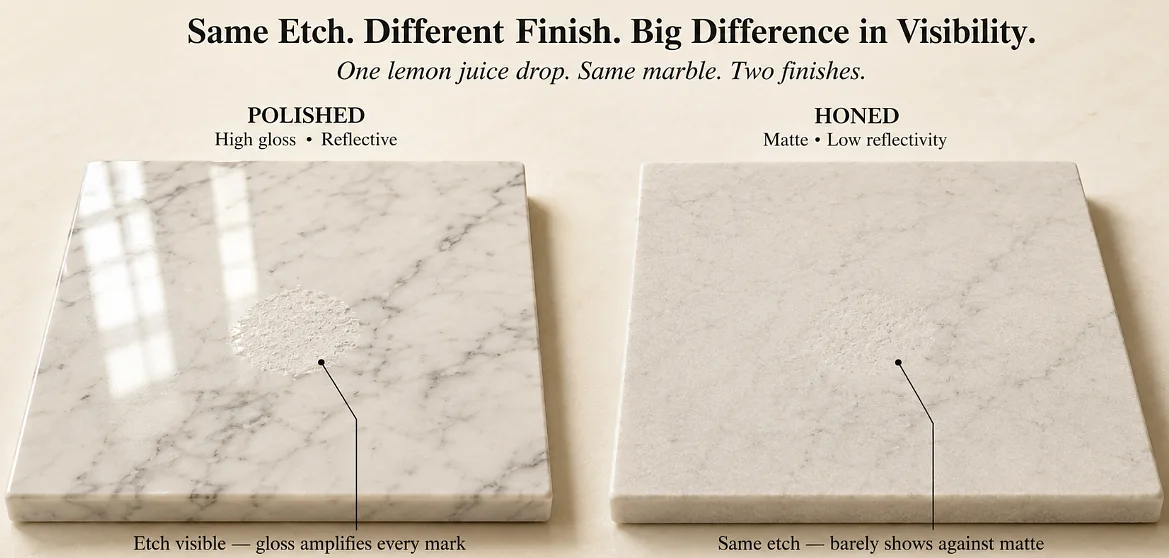
- Honed marble, which has a flat matte surface instead of a glossy one, still etches, because the chemistry doesn’t care what finish you picked, but the etch barely shows, since there’s no surrounding gloss for that dull spot to stand out against. That’s the whole reason people who want marble in a hardworking kitchen almost always go honed. You’re not stopping the reaction, you’re just taking away its ability to embarrass you.
- Polished marble shows every single etch, because each dull mark is sitting right up against a mirror finish that makes it obvious. Beautiful in a formal room, pretty unforgiving in a working one.
And if it’s really the marble look you’re after but the kitchen is genuinely hardworking, this is honestly the point where it’s worth putting natural stone side by side with a porcelain marble tile, which doesn’t etch at all for the simple reason that it isn’t calcium carbonate to begin with. That’s not a shot at marble, it’s just a question of being realistic about how the room gets lived in.
If you go with marble anyway, here’s how to choose
Say you’ve weighed all that and marble’s still the floor you want. Then it really comes down to a handful of decisions that play off each other more than people expect, the finish, the color and the veining, and the size of the tile, each one pulling on both the look and how the floor actually lives day to day. Honed if the kitchen works for a living, a veining and color that sits comfortably with the rest of the room instead of fighting it, a tile size that suits the space you’re working with. If you want to see how those three trade off against one another before you commit, Solidshape’s guide to choosing marble tile by veining, finish, and size walks through it, and getting a feel for actual marble tile across different colors and finishes tells you more than any single showroom sample will, especially once you know to ask for honed rather than polished on a floor that has to earn its keep.
The one test worth doing before you commit
There’s a test that settles the whole thing in about a minute, and I’d do it before buying anything. Get yourself a sample of the exact marble you’re considering, in the exact finish you’re considering, and put a few drops of lemon juice on it. Let it sit a minute, wipe it off, then look at the spot under a decent light.
That dull mark you’re looking at is what your kitchen floor’s going to look like the first time somebody drops a lemon wedge and doesn’t catch it right away. If you see it and figure you can live with it, or you’ve gone honed and it barely shows, then marble’s a perfectly good call for you. But if that little mark already bugs you on a sample you could throw in the bin, it’s going to bug you a whole lot more spread across a floor you just paid to have installed, and far better to find that out now than later.
 Decor & Improvement Accessories