

Home & Decor Blogs: DIY, Interior Design & Lifestyle Ideas
Wired Video Doorbell: Doing It Yourself Or Paying Someone, Decided Before You Buy


A friend of mine bought one of these last spring, got as far as unscrewing the old button, saw two thin wires and a lot of paint, and put the whole thing back together again. The box sat in his hallway for four months.
He was not being timid. He just could not tell from looking whether this was a twenty minute job or the start of something with an electrician and an invoice in it.
So that is what this is about. Not which model to buy. Whether you are the one installing it, and how to know that before the box is open rather than after.
Four things decide it, and all four can be checked in an afternoon:
- What your transformer is rated at
- What condition the two wires are in
- Whether your indoor chime will still work
- Where the recordings are going to live
Get those four right and the camera features become worth arguing about. Get one of them wrong and you are buying a project.
The Transformer Is The Whole Argument
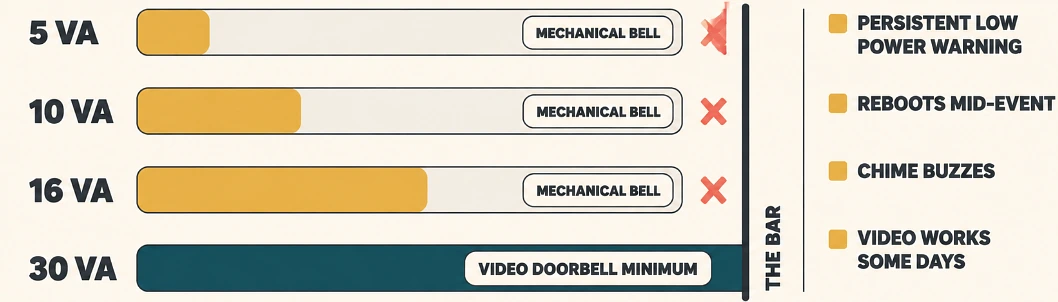
Somewhere in your house is a small metal block wired into the mains, and it is the only reason your doorbell has ever made a sound. Utility room, basement, attic, garage, near the panel, sometimes sitting right behind the chime itself.
Here are the numbers that matter.
Old mechanical doorbells were happy on very little. Transformers of 5VA, 10VA and 16VA were completely normal, and if your house went up in 1995 or earlier there is a fair chance that is what is sitting up there, quietly doing its job for thirty years without anyone thinking about it once.
A video doorbell wants 16 to 24VAC and at least 30VA.
Read those two lines back together. 10VA against 30VA. That is not a small gap you can talk your way around, and it is the single most common reason these installs go wrong.
What an underpowered transformer looks like once everything is mounted:
- Low power warnings in the app that never go away
- The doorbell rebooting itself, usually mid-event
- A buzzing noise from the indoor chime
- Video that works some days and not others
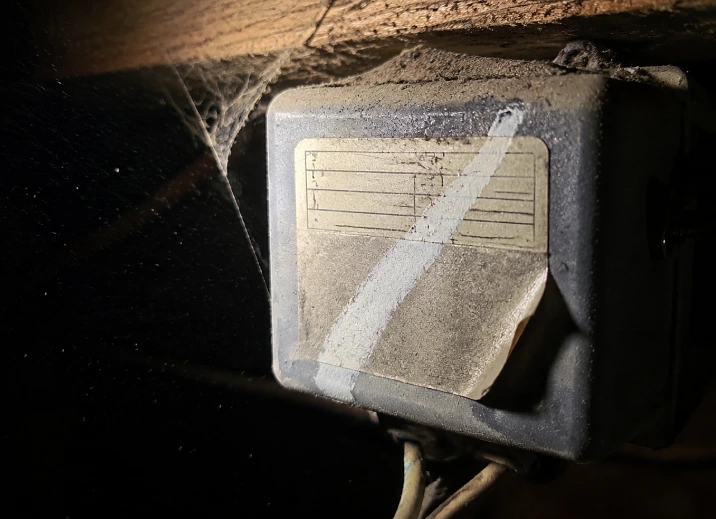
And here is the part people find genuinely annoying. Voltage on the label is not enough. Seeing 16V stamped on the side tells you nothing about VA, and VA is the number that decides this. Both figures have to be there and both have to clear the bar.
What DIY Actually Costs You In Tools
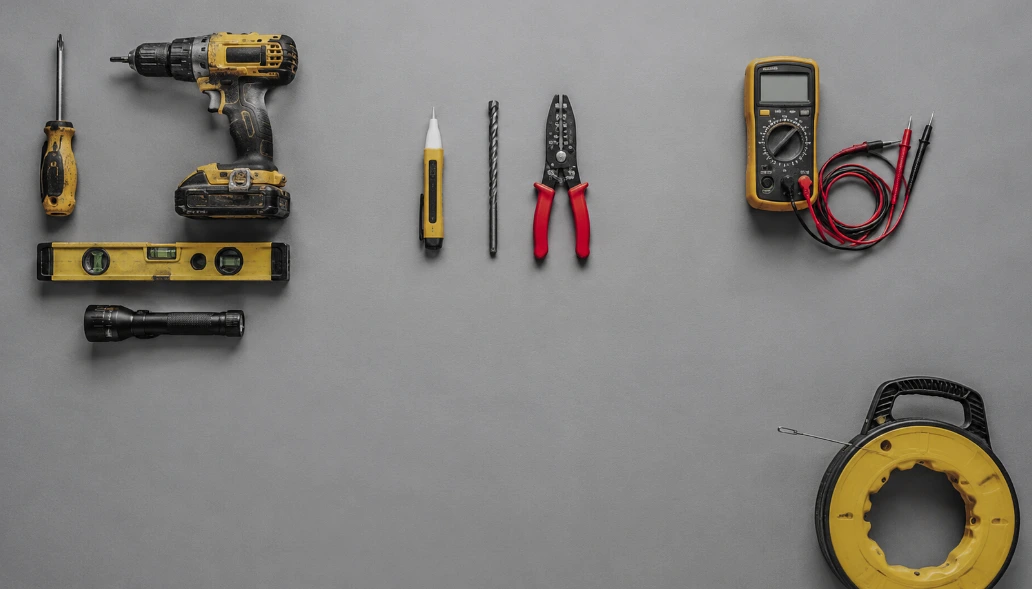
OK, this is where I want to get practical, because every guide tells you to check the transformer and none of them tell you what checking it involves buying.
So let us go through the kit honestly, with the two questions that actually matter in a household. Is this already in the house somewhere, or am I burning fuel to go and get it? And once I have it, am I ever going to use the thing again?
Already In Your House, Almost Certainly
- Phillips screwdriver. In the drawer with the batteries and the takeaway menus.
- A drill. Most households have one by now.
- A level. Or your phone, which has one built in and it is fine for a doorbell.
- A torch. Transformers live in badly lit places, always.
A Trip To The Shop, But Cheap And Worth Keeping
- Non-contact voltage tester, roughly $15 to $25. Buy it. You will use it every single time you go near anything electrical for the rest of the time you own the house.
- Masonry bit, around $8, only if you are drilling brick. Own a brick house and you will be back for it eventually anyway.
- Wire strippers, about $10. Nice to have. People manage with a knife and slightly worse results.
The One Tool That Settles This For You
A multimeter, $20 to $40.
This is the tool that separates the two versions of this job, and I would argue it is the best forty dollars a homeowner spends.
If your transformer label is readable, you do not need it. If the label is painted over, faded, dusty into illegibility or facing a wall in an attic, then you either measure what is coming out of those wires or you are guessing, and guessing is how people end up with a doorbell that reboots every third visitor.
Will you use it again? If you own a home, yes, repeatedly, for things that have nothing to do with doorbells.
The Tool That Means Stop
Fish tape.
If the job needs one, you are no longer replacing a doorbell. You are running new cable through a finished wall, which is a different trade with different problems, and the fish tape will then sit in your garage for a decade doing nothing.
That is the honest dividing line right there. Screwdriver and multimeter is a Saturday. Fish tape is a quote.
Where DIY Stops And You Call Someone
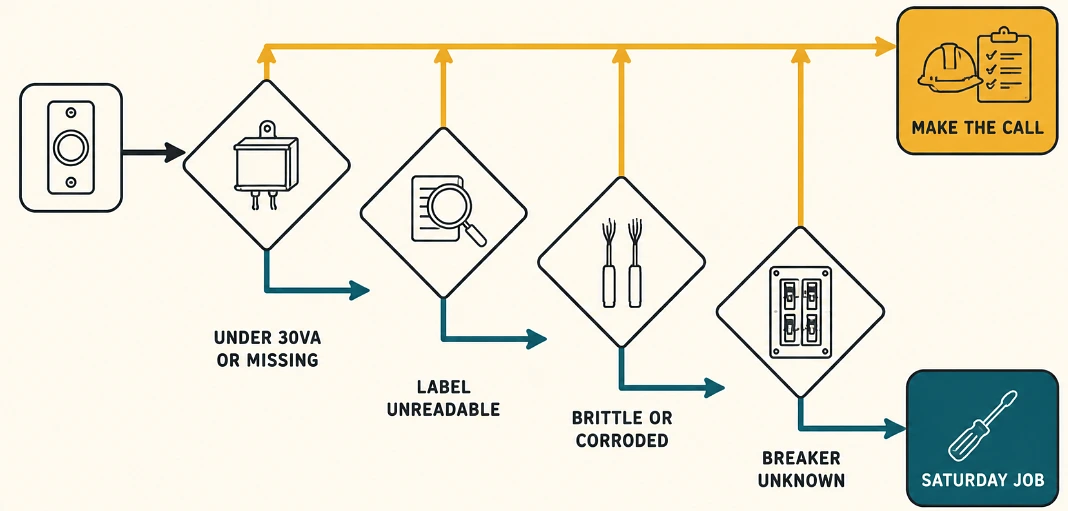
Straightforward enough to write down. Call someone if any of these are true:
- The transformer is under 30VA and needs replacing, because that work touches the line-voltage side of your house.
- You cannot find the transformer at all.
- The label cannot be read and you have no way to measure it.
- The wires are brittle, cracked, corroded or simply missing.
- The wires disappear into the wall and nobody knows where they come out.
- You are not certain which breaker controls the circuit.
And regardless of who does it, power off before anything gets opened. A non-contact tester tells you a wire is live. It does not tell you which breaker to throw, and that is not a thing to work out by trial and error.
Both UL Solutions and the US Consumer Product Safety Commission say the same thing in their guidance on home wiring, which is that suspected problems get looked at by somebody qualified rather than tested by an optimist.
The Chime Will Embarrass You After Everything Is Mounted

Here is the sequence, and I have watched it happen.
Bracket levelled. Wires connected. App set up, live view working beautifully, feeling quite pleased with yourself. Somebody presses the button.
Nothing rings inside the house.
Mechanical chimes, digital chimes and video doorbells do not all get along, and the differences are per model rather than universal. Some include a small connector that goes at the chime. Some bypass the old chime entirely and give you a plug-in one instead. A couple of well-known models are simply not compatible with traditional chimes by design, no matter what you do at the wall.
Read the chime instructions for your specific model before you drill a single hole. Then ask yourself where the ring actually needs to be heard, because a phone notification is fine for one person and useless for a household with kids, guests, or anyone whose phone lives on silent.
And test it properly before the last screw goes in. Press the button, walk to the rooms where it matters, check the app fires, then watch one recorded clip back. Live view opening is not the finish line.
Storage Is A Money Question, Not A Technical One
Most people switching brands are not running from a camera. They are running from a subscription.
The device gets paid for once and then the recordings quietly become a monthly line item, which suits some households perfectly well and irritates others enormously. Local storage changes that arrangement, with clips kept on the device or a local hub and the cloud service left optional.
Worth asking before you buy, and these are the questions that get skipped:
- What happens when the storage is full, and what gets deleted first?
- Is footage still recording during an internet outage?
- Which app features are sending data to the cloud regardless?
- How do you export a clip you actually need to keep?
Those four questions are easier to answer on a real product than on a comparison chart. Take the eufy Video Doorbell (Wired) S330: motion clips sit on 8GB of built-in storage, the oldest footage goes first when it fills, and you can review recordings without a monthly fee. That covers the first and last questions in plain terms. Fine for checking yesterday’s visitor, not for keeping footage forever, so export anything you actually need before it gets overwritten.
Local storage still is not offline storage. Alerts and live view need your network working either way, subscription or not. That is worth remembering before you treat “no monthly fee” as meaning the doorbell runs entirely on its own.
If you have already settled the power question and want to compare within one type, looking at a wired video doorbell range on its own keeps battery models out of the comparison while you are weighing storage against the rest of the wired setup.
When The House Simply Says No
Not every front door is worth wiring, and there is no shame in that at all.
Brick, finished plaster, a rented entryway, a door that has never had a bell in seventy years. Running new cable through any of those costs more and makes more mess than the charging routine you were trying to avoid.
Battery makes more sense when:
- There is no existing wiring at all
- The wiring that exists is damaged beyond a simple reuse
- You rent, or expect to move within a couple of years
- The best camera angle is nowhere near the old bell position
You will be charging it, and cold weather and busy streets both shorten the gap between charges. Renters should also get permission before drilling anything, even for a battery unit. When the power question is genuinely open, comparing a video doorbell across both types in one place saves a lot of tab switching.
The Short Version, In Order
- Find the transformer. Utility area, basement, attic, garage, near the panel, behind the chime.
- Read both numbers. Voltage and VA. You need 16 to 24VAC and 30VA or more.
- Cannot read it? Multimeter, or make the call.
- Look at the wires. Sound and intact means proceed. Brittle or missing means stop.
- Check your model’s chime instructions. Before drilling, not after.
- Decide the storage question. Local, cloud, or both.
- Kill the power, then fit it.
- Test everything. Button, chime, notification, recorded clip.
My friend with the box in the hallway, by the way. He borrowed a multimeter, found 16V 10VA on a transformer older than his children, and got an electrician in for an hour. Fitted the doorbell himself the same afternoon.
Which is roughly the correct answer to this whole thing, honestly. Not fully DIY, not fully outsourced. Just knowing which hour of it was not yours to do.

 Decor & Improvement Accessories