

Home & Decor Blogs: DIY, Interior Design & Lifestyle Ideas
Understanding Rental Stability and What Tenants Should Expect During a Lease
A tenant emails their landlord in March to ask whether the rent is going up, and the answer has been sitting in the document they both signed back in January. Most renting questions work like that.
Renting is a trade. Somewhere to live, in exchange for living by a set of rules while you are in it.
The part that worries people is what they cannot see coming. Rent jumping next month. A fee appearing on the tenant portal. Being told the dog has to go after 8 months of the dog being fine.
Far less of that can happen than people think, and the lease is why.
Why Lease Agreements Set the Foundation for Rental Terms
A lease is a contract, and it binds the landlord as tightly as it binds you. That is the part people forget when they read it as a list of things they are not allowed to do.
It says what the rent is, how long you have the place for, and what both sides have to do. Your landlord cannot start charging more in month 4. You cannot stop paying because the boiler keeps cutting out. Neither of you gets to rewrite it on a Tuesday.
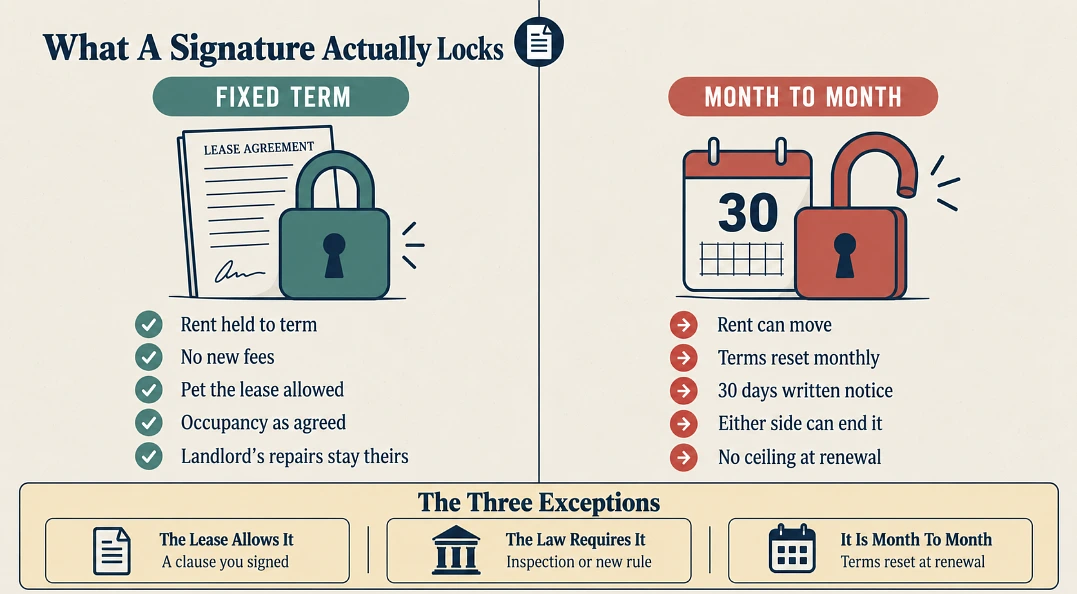
What a fixed term lease locks down:
- The rent, for the whole term, unless the lease itself contains a rent escalation clause. Look for that clause before you sign. It is the one thing that can move the rent mid term.
- Who is responsible for what when something breaks.
- The rules on pets, guests, noise and how many people can live there.
- How you move out and how much notice you owe.
Leases usually run 6 months to a year, and some are month to month. A longer term keeps everything fixed for longer. A shorter one gives you flexibility, and you have no idea what the rent will be once it runs out.
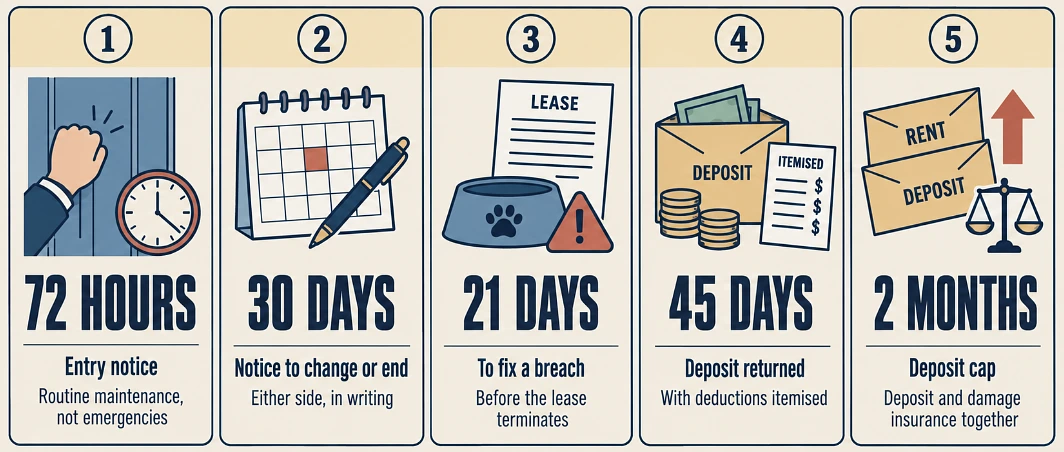
One thing worth knowing before you hand over money. Several states cap what a landlord can take as a deposit. Virginia is a clear example, where the total of security deposit and damage insurance cannot exceed 2 months’ rent, and the deposit has to come back, with any deductions itemised, within 45 days of you moving out. Look up the number for your own state before you pay. It is different everywhere.
If you are renting anywhere around the DC suburbs, Howard Beiles has been running Professional Property Management since 1985 and still does, which in this trade does not happen often. His team works as a property manager in Northern Virginia handling leasing, maintenance coordination, screening and the accounting side, and renting somewhere managed usually means your questions go to a person whose job it is to answer them, rather than to a landlord who is out of the country.
Can a Landlord Change Rules Mid-Lease Without Tenant Agreement?
Tenants ask this more than anything else, and the answer is mostly no.
Sign a fixed term lease and the terms hold until it runs out. Your landlord cannot:
- Raise the rent.
- Add new fees that were not in the agreement.
- Evict you for having the pet the lease allowed.
- Change how many people can live in the unit.
- Make you pay for repairs that are their responsibility.
There are 3 exceptions, and they are worth knowing properly.
The lease itself allows it. Some leases carry clauses that let a landlord change how utilities are billed, or adjust policies that apply to the whole building. If it is in the document you signed, it is allowed.
The law requires it. If your city passes a rule that every rental needs interlinked smoke alarms, or the property fails an inspection, the landlord has to act on that whether or not you have a signed lease. That is not the landlord changing the deal. That is the landlord obeying the law.
The tenancy is month to month. This is the big one. A month to month agreement renews every month, so the landlord can change terms at renewal with proper notice, which in most states means 30 days in writing. In Virginia that 30 day rule covers both a rent increase and ending the tenancy, and it works the same way if you are the one leaving. That is the real difference between a fixed lease and a rolling one, and it matters more than the flexibility people sign up for.
Rent control barely exists in most of the country either. Virginia has none at all, and the state bars cities and counties from bringing it in, which means there is no legal ceiling on what your landlord asks for at renewal. What protects you during the term is the lease, not a law.
If a landlord does try to change the rules mid term:
- Read your lease first. Check whether a clause covers the situation.
- Call your local housing authority.
- Look for a tenants’ union in your area.
- Speak to a real estate attorney if you need to take it further.
In most states the landlord has to stick to the lease until it expires. To change anything, they either agree it with you or they put a new lease in front of you.
How Tenants Can Stay Informed About Property Policy Updates
Being caught out usually comes down to not hearing about something until it has already happened. Large complexes and corporate owned rentals change policies and add fees far more often than a landlord with one house, so this matters more in some buildings than others.
A few things that help:
- Read the lease before signing and keep your own copy. Not a photo of one page. The whole thing.
- Ask how policy changes get communicated. Email, post, a notice on the door, an app. Ask on move in day rather than finding out the hard way.
- Join the tenant email group if there is one.
- Check the bulletin board or tenant portal now and then.
- Get every policy change in writing.
Ask when something sounds off. An email takes 2 minutes and it puts the answer in writing, and there is nothing worse than being told something on the phone and finding out months later it was never true.
Plenty of management companies run tenant portals and apps now, and they are useful. Maintenance dates, rule changes and notices all land in one place with a timestamp on them.
Keep records of everything. Emails, texts, notices, photographs from the day you moved in. If it ever turns into a dispute, that folder is your case.
And know the rules where you live, because they change from state to state. A few that catch people out:
- Entry notice. A landlord cannot just turn up. Virginia requires 72 hours’ notice for routine maintenance the tenant did not request, with emergencies the obvious exception.
- Repairs. You usually have to put the request in writing before the clock starts on the landlord’s obligation, so a text about a leak starts the process rather than finishing it.
- Curable breaches. In Virginia a fixable lease violation, like an unapproved pet, comes with a 21 day window to put it right before the lease terminates 30 days from the notice.
- Your own notice period. Most month to month tenancies need 30 days’ written notice from you as well, and leaving without it can leave you owing rent for the period.
Virginia also requires landlords to hand tenants a Statement of Tenant Rights and Responsibilities published by the state housing department. If you never got one, ask. You are meant to have it.
A search for your city or state housing authority will get you the equivalent wherever you are.

 Decor & Improvement Accessories