

Home & Decor Blogs: DIY, Interior Design & Lifestyle Ideas
Classic Garden Ideas from European Estates, and Which One Belongs in Your Yard

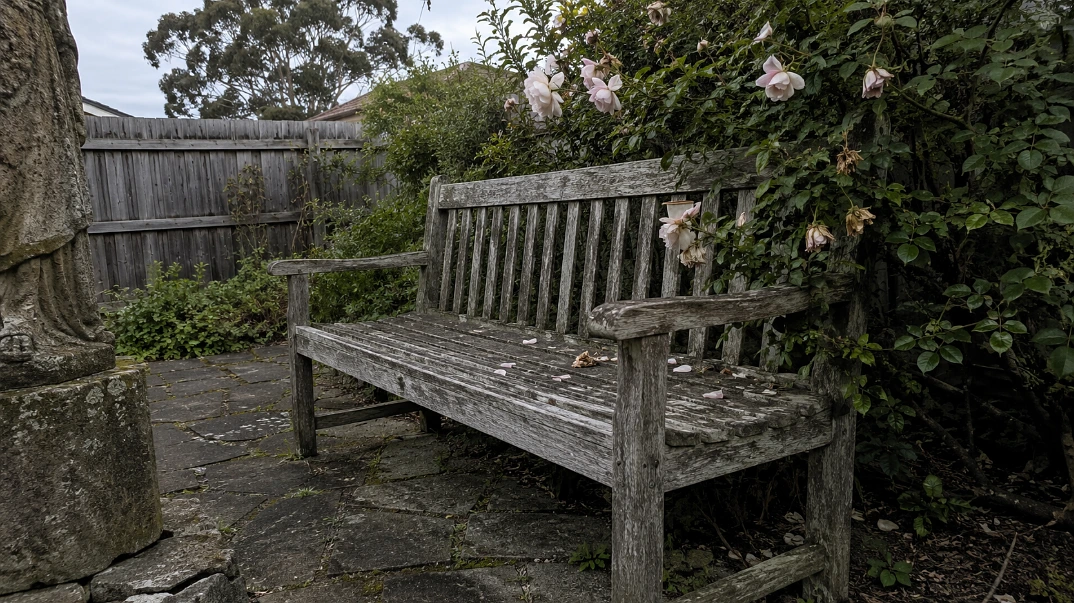
The gardens people fall for on European estates are almost never the grand ones. It’s the worn corners, a bench gone grey under a climbing rose, a statue the lichen has claimed, a terrace that has hosted forty years of long lunches. Patina, not grandeur. The good news is that patina is a design choice, and most of it translates to an ordinary Australian backyard. The catch is that these elements look interchangeable in photographs and feel completely different to live with, and matching the wrong one to your block is how gardens end up decorated instead of loved. So here they are the way you’d experience them, not the way a catalogue lists them.
The Statue the Lichen Gets to Keep
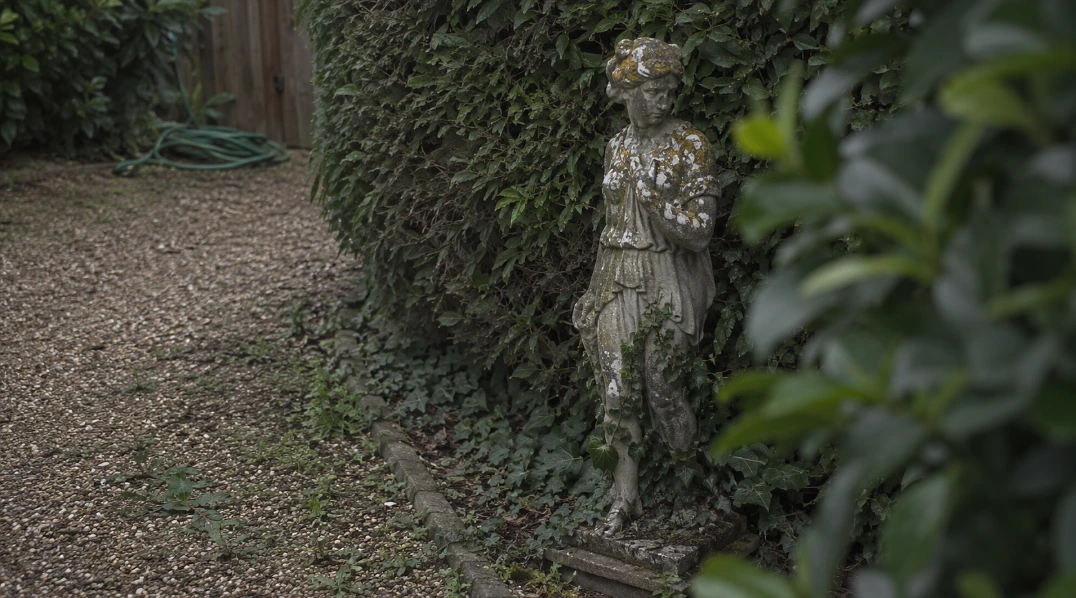
A garden can be healthy, tidy and full of growth and still feel like it has no centre, nothing for the eye to rest on, nowhere for the green to gather around. That’s the job a weathered stone figure does. Tucked behind a hedge or set quietly beside a path, it gives the space gravity, and the trick is placement, not perfection. Let ivy take the base. Let lichen have the shoulders. A figure that looks slightly claimed by the garden reads as older than the garden itself, and a brand new one placed dead centre reads as a purchase. This piece suits the gardener whose beds are already good and who can’t quite say why the space still feels unfinished.
The Gate and the Arch That Make People Pause
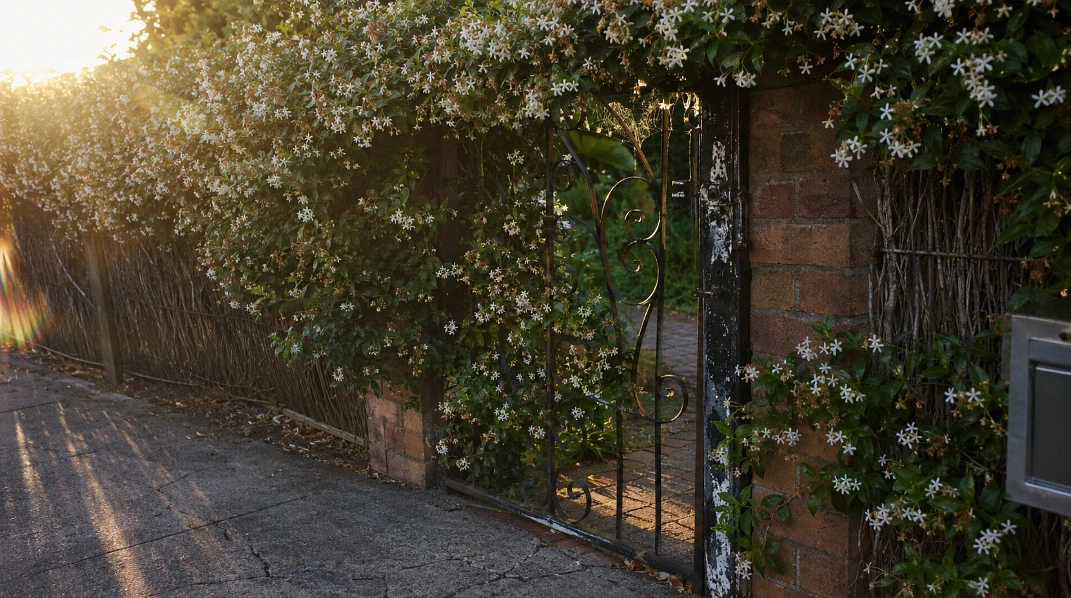
An entrance decides how a garden is entered, which sounds obvious until you watch it work. A wrought iron gate, scrolls and curls with climbing roses or star jasmine threaded through the bars, makes visitors stop for half a second before stepping in, and that pause is the whole effect. Deeper in, an arch or an old timber door set in greenery does the same job again, implying another garden beyond even when there’s only the compost corner. Small blocks gain the most from this. One arch turns a single small yard into chapters, and the eye stops measuring the boundary fence.
A Gazebo for the Block With No Shade
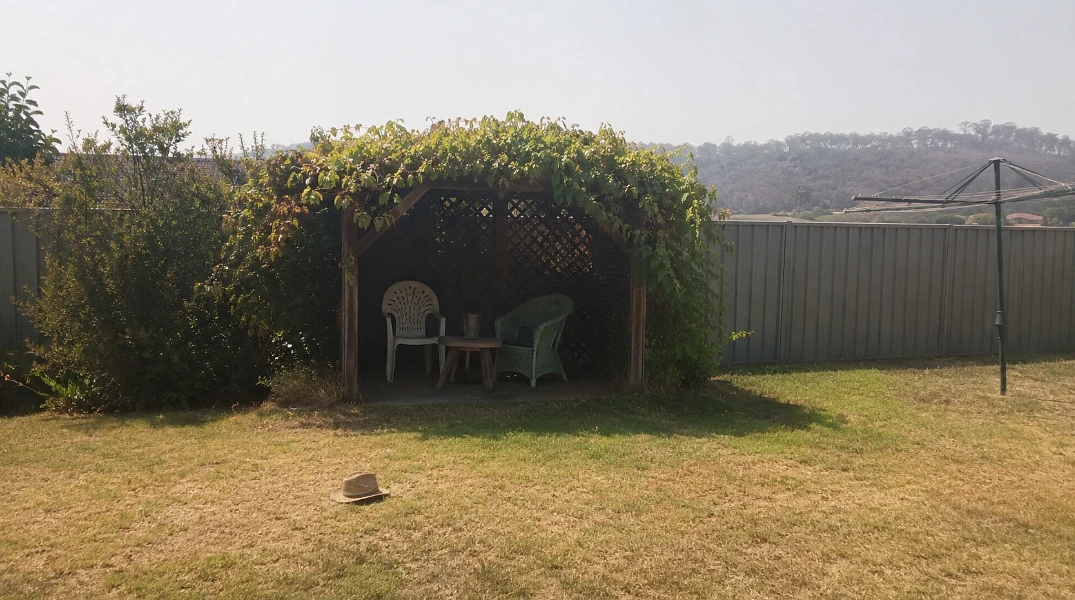
Every estate garden keeps somewhere to simply sit, and on an Australian block that gets hammered by afternoon sun, a timber gazebo is the honest version of it. Lattice sides, a soft roof line, wisteria or ornamental grape going over the top a little faster than you planned. Keep the structure simple and let the planting blur its edges, slightly overgrown is the sweet spot. This one is for the household with sun everywhere and shade nowhere, and it pays for itself in morning coffees.
The Terrace Where the Garden Gets Used
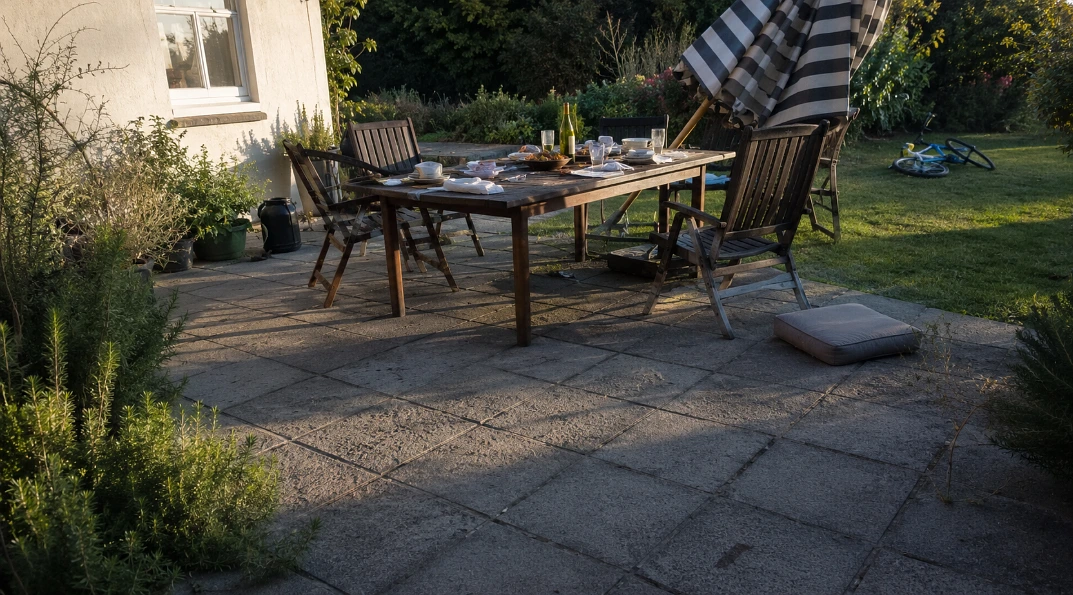
If one element changes how a garden lives, it’s this one, because a level stone surface is where the garden stops being viewed and starts being occupied. Long lunches, afternoon tea going into evening, kids’ homework in spring, the terrace is the room without walls, which is why the old estates built theirs in stone that could take a century of chairs scraping across it.
Granite outdoor pavers suit this role better than almost anything else on an Australian block, dense enough that scorching summers, heavy rain and frosty mornings barely register on them, with the slightly rugged surface that reads heritage rather than showroom. Laid in a plain grid they look settled, laid in herringbone they look like they were always there. On money, granite runs about $75 to $100 per square metre for the stone, laying adds $25 to $70, so an installed terrace mostly lands between $100 and $170 per square metre, with sealing at $8 to $15 if you want stains kept out. Booking the work between May and August tends to shave 10 to 20 percent off the labour, winter is the quiet season for paving crews. This is the piece for the family whose garden gets used at a table rather than admired from a window.
The Corner You Keep for Yourself
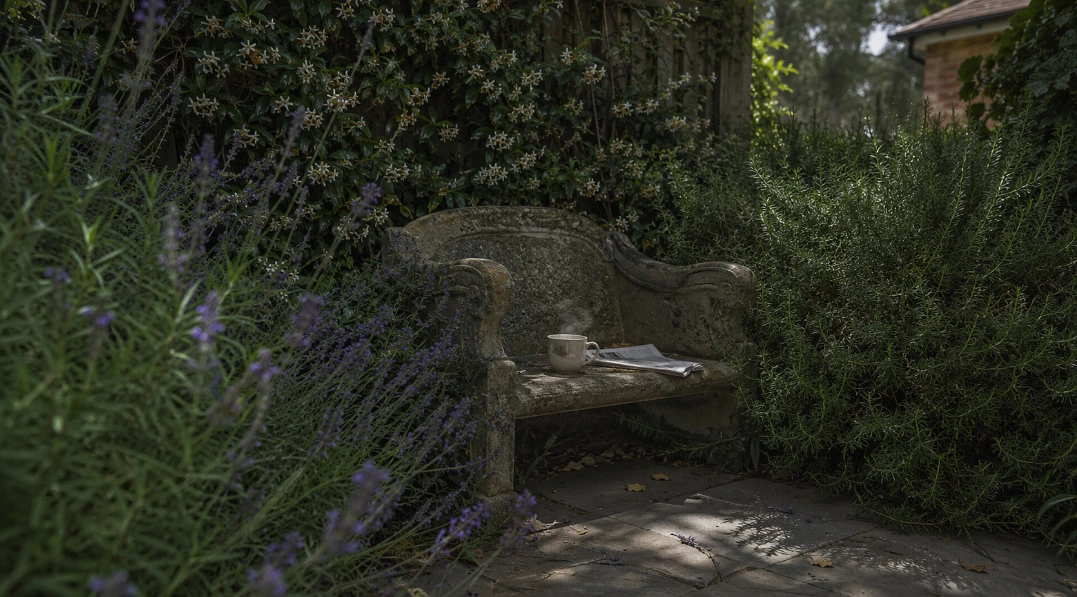
And then there’s the quiet one. A stone bench off the main path, half hidden behind shrubs, positioned so the house can’t quite see you. Every classic garden has one because every household needs one, somewhere to sit with tea and switch off for ten minutes. Granite tile outdoor flooring in a honed, weathered finish grounds the corner beautifully, tough enough for every day and soft enough to look found rather than built. Then let fragrance do the real work: lavender and rosemary crowding close, star jasmine somewhere behind, or westringia if you want the English look with a native constitution. This corner is for the person the garden is secretly for.
And a Bird Bath
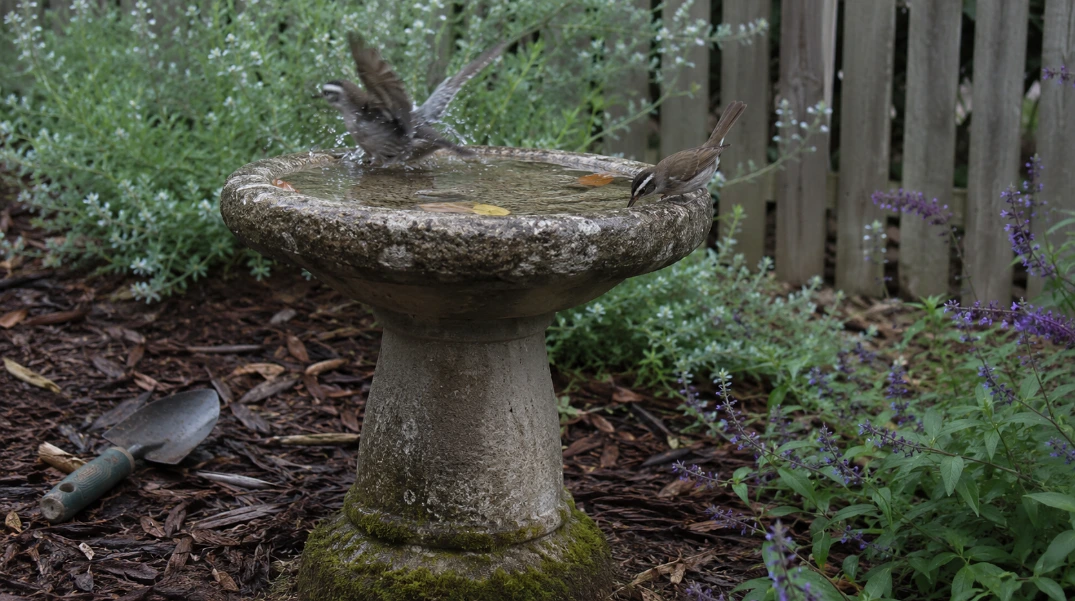
Small detail, outsized effect. A stone bird bath in a garden bed brings the one thing hard landscaping can’t, movement and life, wings and water sounds arriving daily without an invitation. It’s the cheapest element on this list and often the one guests mention.
If I could keep only one of these, it would be the bench in the hidden corner, granite underfoot, rosemary crowding one armrest, because a garden that gives you somewhere to disappear earns its keep quietly, week after week, while the grander pieces mostly perform for guests. Start with the corner you’d sit in. The rest of the estate can arrive slowly, the way it would have anyway.
Disclaimer: The information provided in this blog is to the best of our knowledge and intended as a general guide. We recommend confirming all details based on your specific project requirements before execution.
 Decor & Improvement Accessories