

Home & Decor Blogs: DIY, Interior Design & Lifestyle Ideas
Commercial HVAC in Fort Worth & HVAC Service for Home
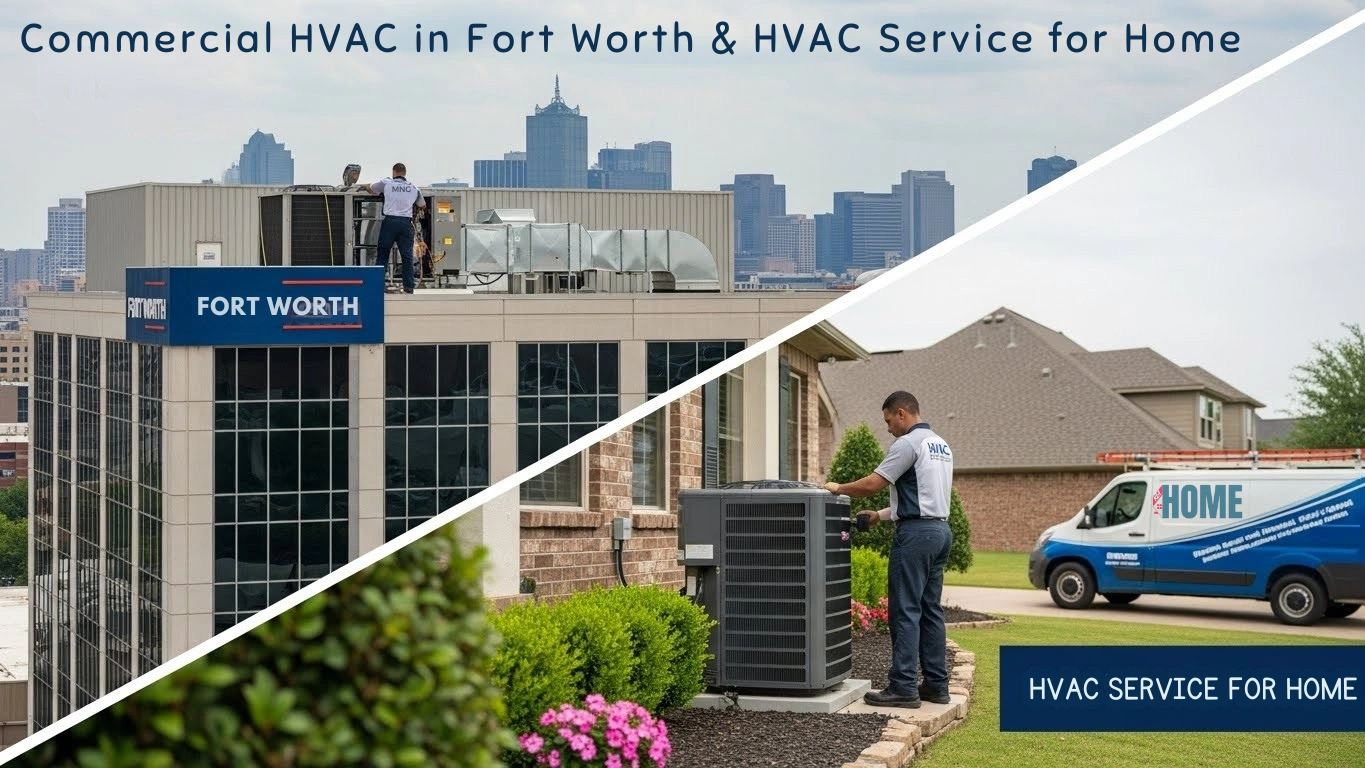
Running a business in Fort Worth means navigating a climate that is as demanding as the local economy is vibrant. You likely understand that the sweltering Texas heat does not care if you are running a logistics warehouse near Alliance or a boutique in Sundance Square; when the air conditioning goes down, revenue stops. Most business owners have a trusted contact for their residential needs, but assuming that your provider of HVAC Service for Home can handle the complexities of commercial HVAC in Fort Worth is a costly gamble. This guide serves as your comprehensive handbook to understanding the massive divide between keeping a bedroom cool and managing the climate of a commercial facility. We will explore why specialized care is non-negotiable, how the unique North Texas weather impacts your equipment, and how to stay compliant with local codes without needing a law degree.
What is Commercial HVAC in Fort Worth
Before we dive into the technical details and maintenance strategies, it is helpful to visualize exactly what commercial service entails compared to residential options. The table below outlines the core differences, the timing for service, and the tangible benefits you gain by choosing the right specialist for your commercial property.
The Unique Demands of Commercial HVAC in Fort Worth
Fort Worth is not just hot; it is an environment that tests the limits of mechanical engineering. You are dealing with a “heat island” effect in urban areas where concrete absorbs solar radiation, keeping temperatures high even after sunset. Your commercial HVAC equipment is fighting a battle on two fronts: the ambient temperature outside and the internal heat load generated by computers, machinery, lighting, and human bodies inside. A standard residential unit cycles on and off to maintain temperature, but commercial units often run continuously, modulating their output to balance these intense loads. If your system is not calibrated specifically for the Tarrant County climate taking into account our humidity levels and the occasional sharp winter freeze you are effectively burning money through inefficiency.
Why Your “HVAC Service for Home”
It is a common scenario for a small business owner to call the same friendly technician who fixes their home AC to look at their office rooftop unit. This is often a mistake because the technology is fundamentally different. Residential systems are typically “split systems” with simple controls, whereas commercial systems are often “packaged units” or complex chillers that involve economizers, variable air volume (VAV) boxes, and sophisticated automation systems. A technician trained primarily in HVAC Service for Home may not know how to diagnose a pneumatic control failure or how to properly charge a 25-ton three-phase unit. Using an underqualified technician can actually void your manufacturer’s warranty, leaving you on the hook for thousands of dollars in repairs that should have been covered.
The Financial Impact of Downtime in Fort Worth
Imagine it is mid-July, the temperature is hitting 105 degrees, and your server room cooling fails. In a residential setting, a broken AC is an uncomfortable inconvenience that might force you to stay at a hotel for a night. In a commercial setting, it can be a catastrophic financial event. For a restaurant, it means closing the kitchen and losing perishable inventory. For an office building, it means sending staff home and halting productivity. For a retail store, it means customers walking out the door immediately. Investing in professional commercial HVAC in Fort Worth is not just about comfort; it is an insurance policy against business interruption. Specialized commercial technicians understand this urgency and typically offer prioritized response times that residential companies cannot match.
Understand the Complexity of Commercial Installation
Installing a commercial system is a major construction & renovation project rather than a simple appliance swap. It requires load calculations that factor in the “sensible heat” (temperature) and “latent heat” (humidity) produced by your specific business operations. For example, a gym has a massive humidity load compared to a furniture warehouse. Commercial installation also involves navigating the rooftops of Fort Worth, often requiring cranes, road closures, and specialized roofing permits. A dedicated commercial provider handles these logistics seamlessly, ensuring that the structural integrity of your roof is maintained and that the unit is secured against high winds, which is a crucial safety consideration during North Texas storm seasons.
The Critical Role of Preventive Maintenance
Residential homeowners can often get away with changing a filter once every few months and calling for service only when something breaks. In the commercial world, this “reactive” approach is a disaster waiting to happen. Commercial maintenance plans are rigorous and scheduled. They involve checking belt tension, lubricating bearings that run 24/7, cleaning condenser coils that get clogged with urban dust and pollen, and calibrating thermostats to ensure different zones are cooling evenly. Using HVAC access doors improves maintenance efficiency by giving technicians direct access to hard-to-reach areas that require frequent inspection. A comprehensive maintenance plan for commercial HVAC in Fort Worth actually pays for itself by catching small issues like a fraying belt or a leaking refrigerant line—before they turn into catastrophic compressor failures that require a full system replacement.
Energy Efficiency and the Bottom Line
Energy costs are one of the largest overhead expenses for commercial properties in Texas. Commercial systems are energy hogs if they are not optimized. Modern commercial HVAC technology offers “economizers,” which are intake vents that use cool outside air (when available) to condition the building, significantly reducing the workload on the compressor. This technology is rarely found in HVAC Service for Home. A skilled commercial technician knows how to program these economizers to take advantage of Fort Worth’s milder spring and fall days. By optimizing airflow and ensuring your system is running at peak SEER (Seasonal Energy Efficiency Ratio) performance, specialized services can shave significant percentages off your monthly electric bill, directly boosting your profit margins.
Navigating Fort Worth Building Codes and Regulations
Commercial properties are subject to a web of regulations that do not apply to single-family homes. The City of Fort Worth adopts specific versions of the International Energy Conservation Code (IECC) and the International Mechanical Code. These codes dictate everything from the thickness of the insulation on your refrigerant lines to the amount of fresh air ventilation required per square foot of occupancy. A residential technician might not be aware of the specific “make-up air” requirements for a commercial kitchen or the ventilation standards for a nail salon. Failing to comply with these codes can lead to failed inspections, fines from the city, and even forced shutdowns. A professional commercial partner acts as your compliance officer, ensuring every repair and installation meets current city standards.
The Importance of Indoor Air Quality (IAQ) for Business
In a post-pandemic world, employees and customers are more conscious of air quality than ever before. Commercial buildings are often “tightly” sealed for energy efficiency, which can trap pollutants, volatile organic compounds (VOCs) from office furniture, and viruses inside. Unlike a home where you can just open a window, commercial buildings rely entirely on mechanical ventilation. High-quality commercial HVAC in Fort Worth involves installing and maintaining advanced air scrubbers, UV light sanitation systems, and HEPA-grade filtration. This isn’t just about health; it’s about productivity. Studies consistently show that better air quality leads to fewer sick days and higher cognitive function among employees.
Retrofitting vs. Replacement: Make the Right Choice
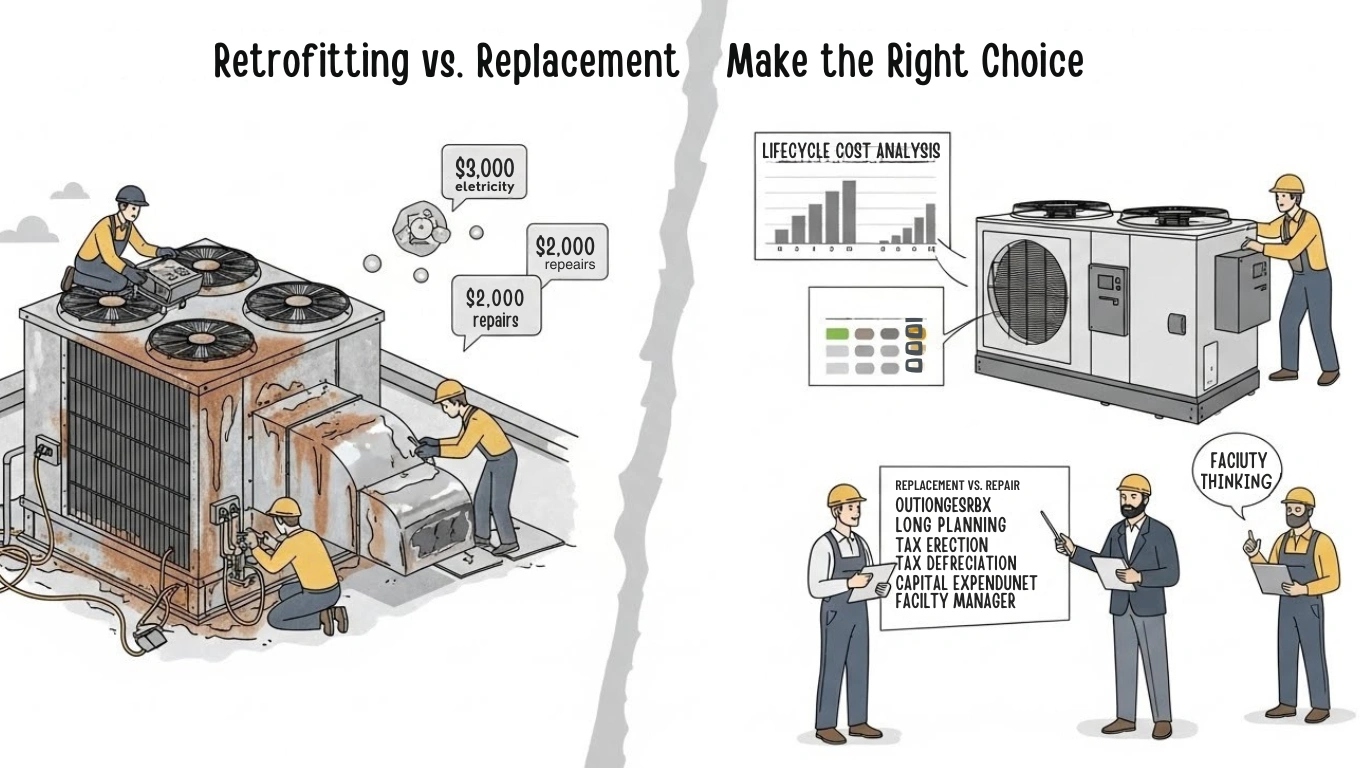
One of the hardest decisions a facility manager faces is whether to repair an aging unit or replace it entirely. This is where the depth of knowledge of a commercial specialist becomes invaluable. They can perform a “lifecycle cost analysis” for you. They might show you that while a new 20-ton unit costs $15,000, keeping your old unit running is costing you $3,000 a year in excess electricity and $2,000 in repairs. A provider focused on HVAC Service for Home might push for a quick repair to get to the next job, but a commercial partner looks at the 5-year or 10-year horizon of your business assets, helping you make a capital expenditure decision that makes sense for your tax depreciation and long-term budget.
Commercial Control and Building Automation
We are living in the age of smart buildings. While a home might have a Nest thermostat, a commercial building often utilizes a Building Automation System (BAS) or Direct Digital Controls (DDC). These systems allow facility managers to monitor temperature, humidity, and energy usage remotely for multiple zones or even multiple building locations. You can set schedules so that the AC eases off at 6:00 PM when the employees leave and ramps back up at 7:00 AM before they arrive. Configuring these complex networks requires an IT-savvy HVAC technician who understands network protocols as well as thermodynamics. This level of integration is simply outside the scope of standard residential service.
The Danger of “Refrigerant Phase-Outs” for Business
The HVAC industry is currently undergoing a major shift in the types of refrigerants allowed by federal law. Older refrigerants like R-22 have been phased out, and newer regulations are affecting current standards like R-410A. Commercial systems hold massive amounts of refrigerant compared to residential units. If your commercial system relies on an obsolete refrigerant, a simple leak could render the entire system unrepairable because the gas is no longer available or is exorbitantly expensive. A forward-thinking commercial HVAC partner will keep you ahead of these regulatory curves, proposing retrofit plans to convert your equipment to modern, eco-friendly refrigerants before you are left with a stranded asset during a heatwave.
Specific Challenges for Different Fort Worth Industries
Different businesses in Fort Worth have drastically different HVAC needs, and a one-size-fits-all approach fails here. A restaurant on Magnolia Avenue needs massive exhaust hoods that must be balanced with intake air to prevent negative pressure (which slams doors shut and sucks in sewer smells). A data center in North Fort Worth needs precision cooling that focuses on equipment heat rather than human comfort, requiring humidity to be kept low to prevent static electricity. A medical clinic requires positive pressure in procedure rooms to keep germs out. Understanding these niche requirements is the hallmark of a true commercial HVAC in Fort Worth, distinguishing them from generalists.
How to Vet a Commercial HVAC Provider
When you are looking for a partner to handle your building’s needs, look beyond the marketing fluff. You need to ask for their “EMR” (Experience Modification Rate), which is a safety rating that indicates how professional their operations are. Ask for references specifically from other businesses in your industry. Verify that they carry sufficient liability insurance—commercial accidents can be far more expensive than residential ones. Ensure their technicians are NATE-certified (North American Technician Excellence), specifically in commercial disciplines. While you might trust your neighbor’s recommendation for HVAC Service for Home, your business due diligence requires a much stricter standard of verification.
The “One-Stop-Shop” Myth
You might see companies advertising that they do “All AC Repair,” but there is a reason the best firms have separate divisions. The tools are different, the parts supply chains are different, and the urgency is different. If a company sends a residential tech to your business, that tech is likely carrying parts for a 3-ton home condenser, not the heavy-duty contactors and three-phase motors needed for your rooftop unit. This leads to “we have to order parts” delays. A dedicated commercial truck is a rolling warehouse of industrial-grade components. By hiring a specialist, you are paying for the probability that they can fix the issue on the first trip, minimizing your downtime.
Building a Long-Term Partnership
Ultimately, the goal is to stop thinking about your HVAC system entirely. You want a relationship with a provider where they know the history of your building better than you do. They should know that Unit 3 vibrates a bit because of the roof curb, and that the conference room gets hot in the afternoon because of the west-facing windows. This institutional knowledge is built over years of consistent maintenance. Unlike the transactional nature of HVAC Service for Home, where you call, they fix, and they leave, commercial HVAC is a partnership. Your technician becomes a key advisor in your facility management team, helping you forecast budgets and avoid surprises.
Conclusion
Your HVAC system is likely one of the most expensive assets your business owns, and it protects the people and products that generate your revenue. While the temptation to cut costs by using a generalist or a residential provider is strong, the risks far outweigh the savings. By choosing a dedicated expert in commercial HVAC in Fort Worth, you are investing in reliability, efficiency, and peace of mind. You are ensuring that when the Texas sun beats down, your business remains a cool, comfortable, and productive oasis.

 Decor & Improvement Accessories