

Home & Decor Blogs: DIY, Interior Design & Lifestyle Ideas
Do You Know Your Storage Can Also Destroy Your Fabric, Not The Wash Cycle

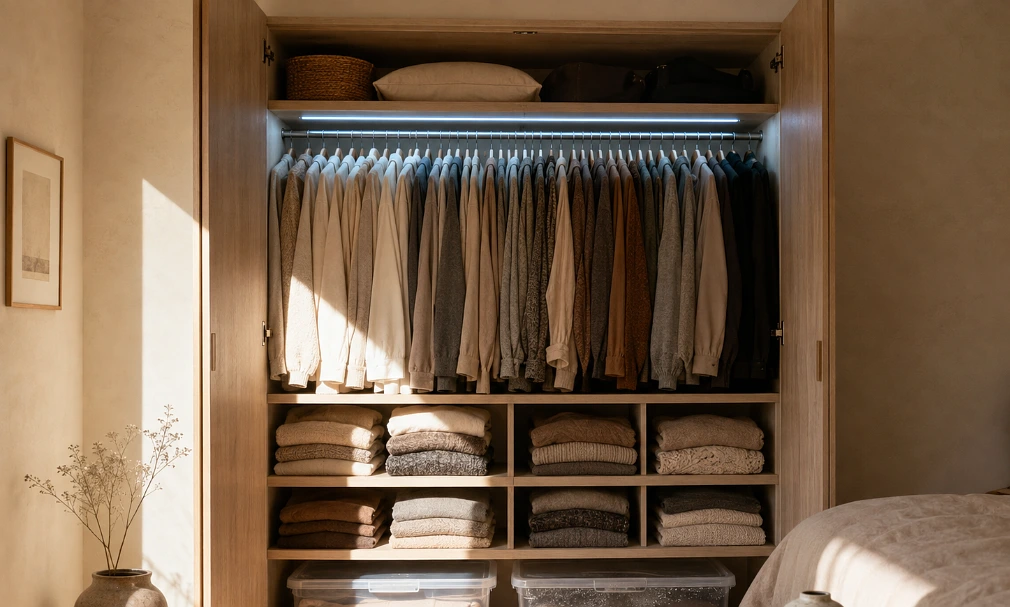
You buy a jacket, you love the colour in the shop, you bring it home, and after wearing it twice you look down and think this thing has gone dull already.
No! No, it has not. Two wears cannot dull a fabric, and the dust theory does not hold either, because dust sits on the surface and a single brush removes it.
The colour you fell for was the shop’s lighting, and the colour you are looking at now is your hallway lighting, and those two things were never the same colour at all. There is a proper name for this and it is metamerism, which means two colours that match under one light source stop matching under another. Retail lighting is chosen deliberately to flatter. Your hallway bulb was chosen by whoever wired the house.
That is one reason, and today I want to walk through the others, because a surprising amount of the damage we blame on washing machines is actually being done by the cupboard, the shelf, the light above it, and in one case by the fabric itself before you ever bought it.
Hmm, So Why Do Two Halves Of The Same Set Stop Matching?
You own a set. Top and bottom, same colour, bought together. Under the bedroom lamp they are a perfect pair, then you step out into daylight and one half has gone slightly warmer than the other.
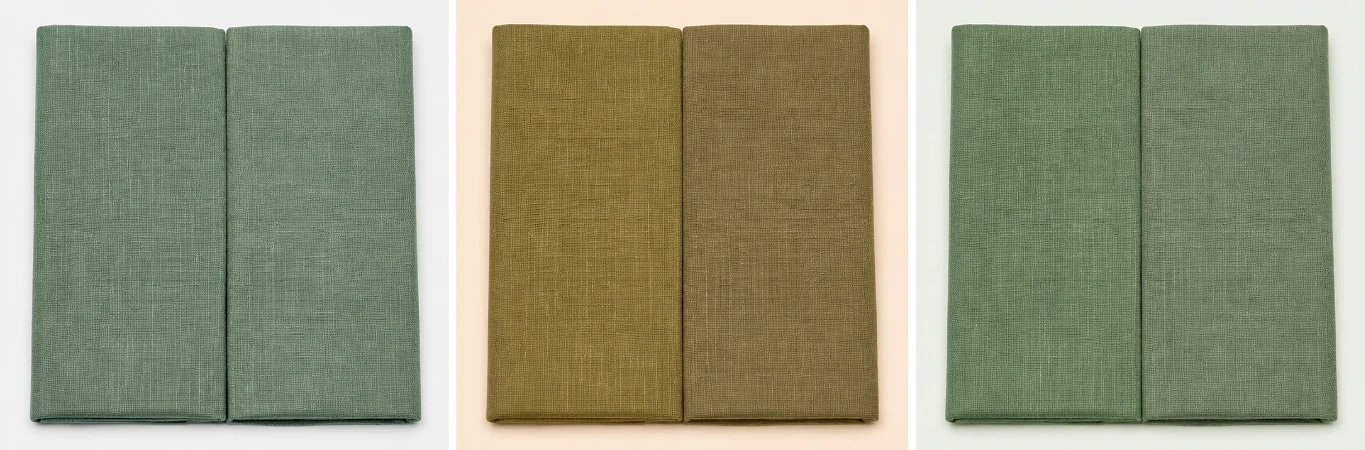
Nothing has faded. The two pieces were dyed in separate batches and the difference was always there, sitting at about half a shade, which is a gap that warm indoor light hides completely and daylight exposes without mercy.
This one belongs to your home more than your wardrobe, and here is why. If you store folded stacks behind glass doors or on open shelving near a window, you have built a display case lit by the one light source that reveals every mismatch. A closed cupboard with a warm bulb would have kept the secret for years.
Oh, and photographs are worse than eyes. Your phone camera has its own idea about white balance, so a stack that looks calm to you can look patchy the moment you photograph the room.
The Light Inside Your Cupboard Is Fading Clothes While The Door Is Shut
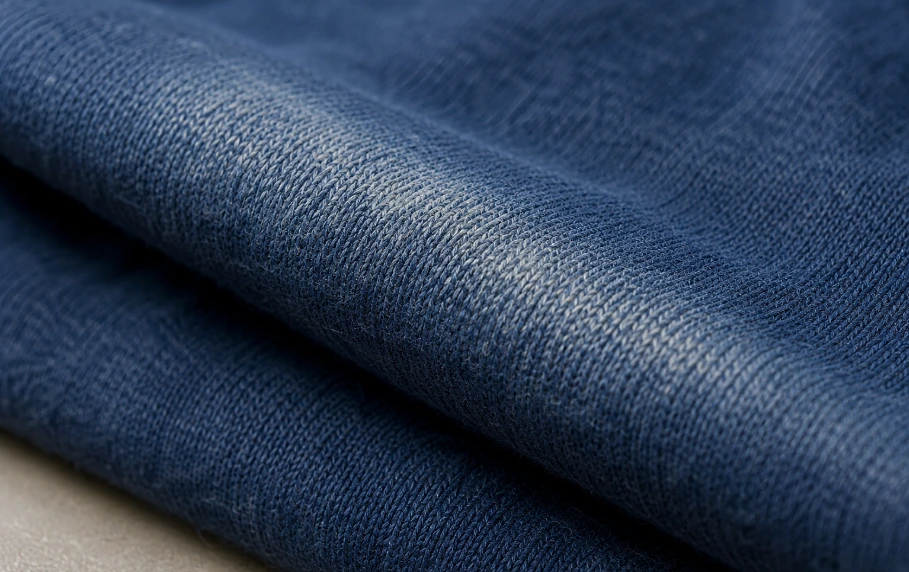
Here is one almost nobody checks. The Drycleaning and Laundry Institute is blunt about it: even a light left on inside a closet can fade the fabric stored there.
Not sunlight. A bulb. Left on, or switched on for long stretches while you decide what to wear.
So if your wardrobe has an interior light, especially one of those strips people fit for a hotel feel, put it on a door switch or a motion sensor. And if you like open shelving in a bright room, accept that anything left on those shelves for a season is going to shift, with the folded edge fading faster than the fabric hidden inside the fold, which is why an old stack has that faint pale line across it.
You see the problem with beautiful storage? Glass, light and display are exactly what we design for, and textiles want the opposite of all three.
Your Airing Cupboard Is Doing Damage, And So Is The Loft
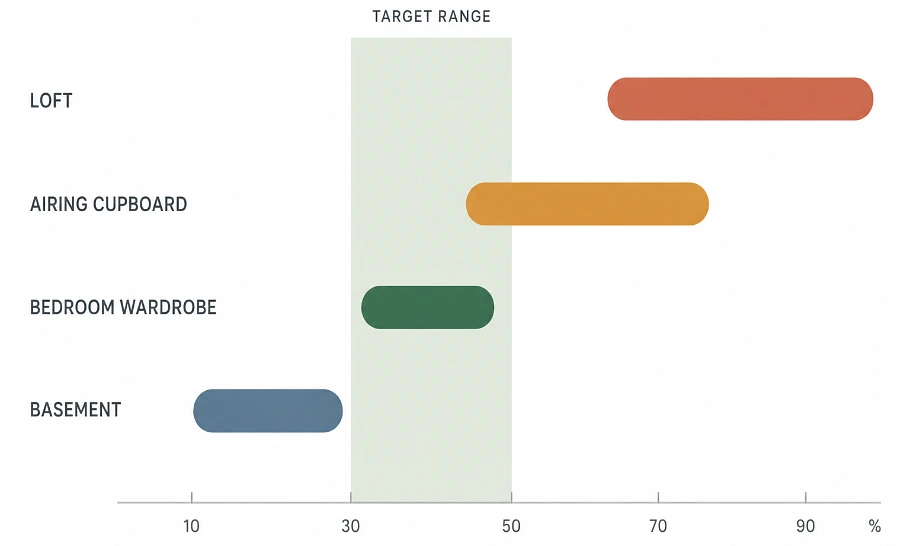
Fabrics want a cool, dry, ventilated place. Most homes offer them the two worst rooms available.
The recommendation from cleaning professionals is a storage humidity band of roughly 30 to 50 percent, kept steady, away from damp. Lofts and basements fail that test on both heat and moisture, and the airing cupboard fails it on heat alone.
- Plastic storage bags and sealed boxes trap moisture against the fabric, which is how a musty smell starts in something that was clean when you put it away.
- Poor air circulation in a packed cupboard produces the same result, since a rail crammed edge to edge cannot breathe.
- Cotton and wool are organic, so mould feeds on them directly rather than merely sitting on them.
The fix costs nothing. Leave finger space between hanging items, keep textiles out of the hottest and dampest rooms in the house, and swap sealed plastic for breathable cotton covers.
Wait, The Fabric Was Already Shrinking Before You Owned It
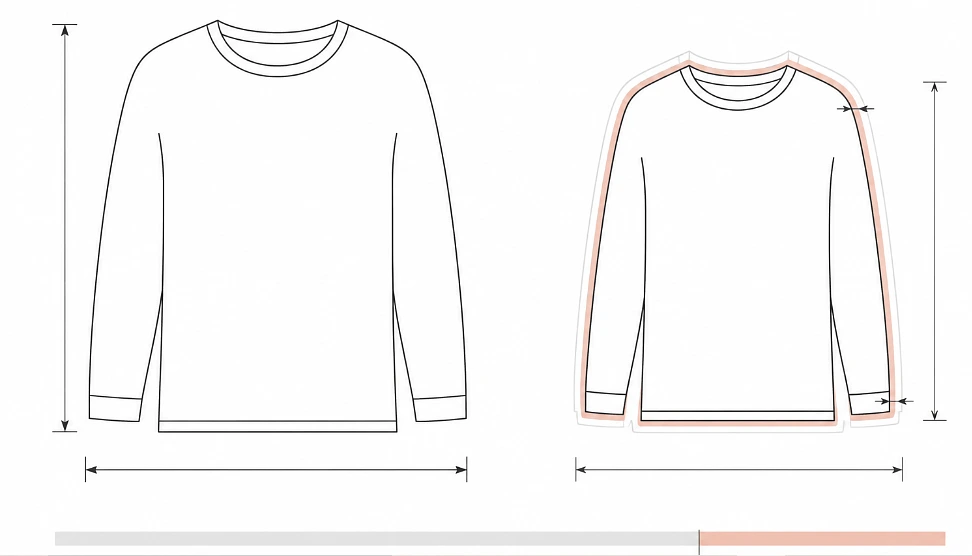
Now the one people never suspect, and it starts long before the garment reaches your shelf.
Untreated cotton and cotton-blend knits typically shrink 3 to 5 percent in the first home wash. Three percent sounds like nothing until you convert it. On a 70 cm long lounge top, that is a couple of centimetres off the length, and on the width it is enough to drop the garment a size.
I asked this from Renrui Textile, who manufacture knit and woven loungewear, and the answer was about a process rather than a fabric. Sanforising is a mechanical pre-shrinking treatment done at the mill, and fabric held to 3 percent or under is what a buyer should be insisting on. Where a factory never raises shrinkage at all, that silence tells you what you are getting.
Why does this belong in an article about storage? Because shrinkage is what quietly ruins a folded stack. A shelf of tops that used to sit square starts stepping in at the edges as the newer washes come back smaller than the older ones, and the person looking at that shelf assumes they folded it badly.
So What Would I Actually Change In A Home?
If someone asked me to fix a wardrobe for the fabric rather than for the photograph, I would change four things and none of them are expensive.
- Move folded textiles out of direct window light, or accept the fading as the price of open shelving.
- Put any interior wardrobe light on a switch that turns itself off.
- Hang wovens, fold knits, because a looped knit stretches under its own weight on a hanger and a collar creases permanently in a drawer.
- Give the rail breathing room, and get the sealed plastic out.
None of that shows up in a room photograph, which is exactly why it never gets designed in.
And the jacket you thought had gone dull? Carry it to a window in daylight before you decide anything. Most of the time the fabric is fine, and it was the bulb telling you a story the whole time.
 Decor & Improvement Accessories