

Home & Decor Blogs: DIY, Interior Design & Lifestyle Ideas
Do You Legally Need to Retrofit a House in Los Angeles?

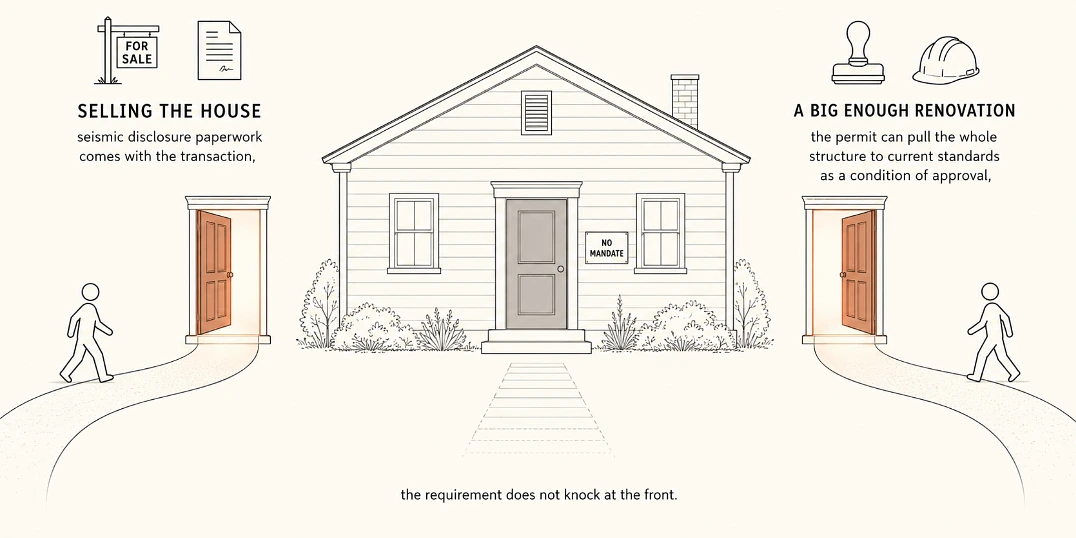
For a regular single family house, no, there is no law in Los Angeles forcing you to retrofit.
The mandate exists, but it fell on apartment owners, and for houses the requirement sneaks in through side doors instead. Selling the place comes with seismic disclosure paperwork, and a big enough renovation permit can pull the whole structure up to current standards as a condition of approval.
So what matters for a homeowner is a different set of questions, whether your house is the kind that needs the work anyway, what it costs after the state grant, and how to hire someone who will do it properly. Because this is a trade where the difference between done and done right lives under the floor where you will never look at it again.
The Mandate Fell on Apartment Buildings, Not Houses
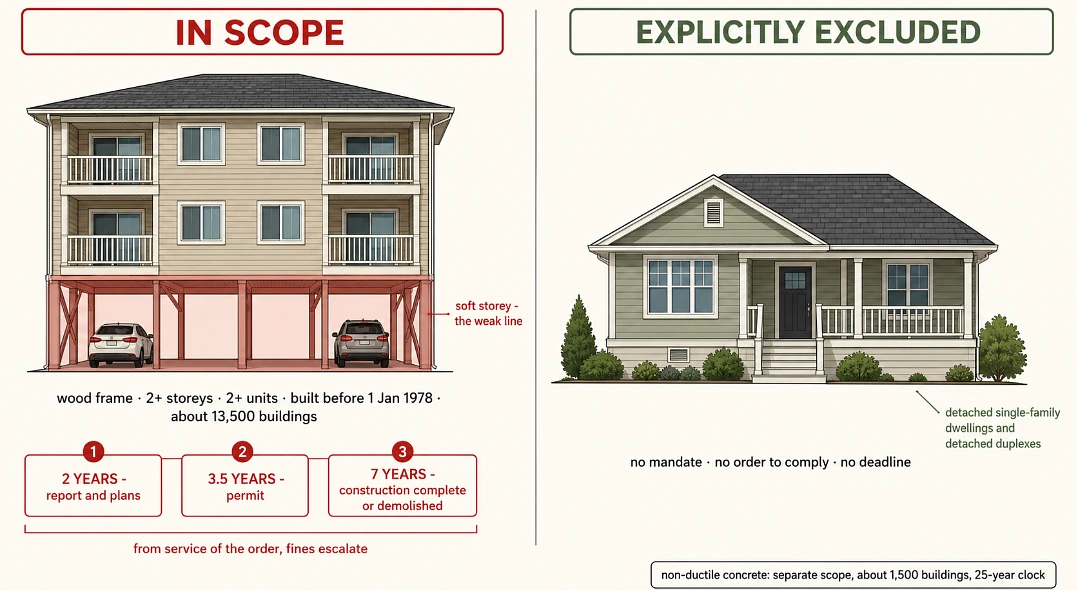
The legal teeth in this city belong to Ordinance 183893, and it is aimed at soft story apartment blocks, not homes.
Since 2015 it has required retrofits for wood frame buildings with parking tucked under the living floors, two or more stories, built before 1978, and about 13,500 buildings got compliance orders under it. The deadlines are staged, a structural report and plans within two years of the order, permits within three and a half, and the fines escalate for anyone who ignores it.
Non ductile concrete buildings sit under their own ordinance with deadlines phased toward 2038. If you own one of these, none of this is optional and the city has probably already written to you about it.
Which Houses Need It Anyway
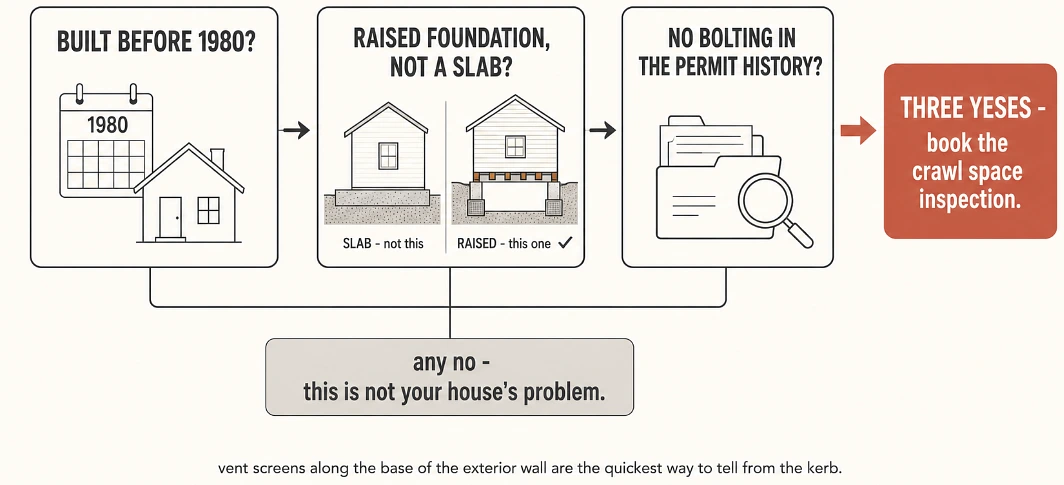
The dividing line runs somewhere around 1980.
Houses built before then often sit on raised foundations with a crawl space underneath, and the framing in a lot of them was never properly bolted to the concrete it rests on, because the codes of the day did not require it. Add the short wooden walls between the foundation and the first floor, the cripple walls, which in older construction stand there unbraced, and you get the known failure, the house slides or those walls fold sideways and the structure drops. The houses that need the conversation share three things:
- Built before 1980, which most of the older neighborhoods are.
- A raised foundation with a crawl space, not a slab.
- No record of previous bolting work in the permit history.
It is a common enough problem that contractors specializing in retrofits build their entire trade around houses from this era. The fix has been standardized for years, bolting the sill plate to the foundation with expansion bolts or epoxy set anchors, then sheathing the cripple walls with structural grade plywood so the load has a continuous path from roof to earth.
The Work, the Permit, and the Money
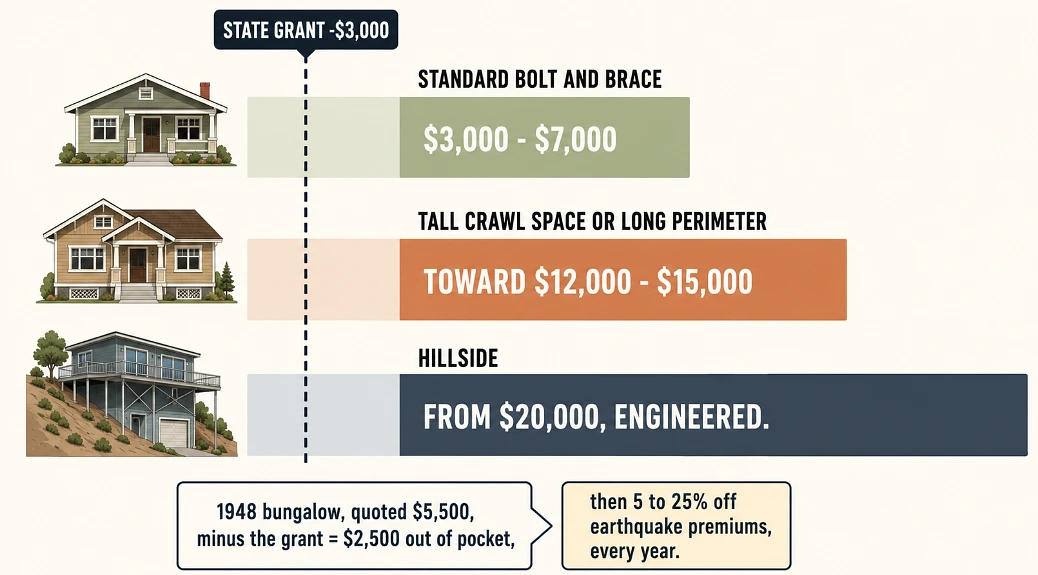
A standard bolt and brace on an ordinary LA house runs $3,000 to $7,000.
Taller crawl spaces and long perimeter walls push that toward twelve or fifteen thousand, and hillside homes are their own expensive world that starts around twenty. The city keeps a pre approved standard plan for exactly this work, which keeps the permit quick and the engineering simple, the crew is under your floor for a few days to a couple of weeks, and you keep living upstairs the whole time.
Then the state quietly pays for a big piece of it:
- The Earthquake Brace + Bolt program grants up to $3,000 toward a code compliant retrofit, for houses built before 1980 on raised foundations in eligible zip codes, and registration opens annually.
- Income qualified owners can get supplemental help beyond the standard grant.
- Run the honest example, a 1948 bungalow quoted at $5,500 for bolt and brace, minus the grant, lands at two and a half grand out of pocket.
- Insurers then discount earthquake premiums somewhere between 5 and 25 percent for verified retrofits, with the California Earthquake Authority at the top of that range.
On a policy running eight hundred a year, that discount is real money every single year the house stands. The finished certificate also shows up in listing photos when these houses sell, because buyers’ agents know what it means.
Hiring Is Where This Goes Right or Wrong
A retrofit contractor who prices your foundation from the driveway is guessing.
The real ones get under the house before they quote it, because the crawl space is where the actual project lives, and that first inspection is where the hidden issues surface. What turns up under older LA houses, more often than anyone expects:
- Concrete degraded to where new bolts would be jewelry on a crumbling base.
- Moisture from a slow plumbing leak that has been softening the sill for a decade.
- Dry rot or termites in the very wood the bolts would grip.
- Old wiring and galvanized supply lines running through the cripple walls the crew will work around.
- In houses built before 1978, materials that trigger asbestos and lead screening rules before anything gets disturbed.
And while everything is open down there, it is the cheapest moment the house will ever offer to insulate the floor above the crawl space, strap the water heater, and add an automatic gas shutoff valve. Small additions that ride along on the same visit.
What to verify before signing, in roughly the order it comes up:
- The CSLB license number, checked on the state board’s site rather than taken from the business card, along with liability insurance and workers comp.
- Retrofit specific history, meaning addresses and permit numbers from past bolt and brace jobs, not remodels, and the EBB program keeps its own directory of trained contractors which is a decent shortcut.
- Who pulls the LADBS permit, and the answer should be them, in their name, every time.
- A written scope naming the materials, the bolt type and spacing, the plywood grade, the connection hardware, because “seismic upgrade” on an invoice describes nothing.
- The inspection plan, since the city inspector has to see the work before it gets closed up, and a schedule that hides the work first is a schedule built to avoid that.
- The warranty on workmanship in writing, how long, what it covers, and whether it transfers when the house sells, because a transferable warranty is worth actual dollars at listing time.
The position on all of it fits in a sentence. If your house predates 1980 and sits on a raised foundation, book the crawl space inspection this month and register for the grant when the window opens, because after the state’s three thousand comes off, a standard bolt and brace is the cheapest structural work a California homeowner will ever buy, and the mandate list this city keeps writing has only ever grown in one direction.

 Decor & Improvement Accessories