

Home & Decor Blogs: DIY, Interior Design & Lifestyle Ideas
How to Match Handrails with Interior Style Without Compromising Design

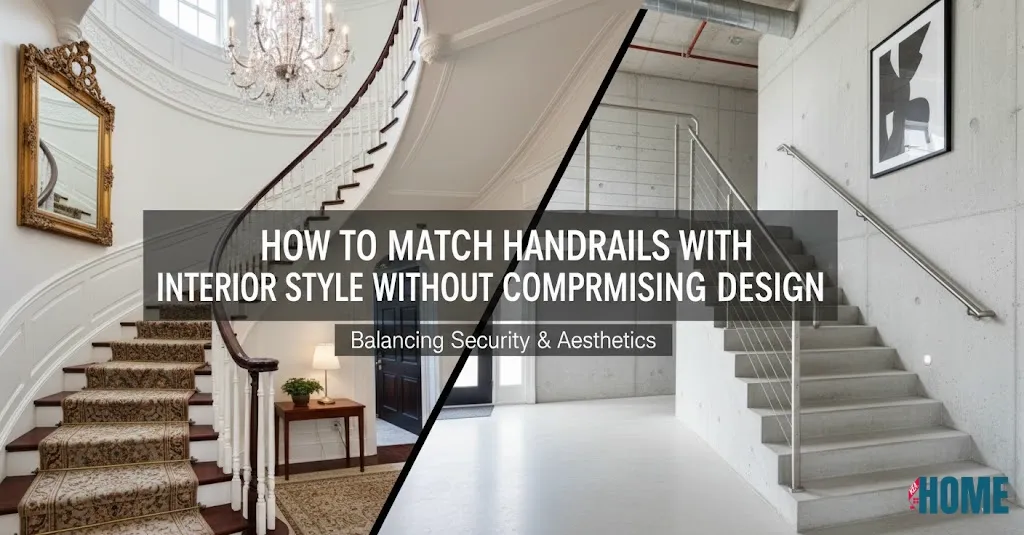
The challenge of security and the interiors that are appealing to the eyes is one of the hardest issues the householders are likely to encounter. Typically, due to this issue, the most noticeable elements are the handrails which rather paradoxically are also at the junction of safety and design and visually influence the entire space.
The misconception that handrails must fit into the shadow or be an essential evil that ruins the appearance of the room has indeed been one of the greatest reasons as to why the majority of people have not realized their potential as an actual design.
As a matter of fact, they are capable of being a tool in the interior designers collection of designs, a design statement to the space, and an enhancement of design ideas without contradicting it, which is what they are there, i.e. safety.
Reading Your Space’s Design Language
Before acquiring handrails, be sure to consider a bit about what design language a given interior already possesses. Every region is represented through architecture, materials, colors, and styles. A house with crown moulding, wainscoting, and antique hardware will be understood to create very different aesthetic values as compared to a loft conversion of exposed ductwork and concrete floors.
The solutions to handrails will vary between a mid-century modern house with clean lines and organic forms and a highly decorated Victorian interior with plenty of decorative flourishes. Do not simply count on the style of your space to decide its nature. The rhythm of the vertical and horizontal elements, the light and dark contrast, the interaction of the textures and finishes can tell a lot about the room.
Attempt to visualize how the architectural elements are shifting between one material to another, the interrelation of the various planes to each other, and separation, the way the light is playing against the surfaces throughout the day. These are the perspectives that will give you the design themes to use in selecting the handrails in such a way that the new elements do not conflict with the existing ones but rather complement them.
Material Choices That Speak to Style
Certain styles have always been attributed to specific materials due to how they were used in the past as well as their physical qualities. Being aware of these associations can make you make the correct choice of handrails that you use in your interiors in a very genuine manner.
Wooden handrails deliver the messages of the past, of being warm, and of the qualities of the art of a craftsman, which is very natural in being compatible with the designs of the classic, transitional, and some of the contemporary organic designs. These associations can be further explained by the type of wood and the finish of the treatment.
Dark and deep walnut or mahogany will remind a formal traditional atmosphere, whereas light maple or white, painted wood will suit perfectly a cottage or coastal style. Wood, which is neutral and not completely finished, will be the best option in the context of modern Scandinavian style or interior design inspired by Japanese style.
Metal handrails exist in the broadest spectrum of stylistic varieties in terms of material, finish, and profile specifications. Brushed or satin stainless steel is a contemporary embodiment of minimalism and it looks great in a modern environment with an industrial or urban impact.
Wrought iron, especially in decorative scrollwork or hammered textures, brings the traditional and Mediterranean designs patterns to the Old World sophistication. Wrought Iron Handrails offer a choice of features when it comes to obtaining the period character with modern reliability, preserving the traditions of classical design and adhering to the modern safety and performance standards.
Profile and Proportion Considerations
The shapes and sizes of the handrails determine the effects they have on the general look of the handrails in the environment where they are used. The delicate and delicate spaces with minor details need the handrails of appropriate size when the blocky and oversized profile is used to coarse and overwhelm the overall picture.
Moreover, large areas with very restive architectural movements may bear and even require heavier measures of handrail to maintain the balance of the image. The traditional designs are largely of handrails with formed profiles referring to the past.
The work can be done by a plain rounded profile, but profiles with minute decorations such as fillet at the bottom, a smooth curve in places where it is now flat top, proportions which are borrowed in classical orders conduct the work, demonstrate design awareness and authenticity of the period.
Such details need not be elaborated to be effective; even such traditional handrails, slightly modeled that are crafted thoughtfully, can be identified as not being of the generic builder grade.
Color and Finish Strategies
The colours of handrails have a significant influence on whether they will blend to the rest of the space or standout as the central elements. When the handrails are related with the surrounding trim, door, or the architecture woodwork, it forms a visual streamline where the handrail is integrated into the composition.
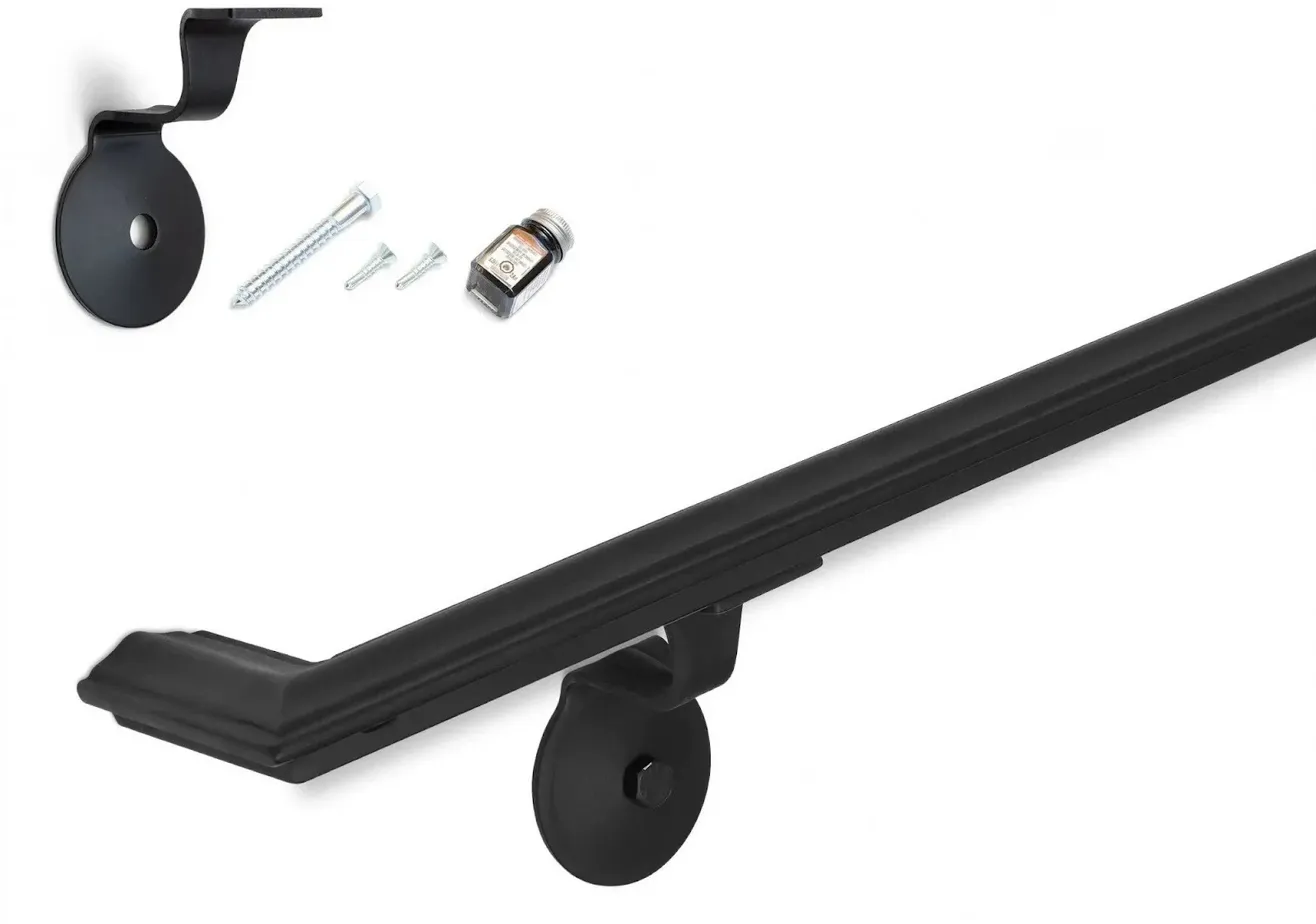
This style works very well in places where simplicity and serenity are the theme or where some aspects are left to play the primary role. Conversely, handrails can intentionally contrast with the surroundings to capture attention of the viewer and to offer architectural clarity. Black metal handrails on white walls are extremely vivid elements, clear objects that are employed to highlight the staircase as a sculptural feature.
This technique suits up-to-date, transitional, and even traditional interiors in which the contrast is regarded as an element of grace, as opposed to a point of conflict. The thing is that the contrast has to appear purposeful and part of the overall design instead of appearing as the product of a chance occurrence or insignificant thought.
Balancing Visibility and Integration
Among the most intangible elements of the handrail design, there is determining how to manipulate the visual effect of the handrails in the room. In other design techniques, the handrails may be almost invisible and therefore offer support that is needed but not conspicuous.
All these can be reduced to the appearance of using glass panels with minimal metal framing, thin cable systems, handrails fixed directly to walls instead of being anchored by large posts are some of the methods that allow all the features to be reduced to the appearance but still retain the functionality.
The various design strategies employ handrails as featured designs that receive the attention they earn. Beautiful wrought iron that contains custom scrollwork not only is the source of safety, but also becomes artwork. The stairs are transformed into a gallery by the inclusion of a wooden sculptural handrail with smooth flowing organic curve, worthy installation.
The handrails are not only practical art that assists the movement but also produce the effect of the atmosphere since the handrails have inbuilt LED lighting. The only difference is that success only comes with matching visibility to design intent because both are not better off.
Coordinating with Surrounding Elements
Components of larger constructions are handrails, which are made of posts, balusters, newels and mounting hardware. These components must operate in harmony to bring out the totality design objectives. The inappropriate items a traditional handrail mounted on the contemporary cable railing, or fancy metal-decorated posts that uphold a rugged wood rail may disorient the spectators, hence, causing the visual chaos, thereby, losing the entire effect of the entire installation.
The connection between handrail and baluster design is usually the factor that affects the perception of style. In the case of a baluster, the turned wood balusters are the traditional design with whatever type of handrail is selected but the horizontal metal cables or glass panels are innovative.
The confounding of these elements requires a person of extraordinary talent otherwise one will end up with stylistic incoherence. When different materials or sources of style are being combined there should be a good design reason that will connect the elements perhaps posts and handrails of one material with balusters of another, creating the intentional zoning of the materials as opposed to the simple mixing.
Living with Your Decision Long-Term
Even when the initial visual pleasure has passed, your choice on the handrail has far reaching effects into the future. The designs of handrails that appear to be fashionable today may become obsolete in a few years, but classic designs remain trendy over decades. Consider that by the time you get bored with your tastes and design fads, your handrails will be out of shape.
In most cases, conventional forms and the quality of materials prove to be more worthwhile long-term investments than very stylized ones that can only be used at particular moments in design. The maintenance of such things in combination with the realities of the lifestyle makes it a perennial source of satisfaction, constant maintenance is required on these, to ensure that they look good, thus an irritation rather than a sense of pride in the owner.
Conversely, handrails selected primarily due to wear resistance with no thought at all to appearance, fail to provide the aesthetic pleasure that makes access to your space enjoyable on an everyday basis. The appropriate location matches the two, beauty and practicality therefore providing short-term visual weight and extended term durability of use.
 Decor & Improvement Accessories