

Home & Decor Blogs: DIY, Interior Design & Lifestyle Ideas
I Replaced the Door, But My Garage is Still Leaking – Alternatives to Stopping the Leak

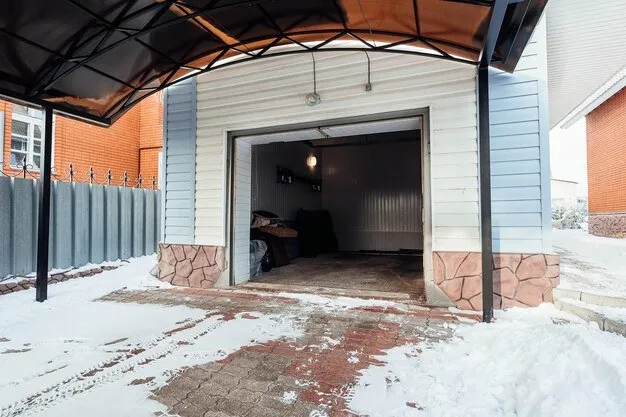
It can be frustrating when you invest in a new garage door only to find there’s still a water problem — it is a common issue for many homeowners. The garage door is not the sole culprit. In fact, it’s often part of a larger problem that includes the floor, the frame, the driveway and even the landscape surrounding it. It can cost thousands of dollars in property damage from just an inch of water. Here is a guide to help you diagnose the real cause of the leak and enact a lasting solution.
Finding the Real Source of the Leak
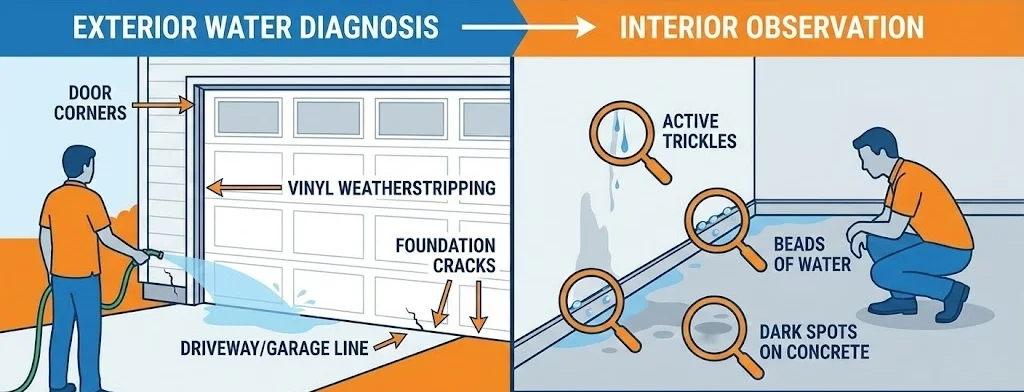
To prevent further wasted time and money on leak repairs, conduct a water diagnosis to identify the leak’s entry point. While one person sprays water from a garden hose on low pressure outside, another person will observe from the inside. Watch key areas such as corners of the door, vinyl weatherstripping along the frame, visible cracks in foundation walls and the line between the driveway and the garage.
Observe signs of moisture, including active trickles, beads of water along seals and dark spots on concrete. These signs are the true entry point of water.
Upgrading Your Garage’s First Line of Defense
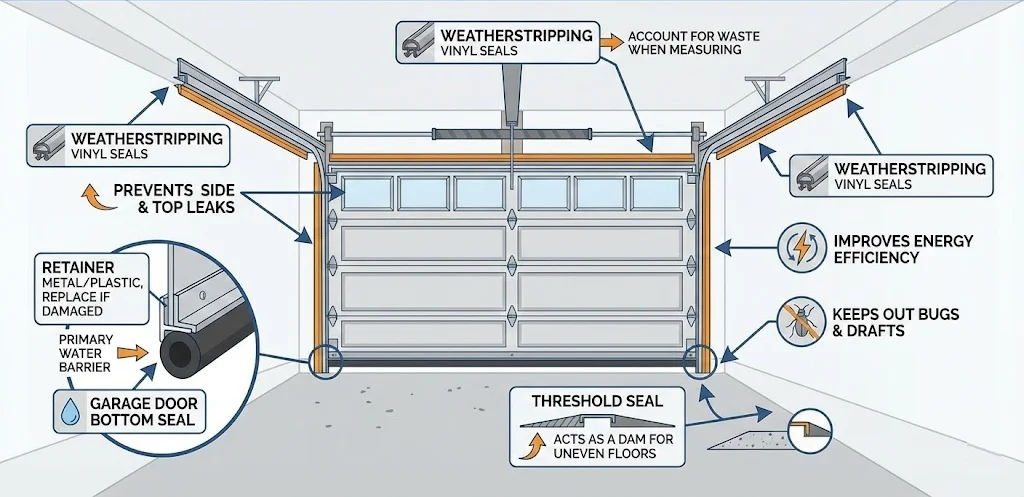
The most common and accessible fix you can do is focusing on the area along the garage door’s frame. Garage doors with properly fitting seals do more than just prevent leaks — they can also keep out bugs, dust and drafts. Additionally, seals improve a home’s energy efficiency by minimizing the transfer of hot or cold air.
The garage door’s bottom seal is your primary barrier against water, held in place by a plastic or metal retainer. Bent, cracked or corroded retainers prevent the entire system from working. Replace old ones when they stop working. For homeowners with uneven floors, consider adding a garage door threshold seal to the concrete floor. It acts like a dam, preventing water from flowing under the door and into your space.
Another upgrade you can do to prevent leaks is installing weatherstripping along the sides and top of the door. Make sure to include extra weatherstripping for the total perimeter to account for waste. Attaching these vinyl seals creates a compression seal that prevents water from seeping in when the garage door is closed.
How an Insulated Door Fortifies Your Entire Home
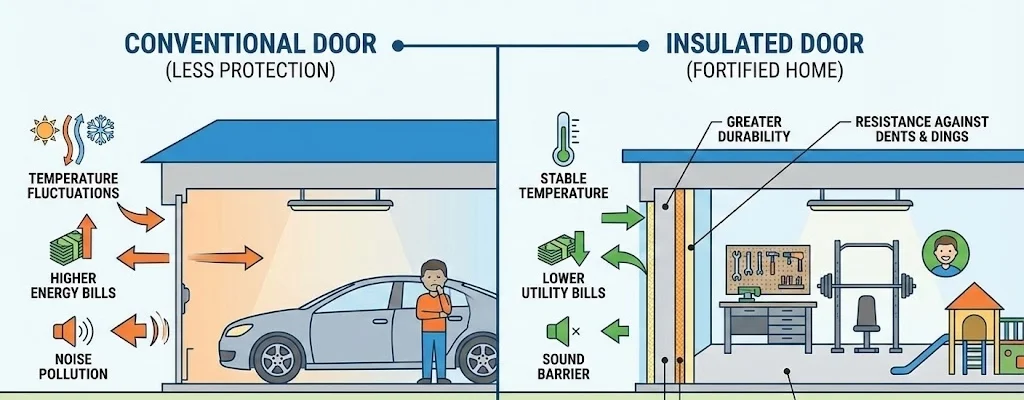
Consider upgrading to insulated garage doors for even greater protection against leaks. They create a thermal buffer which reduces temperature transfer, especially important during the freezing cold of winter and the unbearable heat in the summer. This improves energy efficiency and lowers utility bills by greatly reducing your HVAC system’s workload.
With a stable temperature, insulated garage doors create a comfortable space for functions other than parking. Its sturdy core also acts as a sound barrier against outside noise. You can turn your garage into a workshop, gym or play area, increasing your home’s usable square footage. Compared to steel garage doors, insulated garage doors are more durable, ensuring stronger resistance against dents, dings and everyday wear.
When the Problem Is Your Driveway or Yard
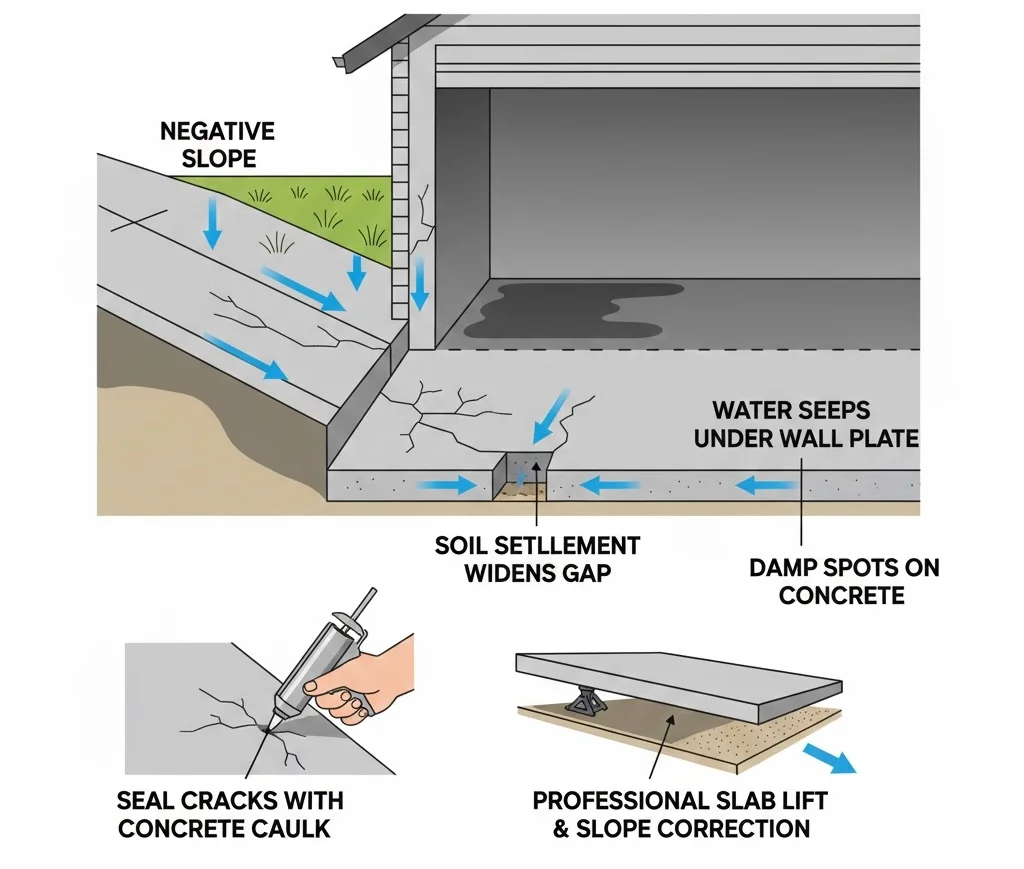
If your seals are intact, the problem might be on the surrounding area. For example, water will eventually lead to the garage in negative slope structures where the driveway, walkway and garden slant toward the garage foundation. Water will seep under the wall plate and through the concrete walls.
The point between the driveway and the garage floor is a common entry point for water. The area widens with soil settlement. When the soil becomes saturated with water, the water migrates sideways, appearing as damp spots inside your garage.
To prevent these issues, seal cracks with concrete caulk. For large-scale issues, contact professionals who can lift the sunken slab and correct the slope away from the garage.
Advanced Drainage Solutions for Stubborn Water Problems
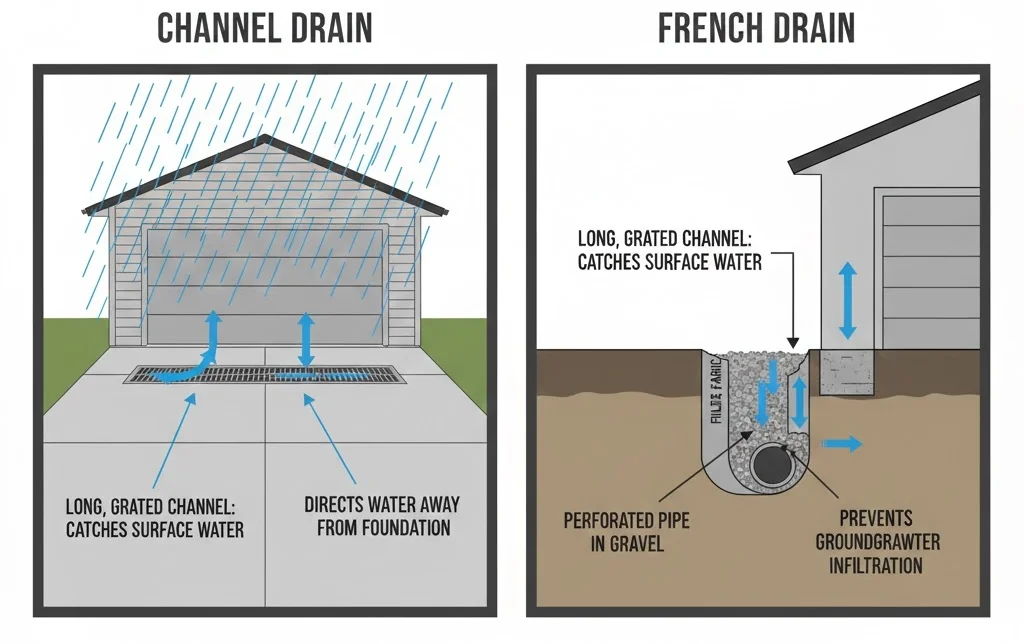
Install a drainage system if water from the roof flows into the garage in significant volume. Use long, grated channel drains in front of the garage doors. They act as gutters that catch all water that flows into your garage and direct it away from the foundation.
If water seeps up the walls, install a French drain to prevent groundwater infiltration. It is laid underground, along the garage foundation. This is done to relieve hydrostatic pressure and prevent water from penetrating the concrete.
A Dry, Secure Garage Is Within Your Reach
A persistent leak usually occurs because of problems in the surrounding system, and not just the garage door. Make sure to diagnose key sources of leaks — from seals and thresholds to driveways and groundwater. By searching these areas, you can find the right solution. A dry garage helps protect your foundation and prevents costly water damage. It also safeguards the items in your garage. Take the first step toward identifying the true source of your water leak.
 Decor & Improvement Accessories