
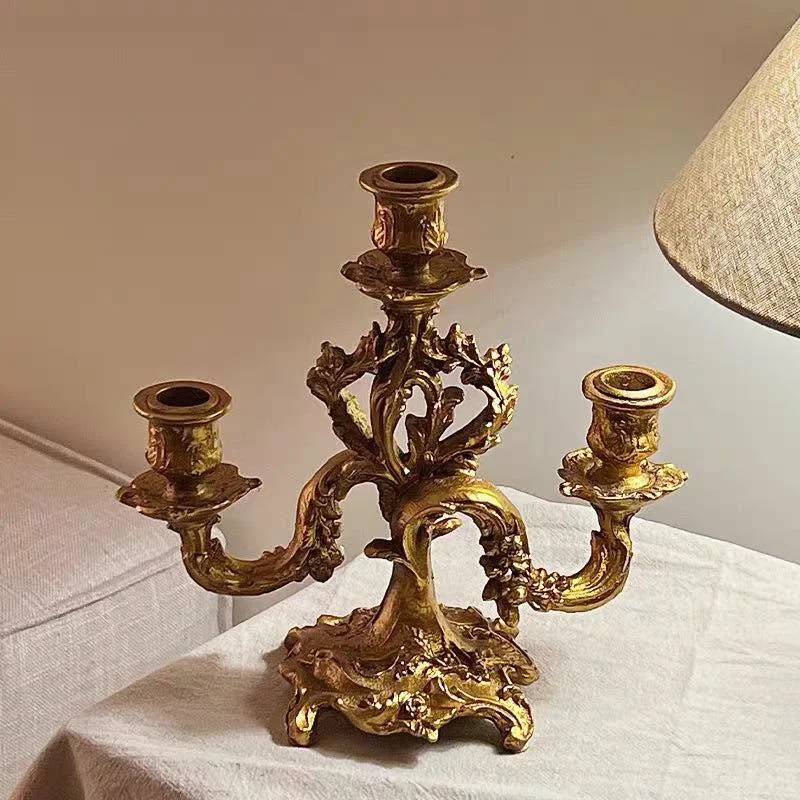
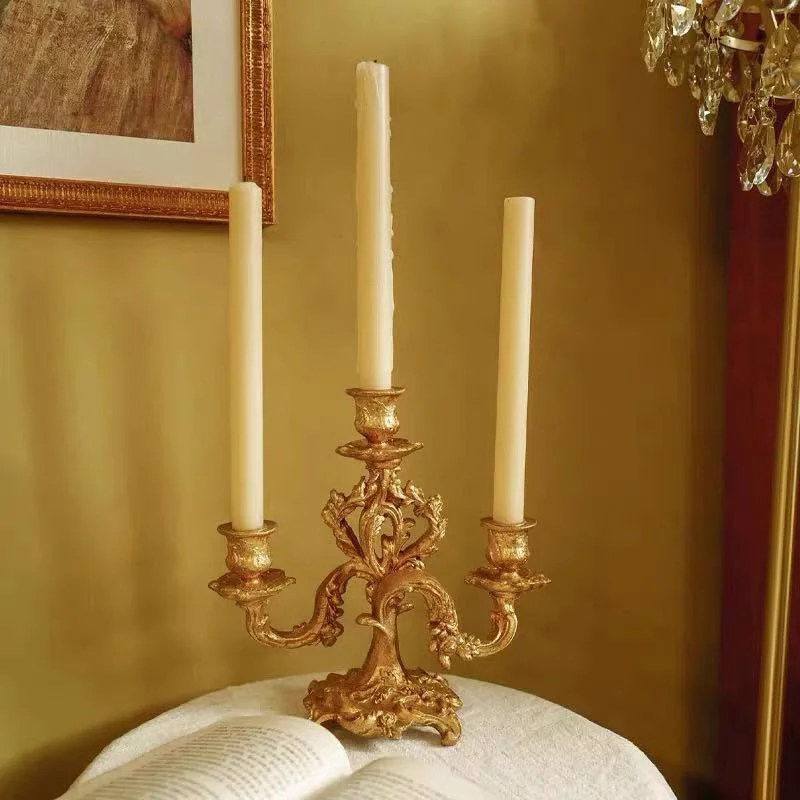
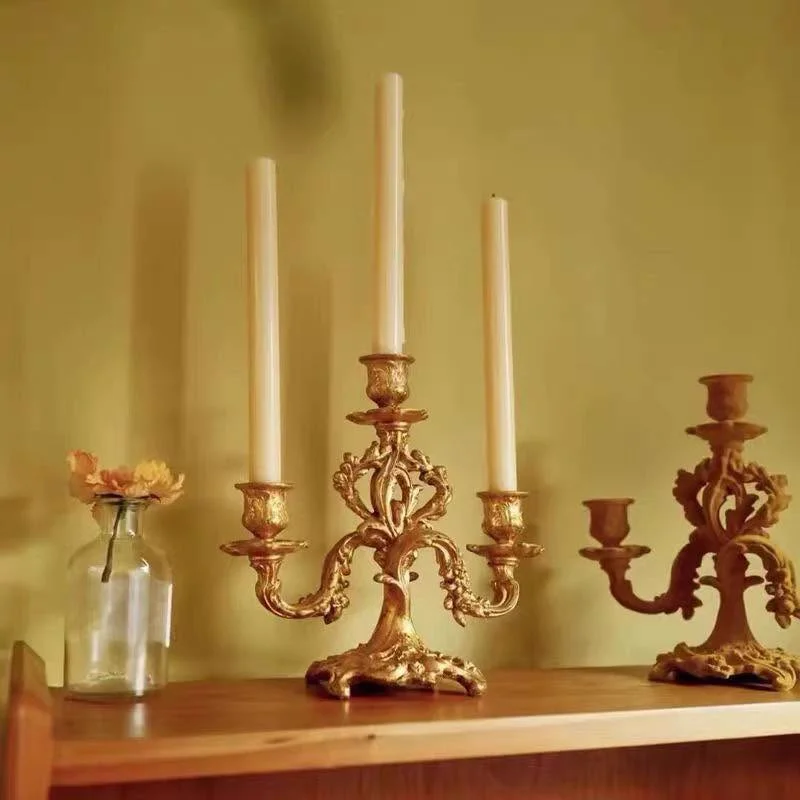
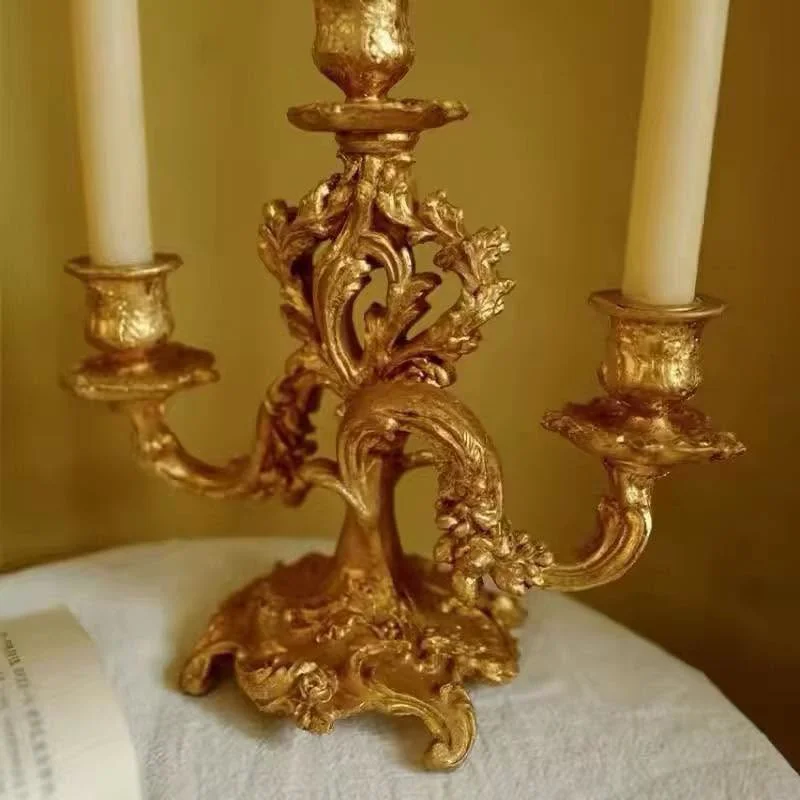

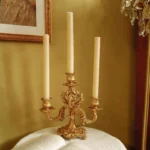
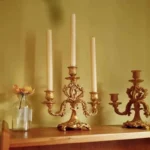

Gold Multi Tea Light Holder
58.00$
Centre of a dining table for a proper dinner, Eid, Diwali, a birthday where the phone lights are off. A console table in the entrance. A mantel if you have one. In a small flat it can look like too much, so keep the rest of the table plain, a white cloth and nothing else and it carries the room on it’s own.
Use ivory or white candles. Coloured ones cheapen it. And don’t let the candles burn right down into the cups, the heat is not good for the finish.
Wipe with a soft dry cloth only. Water will lift the foil at the edges.
- Three cups for standard dinner candles, not tealights.
- Approx 30 cm tall, 25 cm wide across the arms.
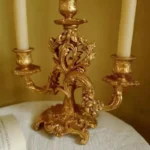
- Resin body with gold foil finish, rococo scrollwork.
- Finish has a deliberately aged, uneven look, varies piece to piece.
- Candles not included.
Three arms, three cups, one for the centre and two curling out either side, all of it covered in scrolls and leaves and little flowers pressed into the mould. The style is French, rococo they call it, mid 1700s, when everything in a rich man’s house had to look like it was melting. The finish is gold foil over resin, so it has that slightly uneven, rubbed look of old gilt rather than the flat shine of spray paint. It stands about 30 cm tall and around 25 cm across at the arms, and the base is heavy enough that three lit candles don’t make it nervous.
The cups take a standard dinner candle, the long 2 cm type. Not tealights, there is no dish for them.
Now, where this thing fits in an Indian house, because people ask. This exact shape came into India with the Europeans, but it did not stay with them. By the 1800s the nawabs of Lucknow and Murshidabad were buying French and Belgian gilt candelabras by the crate, the Calcutta zamindars filled their thakur dalans with them, and the Nizam’s palaces in Hyderabad still have rooms lined with these.
It became a raees ghar ka saamaan, a thing the old money Indian house had on the sideboard and it stayed that way long after the British left. When the cantonment bungalows in Bangalore were being cleared out in the 60s and 70s, my father’s generation in Shivaji Nagar bought whole lots of this stuff at the auctions, gilt candelabras, mirror frames, brass lamps and sold them on to families setting up new houses in Jayanagar and Malleswaram. So when you put one of these on your dining table you are not copying a European look, you are doing what a Lucknow haveli or a Kolkata rajbari did a hundred and fifty years ago.
Related products


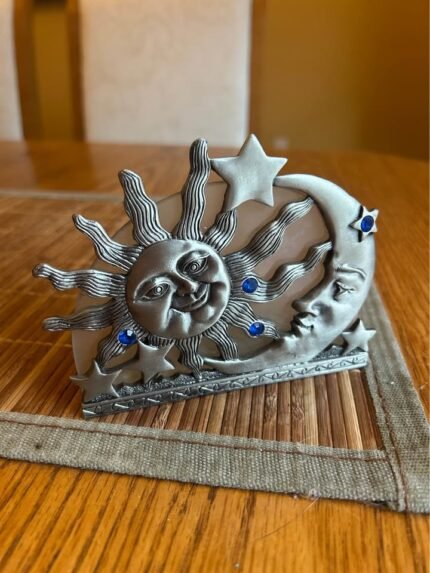
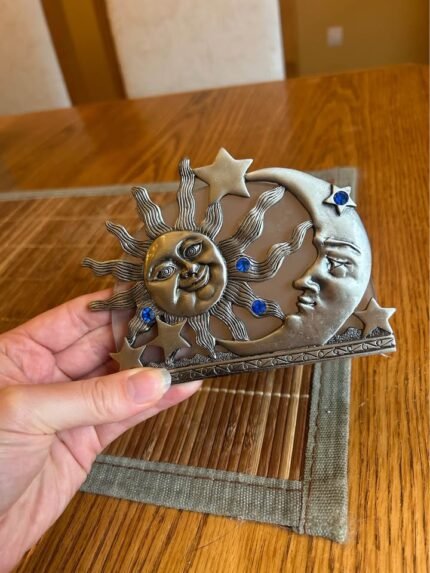
Celestial Candle Holder
Where it goes. Bedside, definitely. Puja shelf if you want a tealight there instead of an open diya, the base catches the wax. Bathroom window ledge, oddly, because the frosted glass suits a bathroom. Study desk. Not the dining table, it is too small, it gets lost among the plates.
Dry cloth only. Don't use Pitambari or any brass polish on it, that will strip the pewter finish and turn the sun's face shiny in patches. The stones are glued, so no soaking.
- Approx 10 cm tall, 15 cm wide, 7 cm deep.
- Cast metal, pewter finish, frosted glass back panel.
- Five blue rhinestone stars.
- Holds one standard tealight in the base recess, tealight not included.
- Finish varies a little piece to piece.
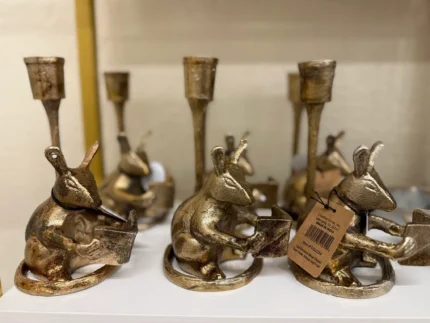
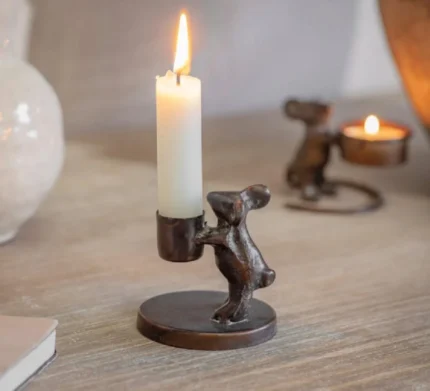
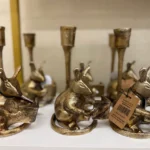
Cuthbert Mouse Candle Holder
- Cuthbert is a small cast aluminium mouse who stands on his back legs and holds a dinner candle out in both paws.
- Approx H8 x W4 x D7.5 cm
- Antique brass finish changes from piece to piece, and it is made to look that way.
- The cup holds a standard 2 cm dinner candle, which is not included.
There is a tealight version of Cuthbert too, same mouse, but holding a round dish instead of a cup and with his tail curling round underneath as the base. If you prefer tealights to dinner candles, that is the one to pick.
Wipe with a soft dry cloth. No polish, no water, no scrubber, all of that will strip the antique finish and leave you with a shiny silver mouse.


Reviews
There are no reviews yet.